
Commercial Treadmill Running Deck Replacement: A Professional Maintenance Guide 2026

Is your treadmill's drive motor working harder than the person running on it? When friction levels climb, your electricity costs and component failure rates follow suit. It's a common reality for facility managers, where a delayed commercial treadmill running deck replacement leads to unscheduled downtime and genuine safety risks for members. Ignoring the subtle signs of a failing surface doesn't just impact user experience; it actively shortens the lifespan of your most expensive cardio assets.
We understand that maintaining a safe, compliant gym floor requires more than just occasional cleaning. This guide provides a technical roadmap for the replacement process, ensuring you can diagnose wear before it triggers a costly motor control board failure. You'll learn how to source precision-machined parts that meet ISO safety standards and master the mechanical workflow required to restore factory-standard performance. We will cover everything from amp-draw testing and thermal diagnostics to ensuring your maintenance logs satisfy PUWER 1998 requirements, helping you extend the operational life of your fleet whilst maintaining absolute facility safety.
Table of Contents
Identifying the Need for Commercial Treadmill Running Deck Replacement
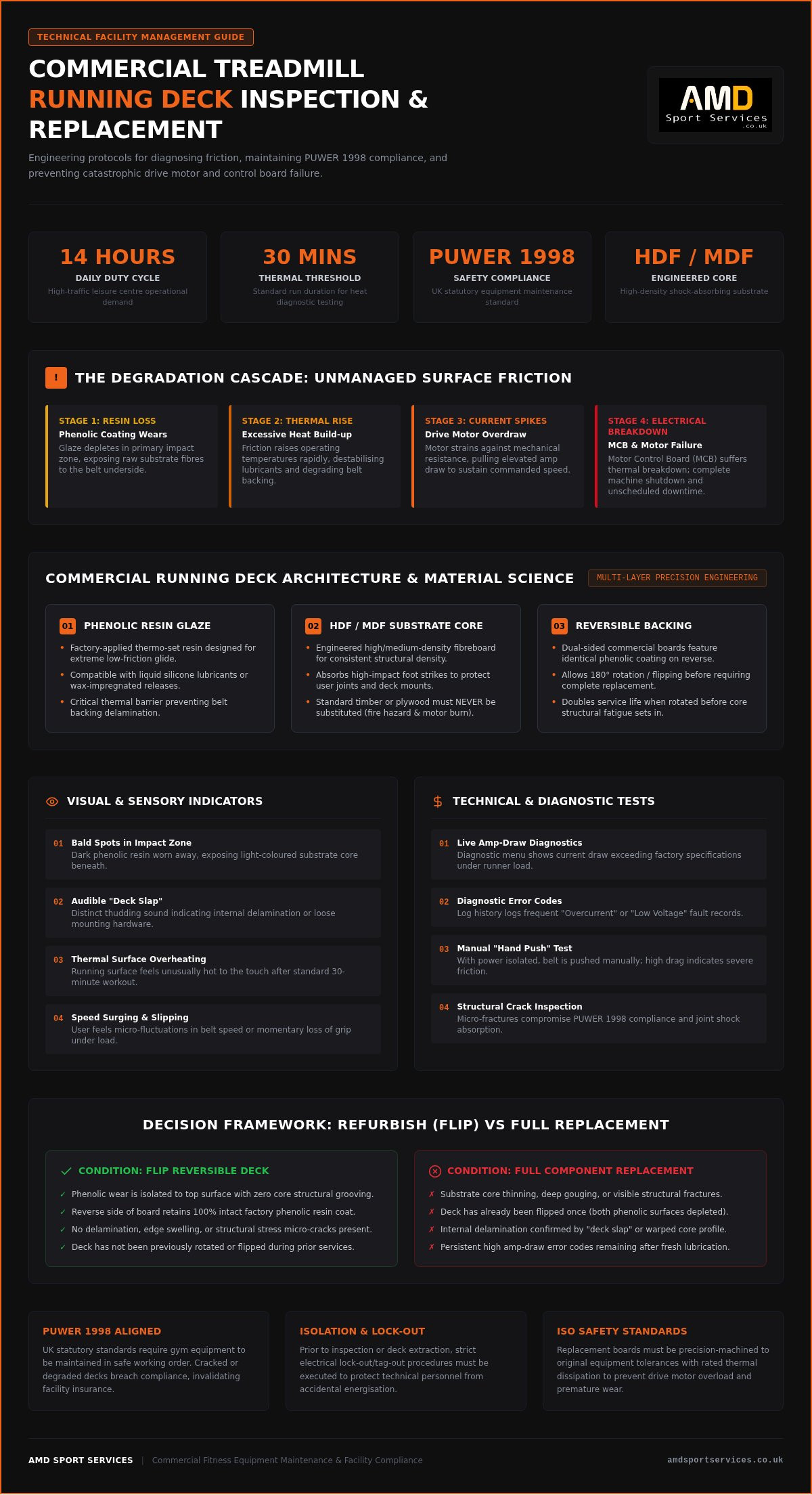
Identifying the need for a commercial treadmill running deck replacement requires a combination of sensory observation and technical data analysis. A common mistake in facility management is waiting for a catastrophic mechanical failure before taking action. By then, the friction between the belt and the deck has likely already damaged the drive motor or the motor control board (MCB). A healthy commercial deck acts as a low-friction gliding surface; once the phenolic resin wears away, the machine consumes significantly more electricity and generates excessive heat. This heat doesn't just damage the machine; it creates a safety hazard for the user.
Friction is the primary enemy of treadmill longevity. When the deck surface degrades, the motor must work harder to maintain the belt speed requested by the user. This creates a cycle of overheating that leads to component fatigue. Facility managers should look for user experience indicators such as surging, where the belt speed fluctuates slightly, or slipping, which often points to a loss of belt tension or deck smoothness. If the running surface feels unusually hot to the touch after a standard 30-minute session, the deck has almost certainly reached the end of its functional life.
Visual and Physical Surface Inspections
Technicians should prioritise inspecting the "impact zone" where users typically land. You're looking for bald spots where the dark phenolic coating has vanished, revealing the light-coloured MDF or plywood core beneath. Additionally, listen for "deck slap," which is a distinct thudding sound caused by a delaminated or loose running board. Structural cracks, even small ones, compromise the shock absorption properties that protect users' joints. Under PUWER 1998 regulations, equipment must be maintained in a safe condition, and a cracked deck is a clear breach of these safety standards.
Technical Indicators and Performance Data
Modern commercial units provide diagnostic menus that show live amp draw data. If a machine draws more current than the manufacturer's specification whilst a user is running at a standard pace, it's a clear indicator of high friction. You'll often see "Overcurrent" or "Low Voltage" error codes in the log history of neglected machines. We recommend performing a manual "Hand Test" by attempting to push the belt along the deck while the power is off. If it feels sluggish or requires significant force, the surface is compromised. Integrating these checks into regular service and maintenance schedules prevents a minor commercial treadmill running deck replacement from escalating into an expensive motor overhaul.
Understanding Commercial Running Deck Construction and Materials
A commercial treadmill deck is a sophisticated mechanical component, not merely a support board. Unlike residential units, these are engineered to withstand up to 14 hours of daily operation in high-traffic leisure centres. The core is typically constructed from high-density fibreboard (HDF) or medium-density fibreboard (MDF), but the secret to longevity lies in the phenolic resin coating. This material provides the low-friction surface required to prevent the drive motor from drawing excessive current. Without this precision-engineered layer, the friction between the belt and the deck would generate enough heat to destroy the motor within hours.
Heat dissipation is a critical requirement for any commercial environment. When a machine is in constant use, the temperature between the running belt and the deck can rise rapidly. Professional-grade decks are designed to manage this thermal load, ensuring that the lubricant remains effective and the motor control board stays within safe operating parameters. Using the wrong materials, such as standard plywood or untreated timber, is a significant fire risk and will lead to immediate motor burnout.
Phenolic Coatings and Friction Management
The phenolic layer is a factory-applied resin that interacts with specific lubricants to maintain a smooth glide. In non-waxed systems, technicians apply liquid silicone, whilst waxed decks feature resin impregnated with wax that releases as the belt heats up. Choosing the correct material for a commercial treadmill running deck replacement is vital. Substandard aftermarket boards lack these specific friction-reducing properties. This leads to rapid heat build-up, which can delaminate the belt backing and eventually cause the motor control board to fail under the strain of high amp draw.
Reversible vs Single-Sided Running Decks
Many leading manufacturers produce reversible decks. These "double-sided" boards allow facility managers to flip the deck once the first side shows signs of wear, effectively doubling the component's lifespan. However, once both sides are grooved or the core has warped, a full commercial treadmill running deck replacement is the only safe option. For older or specialist models where original parts are no longer available, we source bespoke, precision-machined decks that meet original specifications. This ensures the deck continues to work in harmony with the machine's elastomer cushioning system to absorb joint impact effectively. Ensuring your machines are fitted with the correct grade of materials is a core part of a professional indoor inspection and maintenance programme.
The Decision Framework: Refurbishment vs. Full Replacement
Deciding between a simple rotation and a full commercial treadmill running deck replacement requires a pragmatic assessment of the machine's history and current state. Whilst flipping a reversible deck can extend the life of a component, it isn't always the safest or most cost-effective route for high-use facilities. A seasoned practitioner looks beyond the surface to evaluate the structural integrity of the core material. If a deck has already been rotated once, its service life is effectively over, and attempting to prolong its use will inevitably lead to electrical component failure.
The "Belt-Deck Marriage" is a critical concept in professional gym maintenance. These two components wear as a pair. A worn running belt develops a coarse backing that acts like sandpaper, whilst a degraded deck surface increases friction and heat. Replacing one without the other is often a false economy. A fresh deck surface will be rapidly compromised by the grit and heat generated by an old, glazed belt, leading to a repeat failure within months rather than years.
Criteria for Rotating a Reversible Deck
Before committing to a rotation, technicians must meticulously inspect the "fresh" side. In some environments, the underside of the deck may have suffered from moisture ingress or storage warping, rendering it unsuitable for use. The surface must be thoroughly cleaned of any dust or old lubricant before it becomes the primary running side. It's vital to remember that a flipped deck requires a brand-new, non-contaminated running belt to ensure the low-friction phenolic interface works as intended. If there are signs of core swelling or stress fractures, the board's ability to absorb impact is compromised, and it must be discarded.
Calculating the ROI of Professional Maintenance
Investing in a timely commercial treadmill running deck replacement offers a tangible return through reduced operational costs. High friction levels force the drive motor to draw significantly more current, which inflates electricity bills across a large fleet. By restoring the machine to factory standards, you also protect the most expensive internal components. The cost of a new deck and belt kit is a fraction of the price of a replacement drive motor or a new Motor Control Board (MCB). Furthermore, documented service and maintenance history ensures that your facility remains compliant with safety audits and maintains the high resale value of your commercial assets.
The Professional Process: How to Replace a Commercial Treadmill Deck
Before any mechanical work begins, technicians must adhere to strict lock-out and tag-out procedures. In UK leisure facilities, this ensures the machine is electrically isolated and cannot be accidentally energised during the commercial treadmill running deck replacement. This isn't just a best-practice suggestion; it's a fundamental safety requirement under the Health and Safety at Work Act. Once the power is safely cut, the process starts with the removal of the motor cover, followed by the end caps and side rails. These components often conceal the main mounting bolts that secure the running board to the frame.
A seasoned practitioner uses this opportunity to clean the internal chassis. Dust and debris, often referred to as "dust bunnies," are the primary cause of electrical shorts in the motor control board. We use industrial vacuums to clear the motor compartment and wipe down the drive rollers to remove any glazed rubber or old wax. Aligning the new deck is a precision task. It must be secured tightly to the isolation mounts to prevent the vibrations and knocking sounds that often plague poorly installed aftermarket parts.
Dismantling and Internal Cleaning
Methodical organisation is vital when handling commercial-grade fasteners and sensors. We recommend categorising all hardware whilst the machine is open to ensure every bolt returns to its original position. During this stage, we inspect the deck bumpers and elastomer isolation mounts. If these components have hardened or perished due to age, they won't absorb impact effectively. Replacing worn mounts alongside the deck ensures the machine remains quiet and protects the user's joints from excessive jarring.
Installation, Lubrication, and Calibration
Applying the correct lubricant is the most critical step of the installation. You must match the lubricant to the specific deck type; applying silicone to a factory-waxed deck will create a thick, sticky residue that leads to immediate motor strain. Once the new board is positioned, the running belt must be centred and tracked. We don't just bolt it on and walk away. The belt tension is calibrated at low speed to ensure it doesn't slip or drift. Finally, we observe a "Walk-In" period. This involves monitoring the machine during its first hours of use to verify that the amp draw remains within factory specifications and the belt tracking stays stable. If you're managing a high-traffic facility and need to ensure your fleet meets these rigorous standards, you can book our specialist sport equipment repairs to guarantee professional mechanical compliance.
Ensuring Facility Compliance with AMD Sport Services
Managing a commercial gym floor involves more than just keeping machines running; it's about maintaining a robust compliance framework. When you undertake a commercial treadmill running deck replacement, the work should be integrated into your annual sports equipment safety inspections. This ensures that every mechanical change is documented by a competent person, providing the necessary evidence for insurance policies and health and safety audits. A reactive approach to maintenance often leads to higher long-term costs and potential liability issues if a failure occurs during peak hours.
Professional documentation is the cornerstone of facility safety in the UK. AMD Sport Services provides itemised digital reports that include photographic evidence of repairs and inspections. This level of detail is essential for leisure centre managers who need to demonstrate adherence to PUWER 1998 regulations. We manage bespoke repairs amongst a vast network of national UK facilities, ensuring that even discontinued or high-use commercial models receive parts that meet original manufacturing standards. Shifting from a cycle of emergency repairs to a proactive maintenance schedule protects your capital investment and ensures the safety of every user.
Professional Safety Inspections and Compliance
Major mechanical work, like a commercial treadmill running deck replacement, requires a certified inspection to verify that the equipment is safe for public use. Local councils and multi-academy trusts expect a high degree of accountability. By accessing AMD Sport Services maintenance expertise, your facility benefits from a proactive schedule that identifies wear before it results in motor failure or user injury. This long-term support model moves your operation away from emergency call-outs and towards predictable, managed asset longevity.
National Maintenance for UK Leisure Centres
Our team takes a no-nonsense approach to sports facility equipment installation and repair. We understand the logistical challenges of managing large leisure centres and schools, which is why our DBS-checked engineers provide national UK coverage. We source high-quality replacement parts that meet ISO 20957-6 standards, ensuring that every deck and belt kit performs as intended under heavy load. If your facility requires specialist attention for older cardio equipment or complex gym structures, you can contact our team for a bespoke equipment repair consultation to ensure your assets remain compliant and operational.
Securing the Future of Your Cardio Fleet
Maintaining high-traffic cardio equipment is a continuous commitment to both user safety and operational efficiency. Early diagnosis through amp-draw testing and surface inspection prevents minor wear from escalating into an expensive drive motor failure. Safety is paramount. A successful commercial treadmill running deck replacement relies on precision installation and the simultaneous renewal of the running belt to maintain the low friction levels required for longevity. This proactive approach doesn't just save money; it ensures your facility stays compliant with UK safety standards.
With over 20 years of expert industry experience, AMD Sport Services specialises in safety compliance and bespoke repairs for institutional facilities. Our national UK service ensures that schools and leisure centres can access reliable, professional support to meet strict maintenance requirements. To protect your investment and maintain a safe environment for your members, Contact AMD Sport Services for Professional Equipment Maintenance today. We're ready to help you restore your equipment to factory standards and ensure your facility remains fully operational for years to come.
Frequently Asked Questions
How often should a commercial treadmill running deck be replaced?
A commercial treadmill running deck typically requires replacement every three to seven years, depending on the facility's daily footfall. In high-traffic leisure centres, this equates to approximately 15,000 to 25,000 miles of operation. Technicians monitor the phenolic coating for thinning or bald spots during annual safety inspections. If friction levels reach a critical threshold, the component must be changed to prevent irreversible damage to the drive motor and sensitive control electronics.
Can I replace a treadmill deck myself in a commercial facility?
Whilst minor adjustments are possible, a full commercial treadmill running deck replacement should be performed by a qualified technician. In the UK, the Provision and Use of Work Equipment Regulations 1998 (PUWER) mandates that equipment is maintained by a competent person. Using professional, DBS-checked engineers ensures that the machine remains compliant with safety audits. This is particularly important for schools and public facilities where documented maintenance is required for insurance purposes.
Is it necessary to replace the belt at the same time as the deck?
Replacing the running belt alongside the deck is considered industry best practice. A worn belt develops a coarse backing that acts like sandpaper on a new surface, significantly shortening the lifespan of the replacement board. By installing both components together, you ensure a low-friction interface that protects the motor and reduces electricity consumption. This "belt-deck marriage" is essential for restoring the machine to its original factory performance standards and ensuring long-term reliability.
What is the difference between a waxed and non-waxed treadmill deck?
Waxed decks feature a factory-baked phenolic resin impregnated with wax, which releases as the belt generates heat. Non-waxed systems require regular applications of liquid silicone lubricant to maintain a smooth glide. It is vital to identify the specific system used by your machine manufacturer. Applying liquid silicone to a wax-impregnated deck creates a sticky residue that increases friction, leading to motor overheating and eventual failure of the motor control board.
How much does a commercial treadmill deck replacement cost in the UK?
The total cost of a commercial treadmill running deck replacement in the UK depends on whether you source Original Equipment Manufacturer (OEM) parts or precision-machined aftermarket alternatives. Factors such as the machine brand, technician travel time, and hourly labour rates for mechanical overhauls all influence the final figure. Facility managers should also account for diagnostic fees and the cost of a new running belt, as these are typically replaced as a single unit.
Can any type of wood be used as a replacement treadmill deck?
Standard timber or plywood is entirely unsuitable for use as a treadmill deck. Commercial boards are precision-engineered from high-density fibreboard (HDF) and finished with a specialised phenolic resin coating. This coating is essential for heat dissipation and friction management. Using unapproved materials creates a significant fire risk due to heat build-up and will cause the drive motor to burn out almost immediately. Always source boards that meet ISO 20957-6 safety standards.
How do I know if my treadmill deck is reversible?
You can identify a reversible deck by inspecting the underside of the running board. If the bottom surface features the same dark, smooth phenolic coating as the top, it is designed to be flipped. This "double-sided" feature effectively doubles the component's lifespan. However, if the underside is raw wood or shows signs of moisture damage and warping from storage, a full replacement is necessary. Once both sides are worn, the board must be discarded.
What happens if I continue to use a treadmill with a worn-out deck?
Continuing to operate a machine with a worn deck leads to a cascade of expensive mechanical and electrical failures. Increased friction forces the motor to draw excessive current, which inflates electricity bills and eventually causes the motor control board to burn out. From a safety perspective, a degraded surface can cause the belt to slip or hesitate, leading to user injuries. In institutional settings, this neglect can invalidate public liability insurance policies under UK safety regulations.


Comments