
Expert Athletic Throwing Cage Repairs: UK Safety Standards

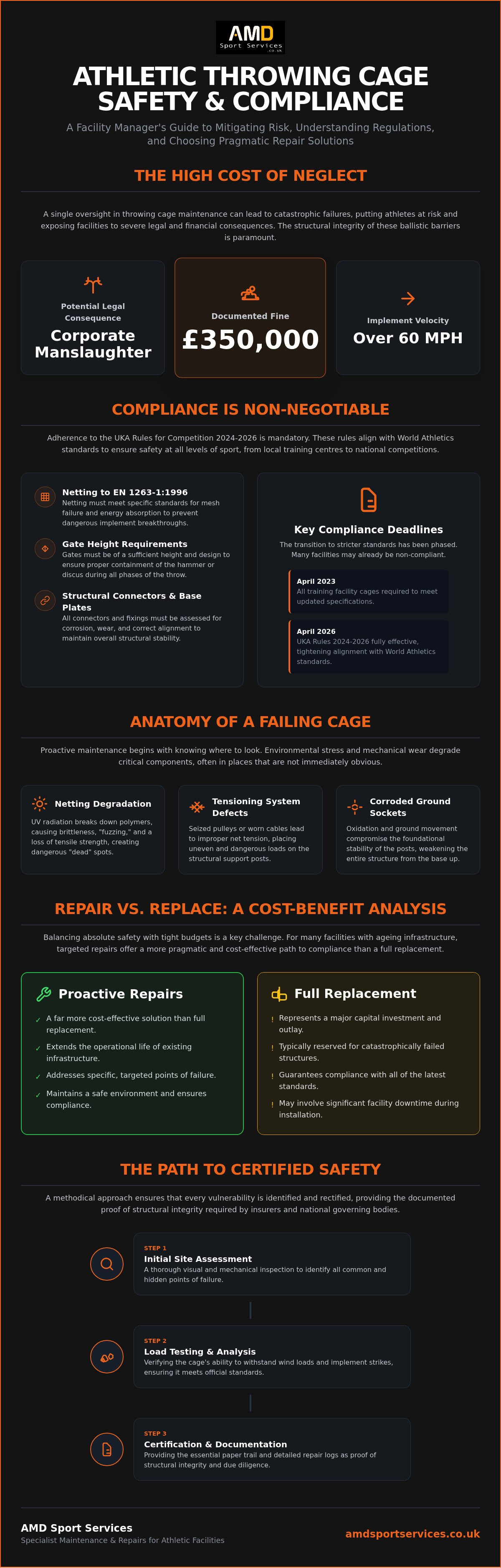
Could a single missing base plate or an overlooked connector really lead to a £350,000 fine and a charge of corporate manslaughter? For many facility managers, the fear of a safety inspection failure is a constant pressure, particularly when aging equipment begins to show its age. Professional athletic throwing cage repairs offer a pragmatic alternative to the massive capital outlay of a full replacement. It's a matter of technical precision and adhering to the UKA Rules for Competition 2024-2026, which demand that all cages, including training facilities, meet strict safety specifications following the compliance deadlines of recent years.
We understand that you're balancing the need for absolute safety with the reality of tight budgets. This article explains how targeted maintenance and expert inspections can extend the operational life of your hammer and discus cages whilst ensuring they remain fully compliant with World Athletics standards. You'll learn about the latest SAPCA requirements, the importance of EN 1263-1:1996 netting, and how to secure the documented proof of structural integrity that your insurers and governing bodies require. We'll outline the process from the initial assessment through to the final, certified result.
Table of Contents
The Critical Importance of Athletic Throwing Cage Repairs
A throwing cage is more than just a perimeter fence; it is a critical ballistic barrier designed to contain high-velocity implements. When you consider that a hammer can travel at speeds exceeding 60 miles per hour, the structural integrity of the Hammer throw safety cage becomes a matter of life and death. Neglecting routine maintenance doesn't just shorten the equipment's lifespan. It creates a significant point of failure that puts athletes, officials, and spectators at risk. Professional athletic throwing cage repairs focus on identifying these vulnerabilities before they manifest as catastrophic structural collapses or implement breakthroughs.
Pragmatic facility management requires a balance between budget constraints and safety obligations. Whilst a full cage replacement is a major capital investment, proactive maintenance allows schools and leisure centres to extend the operational life of their existing infrastructure. By addressing corrosion in ground sockets or replacing UV-degraded netting, you can maintain a safe environment without the need for total decommissioning. We focus on technical proficiency to ensure every repair meets the rigorous demands of modern athletics.
UKA and World Athletics Compliance Standards
Adherence to the UKA Rules for Competition 2024-2026 is a non-negotiable requirement for any facility hosting sanctioned events or training sessions. The current regulations, effective as of April 1, 2026, have tightened the alignment with World Athletics standards. This includes specific mandates for netting density and gate heights that many older installations fail to meet. For instance, all cages at training facilities were required to meet updated specifications by April 2023. Our sports equipment safety inspections help facility managers identify where their current setup falls short of these evolving benchmarks.
Verification of gate height requirements to ensure proper implement containment.
Testing of netting to EN 1263-1:1996 standards to prevent mesh failure.
Assessment of structural connectors and base plates for alignment with World Athletics product certificates.
Liability and Risk Management for Facility Managers
The legal consequences of equipment failure are severe. In June 2026, UK Athletics was fined £350,000 following a tragic fatality involving an incorrectly assembled practice cage. The court found the incident was wholly avoidable, highlighting a five-year pattern of improper assembly and neglected maintenance. This case underscores the necessity of documented proof of structural integrity for health and safety audits. Professional athletic throwing cage repairs provide the necessary paper trail to satisfy insurers and governing bodies that you have exercised due diligence. Detailed repair logs and inspection certificates are your primary defence against claims of negligence, proving that the equipment is fit for purpose and maintained by competent specialists.
Identifying Common Points of Failure in Throwing Cages
A throwing cage is a complex mechanical assembly that remains under constant environmental stress. Whilst the impact of a high-velocity implement is the most obvious threat, the slow degradation caused by UV exposure, oxidation, and ground movement often poses a greater risk to long-term safety. Understanding where these structures typically fail allows facility managers to prioritise athletic throwing cage repairs before a minor defect becomes a major liability. These failures are rarely isolated; a seized pulley often leads to improper net tensioning, which in turn places uneven loads on the structural support posts.
Specialist athletic throwing cage repairs often start with a focus on hidden mechanical components. For example, the linking connectors between frame segments are critical for structural stability. If these are neglected or improperly fitted, as seen in historical safety incidents, the entire cage loses its ability to withstand wind loads or implement strikes. Regular monitoring of these specific points of failure is the only way to ensure the equipment remains fit for purpose.
Netting and Tensioning System Defects
The netting serves as the primary energy-absorption barrier. Over time, UV radiation breaks down the polymer chains in the mesh, leading to "dead" spots where the material becomes brittle and loses its tensile strength. If the netting shows visible "fuzzing" or feels stiff to the touch, it likely no longer meets the EN 1263-1:1996 standard required for safety. Mechanical failure within the hoisting system is equally common. We frequently identify the following issues during assessments:
Seized pulley bearings that prevent the net from being lowered during high winds.
Frayed hoisting ropes or rusted wire cables that risk a sudden net drop.
Improperly weighted bottom edges that allow the net to billow, compromising the safety zone.
Structural Integrity and Metalwork Issues
Corrosion is a silent threat that usually begins where the steel meets the ground. Ground sockets are prone to water pooling, which accelerates the oxidation of galvanised steel from the inside out. By the time rust is visible on the surface, the structural wall thickness may already be compromised. Gate alignment is another critical factor. Because hammer and discus gates are exceptionally heavy, the hinges are subject to immense leverage. Over years of use, these hinges can sag or seize, making it impossible to set the gates at the precise angles required by UKA regulations. Hairline fractures at weld points on cross-members are also common, particularly in facilities located in exposed, high-wind areas.
Identifying these defects early can prevent the need for a total facility overhaul. If you are concerned about the current state of your equipment, arranging a professional safety inspection is the most pragmatic first step toward maintaining compliance.
Repairing vs. Replacing: A Cost-Benefit Analysis
Deciding between a targeted refurbishment and a total asset replacement requires a clear-eyed assessment of the "Economic Repair Limit". For many facility managers, the immediate reaction to a failing safety inspection is to price a new installation. However, the structural frames of many hammer and discus cages are designed for extreme durability. If the core galvanised steel remains sound, investing in athletic throwing cage repairs can restore full compliance at a fraction of the cost of a new build. This pragmatic approach focuses on extending the lifecycle of existing infrastructure rather than defaulting to decommissioning.
The environmental impact of this decision shouldn't be overlooked. Refurbishing a cage is inherently more sustainable than a total replacement. It reduces the demand for new steel production and prevents tonnes of metal from entering the waste stream. By focusing on high-quality athletic throwing cage repairs, such as replacing UV-degraded netting or modernising gate mechanics, you maintain high safety standards whilst significantly reducing your facility's carbon footprint. We evaluate each structure based on its technical viability, ensuring that any repair provides a genuine, long-term return on investment.
When to Opt for Professional Repairs
Repairs are the logical choice when the structural skeleton is healthy but the functional components have reached the end of their service life. This is particularly relevant for cages that require minor modifications to meet updated safety apertures or gate height requirements. Targeted interventions can resolve many common issues:
Replacing localised areas of damaged netting to restore implement containment.
Refurbishing gate hinges and alignment to ensure they operate smoothly and safely.
Upgrading hoisting systems and pulleys to reduce the manual labour required by ground staff.
Applying specialist anti-corrosion treatments to ground sockets to prevent future structural failure.
Indicators for Full Cage Replacement
There is a threshold where repair is no longer the responsible option. We generally advise a full replacement when cumulative repair costs exceed 60% of a new installation's value, or when safety can no longer be guaranteed. If the internal walls of the support posts show significant thinning due to oxidation, the structure may no longer withstand the wind-loading requirements set out in UKA regulations. Additionally, some obsolete cage designs are physically impossible to modify to meet modern safety standards. In these cases, a new, World Athletics-certified installation is the only way to ensure the long-term safety of your athletes and spectators. A professional safety inspection will provide the technical data needed to make this final determination.
The Professional Throwing Cage Repair Process
Effective athletic throwing cage repairs require a methodical, step-by-step approach that moves from technical diagnosis to physical remediation. We begin every project with a comprehensive site assessment. This isn't a simple visual check; it involves structural load testing and a rigorous review of every mechanical connector. By identifying safety-critical defects early, we can provide facility managers with a prioritised report that distinguishes between immediate hazards and long-term maintenance needs. This process ensures that every penny of the repair budget is directed toward the most critical structural issues first. It moves the facility from a reactive "patch-and-pray" mindset to a proactive, documented maintenance strategy.
Our reporting phase provides the transparency needed for public-sector decision-makers. We detail exactly which components fail to meet the UKA Rules for Competition 2024-2026 and provide a clear roadmap for remediation. This level of technical honesty is what defines a seasoned practitioner. We don't just point out problems; we detail the specific engineering solutions required to fix them. This ensures that the finished result isn't just a temporary fix but a long-term restoration of the cage's structural integrity.
Specialist Netting Replacement and Patching
Selecting the correct mesh size and energy rating is vital for implement containment. A hammer throw requires different netting characteristics than a discus throw, particularly regarding energy absorption and mesh density. Our athletic throwing cage repairs involve selecting UV-stabilised netting specifically designed to withstand the unpredictable UK climate and prevent the "fuzzing" that leads to mesh failure. For localised damage, we utilise professional knotting techniques to create high-strength patches that are virtually indistinguishable from the original mesh. For more extensive wear, we perform full netting replacements using bespoke systems that meet the EN 1263-1:1996 standard.
Mechanical and Structural Remediation
The mechanical health of a cage depends on the hardware that supports its immense weight. We prioritise the installation of marine-grade pulleys and stainless steel shackles to prevent the premature corrosion common in exposed athletics tracks. Re-aligning gates is a technical task that requires servicing heavy-duty hinges to ensure they move freely without placing undue stress on the support posts. See our service and maintenance page for more on equipment longevity. Once physical repairs are complete, we issue a post-repair certificate of compliance. This document is essential for your facility's maintenance log, providing the documented proof of structural integrity required for safety audits and insurance renewals.
Ensure your facility meets the latest UKA safety standards by booking a specialist throwing cage inspection today.
Specialist Throwing Cage Maintenance Across the UK
AMD Sport Services provides national coverage for athletic throwing cage repairs, ensuring that facilities from the Scottish Highlands to the South Coast have access to expert technical support. We recognise that every site presents unique mechanical challenges. A coastal athletics track faces different corrosion risks compared to a sheltered school field. Our approach is rooted in bespoke problem-solving. We don't offer generic fixes. Instead, we apply technical proficiency to restore specific structural components, ensuring that your hammer and discus cages remain compliant with UKA standards regardless of their age or original manufacturer.
By maintaining these high-risk structures, we help provide the safe training environments necessary for the next generation of British throwers. A reliable cage allows athletes to focus on their technique without the distraction of equipment failure. Our commitment to using high-grade, durable materials ensures that once a repair is completed, the structure is capable of withstanding the rigours of both daily training and high-level competition. We take pride in solving the mechanical issues that standard equipment providers often ignore.
Serving Schools, Councils, and Athletics Clubs
Managing maintenance within the public sector requires an understanding of strict operational windows. We frequently coordinate athletic throwing cage repairs during school holidays or the athletics off-season to minimise disruption to training schedules. Our team provides the comprehensive documentation required for local authority compliance, including detailed risk assessments and method statements. We ensure that every project is logged correctly, providing a clear audit trail for facility managers. Explore our previous installations and projects for quality assurance and evidence of our national track record.
Coordination with site managers to work around term-time restrictions.
Provision of technical reports suitable for insurance and governing body audits.
Use of industry-approved materials that exceed minimum safety requirements.
Bespoke fabrication for components no longer available from original manufacturers.
Why Experience Matters in Athletics Repairs
Athletics equipment maintenance is a specialist field that standard building contractors often lack the expertise to handle. The "Seasoned Practitioner" approach means we understand the nuances of gate leverage, net tensioning, and structural wind-loading. We solve the mechanical challenges that others ignore, such as bespoke hinge fabrication or the restoration of obsolete hoisting systems. Our goal is to provide technical honesty; if a structure can be safely repaired, we'll fix it. If it's truly beyond its economic repair limit, we'll explain the technical reasons why. Contact AMD Sport Services to organise a safety inspection today and ensure your facility remains a safe, compliant environment for all users.
Securing the Future of Your Athletics Facility
Ensuring the safety of your throwing area is a continuous responsibility that extends far beyond the initial installation. Adhering to the UKA Rules for Competition 2024-2026 allows facility managers to mitigate the risks associated with high-velocity implements. Compliance is non-negotiable. Identifying common points of failure, such as UV-degraded netting or corroded ground sockets, enables targeted interventions that prevent catastrophic failure.
Opting for professional athletic throwing cage repairs is a pragmatic way to restore structural integrity whilst managing tight institutional budgets. Our team provides UKA-compliant safety inspections and bespoke netting and structural repairs across the country. This approach provides the documented proof of compliance required by insurers and governing bodies. Whether you're managing a school field or a regional centre, our national UK specialist coverage ensures expert support is always available.
Take the first step toward a safer facility. Request a Professional Throwing Cage Inspection and Repair Quote today. We're ready to help you maintain a safe, compliant environment for every athlete.
Frequently Asked Questions
How often should an athletics throwing cage be inspected for safety?
Professional safety inspections should be carried out at least once every twelve months to maintain facility certification. You should also conduct informal visual checks before every training session or competition to identify immediate hazards like loose connectors or fresh netting tears. Following severe weather events or high winds, a supplementary inspection of the tensioning system and base plates is highly recommended to ensure no structural shifting has occurred.
Can we repair a throwing cage net ourselves using standard netting?
You shouldn't attempt DIY repairs using standard sports netting or garden mesh. Throwing cage netting must meet the EN 1263-1:1996 standard for energy absorption to safely contain high-velocity implements. Standard netting lacks the tensile strength and UV stabilisation required to prevent implement breakthroughs. Professional athletic throwing cage repairs utilise specialised knotting techniques and certified materials to ensure the barrier remains a ballistic-grade safety feature.
What are the current UKA gate height requirements for hammer cages?
Current UKA and World Athletics specifications generally require hammer cage gates to be a minimum of 7 metres high, though many modern championship cages utilise 10-metre gates for enhanced protection. These heights are designed to prevent the hammer from travelling over the structure at steep release angles. It's vital to verify your specific gate configuration against the UKA Rules for Competition 2024-2026 to ensure full compliance for sanctioned events.
How long does a typical throwing cage repair project take to complete?
A standard repair project usually takes between two and five working days to complete once on-site. This timeframe includes the initial structural assessment, the removal of old components, physical remediation of metalwork, and the final tensioning of the netting system. Complex mechanical issues, such as bespoke hinge fabrication or ground socket replacement, may extend this duration. We always provide a clear schedule of works before commencing any physical labour.
Is it possible to upgrade an old discus cage to a combined hammer/discus cage?
Upgrading is often possible provided the existing foundations and support posts can withstand the significantly higher wind-loading and implement impact forces of a hammer cage. We must conduct a structural load test and foundation assessment before recommending an upgrade. If the current frame is sound, we can often modify the gate apertures and install the necessary concentric circles to meet World Athletics standards without a total replacement.
What causes the most damage to throwing cages in the UK?
UV degradation and ground-level oxidation are the primary causes of equipment failure in the UK climate. Constant exposure to sunlight breaks down the polymer chains in the netting, making it brittle and prone to snapping upon impact. Simultaneously, water pooling in ground sockets causes galvanised steel to rust from the inside out. These hidden defects are why professional athletic throwing cage repairs focus so heavily on structural integrity rather than just cosmetic patches.
Do you provide safety certification after a cage repair is completed?
Yes, we provide a detailed technical report and a certificate of structural integrity upon completion of the works. This documentation is essential for your facility's health and safety audit trail and provides the proof required by insurers that the equipment is fit for purpose. The report includes a summary of the repairs performed, the materials used, and a confirmation that the structure meets current UKA safety benchmarks.
Are there specific netting requirements for schools versus professional clubs?
The safety standards for netting don't change based on the type of facility; the EN 1263-1:1996 standard applies to schools, local authorities, and professional clubs alike. Whilst a school might not require a championship-spec 10-metre gate system, the mesh itself must still possess the energy-absorption capacity to contain a senior-weight implement. Safety is a universal requirement, and using sub-standard netting in an educational setting creates a significant liability risk.


Comments