
Motorised Basketball Goal Installation UK: A Facilities Manager’s Guide

How much time does your team spend wrestling with manual winches just to clear the floor for a five-a-side booking? If you're managing a busy multi-use sports hall, you'll know that manual systems aren't just slow; they represent a genuine health and safety risk for your staff. When you're balancing tight schedules with the need to maximise floor space, every minute lost to outdated equipment is a minute of lost revenue.
Investing in motorised basketball goal installation UK is a pragmatic move that addresses these operational bottlenecks head-on. By transitioning to a push-button system, you replace physical strain with reliable, automated performance. This guide will walk you through the essential technical considerations, from structural integrity assessments of your roof beams to ensuring your equipment meets the BS EN 1270:2005 safety standard. We'll outline how professional installation provides a safer working environment for your team and a more versatile space for your users, ensuring your facility remains both compliant and highly efficient.
Table of Contents
The Shift to Motorised Basketball Goal Systems in the UK
The landscape of UK sports facility management is changing. Manual equipment is being phased out in favour of automated solutions that prioritise both user experience and staff welfare. Motorised basketball goals are electrically driven systems designed to retract the entire goal assembly when it's not in use. This shift is driven by a pragmatic need for higher safety standards, faster turnaround times, and increased hall versatility.
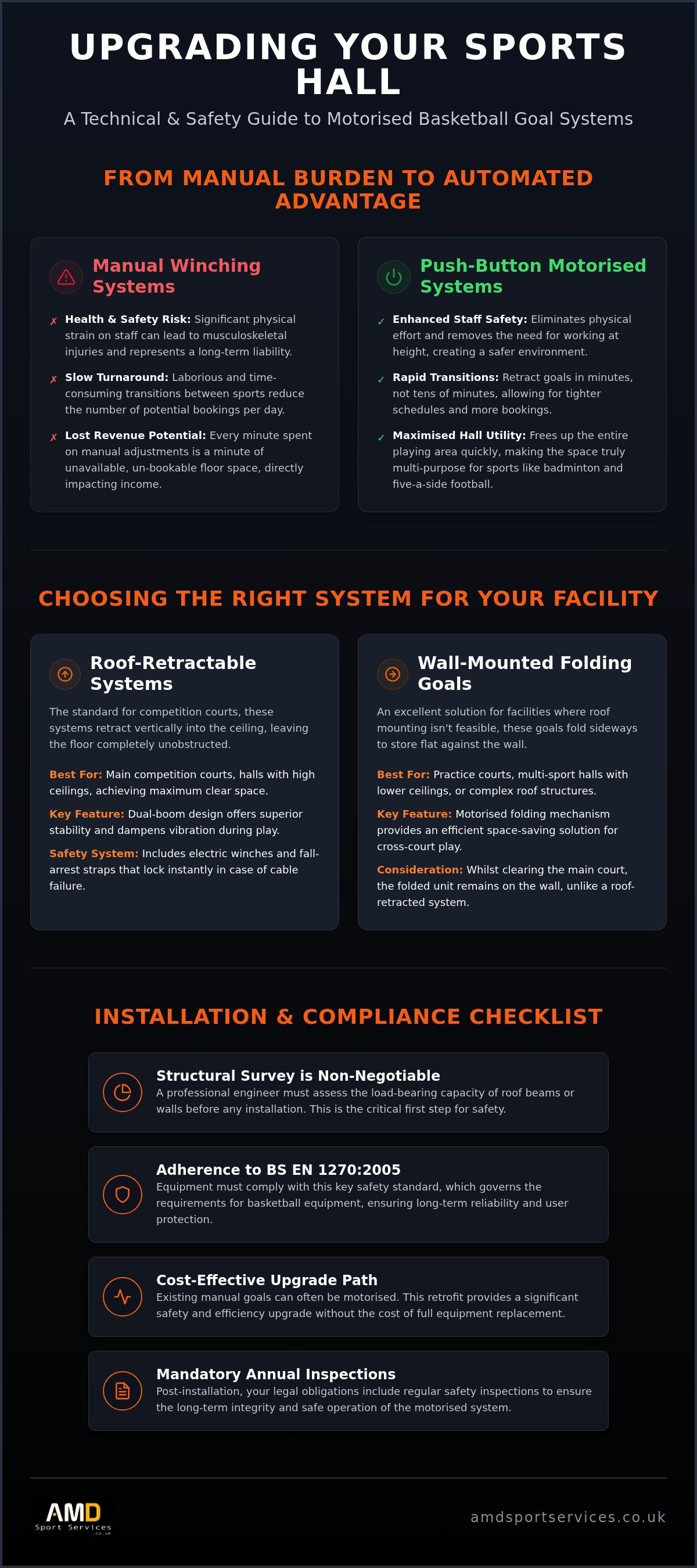
For many schools and leisure centres, manual winching is now seen as a liability. It requires physical effort and carries inherent risks of repetitive strain or injury. Modern motorised basketball goal installation UK projects focus on removing these hazards. These systems often feature secondary safety devices, such as load-limited motors and safety wires, to ensure the structure remains secure. Adopting these technologies helps facilities align with Sport England design guidance and BS EN 1270:2005 standards, which are the recognised benchmarks for playing field equipment.
Improving Staff Health and Safety
The primary benefit of an automated system is the protection of your workforce. Manual winch handles require significant torque to operate, which can lead to musculoskeletal injuries for site teams over time. By installing a push-button control system, you eliminate this physical strain entirely. It's a simple change that makes a significant difference to daily operations.
Automation also removes the need for "working at height" during routine equipment adjustments. In modern educational environments, providing a safe, accessible method for equipment deployment is a key part of meeting health and safety obligations. You can find more detail on maintaining these systems in our guide to indoor inspection and maintenance, which outlines the compliance requirements for motorised units.
Maximising Multi-Sport Hall Utility
Multi-use sports halls are the backbone of community fitness in the UK. A single hall might host basketball at 4 PM, badminton at 6 PM, and five-a-side football at 8 PM. Retractable systems allow these transitions to happen in minutes rather than being a laborious chore for the caretaker.
Roof-mounted dual-boom systems are particularly effective for this purpose. They lift the Basketball Backboard and goal frame completely out of the playing zone, clearing the way for high-clearance sports like badminton. This versatility is essential for meeting UK facility standards that encourage flexible hall designs. With a professional motorised basketball goal installation UK, facilities managers can organise tighter schedules and accommodate more bookings, directly impacting the hall's revenue potential and service delivery.
Types of Motorised Basketball Goal Installation
Selecting the correct system for a facility depends on building geometry, roof height, and intended usage frequency. A pragmatic approach considers both roof and wall-mounted options to ensure the equipment integrates seamlessly with other hall fixtures. Whether you are managing a new build or upgrading an existing hall, the motorised basketball goal installation UK process must start with a clear understanding of these mechanical configurations.
Roof-Retractable Systems for Matchplay
Roof-mounted systems are generally considered the standard for main competition courts. These units retract upwards into the ceiling void, leaving the floor area completely unobstructed for other sports. For maximum stability and vibration dampening during play, dual-boom designs are preferred over single-boom alternatives. The dual-boom structure provides a rigid frame that prevents the backboard from swaying after a shot or dunk.
Safety is integrated into the mechanical design through electric winches and fall-arrest systems. These safety "straps" act like a car seatbelt; if the winch cable were to fail, the fall-arrest block locks instantly to prevent the goal from dropping. All such installations must adhere to the BS EN 15312 Safety Standard, which governs the requirements for multi-sports equipment. Professional installers ensure that these systems include official backboards, pressure-release rings, and high-density padding to meet matchplay regulations.
Wall-Mounted Electric Folding Goals
Wall-mounted motorised goals are an excellent solution for secondary courts or halls with lower ceiling heights where roof mounting is not feasible. These units typically fold either sideways or upwards against the wall. Side-folding mechanisms are common when there is ample wall space, while upward-folding units are better suited for halls where side-wall clearance is limited by heaters, windows, or cricket nets.
The motors used for wall-mounted systems must be capable of handling heavy-duty steel frames and glass or acrylic backboards. It is vital to ensure the folding arc of the goal does not interfere with other hall fixtures. Specialist installers will often design bespoke steelwork to bridge the gap between the building's structural columns and the goal's mounting points. This ensures the load is distributed safely across the wall rather than relying on non-structural infill panels. If you're unsure which configuration fits your hall's layout, you can view our previous basketball goal installations to see how these systems are integrated into various UK facilities.
Every motorised basketball goal installation UK requires a tailored mounting solution. Standard "off-the-shelf" brackets rarely suffice for the complex structural demands of a modern sports hall. By using bespoke secondary steelwork, installers can provide a rock-solid foundation for the motors and winches, ensuring long-term reliability and reducing the need for frequent mechanical adjustments.
New Installation vs. Motorising Existing Basketball Goals
Deciding between a complete new motorised basketball goal installation UK and retrofitting your current equipment is a matter of technical assessment. For many facilities, the existing steelwork remains structurally sound, making motorisation a cost-effective alternative to a full replacement. This approach is particularly popular in UK schools where budgets are tight, but the need for improved staff safety is urgent. AMD Sport Services specialises in motorising roof mounted basketball goals, providing a pragmatic middle ground that upgrades performance without the disruption of a major construction project.
The Retrofitting Process
Retrofitting begins with a thorough evaluation of the existing goal's mechanical components. We assess the cable integrity, pulleys, and the original winch mounting points to ensure they can handle the transition to automation. The manual winch is removed and replaced with a high-torque electric motor, which is then integrated into the hall's power supply. It's a methodical process that focuses on reliability and technical proficiency.
Compliance is a critical factor during this transition. According to the Health and Safety Executive (HSE) guidance on equipment safety, any work equipment must be suitable for its purpose and regularly maintained. We ensure that retrofitted systems include modern safety features, such as torque-limiters and fail-safe braking systems, to meet these legal obligations. This process transforms a manual liability into a modern, push-button asset whilst retaining the value of your original investment.
When Full Replacement is Necessary
There are instances where retrofitting isn't the safest or most logical path. Older manual goals might suffer from structural fatigue in the steel frame, which could buckle under the consistent torque of an electric motor. If the frame shows signs of corrosion or metal stress, a full motorised basketball goal installation UK is the only responsible choice. We don't recommend motorising frames that show any signs of compromise, as the added mechanical force can exacerbate existing weaknesses.
Backboard materials also play a role in this decision. Older timber boards often warp or decay over time, losing the consistent rebound required for modern play. If your facility aims for FIBA-compliant standards for high-level competition, upgrading to new acrylic or glass backboards with high-grade safety padding is essential. In these cases, we design a bespoke system from the ground up. This ensures the new installation provides years of reliable service with minimal maintenance requirements, giving you a fresh start with fully compliant equipment.
The Technical Installation Process and Structural Requirements
A successful motorised basketball goal installation UK begins long before any hardware is unboxed. Unlike portable units, roof-mounted and wall-folding systems are complex structural engineering projects that become a permanent part of the building's fabric. You can't simply bolt these units to any available surface; they require a methodical assessment of the facility's load-bearing capacity and electrical infrastructure to ensure long-term safety and compliance.
The mandatory first step for any project is a comprehensive structural survey. A motorised goal assembly, including the backboard, frame, and motor, can weigh several hundred kilograms. When you factor in the dynamic forces of a player dunking or the vibration during play, the stress on the building's frame is significant. We assess the roof beam load-bearing capacity to determine if the existing steelwork can support a dual-boom system or if secondary steelwork is required to distribute the weight safely.
Structural Assessment and Bespoke Bracketing
Every UK sports hall has a unique roof configuration, ranging from traditional steel portals to complex timber glulam beams. During the assessment, we measure beam centres and identify the most secure fixing points. Because standard "off-the-shelf" brackets rarely fit these varied designs, we often design bespoke steel brackets to bridge the gaps between structural members. This ensures the "pull-out" force is safely distributed across the building frame rather than concentrated on a single point.
This technical precision prevents the structure from flexing or warping over time. It also ensures that the goal remains perfectly level, which is essential for consistent play. If your facility has older roof beams, this survey is even more critical to identify any existing metal fatigue before the installation begins. For more information on how we manage these technical challenges, you can explore our basketball goal installation services.
Electrical Integration and Safety Controls
The electrical requirements for a motorised system are equally specific. Most units require a dedicated 240v mains supply, which must be installed by a qualified electrician. We prioritise the placement of key-operated switches, typically located at a height that prevents unauthorised use by students or unauthorised personnel. This key-switch system is a standard security feature in modern educational environments, ensuring the equipment is only moved by trained staff.
Safety is further enhanced through the use of limit switches and fail-safe braking mechanisms. Limit switches are calibrated during the installation to ensure the motor stops precisely at the correct playing height and retracts fully into the ceiling void without over-straining the cables. In the event of a power failure or mechanical glitch, the fail-safe braking system locks the winch instantly. This rigorous approach to safety controls is what separates a professional installation from a generic equipment setup. If you're ready to upgrade your facility's operational efficiency, contact us for a professional site survey and installation quote today.
Post-Installation: Maintenance and Safety Inspections
The completion of a motorised basketball goal installation UK marks the beginning of a new operational lifecycle for your sports hall. Whilst automation reduces the physical burden on staff, it introduces mechanical and electrical complexities that require disciplined oversight. Facilities managers have a legal obligation to ensure that all work equipment remains safe for use, which necessitates a shift from reactive repairs to a proactive maintenance strategy. Regular sports equipment safety inspections are not merely a recommendation; they are a fundamental requirement for insurance compliance and user protection.
Motorised systems contain specific wear points that manual goals do not. Electric motors, gearbox assemblies, and limit switches operate under significant tension and must be calibrated precisely to prevent over-travel. Over time, motor brushes can wear down, and electrical connections may loosen due to the subtle vibrations caused by repeated use. By identifying these issues early, you protect your capital investment and avoid the high costs associated with emergency system failures.
The Annual Inspection Checklist
A professional inspection goes beyond a visual check. For roof-mounted systems, testing the fall-arrest safety mechanism is the priority. These inertia blocks must be triggered to ensure they lock instantly in the event of a cable failure. We also conduct a detailed examination of the lifting cables, looking for signs of fraying, kinking, or "bird-caging," where the individual wire strands begin to untwist and lose structural integrity.
Structural fixings also require regular verification. The constant torque from the motor and the dynamic impact of basketball play can, over years, affect the tightness of bolts in the ceiling or wall brackets. Our technicians check the torque levels of every primary fixing point to ensure the goal remains rock-solid. This methodical approach ensures your facility stays compliant with BS EN 1270:2005 standards throughout the equipment's lifespan.
Emergency Repairs and Servicing
In a busy multi-use hall, a faulty motorised goal can bring the entire schedule to a halt. If a goal is stuck in the "down" position, you cannot safely host badminton or five-a-side football. Rapid response for repairs is essential to maintain your hall's revenue and service delivery. We specialise in replacing gym cables and pulleys quickly, often identifying wear during routine servicing before a snap occurs.
Regular servicing also extends the functional life of the electric motor. By lubricating moving parts and cleaning the winch drum, we reduce the friction that causes motors to overheat. This "no-nonsense" approach to maintenance ensures that your motorised basketball goal installation UK remains a reliable, push-button asset for decades. Creating a long-term service plan allows you to budget effectively for minor part replacements, such as limit switches or pulleys, rather than facing the unexpected expense of a full motor burnout.
Upgrading Your Sports Hall for Long-Term Efficiency
Transitioning to automated systems is a pragmatic step towards improving staff welfare and maximising your facility's revenue potential. Whether you're retrofitting existing frames or investing in a completely new motorised basketball goal installation UK, success depends on technical precision and structural integrity. A professional survey ensures your roof beams can handle the mechanical loads, whilst bespoke bracketing provides the stability needed for high-level play.
AMD Sport Services provides national UK coverage for schools and leisure centres, bringing specialist expertise to both new systems and retrofitting projects. Our service range includes the comprehensive safety inspections necessary to keep your equipment compliant and operational year-round. By choosing a no-nonsense approach to installation and maintenance, you ensure your sports hall remains a safe, efficient, and versatile asset for the community.
Contact AMD Sport Services for a professional motorised basketball goal installation quote to start your facility's transition to automated equipment. We look forward to helping you streamline your hall operations with reliable, expert solutions.
Frequently Asked Questions
Do I need a structural engineer for motorised basketball goal installation?
A structural assessment is a mandatory requirement to ensure your building's frame can support the dynamic loads of the equipment. Whilst our technicians perform the initial site survey, a formal engineer's report is often necessary for older buildings or complex roof designs. This process confirms that the added weight of the motor and steelwork won't compromise the integrity of your sports hall's ceiling or walls.
Can any manual basketball goal be converted to a motorised system?
Most manual roof-mounted goals can be retrofitted if the existing steel frame is structurally sound and free from metal fatigue. We evaluate the winch mounting points and cable pathways during our technical assessment. If the original frame is severely corroded or outdated, we will recommend a full motorised basketball goal installation UK to ensure the system meets current safety and performance standards.
What are the electrical requirements for a motorised basketball goal?
Motorised systems typically require a dedicated 240v mains power supply with a fused spur located near the motor assembly. The control system uses a key-operated switch, usually positioned at a height that prevents unauthorised access by students. A qualified electrician must perform the final wiring to comply with UK building regulations and ensure the emergency stop functionality works correctly within your facility.
How long does the installation of a motorised system typically take?
A standard installation for a pair of goals usually takes between two to four days, depending on the complexity of the roof structure. Retrofitting motors to existing goals is often a faster process than a full new installation. We coordinate with your facility team to schedule the work during quiet periods, ensuring minimal disruption to your sports hall bookings and school activities.
Are motorised basketball goals safer than manual ones?
Motorised goals are significantly safer because they eliminate the physical risks associated with manual winching and repetitive strain for your staff. These systems include integrated safety features like fall-arrest blocks and limit switches that prevent mechanical over-travel. Automation ensures the equipment stops at the exact height required, which reduces the chance of human error during the setup of matchplay equipment.
How often do motorised basketball goals need to be inspected?
Motorised goals require a professional safety inspection at least once every 12 months to remain compliant with BS EN 1270:2005. Because these systems have more moving parts and electrical components than manual versions, regular checks are vital. These inspections identify early wear in the lifting cables and motor brushes, preventing unexpected system failures that could lead to lost revenue from hall bookings.
What happens if there is a power cut whilst the goals are lowered?
Most motorised systems feature a fail-safe braking mechanism that locks the goal frame instantly if power is lost. This prevents the equipment from dropping and ensures it remains securely in its current position. Whilst you cannot raise or lower the goals without power, the braking system provides peace of mind that the structure is safe until the electricity supply is restored.
Is there a weight limit for roof-mounted motorised goals?
The weight limit is primarily determined by the load-bearing capacity of your building's structural beams rather than the motor. During a motorised basketball goal installation UK, we calculate the dynamic forces and "pull-out" weight to ensure the installation stays within safe limits. We often use bespoke bracketing to distribute the weight across multiple roof members if the original structure has limited capacity.


Comments