
Playground Safety Surfacing: The UK Facility Manager’s Guide 2026

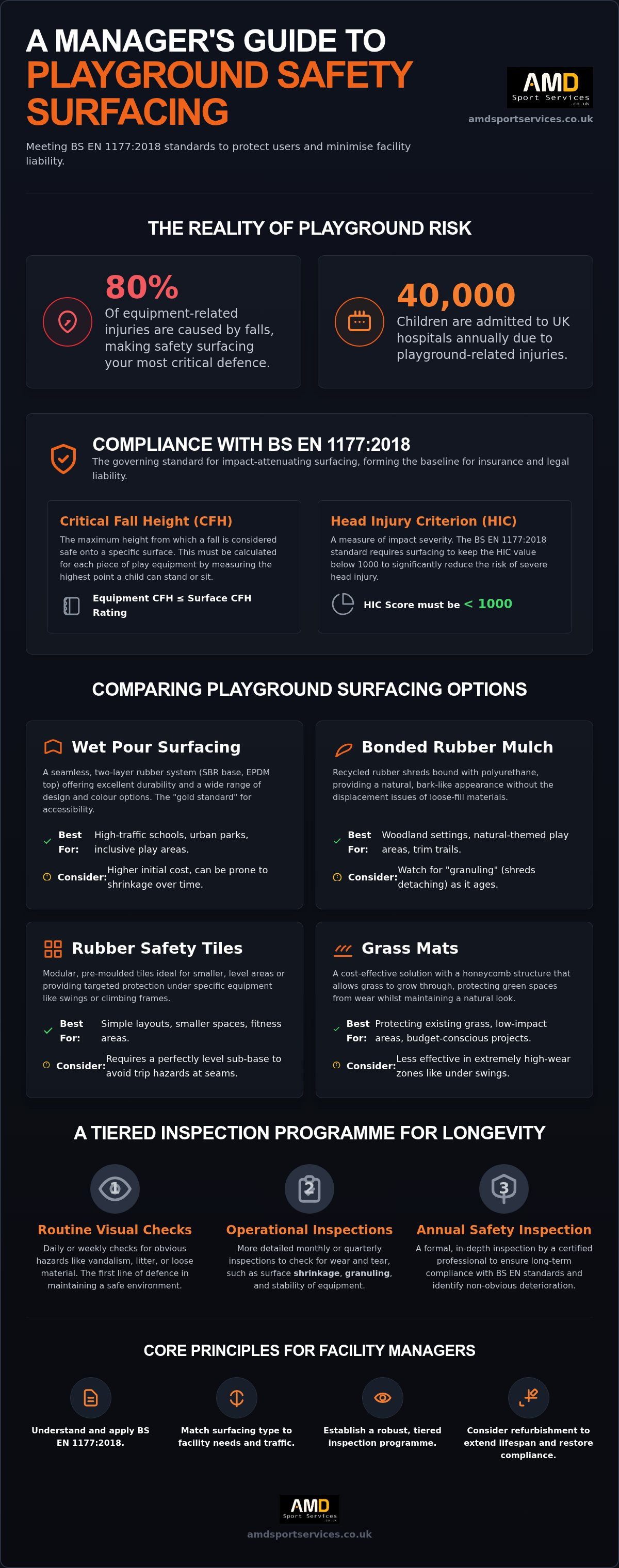
With approximately 40,000 children admitted to UK hospitals annually due to playground injuries, the margin for error in your facility's design is practically non-existent. Research indicates that 80% of equipment-related accidents stem from falls, making your choice of playground safety surfacing the most critical factor in risk management. You likely feel the pressure of navigating complex BS EN 1177:2018 regulations whilst trying to avoid the high costs of surface failure or potential injury claims.
This guide serves as a pragmatic resource for facility managers to select, install, and maintain surfacing that meets current British standards and ensures long-term compliance. We will break down the technical requirements for Critical Fall Height (CFH) and Head Injury Criterion (HIC) to help you make informed procurement decisions. From comparing the durability of wet pour and rubber mulch to establishing a robust inspection programme, this article provides the professional framework needed to reduce maintenance overheads and secure safety certification for 2026 and beyond.
Table of Contents
Understanding British Safety Standards and Critical Fall Height (CFH)
Managing a play facility in the UK requires more than just keeping equipment in good repair. You must ensure that the floor beneath the apparatus is technically capable of absorbing impact. BS EN 1177:2018 is the governing standard for impact-attenuating playground safety surfacing. It dictates how materials must perform to reduce the severity of head injuries. Whilst some might argue that these standards aren't strictly "law", they form the baseline for insurance compliance and legal liability. If an accident happens, an insurer will look for proof that your surfacing meets these specific performance criteria. Ignoring these benchmarks often leaves organisations vulnerable during injury claims.
The Legal Framework for UK Playgrounds
The Health and Safety at Work Act 1974 places a clear duty of care on facility managers to provide a safe environment for all users. For schools and local authorities, this means managing the risk of falls, which account for 80% of playground injuries according to industry data. Professional installation and regular safety inspections act as your primary defence against negligence claims. When you invest in certified surfacing, you aren't just buying a product; you're securing a documented safety record that proves you've met your statutory obligations. This proactive approach significantly mitigates the financial and reputational risks associated with long-term liability.
Calculating Critical Fall Height Requirements
Critical Fall Height (CFH) is the maximum height of fall for which a surface provides an acceptable level of impact attenuation. To determine your requirements, you must measure the highest potential fall point on each piece of apparatus. This isn't always the highest point of the structure; it's the highest point a child can stand or sit on during normal play. Once this height is established, you must select a material depth that exceeds it. For example, a climbing frame with a 2.5-metre fall height requires a significantly thicker layer than a small spring rocker. Different types of playground surfacing have varying absorption capacities. Choosing the correct depth for your playground safety surfacing is the only way to guarantee the Head Injury Criterion (HIC) remains below the dangerous 1,000 threshold. Matching the material specification to the equipment is a technical necessity that requires precision during the planning stage.
Comparing Primary Types of Playground Safety Surfacing
Selecting the right material involves balancing aesthetic goals with the technical requirements of BS EN 1177. According to RoSPA play surfacing advice, the choice often depends on the specific site conditions and expected usage levels. Every site has unique challenges, from drainage issues to high-traffic "wear zones" under swings and slide exits. Understanding the physical properties of each material is the first step in ensuring a long-lasting installation.
The primary options for modern facilities include:
Wet Pour Surfacing: A seamless, two-layer rubber system that offers excellent accessibility and durability. It's the most common choice for urban parks and schools.
Bonded Rubber Mulch: Recycled rubber shreds bound with polyurethane. It provides a rustic, bark-like appearance without the maintenance headache of loose-fill materials.
Rubber Safety Tiles: Modular, pre-moulded tiles that are ideal for smaller, level areas or providing targeted protection under specific items of equipment.
Grass Mats: Honeycomb-structure mats that allow grass to grow through. These are a cost-effective way to protect green spaces whilst maintaining a natural look.
Synthetic vs. Natural-Look Solutions
EPDM (Ethylene Propylene Diene Monomer) is the industry standard for the wear layer in wet pour systems because it resists UV degradation and is available in a wide range of colours. In contrast, bonded mulch typically uses SBR (Styrene Butadiene Rubber) which is dyed to look like wood bark. Whilst mulch blends perfectly into woodland settings, it requires more vigilance as it ages. You should watch for "granuling", where the rubber shreds begin to detach from the binder. Wet pour remains the "gold standard" for inclusive play, as its seamless finish allows for easy wheelchair and pushchair access that textured mulch cannot always provide.
Performance and Durability Comparison
For high-traffic school playgrounds, durability is paramount. A professionally installed wet pour surface can last 10 to 15 years with proper care, whereas rubber mulch may require localised top-ups or repairs every 3 to 5 years in high-use areas. Weather resistance is another critical factor. Unitary surfaces like wet pour and tiles offer superior drainage, allowing playgrounds to remain usable immediately after heavy rain. If you're unsure which material fits your budget and site constraints, our team can provide a professional assessment of your current facility to determine the most viable playground safety surfacing for your needs.
Selection Criteria for Schools and Public Leisure Facilities
Choosing the right playground safety surfacing for a school or public park requires a pragmatic assessment of both usage patterns and environmental constraints. In high-traffic educational settings, the surface must withstand intense, concentrated footfall during break times and physical education lessons. Whilst a lower-cost material might seem attractive during the initial procurement phase, poor-quality installations often degrade within three to five years. This leads to "granuling" or shrinkage that compromises safety and necessitates expensive repairs. A seasoned facility manager looks at the total cost of ownership over a ten-year cycle, prioritising materials that maintain their integrity under constant use.
Accessibility and Inclusive Play
Modern play areas must be accessible to every child, regardless of their physical abilities. This means moving beyond basic safety and considering SEND (Special Educational Needs and Disabilities) compliance. Unitary surfaces like wet pour rubber provide the level access required for wheelchair users and those with mobility aids. When selecting a surface, you must also verify its slip resistance in both wet and dry conditions. Adhering to the BS EN 1177 safety standard ensures that the material provides consistent impact attenuation across the entire play zone, not just directly under the equipment.
Environmental and Site Factors
Your site's topography and drainage capacity will dictate which surfacing is viable. For areas with poor natural drainage, a porous sub-base is essential to prevent standing water, which can accelerate the degradation of the rubber binder. Topography also plays a role; whilst wet pour is versatile on slopes, rubber tiles require a perfectly flat sub-base to prevent tripping hazards at the joints. You should also consider UV stability. Using high-quality EPDM colours prevents the surface from fading and becoming brittle under direct sunlight, which is a common cause of premature failure in south-facing playgrounds.
For facilities that combine play areas with athletics infrastructure, it's vital to ensure a seamless transition between different zones. We often see playground safety surfacing integrated alongside long jump runways or multi-use games areas. Coordinating these installations ensures that the sub-base construction is consistent across the site, preventing "sinkage" at the borders where two different materials meet. This holistic approach to site management reduces long-term maintenance overheads and ensures the entire facility remains compliant with national safety standards.
The Importance of Regular Safety Inspections and Maintenance
Routine checks are the first line of defence for any facility manager. Site staff should perform weekly visual inspections to spot obvious hazards like vandalism or litter. However, these don't replace the technical rigour of a professional annual inspection. Over time, environmental factors like UV radiation and heavy frost cycles take a toll on rubberised materials. UV exposure can cause the binder to become brittle, leading to "granuling" where the rubber crumbs break away from the surface. Similarly, water ingress followed by freezing can expand existing micro-cracks, eventually causing the surface to lift or split. This degradation doesn't just look poor; it actively reduces the impact attenuation of your playground safety surfacing.
Identifying early signs of failure is critical for cost-effective site management. You should monitor for:
Shrinkage: Gaps appearing between the surfacing and the perimeter kerbs or equipment legs.
Cracking: Surface splits that indicate a sub-base issue or binder failure.
Granuling: Loose rubber particles accumulating on the surface, which suggests the polyurethane bond is failing.
Standing Water: Areas where the surface is no longer porous, often caused by dirt and silt blocking the drainage holes.
Developing a Maintenance Programme
A structured maintenance regime extends the lifespan of your playground safety surfacing and preserves its warranty. Regular cleaning is the most effective way to prevent moss and algae build-up, which can make the surface dangerously slippery. We recommend periodic pressure washing with a low-pressure setting to clear the pores without damaging the rubber bond. Small repairs, such as patching a hole or re-sealing an edge, should be addressed immediately. If left unattended, minor damage quickly escalates into a trip hazard. For schools and councils requiring expert support, our service and maintenance programmes provide a proactive solution to facility management.
Professional Safety Compliance Audits
Whilst routine checks keep the site tidy, a professional safety compliance audit ensures the facility remains legally fit for purpose. During an AMD Sport Services inspection, we assess the structural integrity of the surfacing and verify that the impact absorption still meets the design specifications. We provide a detailed report that documents every finding, from minor wear to urgent safety concerns. A professional audit provides a certified record of compliance that is vital for insurance purposes. This documentation proves you have met your duty of care and provides a clear audit trail in the event of an accident claim. To ensure your facility remains compliant, consider scheduling a professional safety inspection to verify your surfacing integrity.
Professional Installation and Surface Refurbishment
Many facility managers assume that once playground safety surfacing begins to show signs of wear, a full and costly replacement is the only option. However, professional refurbishment often provides a viable alternative that restores safety compliance whilst extending the life of the existing asset. Unlike DIY repair kits that often fail to meet BS EN 1177 standards, specialist intervention focuses on the structural integrity of the entire play area. By addressing localised failures early, you can avoid the significant capital expenditure of a complete site overhaul. It's about being pragmatic with your budget whilst refusing to compromise on child safety.
Refurbishment vs. Full Replacement
The decision to refurbish or replace depends on the condition of the sub-base and the extent of the surface degradation. If the underlying foundation remains stable, over-coating is a highly effective technique. This involves cleaning the existing rubber thoroughly to remove silt and algae, applying a new primer, and then laying a fresh EPDM wear layer over the top. This process not only restores the slip resistance and impact attenuation but also gives the playground a completely new appearance. We often recommend refurbishment for schools with tight budgets where the surface is granuling but hasn't yet suffered from total sub-base failure. It's a technical process that typically costs a fraction of a full dig-out and reinstall.
Expert Installation Standards
The longevity of any playground safety surfacing is dictated by the quality of the sub-base. A common mistake in cheaper installations is neglecting the ground preparation, which inevitably leads to sinkage, cracking, and poor drainage. Professional installers prioritise a well-compacted, free-draining base of MOT Type 1 stone or porous macadam. This foundation ensures that the rubber layers remain stable and that the Critical Fall Height (CFH) rating is maintained over the long term. Secure perimeter edging is equally vital; without it, the edges of a wet pour or mulch surface will eventually lift and create trip hazards. Our team specialises in these technical details, ensuring every join is seamless and every edge is locked down. If your facility requires a professional assessment or a bespoke installation quote, contacting a seasoned practitioner is the first step toward a compliant and durable play area.
Securing Long-Term Compliance for Your Facility
Managing a play area is a continuous responsibility that extends far beyond the initial installation. By prioritising the technical requirements of BS EN 1177 and ensuring precise Critical Fall Height calculations, you protect both your users and your organisation's liability. Whether you're selecting new playground safety surfacing or refurbishing an existing site, success depends on sub-base integrity and proactive maintenance. Small, timely interventions prevent minor wear from escalating into hazardous failures that require a full site closure.
AMD Sport Services brings over 20 years of technical expertise to every project. We provide national UK coverage for all sports and play facilities, specialising in rigorous safety compliance audits. Our team doesn't just identify problems; we provide the physical repair and refurbishment solutions needed to restore safety standards. Don't leave your facility's safety to chance or DIY patches. Book your professional playground safety inspection with AMD Sport Services today to keep your facility safe and compliant.
Frequently Asked Questions
Is playground safety surfacing a legal requirement in the UK?
Playground safety surfacing is not a specific statutory requirement under UK law, but providing it is effectively mandatory to meet your legal duty of care. The Health and Safety at Work Act 1974 requires facility managers to ensure a safe environment for all users. Failing to install surfacing that meets BS EN 1177 standards often invalidates insurance policies and leaves organisations vulnerable to negligence claims following an accident.
What is the best safety surface for a school playground?
Wet pour rubber is widely considered the best option for school environments due to its exceptional durability and seamless finish. It provides a level surface that is fully accessible for wheelchair users and requires less day-to-day maintenance than loose-fill alternatives. For high-traffic areas under swings or slides, its ability to withstand constant footfall whilst maintaining its impact-attenuating properties makes it a pragmatic long-term investment.
How often should playground surfacing be inspected for safety?
You should follow a tiered inspection programme to ensure continuous compliance and user safety. This includes routine visual checks performed weekly by site staff to spot obvious damage or debris. Operational inspections should occur quarterly to assess wear levels more closely. Finally, a professional annual safety inspection is essential to provide a certified record of compliance for your health and safety documentation and insurance providers.
Can existing playground surfacing be repaired or refurbished?
Yes, existing surfaces can often be restored through professional refurbishment techniques like over-coating or localised patching. If the underlying sub-base remains structurally sound, a new wear layer can be applied to restore the appearance and safety performance of the area. This approach is a cost-effective alternative to a full replacement, provided that the repairs are carried out by specialists who can guarantee the surface still meets BS EN 1177 standards.
What is Critical Fall Height and why does it matter?
Critical Fall Height (CFH) is the maximum height of fall for which a surface provides an acceptable level of impact attenuation to prevent life-threatening head injuries. It matters because every piece of play equipment has a different fall risk based on its height. You must ensure your playground safety surfacing is thick enough to match or exceed the highest potential fall point on your specific apparatus to remain compliant with UK safety regulations.
How long does wet pour surfacing typically last?
A professionally installed wet pour surface typically has a lifespan of 10 to 15 years, depending on usage levels and maintenance consistency. Factors such as UV exposure, drainage quality, and the frequency of cleaning will influence its longevity. Regular inspections help identify early signs of binder failure or shrinkage, allowing for minor repairs that prevent the need for a premature full-scale replacement of the facility's surfacing.
Does rubber safety surfacing require much maintenance?
Rubber surfacing is relatively low-maintenance but requires regular attention to prevent the build-up of moss, algae, and silt. These contaminants can block the porous structure of the material, leading to standing water and slippery conditions. Periodically cleaning the surface with a low-pressure wash and removing organic debris will preserve the binder's integrity and ensure the playground remains safe for use in all weather conditions.
Are there specific surfacing requirements for athletics equipment like long jump pits?
Yes, athletics facilities require specific technical surfacing that differs from standard play areas. Long jump runways and high jump fans typically utilise polymeric materials or tartan track surfacing, which are designed for spike resistance and optimal energy return. These installations must meet distinct performance standards set by athletics governing bodies whilst still providing the necessary impact protection around landing zones to ensure athlete safety.


Comments