
Polyurethane Track Surfacing: A Comprehensive Guide for UK Facilities

Is your athletics facility a high-performance asset or a mounting financial burden? For many schools and leisure centres across the UK, the line between the two is often defined by the condition of their surfacing. You might be struggling with the escalating costs of frequent repairs on an outdated "Tartan" surface, or perhaps you're feeling the pressure of meeting the latest UK Athletics (UKA) TrackMark safety standards. It's a common challenge to distinguish between various synthetic systems while trying to justify a significant capital investment.
A modern polyurethane track is an engineered solution designed for durability and all-weather performance, provided you select the right specification for your specific usage. In this guide, we'll break down the technical specifications and performance benefits of different polyurethane systems, from porous spray coats to elite full-pour surfaces. You'll discover how to navigate current safety regulations and implement a maintenance programme that ensures long-term cost efficiency. We'll also clarify the differences between legacy surfaces and modern polyurethane technology to help you make an informed, practical decision for your facility.
Table of Contents
What is a Polyurethane Track? Understanding Synthetic Surfaces
A polyurethane track is a high-performance, all-weather synthetic surface engineered specifically for athletics and multi-sport use. It's constructed by combining rubber granules, typically SBR or EPDM, with a specialised polyurethane (PU) binder. This chemical bond creates a seamless, resilient finish that maintains its physical properties across a wide range of temperatures. Unlike legacy surfaces, modern PU systems are designed to provide consistent force reduction and energy return, making them the standard choice for both elite competition venues and school sports facilities across the UK.
Most facilities can expect a lifecycle of 8 to 12 years from a well-installed track before major refurbishment or re-topping becomes necessary. This longevity, combined with the surface's ability to withstand heavy use without deforming, makes it a pragmatic investment for local authorities and educational institutions. The material's porous or non-porous nature can be tailored to the specific drainage requirements of the site, ensuring the facility remains operational even during the wettest British months.
The Evolution of All-Weather Surfaces
Athletics infrastructure has changed significantly since the mid-20th century. Before the 1960s, most tracks were composed of cinder, clay, or crushed brick. These tracks were messy. They required constant grading and became unusable in heavy rain. The development of the All-Weather Running Track marked a turning point, allowing for consistent training conditions regardless of the climate. World Athletics, formerly the IAAF, played a central role in this transition by standardising surface requirements to ensure fair competition and athlete safety.
Environmental standards have also progressed. While early synthetic tracks sometimes contained mercury or other heavy metals as catalysts in the curing process, modern formulations are strictly regulated. Current polyurethane systems are non-toxic and eco-friendly, meeting stringent UK safety and environmental health protocols.
Tartan Track vs. Modern Polyurethane
The term "Tartan track" is frequently used as a generic description for any red synthetic surface, yet it actually refers to a specific brand developed by 3M in the 1960s. While Tartan was the pioneer, modern polyurethane track technology has surpassed those early iterations in both chemistry and installation methods. Today's facilities generally choose between pre-fabricated vulcanised rubber mats and in-situ poured systems.
In-situ systems are mixed and poured directly onto an asphalt or macadam base. This method is often superior for school environments because it allows for a seamless finish that accommodates slight irregularities in the sub-base. It's also easier to repair if the surface is damaged by improper footwear or equipment. Understanding these technical distinctions is vital for decision-makers who need a surface that balances high-level performance with the rigours of daily school use.
Common Polyurethane Track Systems and Technical Specifications
Selecting the correct polyurethane track system requires a clear understanding of your facility's primary users and the local environmental conditions. In the UK, three main configurations dominate the market. Each offers a different balance of performance, drainage, and cost. The longevity of these systems isn't just down to the surface itself; it's heavily reliant on the quality of the asphalt or macadam base layer. A stable, well-engineered sub-base prevents the cracking and shifting that lead to premature surface failure.
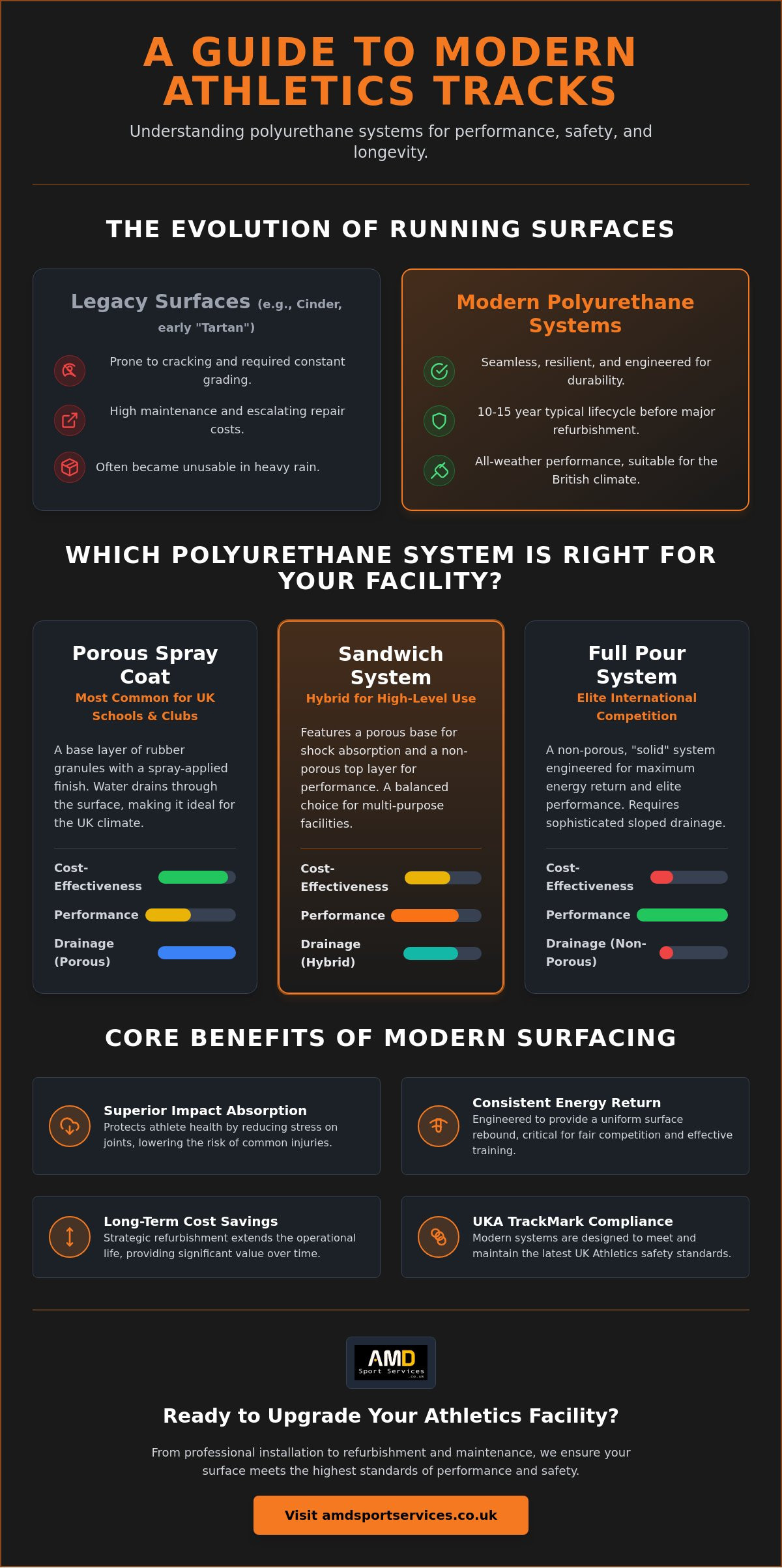
The mat and spray system, which consists of a base layer of rubber granules topped with a structural spray-applied finish, is the most common UK institutional choice.
Porous vs. Non-Porous Systems
Porous systems are designed to allow water to drain directly through the surface into the sub-base. This makes them ideal for the British climate, as it prevents standing water and allows for immediate use after rainfall. These are generally the most cost-effective option for educational environments. In contrast, non-porous or "solid" systems are water-resistant. They are engineered for elite performance and international competition, where a more rigid, high-rebound surface is required. Because water sits on top, these tracks require sophisticated drainage gradients to remain safe.
Sandwich systems act as a hybrid. They feature a porous base layer for shock absorption and a solid, non-porous top layer for added durability and grip. For facilities aiming to meet the World Athletics Track and Runway Synthetic Surface Testing Specifications, the choice between these systems will be dictated by the level of certification required. If you're unsure which system fits your site's drainage profile, consulting with specialists in safety surfacing can prevent costly specification errors.
The Layering Process
The construction of a synthetic track is a methodical, multi-stage process. It begins with the installation of the base mat, which consists of SBR rubber granules mixed with a high-grade polyurethane binder. This layer provides the essential cushioning needed to protect athletes' joints. Once the base mat has cured, a spray coat is applied. This is a mixture of fine EPDM granules and PU binder, sprayed under pressure to create a textured, slip-resistant finish.
Consistent thickness across the entire circuit is critical. Precise application ensures uniform shock absorption and energy return, which are vital for both safety and performance. To maintain the visual appeal and structural integrity of the track, the top coating must include high levels of UV stability. This prevents the vibrant colours from fading and stops the polyurethane from becoming brittle under sun exposure. A well-maintained top coat is the first line of defence against the abrasive wear of spikes and heavy foot traffic.
Key Benefits: Why Facilities Choose Synthetic Polyurethane
Investing in a polyurethane track is a strategic decision for any UK facility looking to balance high performance with long-term durability. Unlike rigid asphalt or softer latex-based alternatives, polyurethane provides a superior level of elasticity that remains consistent over years of heavy use. This physical resilience reduces the impact force transmitted through an athlete's joints, which is a critical safety consideration for schools and leisure centres. By choosing synthetic polyurethane, decision-makers ensure their facility isn't just a place for competition, but a safe environment for daily physical education and training.
Customisation is another pragmatic advantage. Modern systems allow for a wide range of colours beyond the traditional terracotta red, enabling schools to align their sports infrastructure with institutional branding. Precise lane markings and event-specific graphics are applied using specialist polyurethane-based paints, ensuring they remain sharp and visible despite constant foot traffic and exposure to the elements. This versatility makes the surface suitable for a variety of athletics disciplines and multi-sport activities.
Resilience to the British Climate
The British climate presents unique structural challenges, particularly the frequent freeze-thaw cycles that can devastate less flexible materials. Polyurethane's molecular structure allows it to expand and contract without cracking or losing its bond with the sub-base. Whilst asphalt can become brittle and latex can delaminate, a correctly installed polyurethane track maintains its structural integrity through sub-zero winters and peak summer temperatures.
Effective drainage is integrated into the system's design. Porous specifications allow water to pass through the surface immediately, preventing the dangerous pooling that often halts outdoor activities. During the summer months, high-grade UV stabilisers in the top coating prevent the material from becoming tacky or degrading under sun exposure. This all-weather reliability ensures that the facility remains a usable asset for 52 weeks of the year.
Performance and Athlete Safety
Performance is measured by more than just speed. The energy return properties of polyurethane assist athletes by returning a portion of the force exerted during each stride, which can help in improving sprint times and reducing fatigue. The surface texture is engineered to provide a reliable, slip-resistant grip for spiked footwear, even in damp conditions. This level of technical precision is why these materials are specified in World Athletics track construction standards for international venues.
Safety benefits extend beyond the main circuit. These same high-performance materials are utilised in specialist long jump runway installation projects. Using polyurethane for runways ensures that the approach and take-off areas provide the same consistent levels of shock absorption and traction as the rest of the track. This uniformity is vital for preventing injuries and helping athletes maintain their technique across different events within the facility.
Maintaining Your Track for Long-Term Compliance
A polyurethane track is a significant capital asset. Like any high-performance infrastructure, it requires a structured maintenance programme to prevent premature surface failure and ensure user safety. Neglecting basic upkeep doesn't just diminish the facility's appearance; it creates physical hazards and leads to costly structural damage that could have been avoided with proactive care. UK Athletics (UKA) recommends annual inspections for competition venues.
Regular professional assessments are essential for institutional compliance. These inspections identify minor issues, such as small tears or drainage blockages, before they escalate into major safety risks. For schools and leisure centres, maintaining a documented history of these checks is vital for insurance purposes and for meeting the standards required for competitive use. If you're responsible for a facility's upkeep, booking regular sports equipment safety inspections is the most effective way to guarantee long-term operational viability.
Routine Cleaning and Moss Control
Organic debris is the primary enemy of a synthetic surface. Leaves, twigs, and soil naturally accumulate over time, breaking down into a fine silt. In porous systems, this silt migrates into the voids of the base mat, eventually blocking drainage and causing water to pool on the surface. This standing water accelerates the degradation of the polyurethane binder, especially during winter frosts when the water expands within the surface structure.
Moss and algae growth pose a significant slip risk to athletes. However, you must be careful with your removal methods. You shouldn't use high-pressure washers, as the concentrated force can strip away the EPDM granules and weaken the bond between the PU layers. Similarly, avoid harsh household chemicals that might react with the synthetic materials. Organising a weekly sweeping schedule using a soft-bristled power brush is the safest way to remove debris and protect the textured top coat from abrasive silt build-up.
Identifying Signs of Wear and Tear
Early detection of structural issues can save thousands of pounds in replacement costs. One of the most common problems is delamination, where the top polyurethane layer begins to peel away from the base mat or the underlying asphalt. This often starts at the edges of the track or near drainage channels. You should also closely monitor high-traffic areas, such as the sprint start lines and long jump take-off zones, where the abrasive force of spikes is most intense.
When the textured finish begins to smooth out or "bald," the track loses its slip resistance. In many cases, a full replacement isn't necessary. If the base mat remains structurally sound, a "re-top" or a fresh spray-coat refurbishment can restore the surface's performance properties. This process involves cleaning the existing surface, repairing minor damage, and applying a new layer of EPDM granules and PU binder. It's a pragmatic, cost-effective way to extend the track's life for another decade without the disruption of a full-scale reconstruction.
Professional Installation and Refurbishment Services
The successful delivery of a polyurethane track project relies on technical precision during the installation phase. It isn't merely a case of applying materials to a base; it's about understanding the site's unique structural challenges. We recommend a comprehensive facility audit before any work begins. This assessment identifies hidden issues, such as sub-base instability or drainage failures, that could compromise the new surface. By addressing these foundational problems early, you prevent the premature degradation of the synthetic layers and ensure the facility's long-term viability.
A professional installation also involves the seamless integration of ancillary equipment. This is the ideal time to install or replace items like a pole vault trough or to renew the edges of sand pits. Coordinating these tasks during the surfacing phase ensures a level, trip-free finish across the entire athletics area. It's a pragmatic approach that reduces future disruption and helps maintain a high standard of safety for all users.
The Role of Specialist Contractors
General civil engineering firms often lack the specific expertise required for athletics surfacing. The tolerances for track gradients and line marking are incredibly tight. A few millimetres of error can make a facility ineligible for competition under UKA standards. Specialist contractors bring the necessary equipment and experience to ensure accurate line marking and event-specific layouts. Whether it's the main circuit or dedicated long jump runways, the application must be uniform. AMD Sport Services focuses on a "no-nonsense" delivery, prioritising technical proficiency and safety-first refurbishment solutions over marketing flair.
Refurbishing Existing Infrastructure
Many UK facilities don't require a full-scale reconstruction. If the underlying asphalt base remains structurally sound, a targeted refurbishment is often the most cost-effective path forward. The process is methodical. We start with a deep clean to remove all organic matter and silt that has accumulated over the years. Once the surface is prepared, we apply a specialist primer to ensure the new polyurethane track wear layer bonds securely to the existing material.
This "re-topping" process restores the track's essential elasticity and grip. It's a veteran solution for aging facilities that need to meet modern safety standards on a limited budget. During this work, we can also address specific wear in high-traffic zones to ensure the entire facility performs consistently. For schools and leisure centres looking to restore their field event areas, you can contact AMD Sport Services for professional long jump runway refurbishment and track maintenance. Taking a proactive approach to refurbishment today prevents the need for a far more expensive total replacement tomorrow.
Securing the Future of Your Athletics Infrastructure
Managing a sports facility requires a pragmatic balance between performance standards and budget constraints. A well-specified polyurethane track serves as a durable, all-weather asset that protects athlete safety whilst minimising long-term repair costs. By understanding the technical differences between systems and adhering to a structured maintenance programme, you can extend the life of your surfacing and ensure it remains compliant with UK Athletics standards for years to come.
AMD Sport Services brings over 20 years of industry experience to every project. We're specialist long jump runway and track refurbishment experts who provide professional safety inspections for UK schools and councils. Our team focuses on technical honesty and bespoke solutions that address specific structural challenges. Don't leave your facility's compliance or longevity to chance. You can request a professional safety inspection for your athletics facility to identify potential issues before they become costly failures. Taking these proactive steps ensures your facility remains a high-quality environment for training and competition.
Frequently Asked Questions
How long does a polyurethane track typically last?
A polyurethane athletic track typically lasts for 8 to 12 years before it requires significant refurbishment, such as a professional re-top. With a consistent maintenance programme and annual safety inspections, the total lifecycle of the underlying system can extend to 15 years. The exact lifespan depends on the intensity of use, the quality of the original installation, and how effectively you manage organic debris and drainage.
Is a polyurethane track the same as a Tartan track?
"Tartan" is a specific brand name from the 1960s that became a generic term for all-weather surfacing, much like "Hoover" is used for vacuum cleaners. While people still use the term, a modern polyurethane track uses far more advanced chemical binders and EPDM rubber granules than the original Tartan specifications. These updated systems offer better UV stability, improved energy return, and meet current environmental safety standards.
Can a polyurethane track be installed over an existing surface?
Yes, you can often install a new polyurethane wear layer over an existing synthetic surface if the underlying asphalt base remains structurally sound. This process is known as a "re-top" or “overlay” and is a cost-effective way to refurbish aging facilities. However, if the sub-base has suffered significant cracking or the drainage has failed, you'll need a full reconstruction to ensure the new surface doesn't fail prematurely.
What is the difference between porous and non-porous polyurethane?
Porous systems allow water to drain directly through the surface into the sub-base, which is the most practical choice for UK schools and local clubs. Non-porous systems are solid and water-resistant, designed for elite competition where a firmer, high-rebound surface is required for maximum speed. Because water sits on top of non-porous tracks, they require more sophisticated drainage gradients to prevent pooling and ensure athlete safety.
How much maintenance does a synthetic athletics track require?
Routine maintenance involves weekly sweeping to remove leaves and soil, alongside an annual professional deep clean to prevent silt from blocking the drainage pores. You should also arrange for a professional safety inspection every twelve months to identify early signs of wear or delamination. Neglecting these tasks leads to moss growth and standing water, which can significantly shorten the operational life of your polyurethane track.
Are polyurethane tracks safe for use in all weather conditions?
Polyurethane tracks are specifically engineered to remain slip-resistant and safe in both wet and dry conditions. The textured top coat provides reliable traction even during heavy rainfall, which is essential for the British climate. Whilst the surface handles rain well, you should clear snow and ice using plastic shovels rather than metal ones. This prevents physical damage to the textured finish and avoids structural stress during freeze-thaw cycles.
Do polyurethane tracks require specific footwear for athletes?
Athletes can wear dedicated athletics spikes, usually limited to 6mm in length, to ensure optimal grip without damaging the surface. Flat-soled trainers are suitable for general training, but you must prohibit footwear with metal studs or aggressive lugs intended for football or rugby. Using the wrong footwear will puncture the polyurethane layers and cause the textured granules to strip away, leading to rapid surface degradation.
What are the signs that a polyurethane track needs refurbishing?
Common signs include "balding" areas where the textured granules have worn away, or visible delamination where the surface is peeling from the base mat. You might also notice persistent standing water or a loss of the track's original "spring," making the surface feel hard and unresponsive underfoot. If the surface looks brittle or has developed significant cracks, it's time to book a professional assessment to determine if a refurbishment is required.


Comments