
Professional Trampoline Repairs & Safety Inspections

For facility managers, school business managers, and leisure centre operators, the safety and compliance of gymnastics equipment are non-negotiable. A high-performance trampoline is a significant investment, and when signs of wear appear, the critical question arises: can it be repaired safely to maintain compliance, or is a costly replacement the only option? The answer lies in understanding the distinction between a simple patch-up and a professional, technically proficient repair process.
Professional trampoline repair is not a handyman task; it is a specialist discipline focused on restoring the structural integrity, performance, and safety of institutional-grade equipment. It involves a deep understanding of material science, mechanical stress, and the stringent UK safety standards that govern its use. This guide provides a comprehensive overview of the professional trampoline repair process, from identifying critical faults to ensuring long-term safety compliance for your facility.
Table of Contents
Recognising the Need for Professional Trampoline Repairs
A professional trampoline repair is a comprehensive safety restoration process. It goes far beyond addressing visible damage, focusing instead on the underlying mechanical and structural integrity of the entire apparatus. For any school, club, or leisure centre, undertaking prompt and professional repairs is a critical component of managing facility liability and ensuring the safety of every user. Ignoring even minor faults can have significant consequences, making it essential to distinguish between superficial wear and tear and the signs of a critical structural failure.
Gymnastics and competition-grade trampolines are subjected to intense, repetitive forces that are vastly different from those experienced by domestic garden models. Their materials, construction, and performance characteristics demand specialist knowledge to identify and rectify faults correctly, ensuring the equipment remains safe and fit for its intended purpose.
Common Signs of Wear in Institutional Trampolines
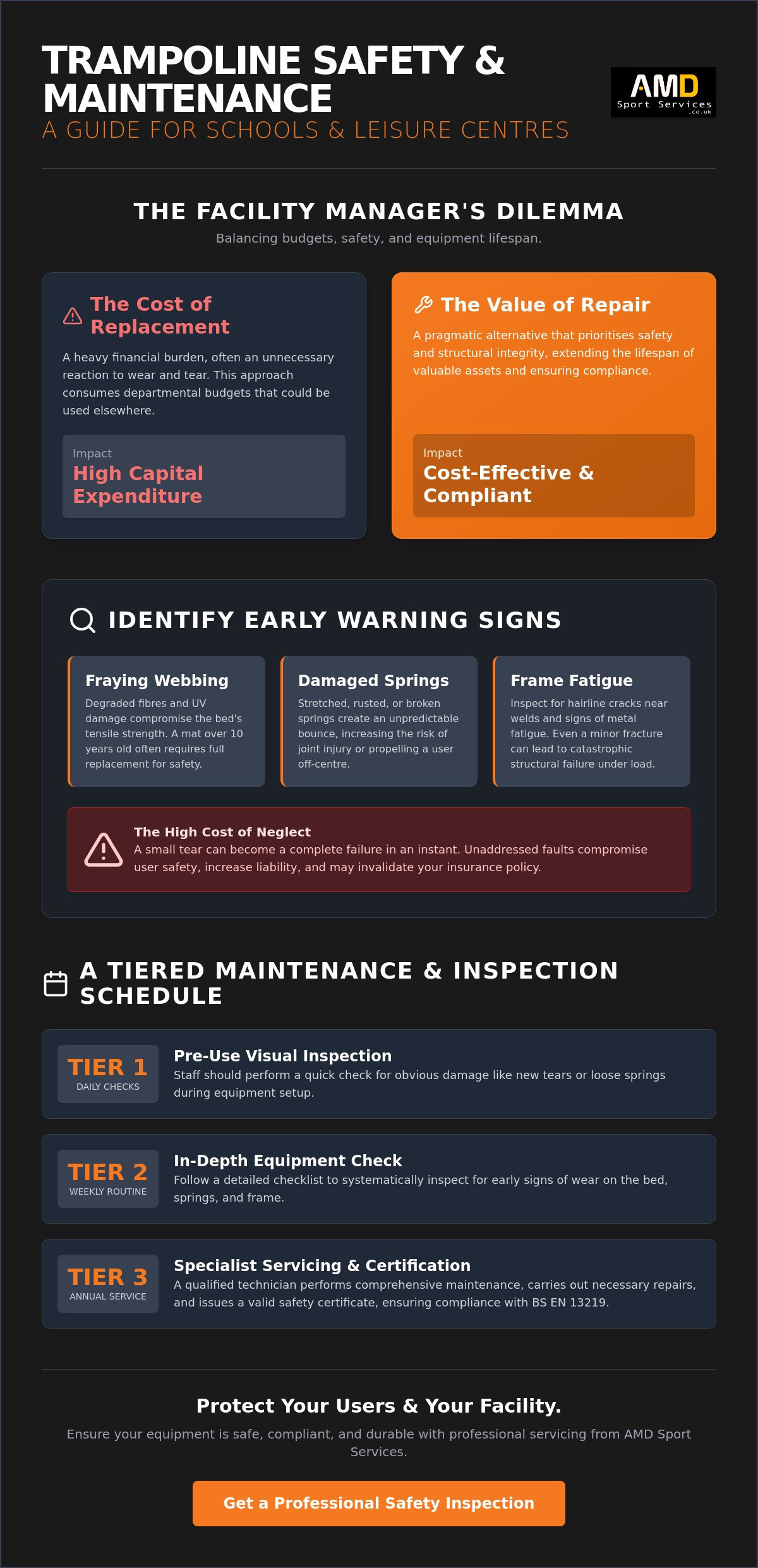
Regular visual inspections are the first line of defence in a robust maintenance schedule. Staff should be trained to identify key warning signs that indicate the need for a professional assessment. These signs are often subtle but can point to more significant underlying issues.
Bed and Webbing Degradation: Look for fraying or thinning of the webbing on the trampoline bed, particularly around the anchor points and the centre of the bed. Any small tear or hole is a critical failure point that requires immediate attention.
Stretched, Rusted, or Damaged Springs: Springs are the heart of the trampoline's performance. Over time, they can stretch, lose their tensile strength, or develop rust, which significantly affects the consistency and safety of the bounce. A "dead" or uneven bounce is a clear indicator of spring fatigue. Check for broken hooks or corrosion at the connection points.
Frame and Weld Integrity: The frame is the equipment's skeleton. Meticulously inspect all weld points for hairline cracks, which often start small but can lead to catastrophic failure under load. Check for any bending or warping in the frame sections and ensure the legs are stable and sit flush with the floor.
The Hazards of Neglecting Minor Equipment Faults
In a high-use institutional environment, seemingly minor faults can escalate into major safety hazards with alarming speed. The operational risks and financial liabilities associated with equipment failure are substantial, making a proactive approach to maintenance essential.
Catastrophic Bed Failure: A small tear in the trampoline bed can propagate rapidly under the dynamic load of a gymnast. This can lead to the user falling through the bed, causing severe injury. Neglecting frayed webbing is a significant risk that is easily preventable with professional re-meshing or replacement.
Risk of Frame Collapse: An unaddressed hairline crack in a weld or a bent frame component is a sign of metal fatigue. Continued use places cumulative stress on this weak point, which can result in a sudden and complete collapse of the frame structure during use, with potentially devastating consequences.
Insurance and Compliance Implications: A documented history of neglected repairs can have a severe impact on your facility's insurance premiums and liability coverage. In the event of an incident, a failure to demonstrate a robust inspection and maintenance regime can lead to legal and financial repercussions. Furthermore, faulty equipment will automatically fail a safety audit, potentially rendering it unusable until rectified.
Technical Components: Beds, Springs, and Frame Integrity
Understanding the anatomy of a professional gymnastics trampoline is key to appreciating why specialist repairs are necessary. Each component is engineered for high performance and is subject to specific stresses. A holistic repair strategy must address the bed, springs, and frame as an interconnected system where the failure of one part compromises the safety of the whole.
The materials used in competition-grade equipment, from high-tensile steel frames to precision-woven beds, require specialist handling, tools, and techniques. A general maintenance provider will lack the specific expertise to correctly diagnose and repair these components to the required safety and performance standards.
Trampoline Bed Refurbishment and Replacement
The trampoline bed, or mat, is the primary user interface and arguably the most critical component for performance. Its condition directly influences bounce height, consistency, and athlete safety. The beds used in UK schools and gymnastics clubs are highly specialised and vary significantly in construction.
Understanding Bed Types: The performance of a trampoline is heavily influenced by its bed type. Beds range from mesh to the more high-performance webbed designs seen throughout schools and leisure centres. Common web sizes include 25x25mm, 13x13mm, 6x6mm, and ultra-fine 4x6mm. As a general rule, the smaller the webbing (a "thinner" bed), the greater the height the user will be able to achieve. Each type requires specific repair techniques and materials.
Repair vs. Replacement: For localised damage or fraying, a professional re-stitching using high-strength, compatible webbing can be a cost-effective solution. However, if the bed shows widespread degradation, loss of tension, or multiple points of failure, a full replacement is the only safe option.
Matching Bed to Discipline: A specialist will ensure that any repair or replacement uses the correct bed type for your specific needs, whether for school-level training, gymnastics club practice, or competition use. Using an incompatible bed can negatively impact performance and introduce safety risks.
Spring Maintenance and Torsion Testing
The springs dictate the trampoline's rebound characteristics. Their maintenance is about more than simply replacing a broken spring; it's about maintaining a uniform and predictable tension across the entire jumping surface to ensure athlete safety and prevent joint strain.
The Problem with Individual Replacements: When one spring breaks, it's often a sign that the entire set is reaching the end of its operational life. Replacing just a single spring creates an imbalance in tension, as the new spring will be stronger than the older, fatigued ones around it. This creates an unpredictable and potentially dangerous jumping surface. For this reason, we often recommend replacing springs in complete sets.
Identifying "Dead" Springs: Springs lose their elasticity over time, becoming "dead" and failing to provide the necessary recoil. A specialist can identify these compromised springs, which may not be visibly broken but severely impact the bed tension and overall performance.
Impact on Athlete Health: An uneven or poorly tensioned bed, caused by failing springs, can put undue stress on an athlete's joints, particularly ankles, knees, and back. A professionally serviced trampoline with correctly tensioned springs provides a safer, more supportive bounce that protects users during repetitive training.
Frame Repairs and Structural Reinforcement
The steel frame of a gymnastics trampoline is its foundation. It must withstand immense forces without flexing or failing. Frame repairs are a highly specialised task that should only be undertaken by qualified technicians with experience in welding and metal fabrication.
Specialist Welding for High-Carbon Steel: Trampoline frames are typically made from high-carbon or high-tensile steel. Repairing cracks or failed welds in this material requires specific welding techniques and equipment to ensure the repair is as strong as, or stronger than, the original joint without making the surrounding metal brittle.
Addressing Instability and Wear: Over time, leg braces can become loose, and the protective floor guards can wear down, leading to instability and damage to expensive sport hall flooring. A full service includes checking and tightening all structural bolts and advising of any other findings, photographing these findings, and adding them to the digital report. These can then be quoted for repair.
Corrosion Prevention: After any structural repair, the frame finish must be properly restored. This is not just for aesthetics; a painted finish is essential to protect the steel from corrosion, which could weaken the frame over the long term.
Safety Compliance and the Repair vs. Replacement Decision
For any UK-based institution, equipment safety is governed by strict standards. The primary standard for gymnastics trampolines is BS EN 13219. Adherence to this standard is not optional; it is a fundamental requirement for ensuring user safety and meeting your legal obligations. Professional repairs play a crucial role in maintaining your equipment's compliance and extending its serviceable life, often presenting a more financially viable alternative to complete replacement. Compliance must be measured strictly against current British and European norms.
The Role of Safety Inspections in Repair Planning
A repair should never be undertaken without a thorough prior inspection. An inspection acts as a diagnosis, identifying not only the obvious faults but also any hidden or developing issues that could compromise safety in the future. This inspection-led approach is the hallmark of a professional service.
Identifying Hidden Faults: A comprehensive indoor inspection and maintenance audit involves more than a visual check. Our technicians systematically assess every component, from the integrity of individual spring hooks to the microscopic integrity of welds, to build a complete picture of the equipment's health.
Pre-Repair Documentation: The inspection report provides the detailed, evidence-based documentation needed for your health and safety records. It outlines all identified faults, categorises them by risk level, and provides clear recommendations for the necessary remedial action.
Informing the Repair Strategy: This detailed report forms the basis of a precise and transparent repair quotation. It ensures that all necessary work is planned for, preventing unexpected costs and ensuring the repair is comprehensive and effective.
Comparing Costs: Professional Repair vs. New Procurement
For high-end gymnastics equipment, the "repair vs. replace" calculation is rarely straightforward. Whilst a new trampoline might seem like a simple solution, repairing a high-quality existing unit is often the more prudent financial decision, especially when factoring in long-term value and performance.
Extending Equipment Lifespan: A major professional service and repair can add many years to the life of a high-quality trampoline frame. The cost of this work is typically a fraction of the capital outlay required for a new competition-grade model.
The Hidden Costs of "Cheap" Replacements: Lower-cost replacement models may not offer the same durability, performance, or longevity as your original professional-grade equipment. The long-term cost of ownership for a cheaper, less robust unit can quickly exceed the cost of repairing a superior, heavy-duty model.
Budgeting for Proactive Maintenance: The most cost-effective approach is to budget for annual servicing. This proactive strategy identifies and rectifies minor issues before they become major, costly failures, preventing emergency repair costs and unexpected equipment downtime.
Establishing a Robust Inspection and Maintenance Schedule
Ensuring the long-term safety of your trampoline equipment requires a structured, multi-tiered maintenance approach. This combines routine checks by your own staff with periodic, in-depth professional audits. This strategy is essential for UK schools and leisure centres to maintain a clear and defensible safety record. Integrating this schedule into your facility's wider service and maintenance plan ensures nothing is overlooked.
A dedicated equipment maintenance logbook is a critical tool in this process. It should be used to record all daily checks, reported faults, and details of any professional servicing or repairs carried out, providing a complete history of the equipment's condition.
Daily and Weekly User Checks
Empowering your staff to conduct simple, regular checks is the foundation of a safe equipment culture. These checks should be performed before each use or, in a high-turnover facility, at the start of each day.
Visual Bed Inspection: Before any session, walk around the trampoline and visually inspect the entire surface of the bed for any debris, sharp objects, new tears, failed stitching, or fraying.
Safety Padding and Frame Pads: Check that all safety padding covering the springs and frame is correctly positioned, securely fastened, and in good condition. Worn or displaced pads expose users to the hard frame and springs.
Frame and Leg Stability: Give the frame a gentle push to ensure it is stable and does not rock. If the trampoline has a folding mechanism, check that it operates smoothly and that all locking pins or clamps are securely engaged.
The Annual Professional Safety Audit
Whilst daily checks are vital for spotting immediate hazards, they are no substitute for a formal, annual inspection by a qualified specialist. This technical audit provides a much deeper assessment of the equipment's structural health and compliance.
What to Expect: A specialist technician will conduct a systematic, point-by-point inspection of the entire apparatus. This includes checking spring tension, examining welds for signs of stress, assessing the material condition of the bed, and verifying the integrity of all hinges, hinge pins, leg braces, and other structural components.
The Value of Certification: Following the inspection, you will receive a detailed report and, if the equipment passes, a safety certificate. This independent certification is invaluable for your insurance, for health and safety audits, and for demonstrating due diligence in maintaining a safe environment.
Strategic Planning: The annual audit is the ideal time to plan for major refurbishments or repairs. By scheduling this work during low-use periods, such as school summer holidays, you can minimise disruption to your programme and ensure equipment is in peak condition for the new term.
Specialist Trampoline Servicing with AMD Sport Services
Choosing the right partner for your trampoline repairs and maintenance is a decision that directly impacts the safety of your users and the liability of your organisation. AMD Sport Services is a trusted partner for UK councils, schools, and multi-site leisure operators precisely because we understand that our role is to provide pragmatic, safety-first solutions grounded in deep technical expertise.
Our commitment is to prolong the life of your valuable assets safely and cost-effectively. We combine rigorous inspections with expert physical repairs to provide a complete, turnkey service that ensures your equipment remains compliant, reliable, and ready for use.
Bespoke Repair Solutions for Every Facility
We recognise that no two facilities are the same. The equipment used, the intensity of that use, and the specific operational challenges vary. That's why we tailor our services to meet the precise needs of each client.
Brand and Model Expertise: Our technicians have extensive experience working with all major brands and models of institutional trampolines used in the UK. We have the knowledge to source the correct parts and apply the right repair techniques for your specific equipment.
The "Seasoned Practitioner" Approach: We pride ourselves on our ability to diagnose and resolve complex mechanical failures. Our hands-on, problem-solving approach means we are equipped to handle everything from standard wear and tear to unique structural challenges.
Verifiable Quality: We believe in the quality of our work, and our track record speaks for itself. We invite you to view our recent projects to see examples of the high standards we deliver for facilities across the country.
Ready to Secure Your Equipment? Contact Us Today
Ensuring your trampolines are safe and compliant is a continuous responsibility. Our team is here to make that process straightforward and reliable, providing the expert support you need to manage your facility's equipment with confidence.
Book a Comprehensive Inspection: The first step towards peace of mind is a professional safety inspection. Contact us to schedule an audit at a time that suits your operations.
Receive a Transparent Quotation: Following our inspection, we provide a detailed and transparent quotation for any necessary repairs. Our reports clearly explain the issues and the proposed solutions, allowing you to make an informed decision.
Maintain a Safe and Compliant Facility: Partner with AMD Sport Services to ensure your facility not only meets but exceeds its safety obligations, providing a secure environment for every user.
Frequently Asked Questions (FAQs)
How often should a school trampoline be professionally inspected?
For institutional equipment in a school or leisure centre, a professional technical inspection should be carried out at least once a year. This is in addition to the regular pre-use checks conducted by staff. For equipment under very heavy use, such as in a dedicated gymnastics club, more frequent inspections (e.g., every six months) may be advisable.
Can a torn trampoline bed be safely patched for gymnastics use?
No. A simple "patch" is not a safe or compliant repair for a gymnastics trampoline bed. The forces involved are too great. Professional repairs involve re-stitching or re-meshing the area with high-strength, compatible webbing to restore the original structural integrity. For larger tears or widespread material degradation, a full bed replacement is the only safe option.
What are the current UK safety standards for gymnastics equipment?
The primary UK safety standard for trampolines in a gymnastics or institutional setting is BS EN 13219:2008 (Gymnastic equipment - Trampolines - Functional and safety requirements, test methods). All inspections and repairs should be carried out in accordance with this standard to ensure compliance.
Is it worth repairing an old trampoline frame with visible rust?
It depends on the extent of the corrosion. Surface rust can often be removed and the frame refinished to protect it. However, if the rust is deep and has compromised the structural integrity of the steel (pitting or flaking), the frame may be beyond economic or safe repair. A professional inspection is required to make this determination.
How long does a typical professional trampoline service take?
A standard annual inspection on a single trampoline typically takes around 30 minutes. More extensive repairs, such as a bed replacement or frame welding, will take longer. We always aim to schedule work to minimise downtime and can often complete major refurbishments during facility closures like school holidays. It is also not uncommon for us to be on site for 5 or 6am to further facilitate!
Do you provide safety certification after a repair is completed?
Yes. After any inspection or repair work, we provide detailed documentation for your records. If the equipment is deemed safe and compliant with BS EN 13219 following our work, we will issue a safety certificate to that effect.
Can you repair trampolines from any manufacturer?
Our technicians have extensive experience with the vast majority of institutional-grade trampoline manufacturers and models found in UK facilities. We have the expertise and supply chain access to service and repair equipment from leading brands like Eurotramp, Nissen, Unitramp, and Continental Sports, amongst others.
What happens if our equipment fails a safety inspection?
If equipment fails an inspection, we will provide a detailed report which includes photos of the specific faults, and the reasons for the failure. The equipment should be immediately removed from service. We will then provide a transparent, no-obligation quotation for the necessary repairs to bring the equipment back into a safe, compliant, and usable condition.


Comments