
School Football Goal Repair: A Professional Guide to Safety and Compliance 2026

Table of Contents
The Critical Importance of Professional School Football Goal Repair
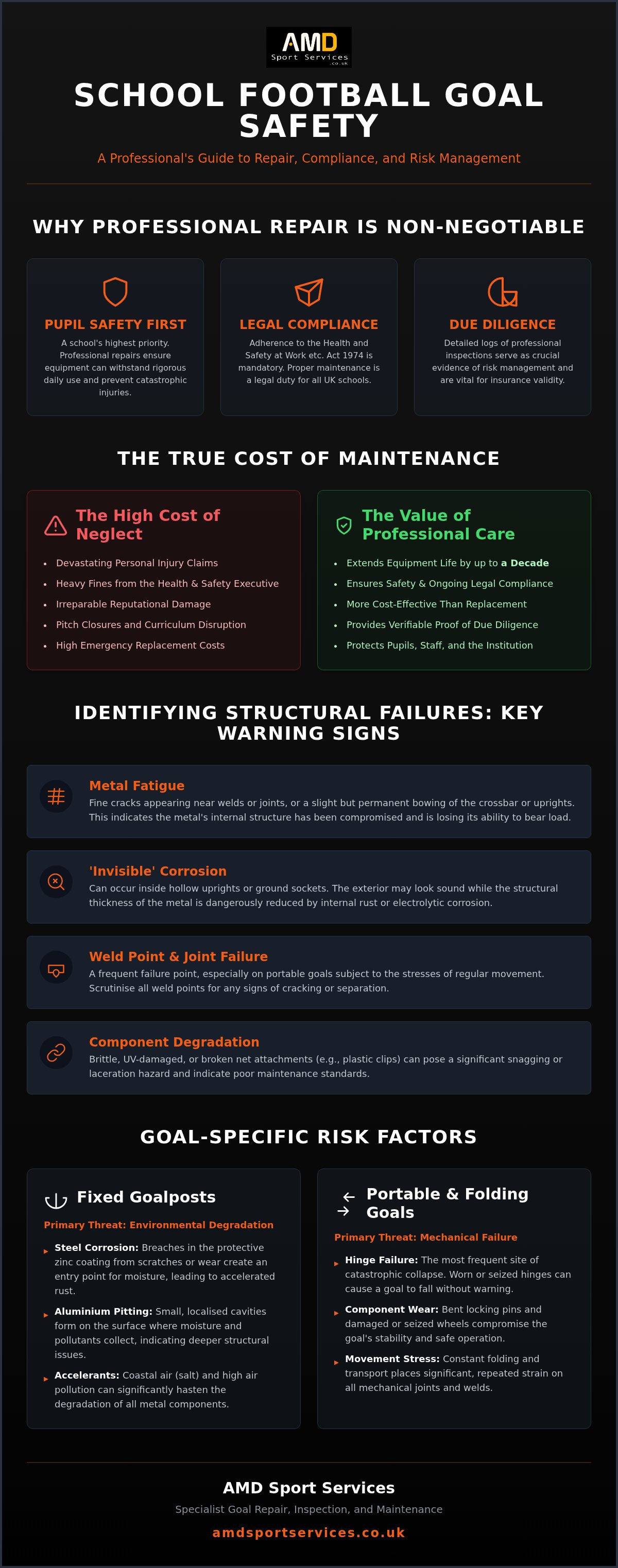
For any school, the safety of its pupils is the highest priority. When it comes to sports equipment, this duty of care extends to every piece of apparatus on the field, especially football goals. Professional school football goal repair is not merely about mending a net or touching up paint; it is the skilled restoration of structural integrity and safety compliance for high-use, institutional equipment. This process ensures that goalposts can withstand the rigours of daily use whilst meeting the stringent safety standards mandated for educational environments.
Schools and local authorities face a far higher level of scrutiny regarding equipment maintenance than a typical residential user. A garden goal failure might result in a minor inconvenience; a school goal failure can lead to catastrophic injury and significant legal consequences. Consequently, maintaining a detailed and up-to-date log of professional inspections and repairs is essential. This documentation serves as crucial evidence of due diligence, directly impacting the validity of the institution's insurance policies and demonstrating a proactive approach to risk management. Fulfilling the 'duty of care' owed to pupils during PE lessons, after-school clubs, and break times depends on this verifiable commitment to safety.
Legal Liability and Safety Compliance for UK Schools
The legal framework governing school equipment is robust. The Health and Safety at Work etc. Act 1974 applies unequivocally to school sports equipment, mandating that it must be safe for use. This legislation places a direct responsibility on the school's leadership and site management to ensure all apparatus, including football goals, is properly maintained and free from defects that could cause harm. Furthermore, guidance from the Department for Education (DfE) reinforces these requirements, setting clear expectations for facility standards and equipment safety across all UK schools.
A failed safety inspection is not a trivial matter. If an independent assessor deems a football goal to be unsafe—due to issues like metal fatigue, anchor failure, or structural instability—it can trigger an immediate prohibition notice. This can lead to the closure of entire sports pitches until the equipment is professionally repaired or replaced and certified as safe. This not only disrupts the curriculum but also signals a serious lapse in the school's safety protocols, potentially inviting further scrutiny from regulatory bodies.
The True Cost of Neglected Goalpost Maintenance
The financial implications of neglecting goalpost maintenance extend far beyond the price of a replacement unit. In the tragic event of an accident caused by faulty equipment, the resulting legal claims, fines from the Health and Safety Executive (HSE), and reputational damage can be financially devastating for a school or local authority. The cost of a single personal injury claim can dwarf years of maintenance budgets, making proactive investment in professional repair the only fiscally responsible option.
Conversely, a structured programme of professional maintenance is proven to extend the operational life of sports equipment significantly, often by up to a decade. Specialist technicians can identify and remedy issues like early-stage corrosion or stress fractures before they develop into terminal failures. This approach of proactive, scheduled refurbishment is invariably more cost-effective than funding an emergency replacement after a catastrophic failure, which often involves higher costs for urgent procurement and installation.
Identifying Structural Failures in School Football Goals
Recognising the warning signs of a failing football goal is a critical skill for any site manager or PE department head. These signs are often subtle and can be easily missed during a casual visual check. For both aluminium and steel goalposts, common indicators of metal fatigue include fine cracks appearing near joints and welds, or a slight but permanent bowing or deformation of the crossbar or uprights. These are not cosmetic issues; they are evidence that the metal's internal structure has been compromised and is losing its ability to bear load.
One of the most significant threats is 'invisible' corrosion, which can occur inside hollow uprights or, more commonly, within ground sockets. Moisture trapped in these areas can cause extensive rusting or electrolytic corrosion from the inside out, leaving the exterior looking sound while the structural thickness of the metal is dangerously reduced. Other key areas to scrutinise are the weld points, particularly on portable goals where they are subject to the stresses of regular movement. Finally, net attachment points, especially older plastic or hook-based systems, are a frequent failure point. Brittle, UV-damaged, or broken clips can pose a snagging or laceration hazard and indicate that the goal is not being maintained to the required standard.
Corrosion and Material Degradation in Outdoor Facilities
The notoriously damp British climate is a primary antagonist in the battle to maintain outdoor sports equipment. For older galvanised steel goal systems, any breach in the protective zinc coating—a scratch from a mower or general wear and tear—creates an entry point for moisture, leading to accelerated rust. This corrosion expands, flaking away the steel and progressively weakening the entire structure.
Aluminium goals, whilst not susceptible to rust, face their own form of degradation. They can suffer from 'pitting' corrosion, where small, localised cavities form on the surface, especially in areas where moisture and pollutants collect. This is often seen as a minor cosmetic blemish, but severe pitting can be an indicator of deeper structural issues. In coastal areas or locations with high air pollution, the combination of salt and acidic compounds in the air can significantly hasten the degradation of all metal components, requiring more frequent and thorough professional inspections.
Mechanical Failures in Portable and Folding Goals
Portable and folding goals, prized for their versatility, introduce mechanical components that represent additional points of potential failure. The folding side-bars and wheel mechanisms must be rigorously assessed. Worn or seized hinges, bent locking pins, and damaged wheels can all compromise the goal's stability and safe operation. Hinge points, which bear the full load of the side frames during folding and unfolding, are the most frequent site of catastrophic failure. A cracked or failed hinge can cause the goal to collapse without warning.
Furthermore, the counterweights and internal anchoring systems designed to prevent these goals from tipping over are of paramount importance. Checks must ensure that these weights are secure, undamaged, and meet the manufacturer's specifications. Any sign of cracking in the weight housing or looseness in the fixings must be addressed immediately by a qualified technician. These mechanisms are safety-critical and their failure is a leading cause of serious accidents.
The Dangers of Uncertified Repairs vs. Professional Intervention
In an environment where budgets are tight, the temptation to perform in-house repairs on sports equipment can be strong. However, for commercial-grade football goals, there is a fundamental distinction between a temporary 'fix' and a compliant, professional repair. The notion of a simple DIY approach is fundamentally flawed because it fails to address the underlying principles of structural engineering and liability that govern institutional equipment. Attempting to mend a school football goal with general-purpose materials or unqualified labour introduces significant, and often hidden, risks.
The core issue is one of compliance and accountability. A professional repair, carried out by a specialist company, is not just about restoring function; it's about restoring the equipment to its original, certified-safe condition. This process involves using correct, load-rated materials and techniques, and it concludes with the issuance of a 'certificate of conformity'. This document provides the school with a verifiable record that the equipment has been inspected and repaired to the required BS EN standards, a critical piece of evidence for insurance and HSE purposes. An uncertified repair, by contrast, creates a chain of liability that leads directly back to the school.
The Risks of Using Non-Compliant Materials
Attempting to patch a goal net with twine purchased from a high-street retailer is a prime example of non-compliant repair. The netting on a certified goal is not just any cord; it is an engineered safety barrier. It must possess a specific tensile strength to withstand powerful shots without breaking and be manufactured with mesh sizes that prevent head and finger entrapment, as defined by safety standards. Consumer-grade twine lacks the required strength, is not treated for UV degradation—meaning it will become brittle and fail after a single summer—and can create dangerous, non-standard mesh sizes when used for patching.
This principle extends to the goal's structure. Using a standard bolt from a hardware supplier to replace a missing high-tensile, shear-rated bolt on a hinge mechanism is dangerously negligent. These components are specified by engineers to handle specific forces. A non-compliant part will fail under load. Professional repair services use only manufacturer-approved or bespoke-fabricated parts that are guaranteed to meet or exceed the original equipment's safety specifications.
Why Structural Integrity Requires Specialist Intervention
The most hazardous form of in-house repair is attempting to weld a cracked or broken metal frame. Welding sports apparatus is a highly specialised skill that requires an understanding of metallurgy and load-bearing dynamics. An improper weld, performed by an untrained individual (such as a well-meaning school caretaker), can actually weaken the surrounding metal, creating a new, invisible stress point that is more likely to fail than the original crack. It is illegal for a school caretaker to weld a broken goalpost unless they hold the specific coding and certification for that type of structural welding—a qualification they are highly unlikely to possess.
Specialist contractors like AMD Sport Services use advanced techniques, such as non-destructive testing, to assess the internal health of metal uprights and identify hidden corrosion or fatigue. This diagnostic capability is far beyond the scope of a simple visual inspection. When a repair is necessary, it is performed by coded welders who understand how to restore the joint to its original strength. This specialist intervention is the only way to guarantee that the structural integrity of the goal has been safely and verifiably restored.
The Football Goal Safety Inspection and Maintenance Process
A robust safety management system for football goals is built on a multi-layered process of checks and inspections. This structured approach ensures that potential issues are identified and rectified early, preventing minor wear from escalating into a major safety hazard. The process can be broken down into four key stages, each with a distinct role in maintaining a safe sporting environment.
Step 1: The Visual Pre-Use Check. This is a quick, informal check that should be carried out by a member of staff (e.g., a PE teacher) before every session. It involves looking for obvious damage such as broken net clips, a detached net, visible cracks, or anything that seems out of place. The goal should be pushed to ensure it is stable and not at risk of tipping.
Step 2: The Formal Quarterly Inspection. This is a more detailed, documented inspection carried out by a competent person on the school's staff, typically the site manager. Using a checklist, they should examine all structural components, welds, fixings, and anchoring points more closely. All findings, even minor ones, must be recorded in the school's central safety log.
Step 3: The Annual Professional Audit. This is a comprehensive inspection conducted by a specialist external contractor. The technician will perform a full structural and compliance audit, checking against the latest BS EN standards. They have the expertise to spot issues like metal fatigue and internal corrosion that are not visible to the untrained eye.
Step 4: Remedial Action. Following any inspection that identifies faults, a plan for remedial action must be implemented. Repairs should be prioritised based on the level of risk. Any issue deemed high-risk requires the equipment to be taken out of use immediately until a professional repair can be completed.
Understanding BS EN 16579 and BS EN 748 Standards
Compliance with British and European standards is not optional for schools; it is a fundamental requirement. The two key standards for football goals are BS EN 748 (for full-size goals) and BS EN 16579 (covering other types of goals, including those used in schools). These documents provide precise technical specifications for goalpost strength, stability, and safety.
A critical element of these standards is the requirement for goal 'tip-over' resistance. They specify the exact force a goal must be able to withstand without toppling, which dictates the design of anchoring systems and counterweights. The standards also define the maximum allowable gap sizes in netting and between the net and the frame to prevent head entrapment, a specific and serious risk for younger children. A professional inspection will always audit the equipment against these specific, measurable criteria to ensure full compliance.
Implementing a Robust Maintenance Schedule
An effective maintenance schedule is the backbone of equipment safety. This should be organised as a seasonal calendar, with specific tasks assigned to different times of the year. For example, a deep clean of ground sockets and a full lubrication of all moving parts on folding goals should be scheduled before the start of the autumn term. This proactive approach ensures that essential tasks are not forgotten.
This schedule should be integrated into the school's wider asset management plan. Crucially, football goal inspections should not happen in isolation; they form part of a holistic approach to sports equipment safety inspections. By linking the maintenance of goals with regular checks on all other apparatus, schools can create a comprehensive safety culture and a single, unified record of compliance, as outlined in our School PE Equipment Safety Check guide.
Specialist Goal Repair and Maintenance by AMD Sport Services
At AMD Sport Services, we provide a pragmatic, no-nonsense approach to restoring school sports equipment. Our focus is on providing safe, compliant, and durable repairs that extend the life of your existing assets, helping you manage your budget effectively. We understand that for a school, a football goal is not just equipment; it's a critical part of the educational and recreational environment, and its safety is non-negotiable.
We offer national coverage across the UK for professional on-site repairs and comprehensive safety audits. Our team of experienced technicians has deep expertise in the full spectrum of sports apparatus, from outdoor pitch goals to complex indoor sports hall netting systems. This breadth of knowledge allows us to provide a single, reliable point of contact for all your equipment maintenance needs, helping schools avoid the high cost and disruption of unnecessary equipment replacement by focusing on expert refurbishment.
Bespoke Solutions for Institutional Facilities
Many schools have older, but otherwise sound, goal systems for which spare parts are no longer available. Our in-house fabrication capabilities allow us to create custom, bespoke parts for these obsolete models, saving them from being condemned. This service is a cost-effective and sustainable alternative to a full replacement.
Our expertise is not limited to football goals. We provide specialist netting solutions and repair services for a wide range of equipment, from basketball goals to athletics throwing cages. Our case studies demonstrate a consistent track record of working with schools and leisure centres to bring their equipment back from the brink of being condemned, restoring it to a safe and fully compliant condition for years of future use.
Securing Your Facility for the Upcoming Season
The best way to ensure peace of mind is to be proactive. Booking your annual safety audit and consolidating any necessary repairs into a single session is the most efficient and cost-effective way to prepare your sports facilities for the demands of the upcoming season. The professional certification we provide following our inspection and repair work gives you the documented proof of compliance needed for your health and safety records and insurance providers.
Don't wait for a failure to occur. Contact the AMD Sport Services team today for a pragmatic assessment of your school's football goals and other sports equipment. We are here to provide expert advice and reliable, professional service to keep your pupils safe and your facilities compliant.
Frequently Asked Questions (FAQs)
How often should school football goals be professionally inspected?
Whilst daily visual checks and quarterly internal inspections are vital, a full professional inspection by a specialist contractor should be conducted at least once a year. This annual audit is essential for identifying underlying structural issues like metal fatigue or internal corrosion that are not visible to the untrained eye and for certifying compliance with BS EN standards.
Can we use sandbags instead of professional anchors if the goal is damaged?
No. Using sandbags or other makeshift weights as a primary anchoring method is extremely dangerous and non-compliant with BS EN 748/16579. These standards require specific, tested anchoring or counterweight systems to prevent tipping. Sandbags can be moved, can degrade, and do not provide the scientifically calculated stability required. If an anchor point is damaged, the goal must be taken out of use until it is professionally repaired.
What are the BS EN standards for school football goals in 2026?
As of now, the primary standards are BS EN 748 (for full-size goals over 5m x 2m) and BS EN 16579 (for all other goals, including smaller school sizes). These standards dictate requirements for structural strength, stability (tip-over resistance), and entrapment hazards. It is crucial to work with a professional inspector who is up-to-date with the latest versions and amendments to these standards.
Is it legal for a school caretaker to weld a broken goalpost?
It is almost certainly not legal or compliant. To perform a structural weld on sports equipment, the individual must be a coded welder with specific certifications for the materials and techniques involved. A general caretaker will not have this qualification. An improper weld can catastrophically weaken the goalpost, making it more dangerous than before. This action would also void any manufacturer warranty and create immense liability for the school.
What should I do if a goal fails its safety inspection?
If a goal fails an inspection, it must be immediately and clearly marked as "out of use" and cordoned off to prevent access. The specific reasons for failure should be documented. You should then contact a specialist repair company like AMD Sport Services to assess the damage and provide a quote for a compliant repair. The goal must not be used again until it has been professionally repaired and certified as safe.
How can I tell if a goalpost has internal corrosion?
Detecting internal corrosion without specialist equipment is very difficult. However, warning signs can include bubbling or flaking paint on the exterior with no obvious external cause, or the appearance of rust stains weeping from joints or small holes. A professional inspector may use tools like an endoscope or ultrasonic thickness gauge to assess the internal condition of the metal accurately.
Does insurance cover accidents if the goal was repaired by school staff?
It is highly unlikely. Most insurance policies for schools and public facilities include clauses requiring equipment to be maintained in line with manufacturer's instructions and relevant national safety standards. A non-certified repair by unqualified staff would almost certainly be seen as a breach of this duty of care, giving the insurer grounds to refuse a claim and leaving the institution directly liable.
Can you repair older goal models that are no longer in production?
Yes. Specialist firms often have fabrication capabilities to manufacture obsolete or hard-to-find parts for older goalpost systems. This is a significant advantage, as it can save a perfectly good set of goals from being condemned simply because a specific bracket or hinge is no longer available from the original manufacturer.


Comments