
Tennis post winding mechanism repair for tennis courts

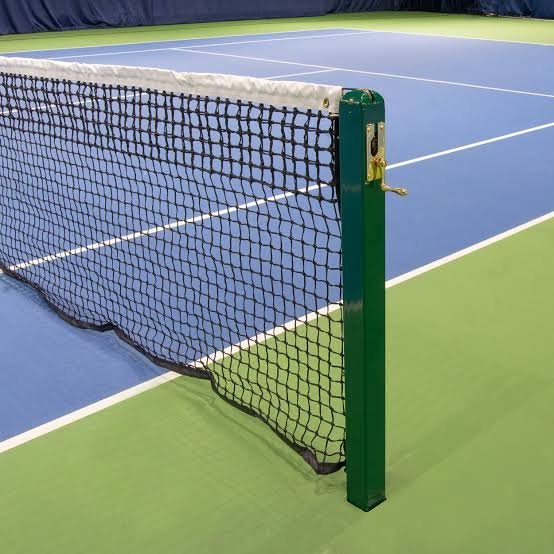
To wind a tennis net, insert the handle into the post and turn it clockwise until the net is firm, but not overly tight. If the mechanism sticks or turns unevenly, tennis post winding mechanism repair may involve checking the winder’s fit and condition and restoring lubrication.
A stiff winder can disrupt court set-up. The cause may be dry gears or an incompatible replacement mechanism. This article explains how the winder works, how to match a replacement to square posts and why regular lubrication matters. It also covers common faults and the repair work that can restore reliable operation.
What is a tennis post winder?
A tennis post winder transfers movement from the handle to the winding assembly, tensioning the net at the post. If it becomes stiff, slips or stops working, the fault may lie with the handle connection, internal components or the post itself. An assessment can establish whether the mechanism needs maintenance or is damaged and unsuitable for repair.
Can a tennis net post winding mechanism be repaired, or does it need replacing? Either may be appropriate, depending on the condition of the gears, drive connection and fixing points. A repair can address a local fault; replacement is more suitable when damage prevents reliable operation or the mechanism cannot be fitted correctly.
For a UK court, post placement and net height depend on the court layout, not the winder. The mechanism tensions the net but does not determine those measurements.
Repair work should address the specific fault, rather than rely on a standard kit. A specialist checks whether the handle engages, the mechanism turns consistently and the post’s mounting points are suitable. A winder that slips under load, for example, needs a different fix from one that binds during rotation. The work depends on the condition of these connected parts.
What tools and spare parts are needed to repair a tennis net post winch? The tools and parts depend on the mechanism’s design, fixings and condition. Assessment identifies what is needed, including parts compatible with the post, rather than assuming one kit fits every court.
Because the net and headline wire are under tension during use, repair work requires controlled handling. A specialist manages the tension and secures moving components before working on the winding assembly, reducing the risk of sudden movement during the repair.
Assessment: locate whether the fault involves the handle, winding assembly or post fixing.
Repair decision: determine whether the affected parts remain serviceable.
Work scope: select compatible repair parts or a replacement mechanism where needed.
Completion: check that the post and winder operate together correctly.
Repair or replacement pricing depends on the fault, the parts required and the work involved; the price is provided after a quote request. A clear description of the symptoms helps establish whether the issue concerns the winder alone or the post connection as well. That distinction matters because a functioning mechanism still needs a secure, compatible mounting to tension the net reliably.
Tennis post winding mechanisms are made from brass or steel. Material is one consideration when assessing a winder, along with how the handle engages, whether the assembly turns consistently and whether the mounting points are suitable. Material alone does not determine whether repair or replacement is right. The decision depends on the connected parts and how the mechanism operates. A clear assessment focuses on the fault, replacement-part compatibility and whether the post and winder work together correctly.
Replacement winder compatibility
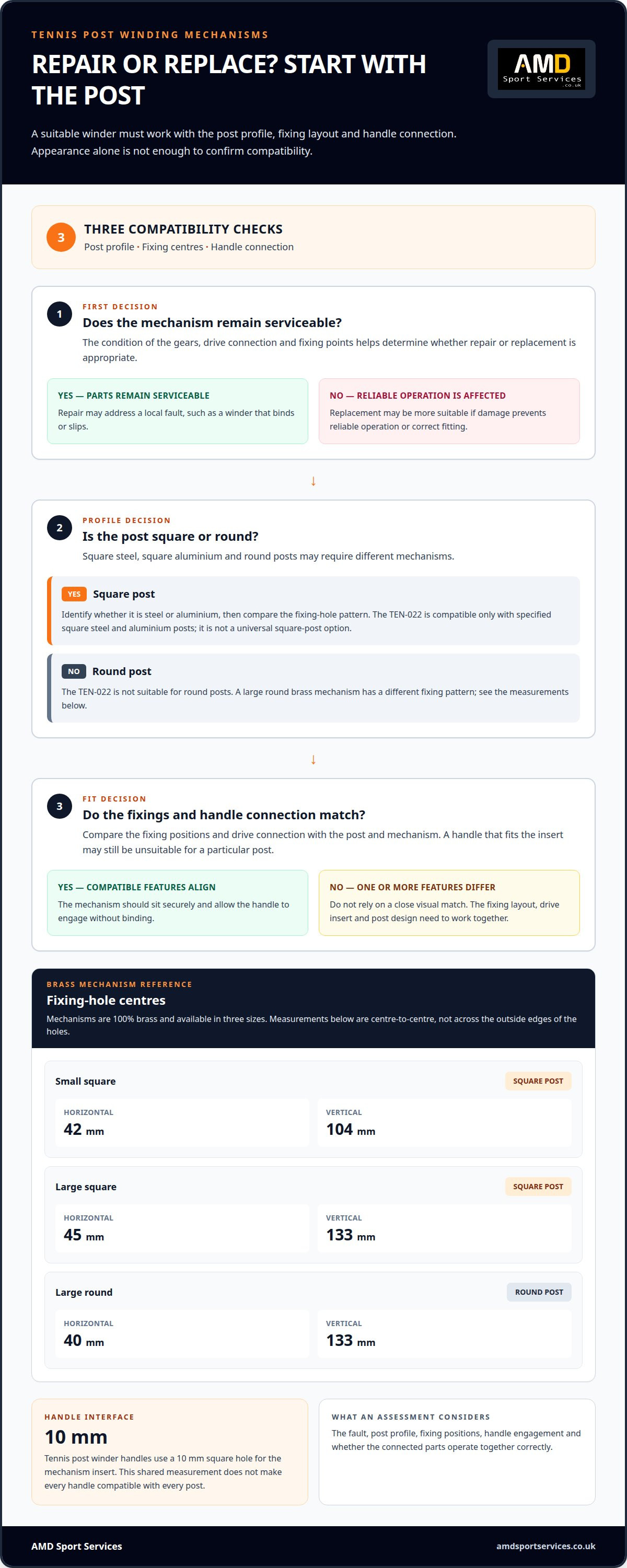
A replacement winder must match the post. Post shape is the first distinction: square steel, square aluminium and round posts may need different mechanisms. A part that appears close in size can still have different fixing positions or an incompatible drive connection. Identify the post type before selecting a replacement, then compare the fixing layout and handle interface.
Handle and insert compatibility matter just as much as the mechanism’s outer dimensions. Tennis post winder handles use a 10 mm square hole for the mechanism insert. That shared handle measurement doesn’t mean every handle fits every post. The drive insert, fixing points and post design must work together. Using a handle intended for another post can damage the mechanism, particularly if it binds or fails to engage squarely.
The replacement TEN-022 winder is compatible only with specified square steel and aluminium tennis posts. It isn’t a universal option for every square post, and it doesn’t suit round posts. The post’s material and shape therefore narrow the choice, while the fixing-hole pattern helps distinguish mechanisms within those categories. Check those features as a set rather than relying on appearance alone.
Post profile: establish whether the post is square or round.
Post material: distinguish steel from aluminium where the replacement requires it.
Fixing layout: compare the mechanism’s hole positions with the post’s existing fixings.
Handle connection: match the square insert and handle to the winder mechanism.
For example, a TEN-022 replacement intended for specified square steel and aluminium posts shouldn’t be selected for a round post. Likewise, a handle that fits a 10 mm square insert may still be unsuitable if its design doesn’t match the post. These are separate compatibility checks: one concerns the mechanism’s fit, the other concerns how the handle drives it.
If the original mechanism is missing, its fixing points and the post profile can help identify the right type. If it is still in place, its shape and hole arrangement can help narrow down a replacement. Accurate matching avoids forcing an unsuitable part into position, which can damage the post or make the net difficult to tension.
A replacement that fits correctly should sit securely and allow the handle to engage without binding. If the post, fixings or winder have been damaged, sports equipment repair and maintenance can address the wider fault as well as the mechanism itself.
Brass winder mechanisms for square tennis posts
Brass winder mechanisms are made for particular post profiles and fixing layouts. The mechanism is specified as 100% brass, and it is available in three sizes. Square and round posts use different hole arrangements, so the post shape alone cannot identify the correct replacement. Compare the fixing centres and the mechanism’s overall pattern before selecting a part.
For square tennis posts, small and large mechanisms have distinct vertical fixing measurements. The small square mechanism has fixing-hole centres 42 mm apart horizontally and 104 mm apart vertically. The large square version measures 45 mm horizontally and 133 mm vertically. These are centre-to-centre distances, not measurements across the outside edges of the holes.
The large round mechanism has a different horizontal spacing from either square option. Its fixing-hole centres measure 40 mm horizontally and 133 mm vertically. The shared vertical measurement with the large square mechanism does not make the two interchangeable: their horizontal centres differ, and their post profiles differ. A round mechanism should therefore be matched to a round post, not selected solely by its 133 mm vertical spacing.
Small square: 42 mm horizontal by 104 mm vertical.
Large square: 45 mm horizontal by 133 mm vertical.
Large round: 40 mm horizontal by 133 mm vertical.
A separate replacement winder has drill-hole centres 45 mm apart horizontally and 105 mm apart vertically. Its 45 mm horizontal spacing resembles the large square mechanism, but its vertical spacing is different. Don’t treat those measurements as a match: 105 mm and 133 mm describe different fixing patterns. This alternative is supplied with a 10 mm square-pattern handle and fixing screw, so both the mounting layout and handle connection need to suit the post.
To identify the right pattern, compare the post’s existing holes with the replacement’s centre-to-centre measurements in both directions. For example, a post measuring 45 mm across and 133 mm vertically aligns with the listed large-square pattern, not the separate 45 mm by 105 mm pattern. A 40 mm horizontal measurement points to the listed large-round layout, provided the post is round.
Accurate matching matters: drilling or forcing a misaligned mechanism into place can leave the winder unsecured or damage the post. If the existing holes have been altered, measure their centres in both directions rather than relying on the old mechanism’s label or appearance. The three-size range covers distinct fixing patterns, not one universal fit for every tennis post.
Greasing and maintaining the mechanism
Regular lubrication is part of tennis post winder maintenance, but it is not a mechanical repair. Grease the mechanisms once a year, using light spray grease on the gears. This can make winding easier and help support the mechanism’s lifespan. It will not fix damaged gears, an incompatible part or a fault that stops the handle driving the winder.
How do you repair a tennis net post winch, step by step? A specialist assesses the reported fault and the mechanism’s condition, then decides whether lubrication, repair or replacement is appropriate. The work ends with an operational check, so persistent stiffness or slipping is not treated as a lubrication issue alone.
A stiff handle can have several causes. Dry gears may benefit from maintenance, while damage or a poor fit needs a different response. If the winder remains difficult to turn after lubrication, it needs further assessment. Applying more grease without addressing the underlying fault will not restore correct operation.
Routine maintenance: lubrication of serviceable gears using light spray grease.
Fault assessment: examination of persistent stiffness, catching or slipping.
Repair or replacement: attention to damaged parts or an unsuitable mechanism.
Operational check: confirmation that the mechanism functions after the work.
For a facility with several courts, recording which post needs attention can help distinguish an isolated fault from a maintenance issue affecting multiple courts. One stiff mechanism, for example, may need different work from several winders showing similar problems. The assessment should connect the reported symptom to the mechanism’s condition, rather than treating every fault as a need for more lubrication.
Maintenance has limits: grease supports working gears, but it cannot correct wear, breakage or incompatibility. If the mechanism cannot operate reliably, repair or replacement may be needed. The right work depends on the assessment, including whether the existing parts remain serviceable and whether the assembly works correctly after maintenance.
Specialist maintenance distinguishes routine gear care from work needed to fix a persistent fault, without treating lubrication as a cure-all. This helps facilities plan the right attention for a tennis post winder and avoid repeated lubrication when the mechanism needs repair.
Greasing the tennis post winder gears before use and maintaining lubrication can make winding easier and help maximise product lifespan. This supports routine care of serviceable gears, but it does not replace attention to a mechanism that continues to work poorly. Treat lubrication as part of winder maintenance, not an automatic answer to every change in how it turns.
Grease tennis post winder mechanisms at least once a year as part of regular maintenance. Keeping to this interval helps avoid overlooking lubrication, while the mechanism’s condition guides any further work. Greasing before use and maintaining lubrication can make winding easier and help maximise product lifespan. If a fault persists, the mechanism needs assessment rather than an assumption that more grease will fix it.
What are the common faults in tennis net post winding mechanisms?
A winding mechanism may feel stiff, slip under tension or stop turning altogether. These symptoms can point to different faults, so check how the handle moves and how the net responds. If the handle turns without winding the net, for example, the drive connection may be at fault. A handle that catches may indicate binding inside the mechanism or an unsuitable fit.
One known cause of cog jamming is a headline wire measuring 5 mm or over. The wire can catch between the winder cogs, interrupting rotation and making tensioning difficult. British-made tennis nets described for this application have a 4 mm headline wire. That comparison helps explain why wire thickness and the mechanism’s clear path matter when a winder jams.
Other faults involve the handle or the post connection. If the handle does not engage properly, it may have the wrong insert. The mechanism may also sit poorly if its fixing pattern does not match the post. Square and round posts use different mechanism patterns, so do not force a replacement intended for a square post onto a round post just because its dimensions seem close.
Jamming: a headline wire of 5 mm or over can catch between the cogs.
Slipping: handle movement without corresponding winding can indicate a drive connection fault.
Binding: stiff rotation may relate to damaged or poorly matched mechanism parts.
Poor fit: incorrect post shape, fixing centres or handle insert can prevent proper engagement.
Dry gears can make winding harder. Greasing is maintenance for a working mechanism, not a fix for damaged cogs, a mismatched handle or a wire caught between components. If light spray grease does not restore smooth movement, the fault needs further assessment rather than repeated lubrication.
Faults can overlap. Dry gears may make a handle stiff, but an unsuitable replacement handle or thick headline wire can also interfere with operation. An assessment should distinguish a lubrication need from mechanical damage, poor compatibility or wire interference. That determines whether maintenance, adjustment or replacement is appropriate.
Persistent jamming can leave the net unevenly tensioned, while a slipping drive may fail to hold tension. Avoid forcing the handle against resistance, which can put extra strain on the gears or connection. If the fault persists after maintenance, arrange tennis post mechanism repair so the winder, post fit and headline wire can be assessed together.
AMD Sport Services: Sports equipment safety inspections
AMD Sport Services provides sports equipment safety inspections and tennis post installation for courts across the UK. If a winder fault persists, an inspection can assess the wider court equipment and identify issues that need attention. Where the posts need renewal rather than a mechanism adjustment, tennis post installation may be the right next step.
Inspection findings can help facilities plan maintenance for their equipment, while replacement posts address problems that a mechanism repair alone cannot resolve. The appropriate service depends on whether the fault lies in the winder or the post itself.
For information about sports equipment maintenance, contact AMD Sport Services through its website.
Keep your court equipment ready for play
A sticking or slipping winder can interrupt court use, so arrange an assessment if lubrication does not restore smooth operation. For tennis post winding mechanism repair, AMD Sport Services can help identify the right next step for the post and its equipment. The company also provides sports equipment safety inspections, basketball goal installation and safety surfacing.
Clear information about the fault helps move the conversation towards a practical solution. Share the issue with AMD Sport Services and discuss the work your court requires. Contact AMD Sport Services to take the next step and keep your facilities in good working order.
Frequently Asked Questions
How do you crank a tennis net?
Wind the net until it is firm, leaving a little give rather than pulling it rigid. The handle should move smoothly and the net should take up evenly. If the handle slips, catches or becomes unusually difficult to turn, the mechanism may need attention. Avoid forcing it against resistance, as this can put extra strain on the winder or its connection.
How does a tennis net post winding mechanism work?
The mechanism transfers movement from the handle to the winding assembly, drawing in the headline wire to create tension. The post supports the assembly as the net is held in position. Smooth, coordinated movement between the handle and net shows that the parts are engaging; a disconnect between them can indicate a fault that needs assessment.
How much does tennis net post winding mechanism repair or replacement cost in the UK?
The cost depends on the mechanism’s condition and the work required. Repairing an accessible fault differs from replacing a mechanism or addressing damage to its mounting. The replacement part must also suit the post. Request a free, no-obligation quotation based on the fault and the repair or replacement work involved.
How to lubricate and maintain a tennis net post winding mechanism?
Maintenance includes lubricating working parts and arranging attention if the winder’s movement changes. A mechanism that continues to catch, slip or resist movement may have a fault beyond routine upkeep. Further assessment can distinguish a maintenance need from damage requiring repair, rather than treating repeated lubrication as a complete solution.
Are tennis net post winding mechanisms standard or specific to each post brand?
Mechanisms are not universal. The right fit depends on the post design and mounting arrangement, not just the brand name. When selecting a replacement, consider how the mechanism attaches to and engages with the post. A visually similar part may still be unsuitable, so establish compatibility before fitting it to avoid poor operation or damage.
Comments