
Annual Sports Equipment Inspection Checklist for Schools

A secondary school annual inspection of sports equipment is a dedicated technical review that supports equipment maintenance, sports facility management, and clear records for future planning. Secondary schools manage high volumes of physical activity every week, from curriculum PE lessons and team training to extra-curricular clubs and community lettings. Over time, intensive daily use leads to natural wear, structural fatigue, and mechanical deterioration across both indoor and outdoor sports apparatus.
Organising a comprehensive annual inspection transforms scattered equipment checks into a structured, proactive maintenance plan. AMD Sport Services provides sports facility equipment inspections, servicing, and repairs for schools and academies across the UK and beyond. Our engineers assess apparatus across sports halls, fitness suites, gymnastics areas, athletics facilities, and external grounds. Following the visit, we provide a detailed digital report complete with photographic evidence, itemised defect descriptions, and practical recommendations. Where feasible, our fully insured and enhanced DBS-checked engineers also carry out minor repairs during the inspection itself, reducing facility downtime.
Table of Contents
What does a secondary school annual inspection cover for sports equipment?
A secondary school annual inspection is a thorough visual and mechanical assessment of all relevant physical education, sports, and recreational equipment on the school site. Its primary objective is to evaluate the physical condition, stability, and operational performance of sports apparatus that pupils and staff handle daily. The inspection covers structural mountings, load-bearing anchor points, moving components, and surface integrity.
Secondary school PE equipment endures sustained mechanical stress. High-impact sports, dynamic gymnastic forces, and frequent assembly and disassembly by pupils and staff can loosen fixings, stretch cables, warp frames, and wear out safety padding. An annual inspection records the condition of these components and identifies maintenance requirements.
The technical scope of an equipment safety audit
During an inspection visit, an experienced engineer methodically examines each piece of equipment. This includes evaluating the mechanical condition of floor-mounted apparatus, wall-mounted fixings, high-level ceiling structures, and outdoor ground installations. The inspection documents visible damage, material wear, missing fasteners, structural misalignment, and any degradation caused by environmental exposure.
Because physical education in secondary schools encompasses a broad curriculum, the scope of an annual audit must span diverse physical environments across the school estate:
Main sports halls: High-level roof structures, winches, tracking systems, division nets, wall-mounted basketball goals, and floor socket mechanisms.
Gymnasiums and activity studios: Wall bars, climbing frames, balance beams, vaulting boxes, mats, and apparatus storage systems.
Fitness suites and conditioning rooms: Commercial cardiovascular machines, resistance equipment, weight benches, cables, pulleys, and upholstery.
External sports pitches and courts: Free-standing and socketed goals, tennis and netball posts, perimeter and ball-stop netting.
Dedicated athletics facilities: Long jump runways, sand landing pits, throwing cages, safety netting, and jump borders.
Connecting inspection findings directly to maintenance and servicing
An inspection is not an academic exercise; it is the practical foundation for ongoing facility maintenance. Observing and recording equipment condition provides site managers, heads of PE, and business managers with the objective data required to allocate maintenance resources effectively. Regular assessments track minor wear—such as a frayed hoist cable or a loose wall bracket—and identify the maintenance work required to keep equipment in working order.
At AMD Sport Services, safety is the number-one priority. We view equipment inspections, preventative servicing, and restorative repairs as connected elements of complete facility management. Our indoor inspection and maintenance team conducts detailed physical audits, identifying hidden fatigue in mechanical systems and immediately advising on corrective action. By distinguishing between cosmetic wear and operational safety risks, an annual inspection establishes an actionable maintenance roadmap that keeps physical education programmes running smoothly.
Which secondary-school sports equipment can an annual inspection include?
Secondary schools house a wide variety of specialist sports installations across indoor halls, outdoor courts, playing fields, and dedicated athletics zones. A thorough annual inspection accounts for the distinct operating demands and safety considerations of each apparatus category.
Indoor PE, sports hall, and fitness equipment
Indoor sports halls are intensive multi-sport hubs. Equipment installed within these spaces is subject to frequent mechanical movement, heavy impact, and ongoing adjustment. An annual audit evaluates:
Basketball goals and backboards: Engineers inspect wall-mounted brackets, ceiling-suspended goal frames, bracing arms, hinge assemblies, and safety locking pins. Where facilities utilise automated systems, high-level inspections review motor winches, pulleys, and suspension cables. Backboards and regulation rings are examined for stress fractures, loose fixings, and netting security.
Sports hall division nets: Trackway systems and division nets require regular technical evaluation. Engineers check track alignment, crossover switches, and suspension brackets. Common track issues include misaligned or unlevel joins, bent track caused by ball impacts, crossover problems, and broken trolleys getting stuck, all of which prevent trolleys from running freely through the track. Netting fabric, lead-weighted bottom bands, and canvas sight screens are inspected for rips and mechanical separation.
Floor sockets and games posts: Internal floor sockets for badminton, volleyball, and netball are checked for internal debris, structural stability, and flush cover-plate alignment. We inspect socketed posts alongside our bespoke games posts, verifying post rigidity, tensioning winches, anchor cleats, and powder-coated finishes.
Gymnastics and climbing apparatus: Traditional gymnasium installations endure high dynamic loads. Inspections cover timber wall bars, rope ladders, ceiling-hung climbing ropes, wall-hinged climbing frames, balancing beams, and vaulting apparatus. Engineers inspect timber surfaces for splintering, verify steel pivot joints, and test the integrity of floor locking plates and wall anchor ties.
Trampolines: School trampolines undergo rigorous checking of steel perimeter frames, leg hinge assemblies, spring tension, roller stands, and high-density safety padding.
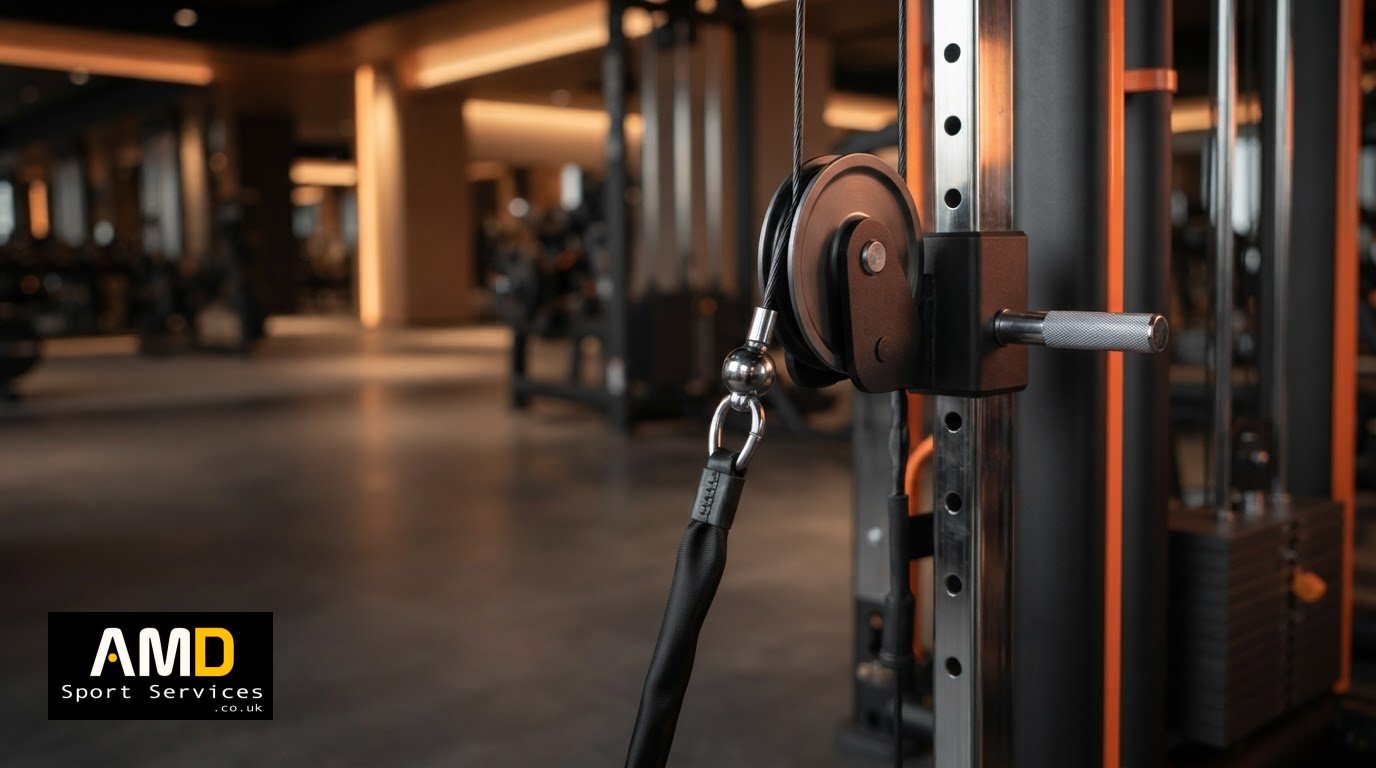
Commercial fitness suites: Where schools offer strength and cardiovascular conditioning suites, inspections cover resistance machines, weight stacks, guide rods, pulleys, and replacement gym cables. Padded seating and support rollers are checked for tears, and cardiovascular machines—including commercial treadmills—are inspected for running deck stability and tracking belt alignment.
Outdoor sports, athletics, and play facilities
External sports assets face continuous exposure to the British climate, which accelerates metal corrosion, timber rot, ground movement, and ultraviolet degradation of netting materials. A comprehensive secondary school annual inspection covers external sports grounds thoroughly:
Outdoor sports goals: Goalposts for 11-a-side, 9-a-side, and mini-soccer, along with rugby, hockey, and Gaelic football posts, are evaluated for joint weld integrity, ground socket security, and net retention fittings. For portable units, engineers inspect ballast weights, counterbalance systems, and football goal wheeling devices, including their condition and operation during movement across grass or artificial turf.
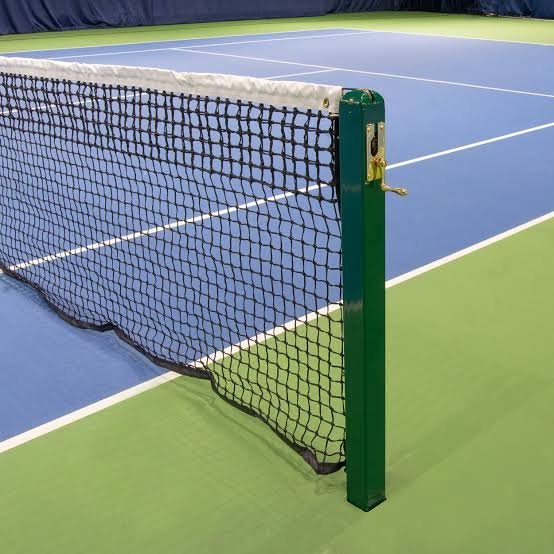
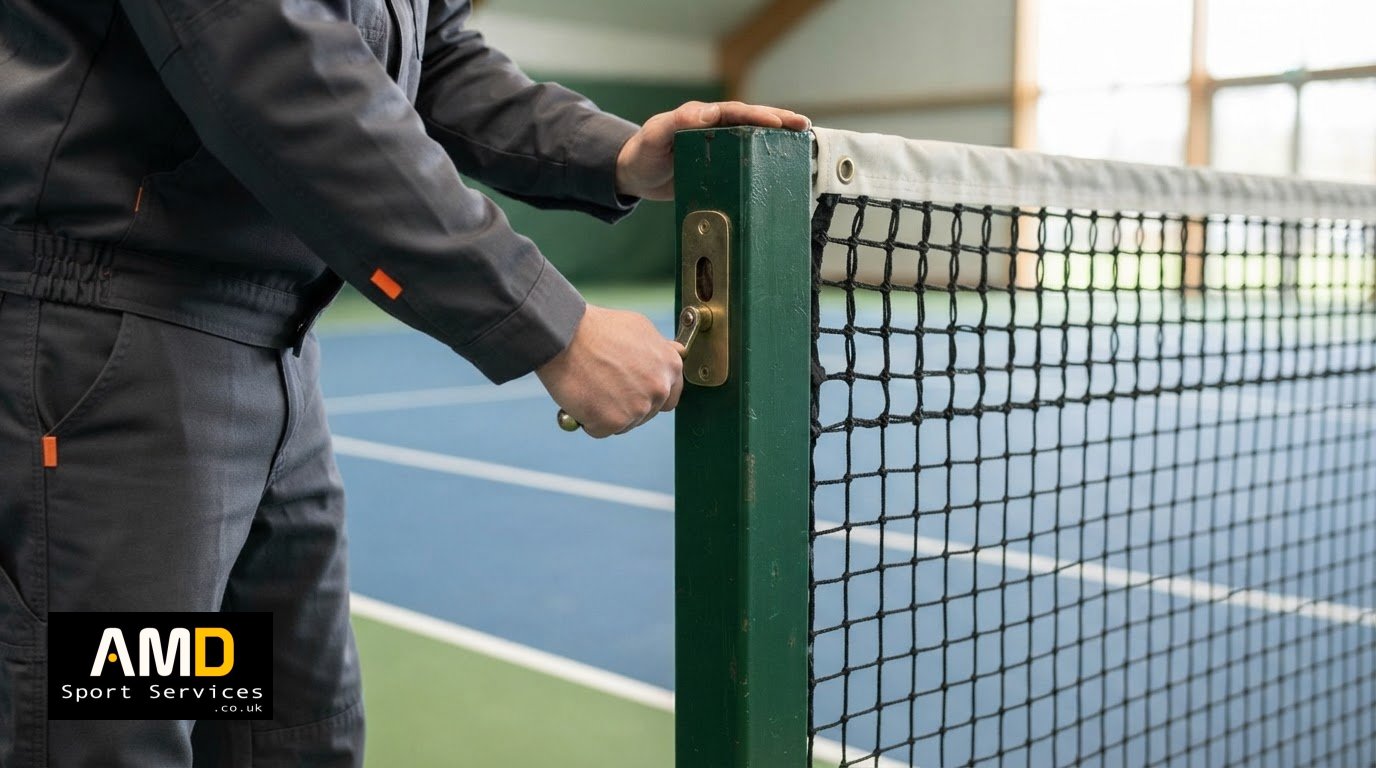
Outdoor netball and tennis installations: Ground-fixed and freestanding posts are checked for vertical alignment, rust development, tensioning winches, and base stability across asphalt and polymeric court surfaces.
Athletics facilities and long jump pits: Inspections assess the structural condition of long jump runways, take-off boards, and sand landing pits. Engineers examine landing pit edge protection to verify that raised or damaged haunched concrete is fitted with protective, right-angled EPDM safety edging secured to the top and inner edge of exposed concrete. Sand pit covers are checked to confirm that weighted perimeter chains and fixing pegs are intact, preventing animal contamination and debris build-up while allowing surface water to drain freely through the mesh.
Throwing cages and safety netting: Athletics hammer and discus throwing cages represent significant structural installations. High-level inspections examine structural uprights, pivot hinge gates, winch assemblies, and lifting cables. The throwing cage net is examined for UV brittleness, torn mesh, and lower rope line security.
Outdoor play equipment and safety surfacing: Where secondary academies incorporate outdoor adventure trails, calisthenics rigs, or outdoor play structures, inspections examine timber posts, steel crossbars, climbing ropes, chain suspensions, and concrete ground anchors. Engineers also assess the condition of associated safety surfacing. Resin bound rubber mulch—laid directly onto grass on school fields—is inspected for surface wear, while resin bound rubber crumb—installed over solid asphalt or concrete bases—is checked for perimeter edge adhesion and sub-base stability.
What does a school sports equipment inspection report show?
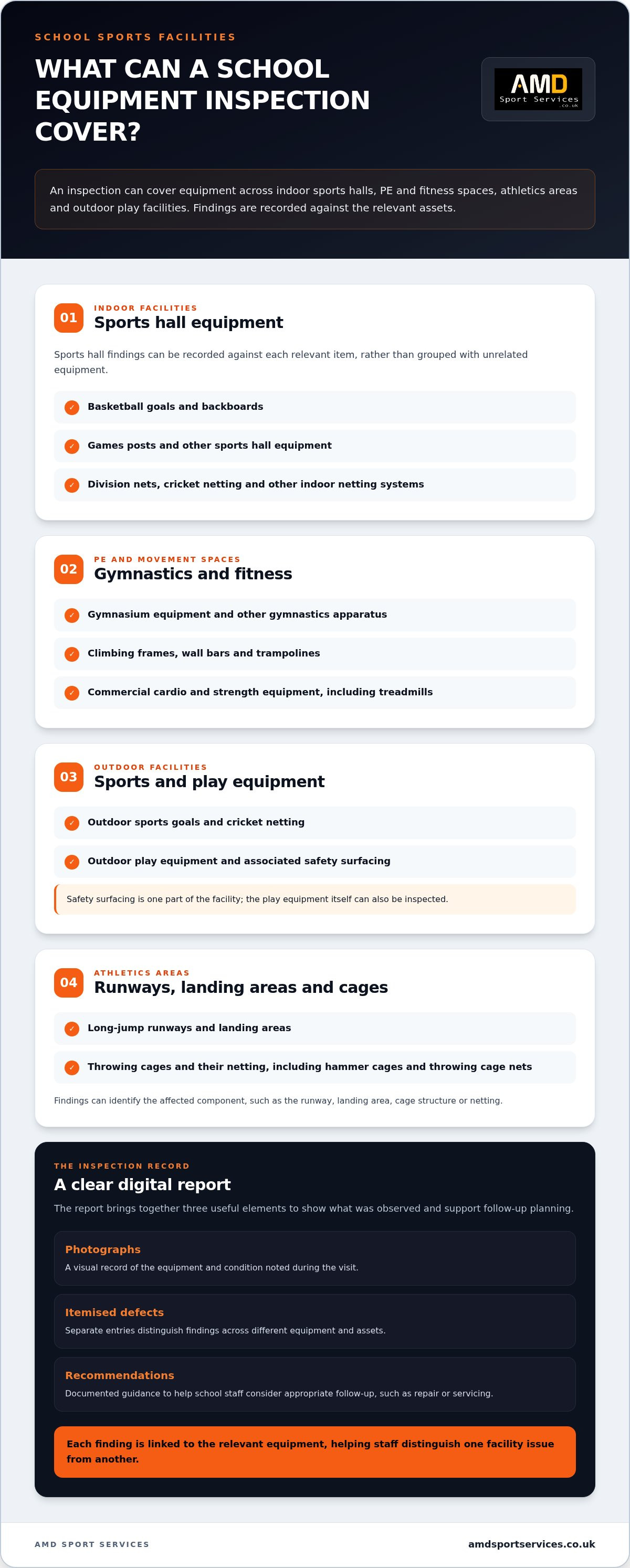
An inspection is only as effective as the documentation it delivers. School facilities managers, bursars, and PE coordinators require clear, unequivocal evidence to justify maintenance budgets and make informed health and safety decisions. Vague, handwritten checklists or generic scorecards lack the precision needed to track apparatus over its full operational lifecycle.
AMD Sport Services provides comprehensive digital inspection reports that document every assessed item clearly. Each report entry connects a specific piece of equipment with high-resolution photographic evidence, an exact description of identified defects, and clear recommendations for corrective maintenance.
Itemised defect logging and photographic records
A digital report eliminates ambiguity by capturing equipment condition exactly as found during the engineering visit. Photographs highlight the precise location of wear, such as a sheared locking bolt on a folding basketball frame, frayed suspension cordage on a division net, or splitting timber on a vaulting box. Itemising defects individually allows school decision-makers to distinguish between minor cosmetic wear and structural issues that require immediate intervention.
The following table illustrates how an engineer categorises equipment findings within a digital inspection report to guide school maintenance workflows:
Informing practical maintenance workflows and immediate repairs
By establishing an accurate, photographic register of equipment condition, the digital report serves as a working document for the school's estates team. Facilities managers can cross-reference recommended actions with departmental budgets, schedule repairs during scheduled school holidays, or commission immediate remedial work for urgent hazards.
A critical advantage of working with AMD Sport Services is our capacity to bridge the gap between inspection and repair. Where minor defects are identified during the audit—such as loose hinge fixings, missing net clips, tracking adjustments, or minor winch tensioning—our engineers can frequently complete repairs on site during the inspection visit. This approach reduces administrative work and disruption to the school timetable.
Where extensive mechanical damage or worn parts require bespoke fabrication—such as custom division net track sections, replacement cables, or new timber components—the digital report specifies the required scope of work. Through our sports equipment service and maintenance framework, schools receive straightforward, itemised proposals for all recommended follow-up work.
How often should a secondary school arrange sports equipment inspections?
Determining an appropriate inspection interval depends on equipment usage rates, pupil numbers, and the diversity of sporting activities hosted across the school grounds. However, regular specialist auditing is essential to monitor mechanical wear and manage facility risk effectively.
AMD Sport Services recommends that all secondary school sports, PE, gymnastics, fitness, and outdoor equipment receive a thorough visual and mechanical inspection at least every 12 months. This 12-month interval establishes an objective annual benchmark for monitoring equipment condition.
When is a 12-month inspection interval appropriate?
An annual inspection cycle forms the standard baseline for secondary schools, multi-academy trusts, and sixth form colleges. Conducting a full audit every 12 months ensures that:
Apparatus adjusted or moved weekly by different teaching staff is checked for mechanical integrity and correct assembly.
High-level roof fixings, overhead division net tracks, and wall-anchored frames are systematically checked for structural movement.
External sports goals, boundary netting, and throwing cages are reviewed following seasonal weather exposure and winter storms.
The school maintains an uninterrupted, documented maintenance history that demonstrates proactive facilities care.
The annual audit should be scheduled at a consistent time each year—such as during summer or half-term breaks—ensuring engineers have unrestricted access to main sports halls, gymnasiums, and playing fields without interrupting physical education classes.
When should facilities consider biannual inspections?
While an annual inspection serves as a minimum baseline, certain secondary facilities benefit from biannual inspections (every six months). Schools should consider a six-month inspection frequency when:
The facility operates extensive community lettings: Sports halls and artificial pitches rented out seven evenings a week and across weekends experience triple the mechanical wear of a standard school facility. Winches, division nets, goals, and floor sockets deteriorate at an accelerated rate under continuous adult recreational use.
The school operates dedicated, high-density fitness suites: Resistance equipment, cable pulleys, and commercial treadmills subjected to constant daily student use require regular mechanical servicing and cable checks.
Gymnastics and trampolining apparatus are heavily scheduled: Apparatus used continuously for competitive gymnastics training programmes demands frequent structural and spring tension verification.
Structuring inspections around equipment usage levels ensures school decision-makers identify emerging mechanical fatigue before an unexpected failure halts facility use or affects equipment operation.
How AMD Sport Services supports secondary-school annual inspections
AMD Sport Services delivers dedicated sports equipment inspection, maintenance, and installation services across the UK and beyond. With over 20 years of hands-on industry experience, we provide educational institutions with dependable, safety-focused technical expertise. We work directly with schools, academies, local authorities, and facilities management providers to maintain sports facilities to the highest operational standards.
Direct communication with specialist engineers
When working with AMD Sport Services, school business managers, PE coordinators, and site teams communicate directly with experienced engineers and installers. We do not employ a detached sales team. From your initial enquiry to the completion of on-site inspections and follow-up repairs, you discuss your equipment directly with the tradespeople who understand the mechanical nuances of sports equipment installation and fabrication.
This technical transparency ensures that recommendations are grounded in practical engineering realities. If a division net trackway can be realigned using specialist tooling at height, our engineers will repair it rather than advising unnecessary replacement. If an obsolete basketball backboard or damaged games post requires custom engineering, we manufacture bespoke solutions in-house to fit the exact structural dimensions of your sports hall.
Comprehensive on-site capabilities and bespoke solutions
Our engineers arrive on site equipped to assess, service, and rectify faults across your entire sports portfolio. Key technical capabilities delivered during our inspection and maintenance visits include:
High-level inspections and mechanical servicing: Safe access to overhead winch cables, basketball goal frames, roof-hung division tracks, and motor assemblies.
Trackway repairs and alignment: Realignment of bent trackways, smoothing unlevel joins, resolving crossover switch problems, and replacing damaged trolleys to ensure division nets glide effortlessly. In severe cases where tracks have been dented by ball impacts, we can cut out damaged sections and insert matching track profiles.
External apparatus and play repair: Maintenance of outdoor sports goals, including fitting new football goal wheeling devices, net restringing, and weld repairs. For outdoor play equipment, our scope extends beyond safety surfacing to replacing damaged timber components, resetting failed concrete foundations, applying protective wood treatments, welding failed brackets, manufacturing bespoke climbing nets, and replacing damaged or missing hardware.
Athletics and surfacing maintenance: Fitting right-angled EPDM safety edge protection to concrete sand pit borders, supplying weighted, breathable sand pit covers, and carrying out repairs across polymeric runways and safety surfacing.
Direct on-site rectifications: Carrying out minor repairs, bolt replacements, track lubrications, and safety adjustments during the inspection visit, saving schools time and secondary site call-out costs.
All AMD Sport Services staff are fully insured and enhanced DBS-checked, ensuring full peace of mind when operating within secondary school environments. We combine technical competence with a practical, methodical approach to facility safety.
Securing long-term facility safety for your secondary school
Sports equipment within secondary schools represents a substantial financial investment and an important facility resource. Maintaining this infrastructure requires proactive, engineer-led oversight. A secondary school annual inspection bridges the gap between daily equipment operation and long-term asset management, transforming routine checks into clear, documented maintenance records.
Partnering with a specialist contractor supports the ongoing maintenance of sports halls, gymnasiums, fitness suites, and outdoor fields for every lesson, match, and community session. With itemised digital reporting, immediate on-site repair capabilities, and direct access to seasoned engineers, AMD Sport Services helps schools manage sports facilities with total confidence.
Whether you require a comprehensive 12-month annual inspection across your indoor and outdoor facilities, high-level basketball goal servicing, or bespoke apparatus repairs, our team is ready to support your school. Contact AMD Sport Services today to discuss your site requirements and arrange a free, no-obligation quotation for your secondary school annual sports equipment inspection.
Frequently Asked Questions
What specific sports equipment is covered during an annual inspection?
An annual inspection covers all indoor and outdoor sports, physical education, gymnastics, fitness, and recreational play equipment across the school site. This includes basketball goals, backboards, division nets and trackways, wall bars, climbing frames, vaulting apparatus, trampolines, fitness machines, free-standing and socketed outdoor goals, tennis and netball posts, long jump facilities, throwing cages, and associated safety surfacing.
Can an annual inspection cover both indoor sports halls and outdoor athletics facilities?
Yes. AMD Sport Services inspects equipment across the entire school estate. An engineer can evaluate indoor sports halls, dedicated gymnasiums, and fitness conditioning suites alongside outdoor facilities such as playing fields, artificial turf pitches, athletics sand pits, throwing cages, and outdoor play areas during a coordinated inspection visit.
What details are included in the inspection report provided to the school?
Schools receive a detailed digital inspection report upon completion of the visit. The document itemises every inspected apparatus, accompanied by high-resolution photographs of observed defects, a technical description of the fault, and clear engineering recommendations for maintenance, servicing, or repair. This provides a transparent, actionable audit trail for site managers and PE coordinators.
Can equipment repairs be completed during the inspection visit?
Yes. Where feasible, AMD Sport Services engineers carry out minor repairs, mechanical adjustments, track lubrications, and fastener replacements on site during the inspection visit. Resolving minor issues immediately reduces administrative burdens and disruption to facility use. For larger repairs requiring custom fabrication, an itemised proposal is provided.
How frequently should secondary schools inspect their sports apparatus?
AMD Sport Services recommends that all secondary school sports and physical education equipment receive a thorough visual and mechanical inspection at least every 12 months. Facilities subjected to intensive secondary school use alongside heavy evening and weekend community lettings benefit from biannual inspections (every six months) to manage accelerated wear effectively.
How does a school arrange an annual inspection with AMD Sport Services?
Arranging an inspection is straightforward. Schools can contact AMD Sport Services by telephone at 0330 043 3453 or via email at info@amdsportservices.co.uk. We provide free, no-obligation quotations based on the specific scope of indoor and outdoor sports facilities you wish to have inspected, with all work delivered by our fully insured, enhanced DBS-checked engineers.
Comments