
Annual Sports Equipment Inspection: Safety & Compliance

An inspection report is only useful if it helps you decide what needs attention next. An annual sports equipment inspection can identify defects, but facility teams also need clear findings and practical recommendations to plan repairs and manage equipment safely.
It’s understandable to have questions before arranging an inspection: which indoor and outdoor equipment can be assessed together, how access will be coordinated, and whether the report will support follow-up. Equipment should receive a thorough visual inspection at least every 12 months, with some sites arranging inspections twice a year where use is heavy.
This article explains what an inspection can cover across sports, PE, gymnastics, fitness and outdoor-play equipment, and how findings are recorded. AMD Sport Services provides detailed digital reports with photographs, itemised defects and recommendations. Where possible, our specialist teams can also carry out repairs during the visit, helping connect the inspection to practical action. We’ll also look at planning around equipment use and access, so you can arrange a professional inspection and repair service with confidence.
Why an Annual Sports Equipment Inspection Belongs in the Facility Maintenance Cycle
What an Annual Sports Equipment Inspection Can Cover Across a UK Facility
What an Annual Sports Equipment Inspection Report Shows, and How Repairs Fit In
Planning an Annual Sports Equipment Inspection Around Facility Use and Access
What to Expect from AMD Sport Services’ Annual Inspection Service
Why an Annual Sports Equipment Inspection Belongs in the Facility Maintenance Cycle
Sports equipment is used, adjusted and moved as facilities accommodate different activities. A planned inspection gives facility teams a consistent opportunity to review equipment condition and bring findings into their maintenance planning. An annual sports equipment inspection is a thorough visual review of facility equipment, providing a structured point of reference rather than waiting for concerns to emerge during everyday use.
In general terms, an inspection is a close examination of an item or system. The overview of What is an Inspection? describes inspection as part of assessing condition and conformity. In a sports facility, the practical purpose is to understand the condition of the equipment included in the review and identify issues that may need attention.
How annual inspection supports planned facility maintenance
A scheduled review helps make equipment oversight part of the facility’s maintenance cycle. By keeping a consistent record of findings, teams can track which issues have been identified, note whether they remain outstanding and keep maintenance decisions connected to previous assessments. That history can be useful when responsibilities are shared across site teams or when equipment serves several sports and activities.
An inspection is a review, not a guarantee that repairs will be required or completed. AMD Sport Services documents findings and recommendations to support practical follow-up. Where possible, our engineers can carry out repairs during the visit; other work can be considered separately. Keeping the assessment and repair work distinct helps teams understand what has been reviewed and what action may still be needed.
A useful maintenance cycle also makes it easier to discuss equipment condition with colleagues responsible for organising facilities, budgets and access. Rather than relying on informal recollection, teams can use inspection records to inform decisions about priorities and future maintenance planning. The record supports oversight, while the facility’s maintenance arrangements determine how identified work is progressed.
When a facility may schedule inspections more often
Inspection planning can reflect the way equipment is used at a particular site. Facilities with intensive or varied use may find that a more frequent review suits their maintenance arrangements, whilst equipment with a different pattern of use may be planned on another cycle. There is no single usage threshold that defines the right schedule for every facility.
The key is to align the review plan with the equipment and its use, then make the inspection scope clear. AMD can discuss the facility’s equipment and operating pattern when arranging a professional inspection. This helps shape a schedule that fits the site, rather than relying on a one-size-fits-all approach, and gives facility teams a consistent basis for ongoing equipment oversight.
What an Annual Sports Equipment Inspection Can Cover Across a UK Facility
A facility-wide inspection can include equipment from several settings, from the sports hall and gym to outdoor play spaces and athletics areas. The scope of an annual sports equipment inspection can be organised around the equipment your site uses, giving teams a clearer picture of the assets included in the review.
AMD Sport Services inspects sports, PE, gymnastics, fitness and outdoor-play equipment. Depending on the facility, coverage may include:
Indoor sports and PE: gymnasium equipment, trampolines, gymnastics apparatus, wall bars, climbing frames, basketball goals and backboards.
Sports hall facilities: games posts, cricket netting, division nets and other installed sports hall equipment.
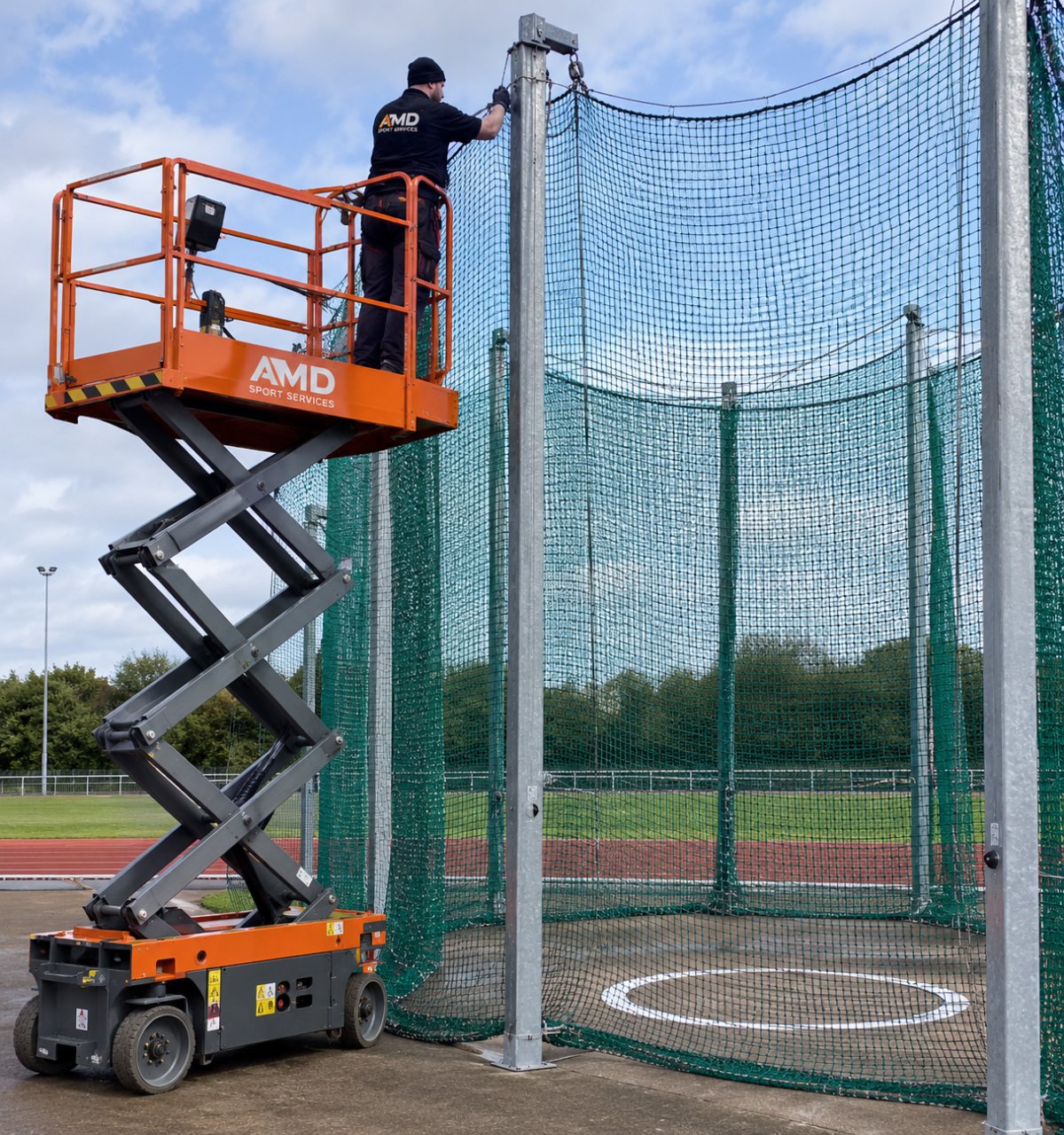
Outdoor and athletics equipment: outdoor sports goals, outdoor play equipment, safety surfacing, throwing cages, long-jump facilities and landing areas.
Fitness equipment: commercial cardio and strength equipment.
This breadth is useful for sites where equipment is spread across different buildings and grounds. Rather than treating each area as unrelated, the inspection scope can be planned around the facility’s equipment groups and access requirements.
Indoor equipment and sports hall facilities
In a sports hall or gymnasium, inspection coverage can include trampolines, gymnastics apparatus, wall bars and climbing frames, alongside basketball goals and backboards. Basketball equipment installed at height can be included in high level inspections on request. Games posts, indoor cricket netting and division nets can also form part of the review, giving facility teams a record across the hall’s fixed and activity-specific equipment.
Including these different items in the planned scope helps avoid an overly narrow review of a space that serves several sports and activities. AMD also provides inspection and maintenance for indoor sports equipment, with the scope shaped around the equipment present at the facility.
Outdoor equipment, athletics and fitness facilities
External areas can include sports goals, outdoor play equipment and associated safety surfacing. For athletics facilities, the inspection scope can extend to throwing cages, long-jump runways and landing areas. These items have distinct uses and locations, so identifying them clearly in the scope helps ensure the report reflects the facility’s actual equipment, rather than grouping everything under a broad heading such as “outdoor equipment”.
Fitness areas can also be included, covering commercial cardio and strength equipment. A combined facility may therefore need indoor, outdoor, athletics and fitness equipment represented in its inspection plan. For external play equipment, the review can cover the play structures and their associated surfacing as separate but related parts of the site.
For a facility with both sports hall and external equipment, AMD can plan inspection coverage across these areas as part of its sports equipment inspection service. This gives the facility team a clear view of which equipment groups are included and supports a practical, site-specific inspection arrangement.
What an Annual Sports Equipment Inspection Report Shows, and How Repairs Fit In
An annual sports equipment inspection gives facility teams more than a general assessment of condition. AMD Sport Services records its findings in a detailed digital report, with photographs, itemised defects and recommendations. This documented output helps show what was inspected, which issues were identified and what follow-up may be appropriate.
A report is most useful when its findings are clear enough to support practical decisions. A photograph gives visual context to a recorded defect, while an itemised entry helps distinguish one issue from another, particularly where a facility has several pieces of similar equipment. Recommendations then connect the findings to possible follow-up, without suggesting that every item requires the same response.
What facility teams can expect in the digital report
AMD’s digital reports bring the inspection findings together in a format facility teams can refer to after the visit. Photographs help illustrate the condition recorded, itemised defects make the issues easier to identify, and recommendations explain relevant next steps. Together, these details provide a useful record for reviewing the equipment and coordinating follow-up with the people responsible for maintenance.
That clarity can help teams prioritise their attention and keep a record of identified defects. The report documents the inspection; it doesn’t replace a repair or promise a particular outcome. Its role is to give decision-makers practical information about the items assessed and the findings that need consideration.
How inspection findings connect with repair work
An inspection report and repair work are connected, but they are not the same thing. The report records the equipment condition and recommendations; repair work addresses identified faults through physical work on the equipment. Keeping that distinction clear helps facility teams understand what the inspection has established and what action may follow.
Where possible, AMD can carry out repairs on-site during the inspection visit. This can link an identified issue directly to practical work, while the report remains a record of the findings. If further maintenance is needed, AMD’s sports equipment service and maintenance supports follow-up beyond the inspection itself.
For facility teams, the value lies in having both a clear record and a route to repair work where it can be completed during the visit. Findings can inform maintenance planning, while any completed work deals with the relevant fault. The report therefore supports follow-up without being mistaken for the repair itself.
Planning an Annual Sports Equipment Inspection Around Facility Use and Access
A well-planned annual sports equipment inspection starts with a clear view of the facility: what equipment is present, where it is located and how it is used. Sharing this overview with AMD helps shape the inspection scope around the site, rather than treating every item as if it requires the same access or timing.
Use patterns matter to planning. A sports hall may be booked throughout the day, while outdoor areas or fitness rooms have different access arrangements. Equipment that is in regular use may need to be made available at a suitable time for inspection. Clear co-ordination helps AMD’s specialist teams understand the site layout and organise the visit with facility operations in mind.
Co-ordinating equipment groups and inspection access
A facility-wide view can bring indoor, outdoor, athletics and fitness equipment into one planning conversation. The types of equipment and their locations help define the scope, including whether access to a sports hall, gym, external play area or athletics space needs to be arranged. For indoor spaces, AMD’s indoor inspection and maintenance service covers the equipment and facilities included in the review.
Some equipment is installed at height. Where relevant, high level inspections can be included in the arrangements, with access considered as part of planning the inspection. This is particularly useful when a facility has a mixture of ground-level equipment and items positioned above the playing area. A defined scope helps the facility team and inspection team work from the same understanding of what is to be assessed.
Planning can also account for how areas are booked and used, so inspection access fits around the facility’s programme as far as practical. The aim is to coordinate the equipment groups and areas included, not to prescribe a single schedule for every site.
Keeping inspection planning distinct from DIY checks
Planning a professional inspection is different from asking facility staff to carry out technical checks themselves. AMD’s specialist teams conduct the inspection and provide documented findings, giving the facility a consistent record of the equipment assessed. Staff can support arrangements for access and provide relevant information about the site, while the inspection work remains with the specialist team.
That distinction also keeps the planning focused: identify the equipment and areas for review, consider how the facility is used, and coordinate access for the visit. Broader context on professional inspections is available in AMD’s sports equipment inspection guidance.
For a site with several equipment groups, a coordinated scope can make the visit easier to organise and the findings more relevant to facility planning. Discuss an inspection for your facility with AMD Sport Services.
What to Expect from AMD Sport Services’ Annual Inspection Service
AMD Sport Services brings sports facility installation, inspection, maintenance and surfacing together under one specialist provider. With over 20 years of experience, the team works with facilities across the UK and beyond. This breadth is useful for organisations managing different sports spaces and equipment, with specialist installation teams able to support projects that call for a considered, site-specific approach.
AMD’s staff are fully insured and enhanced DBS-checked. Customers also speak directly with engineers and installers, keeping conversations about facility requirements close to the people carrying out the work.
A specialist service with direct engineer communication
Some facilities have equipment or site conditions that call for more than a standard, off-the-shelf solution. AMD provides bespoke fabrication and repair solutions where standard products do not meet the requirement. Direct access to engineers and installers helps customers discuss the technical context of a project with the specialists involved, whether the work concerns an installation, maintenance or an inspection arrangement.
This hands-on approach is supported by experience across sports facility work. Rather than treating every site as identical, AMD’s specialist teams can consider the equipment and requirements presented by each facility. The aim is a clear conversation about the work and a suitable approach, grounded in practical installation and maintenance experience.
Arranging a no-obligation inspection quotation
AMD offers a free, no-obligation quotation for inspections and services. It provides a straightforward way to set out the facility’s requirements and understand the proposed work before deciding how to proceed. Customers can speak directly with the engineers and installers, keeping the discussion focused on the equipment and the service being considered.
To begin, outline the inspection requirements for your facility. AMD can then provide a quotation for consideration, with no obligation to proceed.
Make Your Next Inspection Part of a Clear Maintenance Plan
A well-organised inspection gives your facility a useful point to review equipment condition and plan what happens next. As equipment, spaces and patterns of use change, keeping the inspection scope aligned with the facility helps ensure the review remains relevant. An annual sports equipment inspection can be a dependable part of that process, supporting informed decisions about ongoing maintenance and future access.
The next step is to set out which equipment and areas your facility needs assessed, then arrange a professional inspection that fits the site. AMD Sport Services can discuss your requirements and provide a free, no-obligation quotation, so you can consider the proposed inspection before proceeding.
Request a free, no-obligation inspection quotation and take a practical next step towards managing your facility’s equipment with confidence.
Frequently Asked Questions
How often should sports equipment receive a thorough visual inspection?
At least every 12 months. This is a general inspection schedule for sports equipment, not a statement that every item will need repair at each visit. AMD can plan an inspection around the facility’s equipment and access arrangements, helping the review fit the site’s maintenance cycle.
Can a facility arrange biannual inspections for heavily used equipment?
Yes. Some facilities arrange inspections twice a year when equipment experiences heavy use. The inspection schedule can reflect the facility’s pattern of use; there is no single usage threshold that applies to every site. AMD can discuss a suitable inspection arrangement for the equipment and how it is used.
Are high level inspections available for basketball goals and backboards?
Yes. High level inspections for basketball goals and backboards are available on request. This can be relevant where basketball equipment is installed above the playing area. Including it in the inspection arrangements helps ensure the requested scope accounts for elevated equipment, alongside other items the facility wants assessed.
Does an annual sports equipment inspection cover outdoor play equipment?
Yes. AMD’s inspection service covers outdoor play equipment. The inspection scope can include play structures and associated safety surfacing, giving the facility a review of these elements as part of its wider equipment arrangements. This is useful for sites that manage sports and play areas across the same grounds.
Can AMD carry out repairs during an inspection visit?
Yes, AMD can carry out repairs during the inspection visit where possible. Whether work can be completed then depends on the repair required and the circumstances on site. The inspection identifies findings; repair work addresses them. If a repair cannot be completed during the visit, the findings remain available to inform follow-up planning.
What details are included in an AMD digital inspection report?
The digital report includes photographs, itemised defects and recommendations. These details help distinguish findings across pieces of equipment and give facility teams a written record to refer to when considering follow-up. The report documents the inspection outcome; it does not itself carry out repairs or guarantee a particular result.
Comments