
Expert Throwing Cage Repair for UK Athletic Facilities

A damaged throwing cage doesn’t automatically need replacing. Throwing cage repair can address worn netting, faulty fittings and tension cable problems. The right scope depends on the cage’s condition and the damage found. A quotation should reflect the work needed, not assume every cage requires the same solution.
It’s understandable to want a clear view of the work before deciding. This article explains how repair quotations are assessed, which repair and refurbishment options may suit your facility, and how damaged or stretched tension cables are handled. It also covers how maintenance can identify wear and help keep netting and supporting components in serviceable condition.
Repair quotations based on photographs or inspections
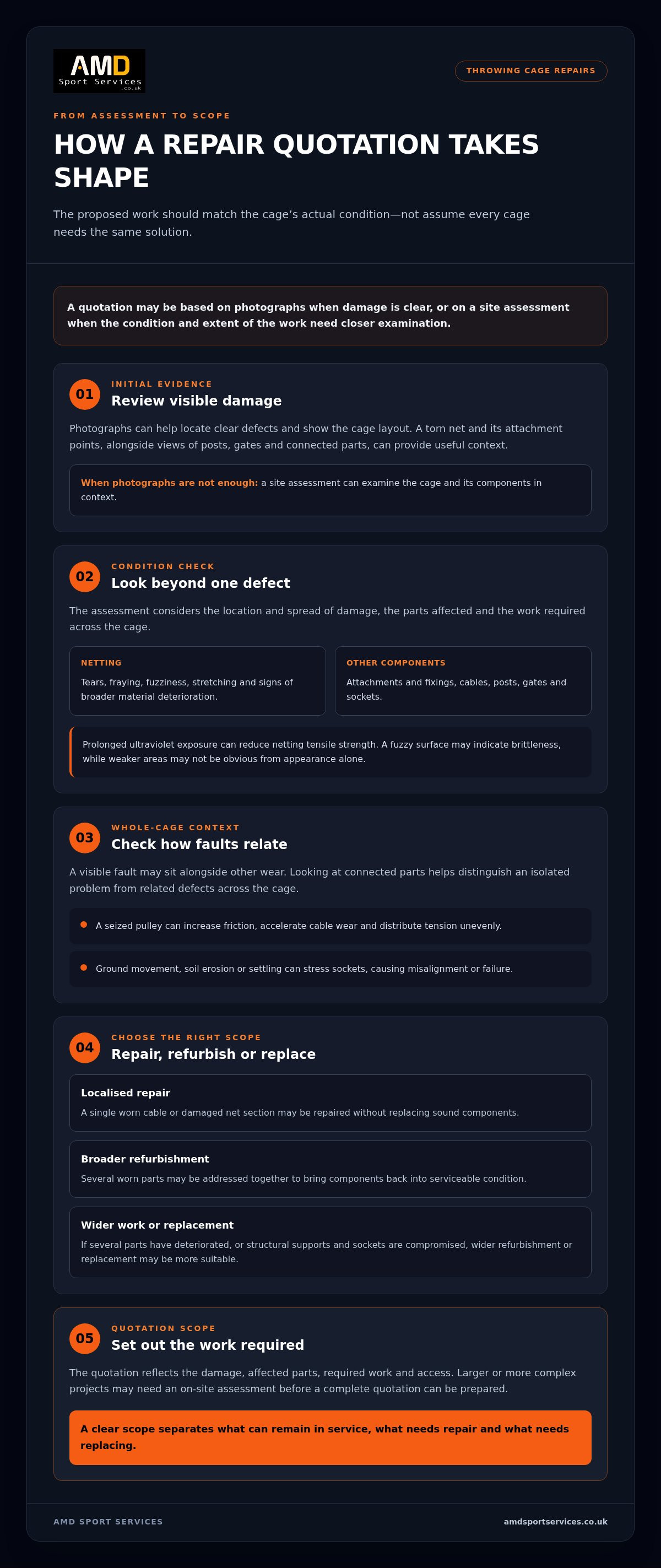
In the UK, throwing cage repairs are available from sports-equipment repair specialists. A quotation may be based on photographs when visible damage is clear, or on a site inspection when the cage’s condition needs closer assessment.
Photographs can help a specialist locate visible defects and understand the cage layout. Images showing a torn net and its attachment points, for example, may help distinguish local net damage from a problem with the fixings. Photos also show posts, gates and connected parts, giving context that a close-up of one defect alone cannot provide.
The quotation depends on the extent and location of the damage, the parts affected and the work needed. A small tear in one net panel presents a different scope from damage across several sections or worn fittings. The assessment should connect the proposed work to the specific condition shown or found.
Netting condition can be difficult to judge from appearance alone. Prolonged ultraviolet exposure can break down the polymer chains in netting, reducing its tensile strength. A fuzzy surface may indicate brittleness, while UV degradation can also create less visible weak spots. A specialist assessment considers both obvious tears and broader signs of material deterioration.
Routine inspections can identify early netting degradation and help prevent accidents. Findings can record the affected area, observed defect and recommended action. This provides a useful reference for distinguishing new issues from previously recorded ones during later assessments.
Information relevant to an assessment may include:
Netting tears, fraying, fuzziness or stretching.
Damaged or loose attachments and fixings.
Visible wear to cables, posts, gates or sockets.
The location and apparent spread of each defect.
Previous inspection findings or completed repairs.
When photographs cannot show the extent of damage, a site inspection allows the cage and its components to be assessed in context. A net tear may be visible, for example, while the condition of its supports or adjacent netting needs closer examination before the repair scope is clear.
Larger or more complex repair projects may need an on-site assessment before a complete quotation can be prepared. Reviewing the whole cage helps distinguish isolated faults from related defects, so the proposed work reflects its actual condition, rather than pricing only the first visible problem.
Repair, maintenance and refurbishment
Repair work may target one failed component, while refurbishment addresses several worn parts across the cage. The decision depends on how the structure, netting, cables and moving components work together.
Repair and refurbishment work
A repair can focus on a specific fault, such as a worn tension cable, damaged netting or faulty pulley. Refurbishment takes a broader view, bringing several ageing components back into serviceable condition together. The scope should reflect the cage’s overall condition, rather than treating every visible defect as an isolated problem.
Consider how individual faults affect the rest of the structure. A seized pulley increases friction and can accelerate cable wear. It may also distribute tension unevenly, placing extra stress on some cables. If a cable is worn or stretched, prompt replacement helps restore appropriate tension and reduces the chance of it breaking under stress.
Ongoing maintenance
Maintenance helps identify wear before it develops into a larger repair. Lubricating pulleys helps prevent components from seizing, while checking cables can reveal stretching or wear that affects tension. The connection matters: a pulley that no longer turns freely can increase friction and make a cable wear faster.
Ground sockets also need attention. Ground movement, soil erosion and settling can stress sockets, leading to misalignment or failure. Moisture and oxygen can contribute to rust, particularly where metal sockets meet the ground. Maintenance planning should consider moving components and the supporting structure, not just the netting.
Repair versus replacement
When comparing repair with replacement, weigh the condition of the whole cage. A localised fault, such as one worn cable or a damaged net section, may be addressed without replacing sound components. If several parts have deteriorated, or structural supports and sockets are compromised, wider refurbishment or replacement may be more suitable.
The scope of work, components required and access all affect the quotation. A useful comparison sets out which parts can remain in service, which need repair and which need replacing. This makes the decision about continued use clearer than comparing replacement with the cost of one isolated repair alone.
Safe repair precautions
During repairs, keep the throwing area clear and prevent use of the cage until the work is complete. Tension cables can carry a load, so releasing or adjusting them without controlling that load may cause sudden movement. Before work begins, the repair plan should account for cable tension, unstable components and the work area.
Once work is finished, the repaired parts and their connections need to be checked. Replacing a cable, for example, should include consideration of pulley movement and resulting tension, because a seized pulley can create uneven loading. These precautions help keep repairs controlled and reduce the risk of overlooking a component fault.
Corrosion-resistant materials and installation
Material selection is part of planning a durable throwing cage repair, particularly when replacing buried fittings. Galvanised steel and other corrosion-resistant materials can reduce oxidation in ground sockets. The suitable choice depends on the existing cage design and each fitting’s role in its support system.
Replacement parts need to work with the existing posts and connections. A socket with a different shape or fit may not hold the post in its intended position. The installation assessment considers how the new fitting connects to the cage structure, rather than treating material choice as a standalone decision.
Position matters too. A socket and post must align with the cage layout so the frame sits correctly in relation to its netting and gates. If a replacement fitting changes that alignment, connected parts may no longer meet or operate as intended. The proposed installation should account for the full assembly and how its components connect.
Specialist installation typically involves assessing the existing fitting, identifying suitable replacement material and installing it to suit the cage configuration. The work also considers how securely the post sits and whether the connection fits the surrounding structure. This joined-up approach avoids treating a replacement socket as an isolated item.
Material and installation considerations include:
Material suitability: whether galvanised steel or another corrosion-resistant option suits the fitting’s function.
Compatibility: whether the replacement connects properly with existing posts and fittings.
Positioning: whether the installed socket keeps the supported post aligned with the cage.
Assembly fit: whether connected netting, gates and structural parts remain correctly arranged.
For an existing cage, the fitting’s condition and configuration guide the scope of work. A single replacement may be appropriate when the surrounding structure remains suitable. If the installation assessment reveals related damage, the scope can account for those connections before work proceeds.
For a new or substantially refurbished cage, choosing corrosion-resistant materials at installation can help reduce oxidation in ground sockets. The finished installation should suit the facility’s cage layout and the components it supports. This gives the repair or refurbishment a clear material and fitting specification without assuming every facility needs the same arrangement.
Material selection and accurate fitting work go together. Galvanised steel or another corrosion-resistant material addresses the socket choice, while correct positioning and compatible connections determine how it functions within the cage. Considering both helps define a repair that suits the structure and its components.
Frayed or stretched tension cables
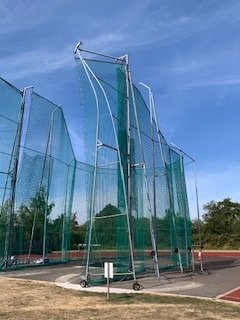
Tension cables are part of the cage’s net-support system, so their condition affects how the net is held across its span. A fault may appear on the cable itself or around its connection points. Assessing both areas helps establish whether the repair is limited to one cable or includes associated fittings.
Fraying can develop along a cable or concentrate near an end where it connects to the cage. These locations call for different considerations. Damage along the span affects the cable body, while damage at an end may involve the termination or fixing. The repair scope should identify the fault’s location and which connected parts need attention.
Stretching can change how a cable sits within the system. One section of net may hang differently from the rest, for example, if its supporting cable no longer holds its intended position. The cable layout and its relationship to the net help show whether the fault affects one area or the wider cage arrangement.
A cable repair assessment considers the route, endpoints and function of each affected line. It also checks that the proposed replacement suits the existing cage configuration. Cable length, attachment arrangement and how the net is supported all influence the work required. This avoids treating a cable as a generic component separate from the system it serves.
Worn cables can break under stress, so their condition needs to be addressed before the cage returns to use. A specialist may replace the affected cable and assess adjoining connections as part of the same work. If several lines show deterioration, the wider cable arrangement can be reviewed to establish a coherent repair scope.
Uneven loading from a compromised tension system can place greater stress on structural posts, potentially bending or cracking them. Cable assessment should therefore include the frame. For instance, a post that appears out of alignment may need consideration alongside the cables connected to that section of net.
After cable work, review the completed arrangement as a connected system. The assessment can consider whether cables follow their intended routes, end connections are secure and the net is supported consistently. This gives facility managers a clearer account of the repair and the related components included in its scope.
When planning work, distinguish whether the fault affects one cable, several connected lines or their support arrangement. A cable-specific assessment can identify the scope and inform the repair plan, without assuming every cage needs the same work.
Is it cheaper to repair or replace a throwing cage?
Repair may cost less than replacing a cage when damage is limited and its main structure remains serviceable. Replacement becomes more relevant when faults affect several components or the supporting structure no longer provides a sound base. Compare the full scope of work, not just the most visible defect.
For example, a cage with a localised net tear or one worn component may need only targeted repairs. A cage with damaged netting, several worn fittings and compromised supports needs a broader assessment. Compare the combined repair and refurbishment work with replacement, including any installation work required for a new structure.
Ground sockets are another important consideration. Corrosion or movement can affect how securely the cage is supported. If a socket remains suitable, repair work may focus on the affected part. If it has weakened or shifted, the decision must account for restoring stable support, rather than pricing netting or cables alone.
A quotation reflects the cage’s condition, the components required, access and the extent of work. A clear comparison separates repairable parts from items needing replacement. It should also explain whether proposed refurbishment addresses causes of related faults, such as pulley resistance contributing to cable wear.
Consider these points when comparing the options:
Overall condition: whether damage is localised or spread across the cage.
Structural support: the condition and alignment of posts and ground sockets.
Component compatibility: whether replacement parts can work with the existing cage.
Scope of work: the combined repairs, refurbishment and installation required.
Continued suitability: whether the repaired cage still meets the facility’s practical requirements.
Replacement isn’t automatically the better long-term decision, just as a limited repair isn’t always enough. A sound comparison identifies what can remain in use, what needs repair and what should be replaced. Retaining a serviceable structure while renewing worn components may be appropriate, whereas widespread damage can make full replacement more practical.
For a repair or replacement assessment, discuss your throwing cage’s condition and repair options. Sharing the cage’s known faults and previous work helps clarify the scope for a quotation.
AMD Sport Services: Sports equipment safety inspections
AMD Sport Services carries out sports equipment safety inspections to help UK facilities assess equipment condition and identify faults requiring attention. For a throwing cage, an inspection can bring netting, tension components, fittings and supporting structures into one assessment, rather than considering a visible defect in isolation.
An inspection is a useful next step when damage appears, faults recur or the cage’s overall condition needs review before you decide on repair or refurbishment. The findings help facility managers understand which issues need attention and how they relate to the wider equipment condition.
To discuss a sports equipment safety inspection, contact AMD Sport Services.
Plan the next step for your facility
A throwing cage repair decision can also inform how you plan wider sports-facility work. Consider how the cage fits alongside the equipment and spaces your school or club relies on, so future improvements can be planned with the whole facility in view.
AMD Sport Services offers sports equipment safety inspections, basketball goal installation and safety surfacing. These services support facilities reviewing different equipment needs, whether the priority is an inspection, installation or surfacing project. Keeping those requirements in view can help shape a practical facilities plan.
For your cage, the next step is to discuss its condition and the work you’re considering with AMD Sport Services. Share the faults or concerns that prompted the review, so the conversation can focus on the relevant repair or inspection requirements. Clear information helps frame the work around your facility’s needs.
Contact AMD Sport Services to discuss your throwing cage, and take the next step towards a suitable plan for your facility.
Frequently Asked Questions
Need extra help repairing your throwing cage?
AMD Sport Services carries out throwing cage repairs and sports equipment safety inspections for UK facilities. This can help when damage affects the cage’s use, a fault returns after earlier work or the extent of the problem is unclear. Describe the issue to discuss whether repair work or an inspection is the appropriate next step.
What is a throwing cage and what parts commonly need repair?
A throwing cage is a protective enclosure for athletics throwing events, with netting supported by a frame and associated fittings. Common repair needs include torn or worn netting, damaged attachment points, tension cables, pulleys, posts and ground sockets. A fault in one part can affect another: a loose fitting, for example, may leave the net unsupported in one area.
How do you inspect a throwing cage for damage or safety issues?
A specialist inspection considers the cage as a complete system, including the net, frame, cables, fittings and ground supports. It can identify visible wear, loose connections, corrosion, alignment issues and damage that affects how the equipment functions. Findings can be recorded with photographs and recommendations, helping a facility understand which defects need repair and which components need closer assessment.
How to repair or replace throwing cage netting?
Netting can be repaired when damage is limited and the surrounding material and attachments remain suitable. Widespread wear, brittleness or multiple damaged sections may call for replacement netting instead. The assessment should consider attachment points and the cage layout, so repaired or new netting fits and is supported correctly. A throwing cage repair specialist can define the work based on the net’s condition and extent of damage.
How to repair throwing cage poles, frames and fixings?
Repairs depend on whether the issue affects a fitting, post, frame or ground support. A loose connection differs from a bent or corroded structural component, and each needs its own assessment. Work should consider how the damaged part connects to the rest of the cage. If a support has shifted or weakened, its stability matters as much as visible frame damage.
How much does throwing cage repair cost in the UK?
The quotation depends on the damage, components required, access and extent of work. Replacing one damaged fitting involves a different scope from renewing netting, cables and structural parts together. Photographs can help explain visible defects, while an inspection can clarify damage that isn’t apparent remotely. The quotation should set out the proposed work, rather than assume every cage needs the same repairs.
Can you repair a throwing cage yourself, or should you hire a specialist?
A specialist is the appropriate choice for work involving tension cables, structural supports, ground sockets or extensive netting damage. These components interact, so an apparent single fault may involve other parts of the cage. AMD Sport Services can assess the complete equipment and carry out repairs within the agreed scope. This is especially relevant where the cage has shifted, cables are under load or structural damage is visible.
How often should a throwing cage be inspected and maintained?
All sports equipment should receive a thorough visual inspection at least every 12 months. Some sites arrange inspections biannually when equipment experiences heavy use. For a throwing cage, regular attention can help identify emerging net, cable or fitting defects before they become more extensive. Inspection records also give facilities a useful history of findings and completed work, supporting decisions about ongoing maintenance.
Comments