
Athletics Long Jump Runway Repair: The Professional Guide to Refurbishment

A cracked or delaminated surface doesn't always signal the end of your long jump facility's life. Many facility managers assume that visible wear and tear necessitates a total, budget-breaking replacement, yet professional athletics long jump runway repair often provides a far more pragmatic solution. We understand the pressure of maintaining a high-performance environment whilst navigating tight institutional budgets and the strict safety standards set by UK Athletics. It's a difficult balance to strike when the safety of your athletes and the certification of your track are both at stake.
This guide provides a technical breakdown of the refurbishment process, helping you identify when a surface can be saved and when it truly requires a full reconstruction. You'll discover how to evaluate runway damage against the UKA Rule Book 2026-2028 and the SAPCA Code of Practice to ensure your track remains 100% compliant for competition. We will walk through the assessment of polymeric surfaces, the specific tolerances required for level runways, and the steps to finding a contractor who prioritises structural integrity over a quick sales pitch. This overview gives you the tools to extend your facility's lifespan and protect your athletes from avoidable injury.
Table of Contents
Identifying Common Long Jump Runway Defects
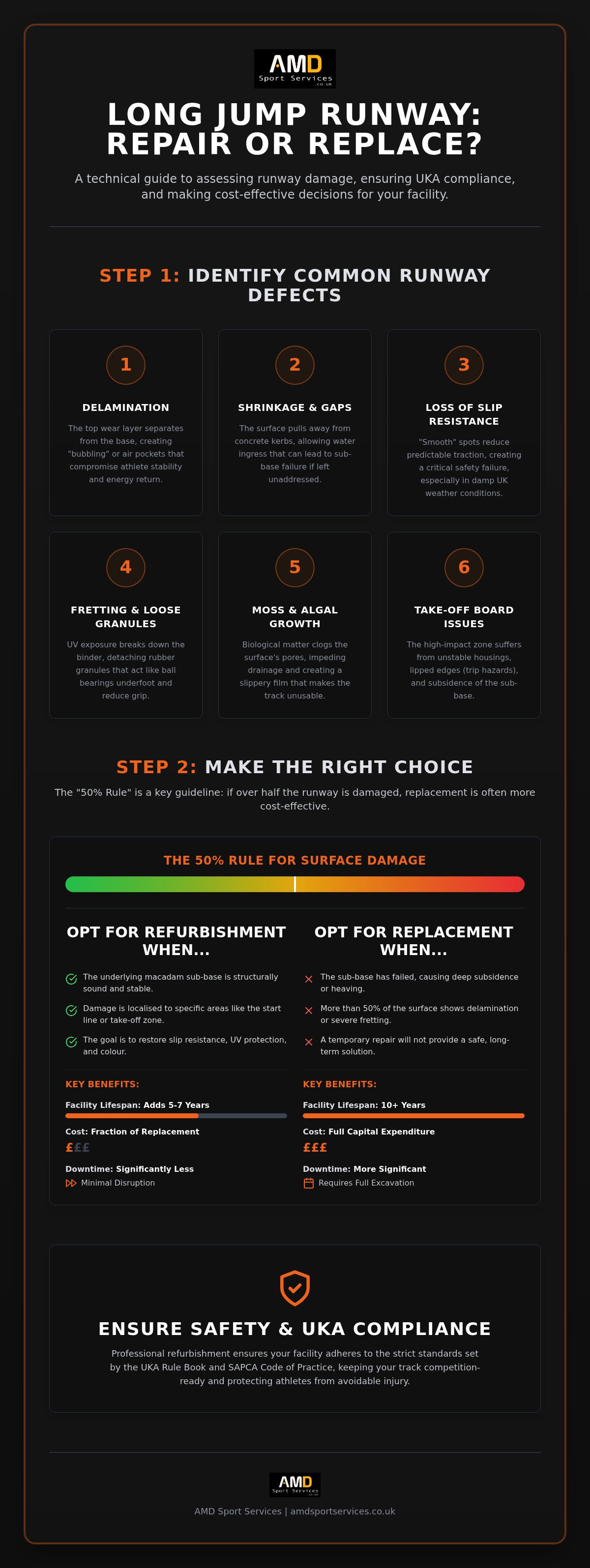
Professional athletics long jump runway repair is a process that focuses on restoring both the structural integrity and the technical grip of a facility. It isn't merely a cosmetic fix; it's a necessary intervention to ensure the polymeric or tartan surface performs as intended. One of the most significant defects we encounter is delamination. This occurs when the top wear layer separates from the shock-pad or the macadam base, creating air pockets or "bubbling." These loose areas compromise the athlete's stability during their approach, leading to inconsistent energy return and an increased risk of injury.
Shrinkage and perimeter gaps also present serious challenges. Over time, synthetic materials can contract, pulling away from the concrete kerbs that define the runway's edge. These gaps allow water and organic debris to penetrate the sub-base, which can lead to structural failure if left unaddressed. Furthermore, a loss of slip resistance is a critical safety failure. "Smooth" spots on a fast-approach track are particularly dangerous in the UK's damp climate, as they remove the predictable traction required for a safe long jump performance.
Surface Wear and Polymeric Degradation
Constant UV exposure and heavy seasonal usage eventually break down the polyurethane binder that holds a polymeric surface together. This leads to a condition known as "fretting," where the rubber granules become loose and detach from the surface. These loose particles act like ball bearings under an athlete's spikes, significantly reducing grip. In many cases, neglected runways also suffer from moss and algal growth. This biological matter blocks the porous nature of the surface, preventing effective drainage and creating a slippery film that makes the track unusable for competitive events.
Structural Issues Around the Take-off Board
The area surrounding the take-off board is the most prone to rapid deterioration because it sustains the highest impact forces on the entire track. Effective athletics long jump runway repair must address the unique stresses in this zone. Common issues include:
Unstable board housings: Frames that move or wobble under load, which compromises jump accuracy and athlete confidence.
Lipped edges: Vertical displacements between the runway surface and the sand pit transition that create significant trip hazards.
Subsidence: Depressions in the surface immediately adjacent to the board where the sub-base has compacted over time.
Identifying these defects early allows for targeted repairs that prevent the need for a full, costly reconstruction. By focusing on the technical health of the surface, facility managers can maintain a safe, UKA-compliant environment for their athletes.
Refurbishment vs. Replacement: Making the Right Choice
Deciding between a targeted repair and a full surface replacement is a technical decision that impacts both your safety certification and your long-term maintenance budget. When evaluating the viability of a surface, we prioritise the condition of the underlying macadam base over the aesthetics of the top wear layer. If the sub-base has failed, resulting in deep subsidence or "heaving" from root ingress, any athletics long jump runway repair will only be a temporary fix. In these instances, the structural foundation cannot support a new polymeric layer, and a full reconstruction becomes the only safe path forward.
We typically apply the "50% rule" during our site assessments. If more than half of the runway area shows signs of delamination, thinning, or significant fretting, the cost of multiple patch repairs often approaches the price of a total resurface. For schools and clubs operating on tight schedules, refurbishment is frequently the preferred route as it involves significantly less downtime than a full excavation. Whilst a new track might last over a decade, a professionally executed refurbishment can add 5 to 7 years of high-performance life to your facility for a fraction of the capital expenditure.
When to Opt for Professional Refurbishment
Refurbishment is the most pragmatic choice for runways with localised damage, such as wear around the start line or the take-off area. Techniques like "re-topping" or spray coating allow us to restore the necessary slip resistance and UV protection without disturbing the existing base. This process ensures the facility meets World Athletics runway standards for energy return and surface friction. It's an efficient way to restore the vibrant colour and technical grip required for competition whilst maintaining the original structural integrity of the site.
Indicators for Full Runway Replacement
Full replacement is necessary when the polymeric layer has lost its elasticity and become "hard." This hardening increases the impact force on an athlete’s joints, significantly raising the risk of shin splints and stress fractures. You should also look for deep structural cracks that mirror the joints in the sub-base macadam, as these suggest movement that a surface-level repair cannot stabilise. Unlike general surfacing contractors who may overlook the specific tolerances of the take-off board housing and the sand pit transition, a specialist assessment will confirm if your facility requires a complete overhaul to remain safe and compliant.
The Technical Process of Long Jump Runway Repair
Every successful athletics long jump runway repair begins with rigorous site preparation. This isn't a superficial sweep; it's a deep-cleansing phase designed to remove years of accumulated organic matter, debris, and loose rubber granules. We utilise industrial high-pressure washing systems to strip away dirt that regular maintenance cannot reach. This step is vital because even a microscopic film of dust can prevent a new polyurethane binder from adhering to the existing substrate. A clean surface is the only way to guarantee a permanent bond.
Once the surface is clean and dry, we address low spots and depressions. We fill these voids with a specialist polymeric compound to restore a perfectly flat approach. This prevents water from pooling and ensures that the athlete's foot strike remains consistent throughout their sprint. Following the levelling, the final phase involves applying a fresh polyurethane wear layer. We broadcast high-quality EPDM granules into this wet binder to restore the track's texture and slip resistance. This results in a durable, all-weather surface that meets competitive performance standards.
Specialist Cleaning and Priming
We apply professional-grade biocides to kill deep-seated moss and algae spores that often survive standard pressure washing. Following this, we apply a 'tack coat' primer across the entire repair zone to ensure the new materials integrate with the original track. Without professional priming, new polymeric patches will likely fail within one season. This chemical bond is what prevents the delamination issues mentioned earlier in this guide.
Restoring the Take-off Board and Sand Pit
We also focus on the critical transition zones that sustain the most wear. This involves resetting or replacing the take-off board to ensure a flush finish with the surrounding runway, eliminating any trip hazards. We refurbish the sand pit kerbs to remove sharp edges or vertical displacements that could cause injury during the landing phase. Finally, we verify that the facility is topped up with UKA approved silica sand to maintain the correct landing depth and impact absorption required for competition.
Ensuring Safety Standards and UKA Compliance
Maintaining a competitive facility requires more than just a smooth surface. UK Athletics (UKA) mandates specific technical tolerances that general surfacing contractors often overlook. For instance, the runway must maintain a level profile to ensure fair competition and athlete safety, with specific requirements for the take-off area transition. Professional athletics long jump runway repair ensures these levels remain within the strict limits defined in the UKA Rule Book 2026-2028. Failing to meet these standards can result in the voiding of competition results and increased liability for the facility owner if an injury occurs. It's a risk that most schools and clubs simply cannot afford to take.
Compliance is an ongoing commitment. A "Certificate of Play" isn't a permanent status; it depends on the facility's current condition and continued adherence to maintenance protocols. We recommend keeping detailed maintenance records that document every cleaning session, biocide application, and minor patch repair. These logs serve as vital evidence for insurance providers and governing bodies, proving that the school or club has exercised its duty of care. It's a pragmatic approach to risk management that protects both the athletes and the institution's budget over the long term.
Accurate Line Marking and Measurement
Competition validity relies entirely on the precision of your track markings. We use specialist, high-friction track paints designed to withstand heavy spike traffic whilst maintaining high visibility in all weather conditions. Every line, from the runway boundaries to the take-off indicators, must align with current standards. If you're planning a complete redesign or extending your current facility, you should consult our guide on long jump runway installation to ensure the initial layout meets all regulatory requirements.
Annual Maintenance and Safety Audits
An annual safety audit is the most effective way to prevent minor wear from escalating into a major hazard. AMD Sport Services provides professional safety inspections across the UK, identifying issues like hardening polymeric layers or loose take-off board housings before they cause an accident. These audits provide a clear roadmap for future athletics long jump runway repair, allowing you to budget for maintenance rather than emergency reconstruction. It's about being proactive rather than reactive.
Ensure your facility remains compliant by booking a technical safety inspection with our veteran team.
Choosing a Specialist Athletics Repair Contractor
Selecting the right partner for athletics long jump runway repair is a critical decision that determines the facility's safety and longevity. General surfacing contractors often lack the technical understanding of athletics-specific tolerances, treating a competition runway like a standard playground or car park. This lack of specialist knowledge leads to surfaces that are too hard, too slippery, or improperly drained, ultimately failing a UKA inspection. At AMD Sport Services, we leverage over 20 years of industry experience to provide bespoke solutions that address unique site challenges, such as restricted access or complex drainage requirements.
A contractor's technical proficiency should be evidenced by their history of working on high-performance tracks. We encourage all facility managers to evaluate a contractor's track record by reviewing their portfolio of completed athletics projects. Our approach prioritises transparent communication and a no-nonsense technical assessment, ensuring that the work we propose is exactly what the facility needs to return to peak condition. We focus on physical results rather than polished sales pitches, positioning ourselves as a dependable partner for long-term facility safety.
Questions to Ask Your Potential Contractor
Before commissioning any repair work, it's vital to vet your contractor's specific expertise in the athletics sector. Use the following questions to gauge their technical proficiency:
Do you have experience working with UKA-standard polymeric surfaces? This ensures they understand the specific friction and level requirements for competition.
Can you provide a detailed technical breakdown of the repair materials used? A specialist should be able to specify the polyurethane binders and EPDM granules they intend to install.
How do you manage site safety whilst working on school or public leisure grounds? Professional contractors must have robust protocols for working in sensitive or high-traffic environments.
Why Experience Matters in Athletics Refurbishment
The nuances of material compatibility are often overlooked by less experienced firms. Different generations of polymeric tracks require specific binder formulations to ensure a successful bond. Applying the wrong chemicals can lead to rapid delamination or "over-spraying," which clogs the porous structure of the track and ruins its drainage properties. A seasoned practitioner understands how to restore the correct force reduction and energy return for the athletes, ensuring the surface is neither too soft to be fast nor too hard to be safe. This technical honesty prevents costly mistakes and ensures the finished result meets the high standards expected by athletes and governing bodies alike.
Securing the Future of Your Athletics Facility
Maintaining a high-performance track requires a disciplined approach to maintenance and a clear understanding of technical tolerances. We've explored how identifying early signs of delamination and addressing structural wear around the take-off board can prevent the need for a total, budget-breaking reconstruction. Professional athletics long jump runway repair isn't just about appearances; it's a critical safety measure that ensures your facility remains fully UKA-compliant and safe for every athlete who steps onto the track.
By choosing a partner with over 20 years of technical sports surfacing experience, you ensure that every repair is executed with precision and durability in mind. Our comprehensive safety inspection and repair service is designed to solve unique structural challenges whilst protecting your long-term capital budget. Don't wait for surface wear to compromise athlete performance or competition validity. It's far more pragmatic to address minor defects now than to face an emergency closure later.
Take the first step toward a safer, more reliable track by visiting our site to Request a Professional Long Jump Runway Assessment. We look forward to helping you restore and maintain your facility to the highest professional standards.
Frequently Asked Questions
How long does a long jump runway repair typically take to complete?
Most athletics long jump runway repair projects take between two and five working days to finish, depending on the extent of the surface damage. Localised patching and re-topping are relatively swift processes, whilst more extensive repairs involving sub-base stabilisation or kerb replacement require additional curing time. We aim to minimise facility downtime, especially for school sites, by coordinating work around term-time schedules and ensuring all materials are ready for immediate application.
Can we repair a long jump runway in the winter months?
Repairing a runway during the winter is challenging because the polyurethane binders used in polymeric surfaces require dry conditions and specific temperature thresholds to cure correctly. High humidity and frost can compromise the bond between the new materials and the existing track. Whilst we monitor weather windows closely, we typically recommend scheduling significant refurbishment work between April and September to ensure the most durable and reliable results for your facility.
What is the difference between a polymeric track and a tartan track?
The terms are often used interchangeably, but "Tartan" is a specific brand of high-performance synthetic track surfacing. Both systems are constructed from a mixture of EPDM rubber granules and a polyurethane binder. A standard polymeric track is often a porous system designed for all-weather drainage, whereas some professional-grade tartan tracks are solid, non-porous systems. Both require specialist technical knowledge to repair without damaging the original force reduction properties of the runway.
How often should a long jump sand pit be refurbished?
A long jump sand pit should receive a professional refurbishment every twelve to eighteen months to maintain athlete safety. This process involves deep-cleaning the sand to remove organic debris, checking the depth against UKA standards, and topping up with approved silica sand. Daily maintenance, such as raking and covering, helps extend this interval, but an annual technical inspection is vital to identify compacted sand or damaged kerbing that could cause landing injuries.
Will professional repairs make our runway competition-compliant again?
Yes, professional athletics long jump runway repair is specifically designed to restore a facility to UK Athletics (UKA) and World Athletics standards. We focus on ensuring the surface levels, slip resistance, and line markings fall within the precise tolerances required for sanctioned competitions. By documenting these repairs, you can maintain your "Certificate of Play" and provide evidence of compliance for governing bodies, insurance providers, and league officials across the UK.
Is it possible to change the colour of the runway during refurbishment?
It's entirely possible to change the colour of your runway during the refurbishment process. When we apply a new spray-coat or re-top the surface, we can use different pigmented EPDM granules to refresh the track's appearance. Whilst traditional red is the most common choice, many schools and clubs opt for blue or green to match their institutional branding. This cosmetic update is applied simultaneously with the technical wear layer, providing a cost-effective aesthetic improvement.
What happens if our take-off board is loose or unstable?
A loose or unstable take-off board is a major safety hazard and must be addressed immediately. It compromises jump accuracy and can cause significant ankle or knee injuries during the high-impact take-off phase. We reset unstable housings by clearing the surrounding debris and securing the frame with fresh concrete or specialist binders. Ensuring the board sits perfectly flush with the runway surface is a non-negotiable requirement for competition validity and athlete confidence.
Do we need to replace the entire sand pit if the kerbs are damaged?
You don't need to replace the entire sand pit if only the kerbs are damaged. We can replace individual sections of rubber-topped safety kerbing or repair vertical displacements without disturbing the main pit structure. It's vital that these edges remain soft and flush with the surrounding ground to prevent trip hazards. Targeted kerb repairs are a cost-effective way to maintain safety standards whilst avoiding the expense of a full excavation and reconstruction.


Comments