
Athletics Sand Pit Edge Protection Installation: A UK Buying Guide

Does your long-jump pit need work around its perimeter, a cover, or both? These address different needs, so clarifying the issue first can help you avoid specifying work that does not suit your site. A well-planned athletics sand pit edge protection installation starts with the pit’s dimensions, the condition of its existing edges and the protection your facility needs.
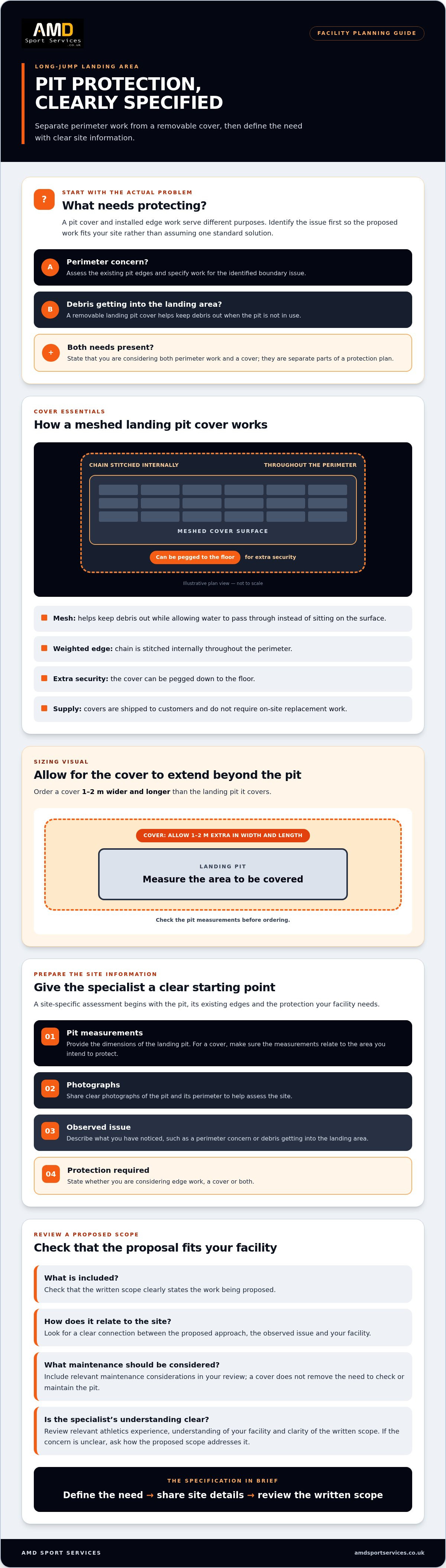
It is also important to distinguish installed infrastructure from a landing pit cover. Covers are shipped to customers and do not require on-site replacement work. Their mesh helps keep debris out while allowing water to pass through rather than sit on the surface. An internally stitched chain runs throughout the perimeter to weight the cover, and it can be pegged to the floor for extra security. For a suitable fit, order a cover 1-2 m wider and longer than the landing pit.
This guide explains the protection options, measurements and site checks to consider, as well as questions to ask when reviewing a contractor’s proposed scope. Use it to define the work, assess the approach and specify a solution suited to your facility.
Table of Contents
Athletics sand pit edge protection: define the problem before specifying work
How athletics sand pit protection works: edge details and landing pit covers
Choosing athletics sand pit edge protection: compare fit, function and scope
Athletics sand pit edge protection installation: site checks and project steps
Selecting a UK athletics sand pit protection specialist and next steps
Athletics sand pit edge protection: define the problem before specifying work
Before requesting work, identify what needs protecting. Athletics sand pit edge protection installation is site-specific and is separate from supplying a removable cover. Describe the issue, provide measurements and photographs, and ask for a scope that addresses the actual pit condition.
In simple terms, pit-edge protection is work specified to address a concern at the boundary of a long-jump landing pit. The appropriate work depends on the existing pit and the facility’s needs. Do not assume the term refers to one standard product or treatment. The long jump includes a landing in a sand pit; see this overview of the long jump event for background on the activity.
Is the requirement pit-edge work, a cover, or both?
Start with the reason for your enquiry. Is there an issue with the perimeter, debris getting into the landing area, access, or something else you have observed on site? A removable cover helps keep debris out, while installed edge work addresses a separate perimeter requirement. Record the concern, take clear photographs and measure the pit before asking for advice.
Who should define the installation scope?
School estates teams, councils, clubs and sports facility managers may all be involved in specifying work. Share the pit measurements, photographs and the issue you have observed with a competent athletics facility specialist. Ask them to assess the site and set out what is included. AMD Sport Services provides sports facility installation across the UK, including long jump runway installation and refurbishment. Its long jump runway installation guide offers related information on athletics facility installation.
Keep the requirements distinct in your enquiry: perimeter work, a cover, or both. If the concern is unclear, ask the specialist to explain what they have observed and why their proposed scope addresses it. This gives your team a practical basis for comparing proposals and agreeing next steps.
How athletics sand pit protection works: edge details and landing pit covers
Perimeter work and a landing pit cover serve different purposes. For an existing pit, retrofitted edge protection—such as right-angled EPDM edging secured to exposed concrete—is typically used where haunched concrete creates a safety hazard because it is too raised or the pit is too narrow. For new installations, direct EPDM rubber edging is preferred over haunched concrete because it offers improved safety and durability, although the upfront cost is higher.
The proposed edge detail should reflect the pit’s dimensions, construction and condition. If dimensions or wider facility requirements affect your project, check the relevant guidance. World Athletics provides technical information through its World Athletics facility standards resource.
Keep the two scopes distinct in any request for work: installed edge protection, a shipped cover, or both. This makes it easier to compare what a proposal actually includes and avoids treating delivery of a cover as contractor-installed infrastructure. For related athletics work, review AMD Sport Services’ installation experience and discuss your site requirements and scope with the company.
Choosing athletics sand pit edge protection: compare fit, function and scope
Choose the edge solution according to whether the pit is new or existing, the condition of the perimeter and the safety concern identified. For existing pits, a right-angled EPDM retrofit may be suitable where raised or restrictive haunched concrete is unsafe. For new installations, direct EPDM rubber edging is preferred to haunched concrete for improved safety and durability, despite higher upfront costs. Keep any cover requirement separate when comparing proposals.
How to measure a landing pit cover
Questions to ask before choosing an installation contractor
Ask for the proposed work, exclusions and responsibilities in writing. The proposal should explain how the recommendation relates to your measured site and distinguish any supplied cover from contractor-installed work. If a standard or specification is relevant, ask which one and verify its application with the appropriate authority. England Athletics provides UK athletics facility guidance for facilities and project planning.
Compare proposals by their clarity, not just their headline description. Check that the measurements, deliverables and responsibilities match your facility’s needs. To discuss relevant site requirements and installation scope, see AMD’s external sports equipment installation service information.
Athletics sand pit edge protection installation: site checks and project steps
A clear brief gives a specialist a better basis for proposing site-specific work. Provide the pit measurements, photographs and the concern to be addressed. State whether the pit is existing or new so the specialist can consider a right-angled EPDM retrofit or direct EPDM rubber edging as appropriate. Do not assume a construction method or timescale before the site has been reviewed.
What to prepare for a site assessment
Before contacting a specialist, gather current measurements and clear photographs showing the pit perimeter and surrounding area. Describe what needs attention, such as an observed perimeter issue or debris entering the landing area. Note relevant access or operating constraints as well. Ask the specialist what further information they need to recommend a scope.
Use a straightforward project sequence to keep decisions clear:
Make the enquiry: Share the pit dimensions, photographs and the concern you want addressed.
Clarify the requirement: Confirm whether you are seeking contractor-installed edge work, a removable cover, or both.
Review the site information: Ask the specialist to identify any gaps or site details that could affect the proposed work.
Check applicable requirements: Verify relevant standards, technical dimensions and safety requirements with the appropriate authority before work proceeds. Do not assume a specification applies without checking its relevance to your facility and intended use.
Agree the scope: Record the work area, deliverables, exclusions and each party’s responsibilities in writing.
Confirm completion: Check the finished work against the agreed scope and record any outstanding matters with the contractor.
What to confirm before work is commissioned
Review the proposal against the information supplied. It should explain whether the recommendation is for a retrofit or new installation, why the proposed edge detail suits the pit, and what is included or excluded. Make responsibilities clear, including who supplies any separate cover and what work will be carried out on site.
For relevant contractor-installed facility work, review AMD’s external sports equipment installation services. Once you have gathered the site details, you can discuss your athletics facility requirements with AMD Sport Services.
Selecting a UK athletics sand pit protection specialist and next steps
A suitable specialist should assess the pit’s condition, dimensions and safety concern before recommending an edge detail. For athletics sand pit edge protection installation, check whether the proposal appropriately distinguishes a right-angled EPDM retrofit for an existing pit from direct EPDM rubber edging for a new installation.
What evidence should a facility request?
Ask for examples of relevant athletics facility installation or refurbishment work, then check whether the experience relates to your project. A contractor with long jump facility experience may be better placed to discuss how the pit fits within the wider facility, but the proposed work still needs to respond to your specific site.
Before appointing anyone, ask how they will assess the pit and record their recommendation. A useful proposal should make clear:
What site information the recommendation is based on, including measurements and photographs.
Which area and work items are included, and what is excluded.
Who is responsible for supply, installation and any other agreed tasks.
Which standards or specifications are considered relevant, so you can verify them with the appropriate authority.
Reviewing athletics installation projects can help you understand the type of facility work AMD Sport Services has undertaken. Treat project examples as context, not as a substitute for a site-specific assessment or a clear written scope.
How to move from specification to enquiry
Prepare the pit’s length and width, clear photographs of the perimeter and surrounding area, the type of facility and a concise description of the issue. State whether the pit is existing or new and whether you need permanent edge protection, a shipped landing pit cover or both. Ask for the proposed detail, responsibilities and exclusions in writing.
AMD provides long jump runway installation and refurbishment, alongside other sports equipment installation services. Share your facility details to establish whether your requirements fit the relevant work. To take that step, discuss your sand pit protection requirements with AMD Sport Services.
Set out your next steps with confidence
A suitable solution starts with the right scope. Identify whether the pit is new or existing and whether the concern is the perimeter, debris in the landing area or both. For athletics sand pit edge protection installation, ask for the proposed edge detail, exclusions and responsibilities in writing, and verify any relevant requirements before proceeding.
AMD Sport Services provides UK-wide sports facility installation and maintenance, with experience in long jump runway installation and refurbishment. If you have your site details ready, discuss your athletics facility requirements and clarify the scope with the team. A clear brief is a practical first step towards a solution suited to your facility.
Frequently Asked Questions
What is athletics sand pit edge protection?
Athletics sand pit edge protection is a measure intended to address a safety concern around the boundary of a long-jump landing pit. For an existing pit, this may involve right-angled EPDM edging secured to exposed concrete where haunched concrete is too raised or the pit is too narrow. For a new installation, direct EPDM rubber edging is preferred over haunched concrete for improved safety and durability, despite higher upfront costs.
Is a landing pit cover the same as sand pit edge protection?
No. A landing pit cover is removable protection placed over the landing area to help keep debris out, while installed edge protection addresses the pit perimeter. Describe these requirements separately when seeking advice.
How much wider and longer should a landing pit cover be?
Order a cover 1-2 m wider and longer than the landing pit it covers. Check both pit dimensions before ordering rather than relying on a single measurement or estimate. Share the length and width clearly when confirming the required cover size. This sizing guidance helps you specify the cover relative to your pit, but it is not an instruction to cut, alter or fit the cover on site.
Can water pass through a meshed landing pit cover?
Yes. The cover is meshed so water can pass through instead of sitting on its surface, while the mesh helps keep debris out of the landing area. This feature does not mean the pit needs no further attention. Continue to check and maintain the landing area as appropriate for your facility, and consider the cover’s purpose separately from any permanent perimeter work you may need.
Does AMD Sport Services install landing pit covers on site?
No. Landing pit covers are shipped to customers and do not require on-site replacement work. They are separate from contractor-installed edge protection. If you need a cover, check both pit dimensions and specify one 1-2 m wider and longer; if the issue concerns the perimeter, provide site details for a separate assessment.
How is a chain-weighted landing pit cover secured?
The cover is chain weighted, with chain stitched internally throughout the perimeter. For extra security, it can be pegged down to the floor. These are cover features, not a description of permanent edge installation. Before ordering, consider whether pegging the cover down is suitable for your site, and confirm the pit dimensions so the cover can be specified at the recommended size.
What information should I provide when requesting sand pit protection work?
Provide the pit’s length and width, clear photographs of the perimeter and surrounding area, and a short description of the concern. State the facility type and mention any relevant access or operating constraints. Clarify whether you are asking about installed perimeter work, a shipped cover or both. Ask the specialist to identify any further information needed and set out the proposed work, exclusions and responsibilities in writing.


Comments