
Ball Stop Netting for Sports Facilities

AMD Sport Services supplies and installs ball stop netting for sports facilities, helping contain play and protect nearby areas from stray balls. We consider the sport, site layout and surrounding activity when arranging a system for a school, leisure centre or sports club.
Netting dimensions, mesh and position all affect how well it suits the space. AMD provides a tailored service rather than relying on a standard fit, with the system designed around how the facility is used.
Our ball stop netting service covers the requirements of each site and the work involved in providing a suitable system. Facilities managers can contact AMD Sport Services to discuss their site and arrange the work.
Why Buy Ball Stop Netting?
Ball-stop netting helps keep play within defined areas and limit stray balls reaching nearby spaces. Its effectiveness depends on the sport, site layout and surrounding activity.
Ball-stop netting applications
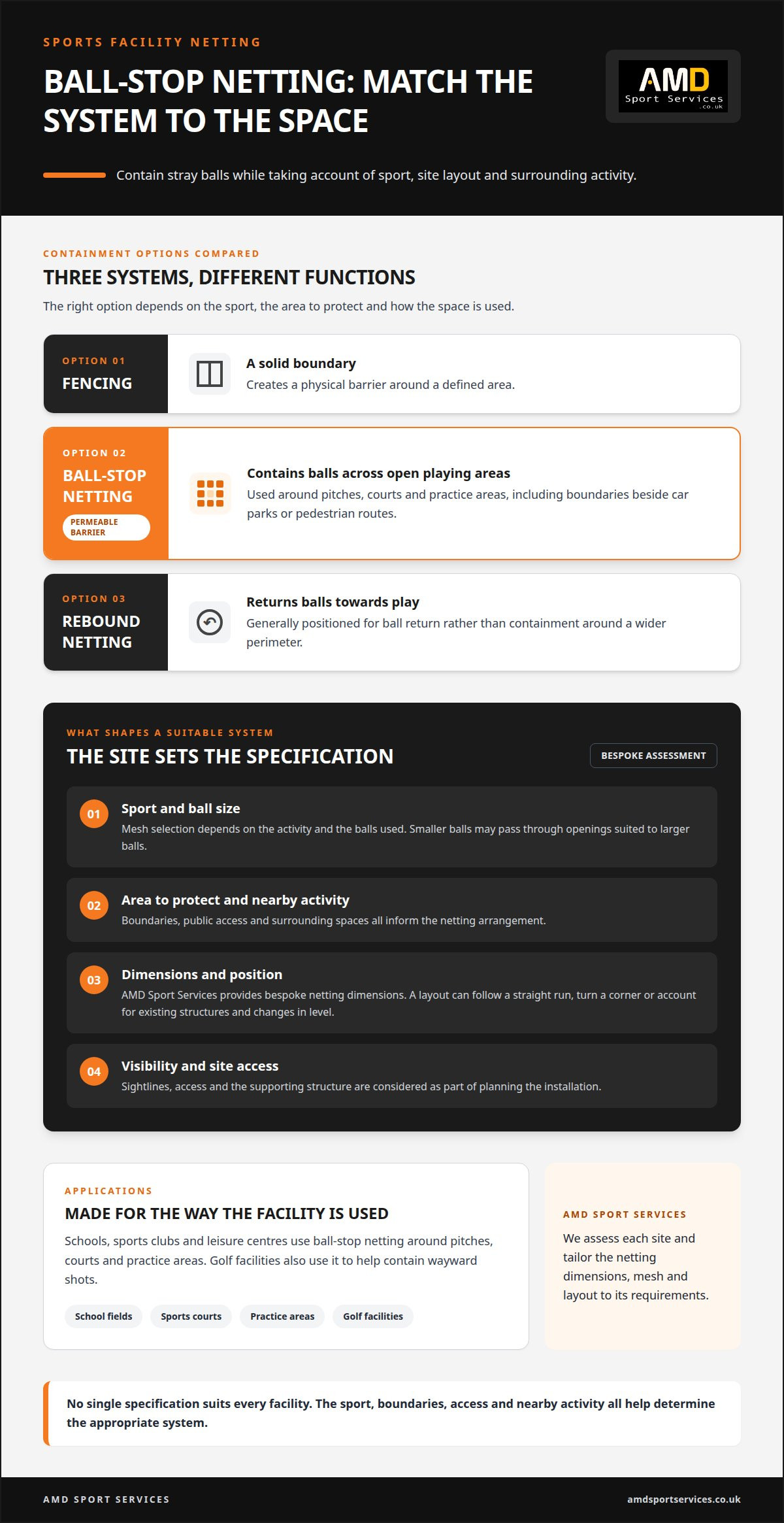
Schools, clubs and leisure centres use it around pitches, courts and practice areas. At a school, netting can separate a playing field from a car park or pedestrian route. Golf facilities also use netting to contain wayward shots; golf balls can travel at speeds nearing 200 mph. A professional assessment considers boundaries, access and nearby activities. Land ownership and local planning requirements inform any permissions needed.
Containment options compared
Fencing creates a solid boundary, while ball-stop netting forms a permeable barrier to contain balls across open playing areas. Rebound netting is generally positioned to return balls towards play, rather than contain them around a wider perimeter. The right option depends on the sport, the area to protect and how the space is used. A site assessment helps determine a suitable layout.
Standards and safety requirements
UK requirements depend on the facility, location and proposed system. Before work is agreed, a project assessment should identify relevant standards, safety considerations and planning constraints. No single specification suits every school pitch, sports hall or golf practice area. The assessment considers how the netting relates to public access and nearby activity, along with any permissions required for the site.
Installation costs and risks
Price depends on the area covered, net dimensions, site access and supporting structure. A quote request allows these factors to be assessed for the specific facility. Professional planning considers posts, cables, fixings and foundations as part of the system. Poorly matched components or overlooked access constraints can affect the finished installation. External sports equipment installation also needs to account for the site’s layout and access.
At schools and clubs, sports netting can help contain stray balls and reduce the risk of them reaching spectators or passers-by. This is particularly useful when play takes place close to people watching or moving through the area.
Golf netting is important wherever golf is played, including at driving ranges and golf courses, to help prevent damage from golf balls. Its role matters across these settings, not only where players practise.
Custom net dimensions and shapes
AMD Sport Services assesses each site layout and provides bespoke netting dimensions to suit the area requiring protection. A school pitch beside a car park, for example, may need different coverage from a sports court beside a building. The width and height of a ball stop netting installation are tailored to the playing area and its surroundings.
Site boundaries and access vary, so the netting layout may need to follow a straight run, change direction around a corner or accommodate existing structures. AMD takes these details into account when assessing the site and agreeing dimensions for the installation.
Different parts of a facility may need different levels of coverage. A school might require netting along one side of a pitch and additional protection near a neighbouring playground, while a leisure centre may have limited space beside an outdoor court. AMD assesses these requirements to provide a layout suited to the site.
Our assessment considers the full footprint, including corners, changes in level and nearby structures, helping to ensure the netting covers the intended area. Facilities managers can tell us which sports are played and where stray balls are a concern; we use this information to provide bespoke dimensions for the installation.
Delivery times
Delivery timing depends on the netting specification and the scope of the order. A single panel for a practice area differs from a large system covering several boundaries. Bespoke dimensions, mesh selection and the number of sections all affect preparation. Without those details, a reliable delivery date cannot be given. The schedule should be considered alongside the facility’s intended use and any planned works.
For a school preparing a pitch for a new term, the date it needs to be ready matters from the outset. A leisure centre replacing netting around an existing court may have different scheduling priorities. In both cases, planning should reflect the agreed net size and quantity. Changes to the specification can affect the programme, so settling the scope early helps keep arrangements clear.
Installation is only one part of the programme. Facilities managers may also need to coordinate access, site activity and other contractors’ work. For example, a school may have resurfacing planned near the same boundary. Aligning the netting work with those activities can help avoid storing materials on site or disrupting other scheduled work. Consider the relevant dates together rather than treating the installation in isolation.
A larger sports facility may need several net sections across different areas. The programme should account for that scope and any bespoke layout agreed for the site. Planning is most effective once the dimensions, mesh and work requirements are clear. This gives the facilities team a practical basis for coordinating the project, communicating with site staff and working around the facility’s normal use.
Mesh sizes for different sports
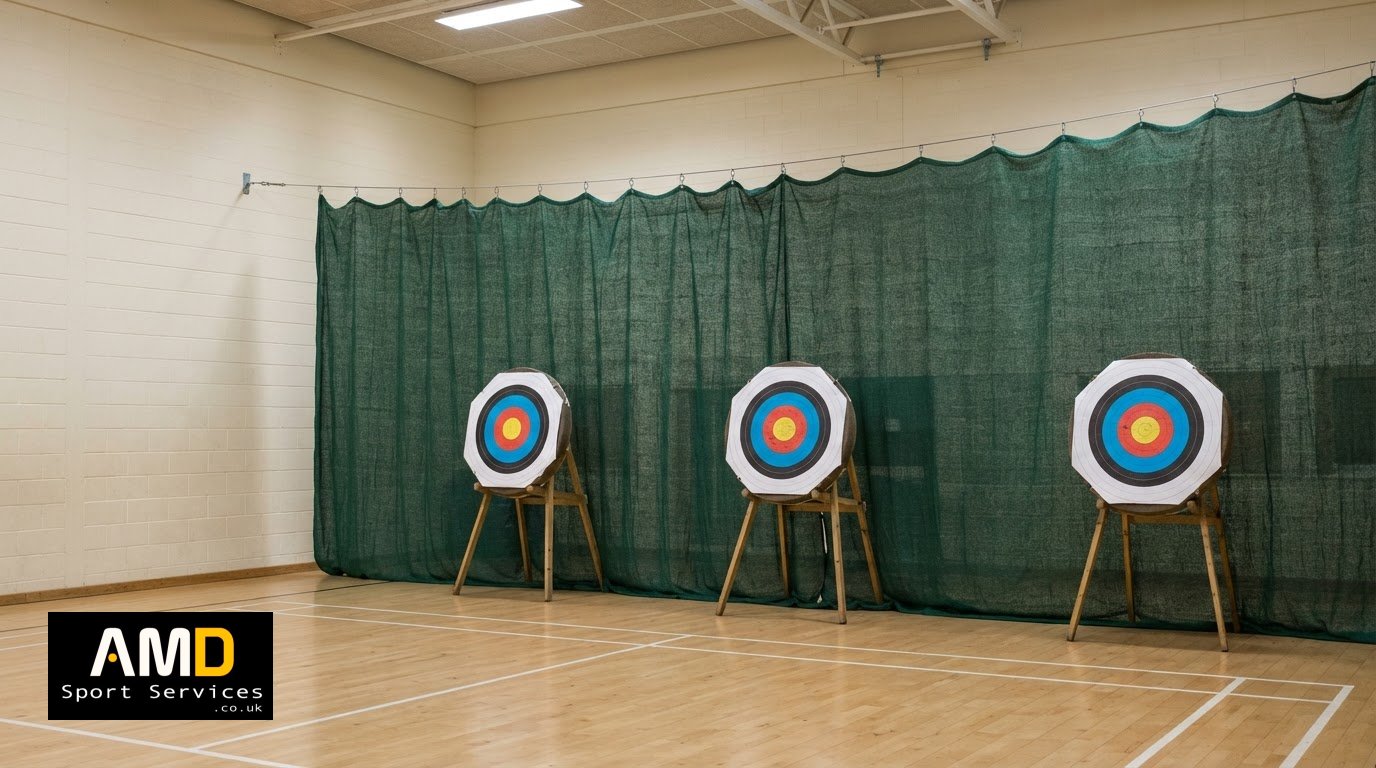
Mesh choice depends on the sport, the balls used and the site. Tennis balls, cricket balls and footballs differ in size and playing conditions, so a netting specification suited to one court may not suit a cricket practice area. AMD Sport Services assesses the activity and the area to be contained when selecting netting for each project.
At a school, netting might be needed beside a football pitch near a pedestrian route, or around tennis courts close to a car park. We consider the intended use and site layout when choosing the mesh opening and netting arrangement. Smaller balls may pass through openings that contain larger balls, so the sport is a key factor in selecting suitable netting.
Golf practice areas have different requirements from football or tennis facilities. A golf ball travels at speed, so the netting needs to suit the facility’s purpose and surrounding space. Cricket practice areas also need netting appropriate to their use, particularly when enclosing a dedicated practice area. AMD selects mesh for the sport and setting, rather than simply matching the appearance of an existing installation.
Visibility and containment can also affect the choice. A leisure centre may want clear sightlines across an outdoor court, while a school may need to contain balls beside a busy boundary. We consider these priorities alongside the site dimensions and intended coverage, so the selected netting is suited to the facility.
AMD Sport Services: Sports equipment safety inspections
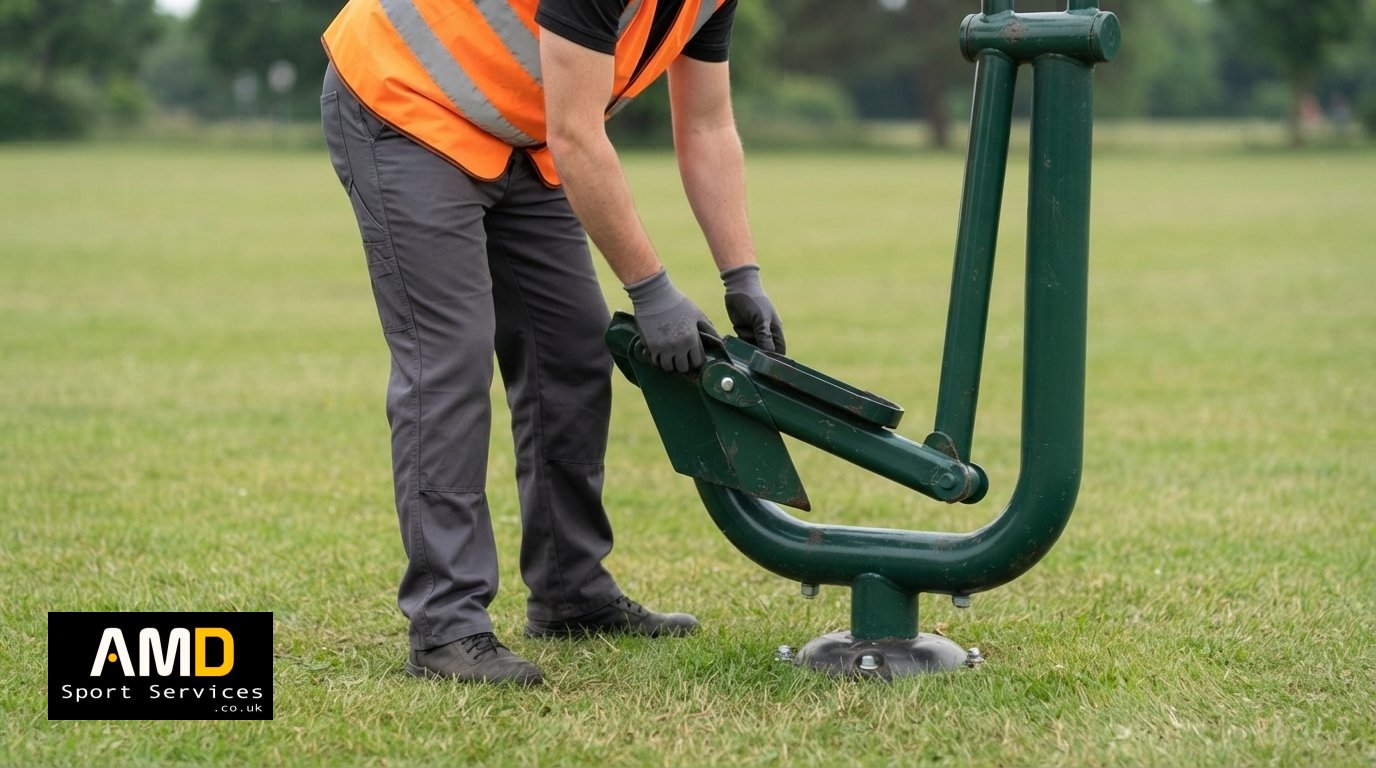
AMD Sport Services provides sports equipment safety inspections for schools, leisure centres and other commercial facilities. An inspection gives facilities managers a clearer picture of equipment condition and any remedial work needed. The findings help distinguish routine maintenance from items requiring prompt attention, supporting practical decisions about facility use and repair priorities.
All equipment should undergo a thorough visual inspection at least every 12 months. Some sites arrange inspections biannually where equipment experiences heavy use. This can be relevant in busy school sports halls, where equipment sees frequent use across lessons and clubs. Regular inspection records also help facilities teams track condition over time and plan maintenance around the site’s programme.
Where remedial work is identified, AMD grades each affected item as low, medium or immediate risk. This helps a centre prioritise repairs and identify equipment that must be taken out of action immediately. Clear risk categories give school business managers and facilities teams a practical basis for deciding what needs attention first.
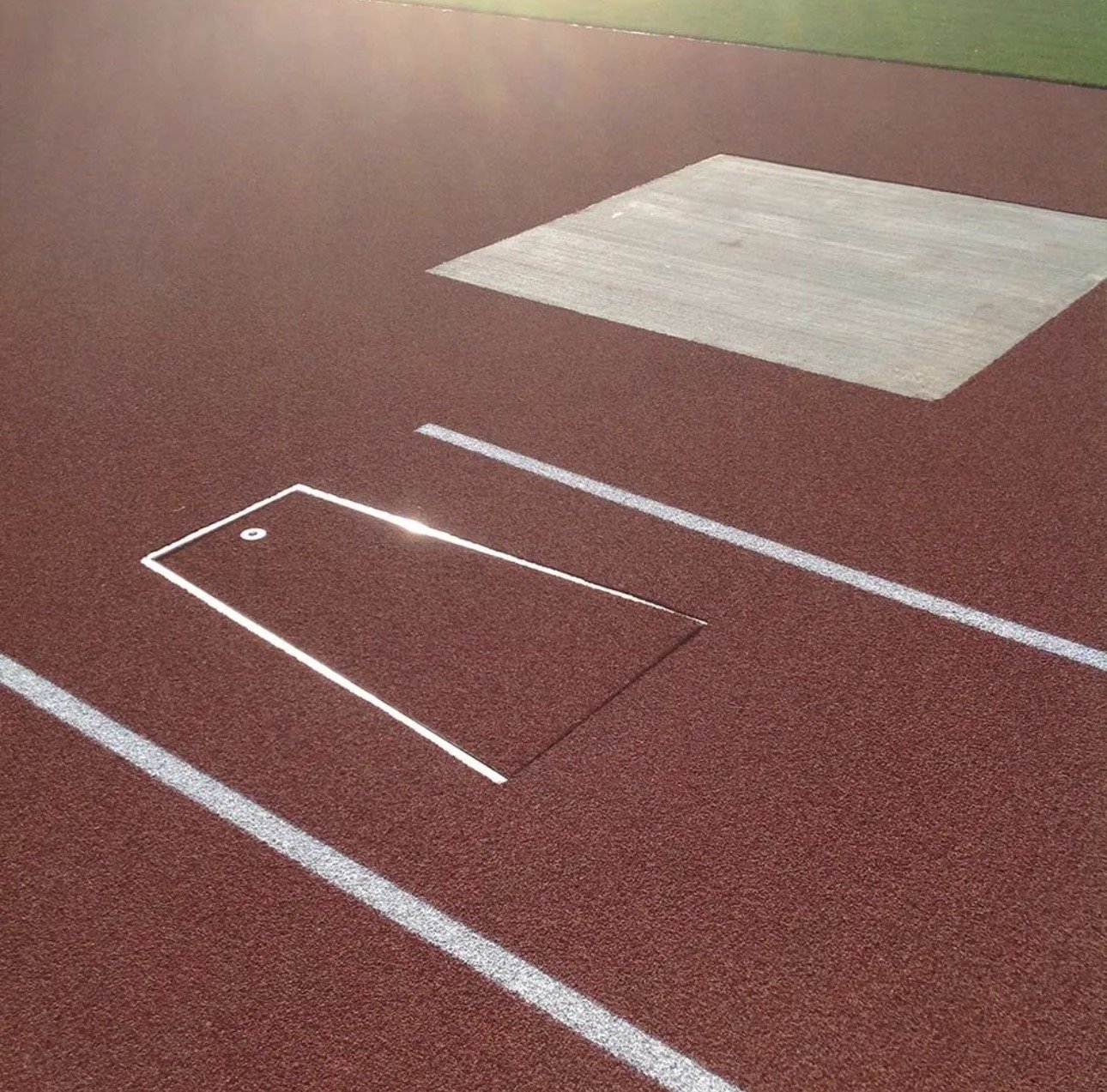
AMD Sport Services also carries out related facility projects, including basketball goal installation, safety surfacing and long jump runway installation. These services can be useful when a school or leisure centre is reviewing several parts of its sports provision. The work can be tailored to the facility’s requirements rather than packaged as a standard solution.
For facilities managers reviewing equipment condition or planning related sports works, contact AMD Sport Services to discuss the service required.
Frequently Asked Questions
What is ball stop netting and where is it used at sports facilities?
Ball stop netting helps keep sports balls within a defined area. AMD Sport Services installs it at facilities such as schools, where it can separate sports areas from other parts of the grounds. We assess the site’s layout and use to provide netting suited to the facility.
How are suitable ball stop netting heights and mesh sizes chosen for different sports?
AMD Sport Services assesses the facility and the sports being played to specify suitable netting dimensions and mesh. Where a site hosts activities such as football and tennis, we consider each area’s requirements individually, including any different uses during lessons and after-school clubs.
How can a professional inspect, maintain and repair sports ball stop netting?
AMD Sport Services inspects ball stop netting to assess its condition and identify defects that may need attention. We provide digital inspection reports with photographs, itemised defects and recommendations. Repairs can also be carried out on site during inspection visits where possible, giving facilities teams a clear record of the work required.
Comments