
Outdoor fitness equipment inspection in the UK: Safety checks

Outdoor fitness equipment can look sound while developing faults that affect safe use. A professional outdoor fitness equipment inspection in the UK helps identify wear, damage and other hazards that might otherwise go unnoticed.
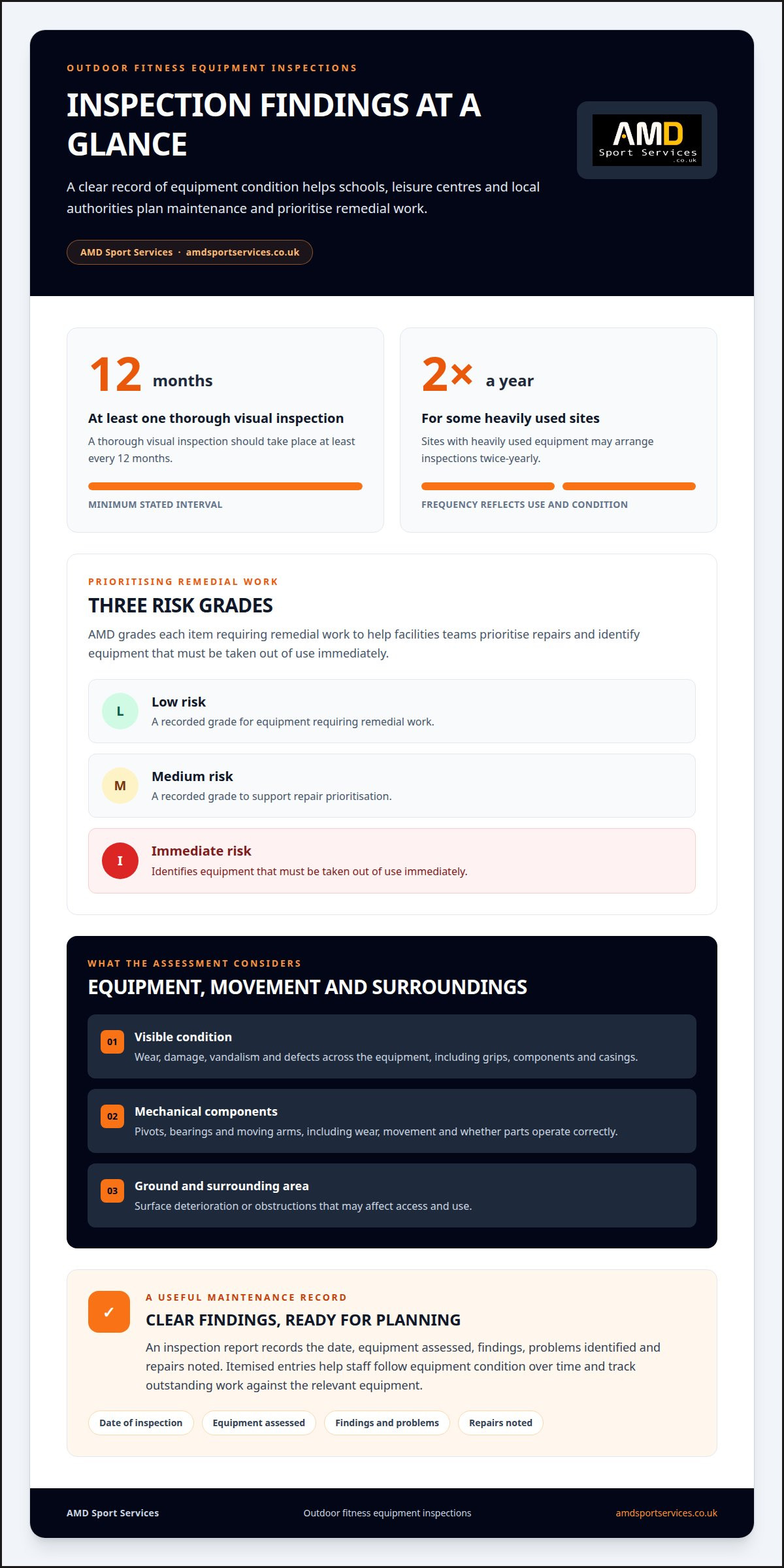
For schools, leisure centres and local authorities, regular inspections support informed decisions about equipment condition and remedial work. A thorough visual inspection should take place at least every 12 months; sites with heavily used equipment may arrange inspections more often.
This article explains why professional inspections matter, how findings are recorded, which equipment is assessed and what an annual inspection involves. It also covers inspections of indoor and outdoor sports equipment, so facilities managers can understand equipment condition and prioritise follow-up work.
How inspection findings are reported and prioritised
A well-structured inspection report gives facilities teams a practical record of equipment condition. Clear evidence and specific recommendations make it useful for planning, rather than leaving staff with a simple pass-or-fail summary.
Reports for Insurance and Maintenance Records
An inspection report records the date, equipment assessed, findings, problems identified and repairs noted. For a school or leisure centre, this creates a maintenance history that can support insurance records and help staff understand how equipment condition has changed. Itemised entries also make it easier to connect a later issue with earlier observations, rather than relying on incomplete recollections.
Inspector Qualifications and Reporting
An inspector assesses equipment and explains the outcome in clear, useful terms. A specific observation, such as damage to a handgrip, gives facilities staff more context than a general note that equipment needs attention. The report should also distinguish the condition of the equipment from issues in the surrounding area.
Each item requiring remedial work should be graded as low, medium or immediate risk. This helps facilities teams prioritise work and identify equipment that must be taken out of use immediately. Recommendations should be specific enough to support an action schedule, with outstanding work tracked against the relevant equipment. In this way, inspection findings become a practical maintenance-planning record.
An inspection report is not automatically a Health & Safety certificate. It documents the inspection and its findings, and should only be described as a certificate if it is one. Keeping it with maintenance records gives schools and leisure centres a clearer history of inspections and subsequent work.
What AMD checks during an outdoor fitness equipment inspection
A professional assessment considers the equipment, its moving parts, the ground and the surrounding space. For local authorities, inspection arrangements should reflect the equipment, its condition and how the site is used. There is no single inspection frequency that suits every outdoor gym.
How professional inspections identify wear, vandalism and defects
A professional inspection assesses visible wear, damage, vandalism and defects across outdoor fitness equipment. A cracked grip, loose component or damaged casing can affect how a unit is used. The assessment also considers the ground and surrounding area, where surface deterioration or obstructions may affect access. The findings give facilities teams a clear picture of equipment condition.
Mechanical components, wear and maintenance needs
Inspectors assess mechanical components for wear and movement, including pivots, bearings and moving arms. They consider whether parts operate correctly and whether adjustment or lubrication is recommended. This helps distinguish normal signs of use from defects that need attention. Maintenance needs are noted in the assessment, giving facilities teams relevant information without requiring staff to carry out technical checks themselves.
Inspection frequency and reporting
Inspection frequency depends on site use and equipment condition. A thorough visual inspection should take place at least every 12 months; some heavily used sites arrange inspections twice-yearly. The findings are recorded for the facility’s maintenance planning, with any item requiring remedial work graded as low, medium or immediate risk. This helps staff recognise which equipment requires urgent attention, including anything that must be taken out of use immediately.
Annual inspections of outdoor fitness equipment
An annual inspection provides a detailed review of equipment condition and complements routine checks. Each type of inspection has a distinct purpose, and together they can form a coherent maintenance record.
Annual Independent Equipment Inspections
An independent annual inspection is a scheduled, detailed assessment of equipment, separate from day-to-day oversight. It provides a structured review rather than relying solely on observations during normal use. For a school or leisure centre, it also helps maintain a consistent record when different staff oversee the site throughout the year.
Visual and operational checks during a professional inspection
Visual checks consider the equipment’s apparent condition, while operational checks assess how it functions. The two offer different perspectives: a component may look intact but show a problem during movement, or visible wear may need attention even if the equipment still works. A thorough annual assessment brings these observations together, giving facilities a fuller picture than either type of check alone.
Routine and Post-installation Inspections
Routine inspections form part of ongoing site oversight, while an annual inspection provides a more detailed review. Facilities can consider post-installation checks separately when planning inspections for newly installed equipment. The scope should reflect the equipment and site, including associated surfacing where relevant. Keeping records distinct helps staff identify which assessment relates to each stage of the equipment’s use.
Both standards require routine visual, operational and annual inspections. Treating these as complementary parts of one inspection arrangement helps distinguish ongoing oversight from the more detailed yearly review. BS EN 1176-7 describes a routine visual and operational inspection model that the page recommends adapting as a sensible default cadence for outdoor gyms. This provides a starting point for planning routine checks while allowing the inspection arrangement to reflect the equipment and site.
An annual inspection is typically carried out once a year. Keeping its record clearly identified alongside routine visual and operational checks helps staff understand what type of review took place. Together, these records support maintenance planning without treating routine observations as a substitute for a fuller annual assessment.
Sports equipment safety inspections
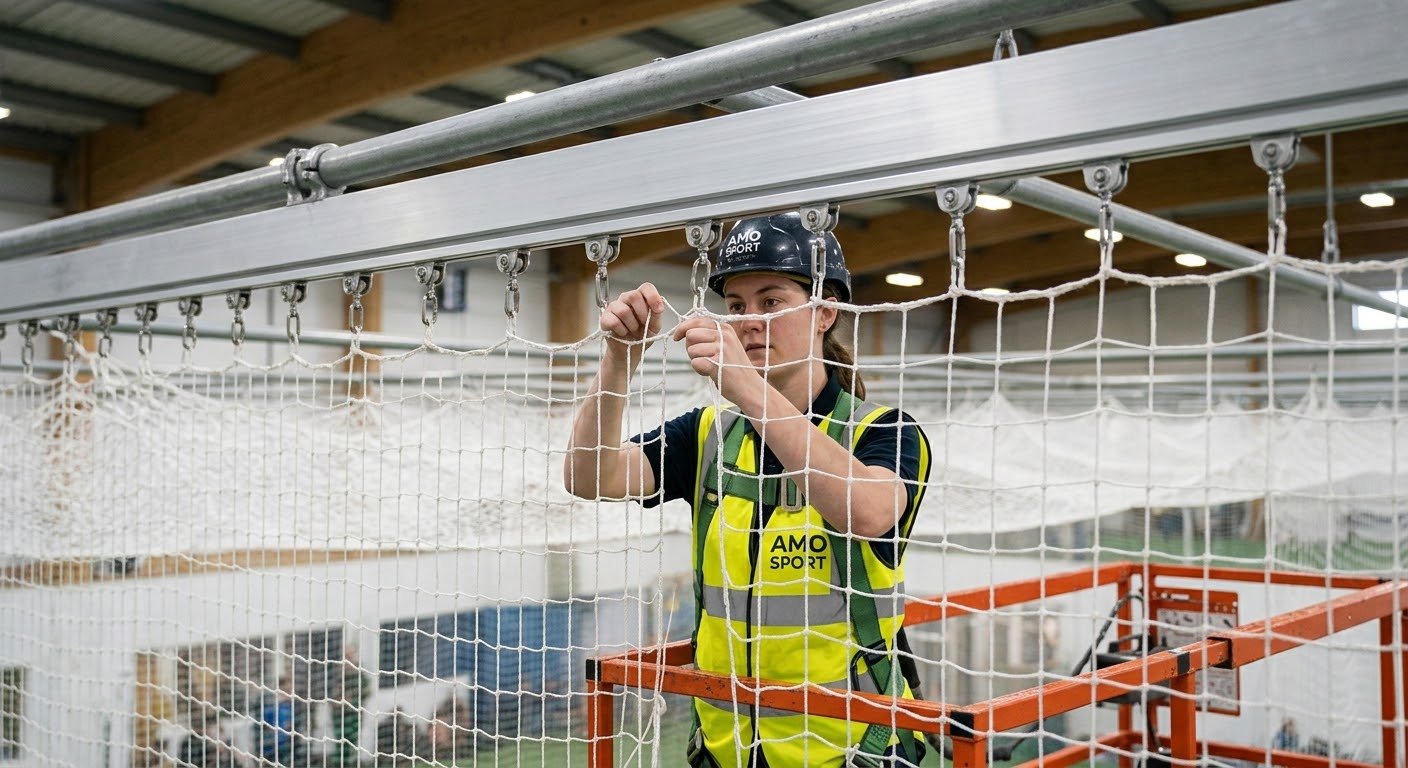
Professional sports equipment inspections can cover more than an outdoor gym. At schools, leisure centres and public facilities, assessments consider exposure to weather, repeated use and vandalism, and identify defects affecting children and adult users. The findings support health and safety decisions and help inform repair planning.
BS EN 16630:2015 covers permanently installed, freely accessible outdoor fitness equipment intended for adults and young people aged 14 and over, at least 1.4 metres tall. This scope gives facilities a reference point for outdoor gym inspections. Equipment intended for users 1.4 metres or shorter falls outside the standard’s stated scope, so the assessment needs to reflect the equipment and its users. For children’s playground equipment, BS EN 1176 applies where relevant.
A school or leisure centre may have an outdoor fitness area alongside indoor sports equipment and a playground. Each asset serves a different purpose and user group, so inspection records should identify the equipment assessed, its location, condition and findings. For example, a report should distinguish an outdoor exercise station from playground equipment used by children. This helps facilities teams direct recommended repairs to the right asset.
For public facilities with both outdoor gyms and playgrounds, match the inspection scope to the equipment type, setting and intended users. The report supports decisions about remedial work but does not complete repairs. Its findings give facilities managers a practical basis for prioritising work across public-use equipment, including assets used by children.
AMD Sport Services’ outdoor fitness equipment inspections
AMD Sport Services carries out sports equipment safety inspections for schools, leisure centres and other facilities managing public-use equipment. An inspection can be useful after regular use, when equipment condition is uncertain or when a previous report identified remedial work. It provides a professional assessment rather than leaving decisions to informal observations.
Inspection findings are recorded with recommended remedial actions. Items requiring work are graded as low, medium or immediate risk, helping facilities teams plan repairs and identify equipment that must be taken out of use immediately. For example, the report can distinguish an issue for planned attention from a defect requiring urgent action. This gives school business managers and facilities teams a practical basis for prioritising work across a site.
The inspection can form part of wider sports facility maintenance. When outdoor fitness equipment sits alongside a playground or other sports assets, clear records show staff what was assessed and which findings need follow-up. AMD Sport Services also provides safety surfacing, which may be relevant when reviewing equipment and nearby surfaces. The inspection report records findings; repairs and other remedial work are handled separately.
If you are planning an outdoor fitness equipment inspection in the UK, the next step is a professional assessment of the equipment in use and the condition of the site. Documented findings help the responsible team set maintenance priorities based on observed condition, rather than assumptions.
Contact AMD Sport Services to discuss an inspection for your facility.
Frequently Asked Questions
Why should I arrange a professional inspection of my outdoor fitness equipment?
A professional inspection gives facilities managers an informed view of equipment condition, rather than relying on casual observations. This is particularly useful for public sites where equipment is used by people with different levels of experience. For example, a local authority managing several outdoor gyms can use inspection findings to identify which assets need attention and plan maintenance across its sites.
How often should an outdoor gym be inspected?
Arrange a thorough visual inspection at least every 12 months. Sites with heavily used equipment may schedule inspections twice-yearly, while operational checks may be appropriate more frequently. Usage levels, the equipment’s condition and changes at the site all influence the inspection schedule. A busy public gym, for instance, may need closer oversight than equipment used occasionally.
What’s included?
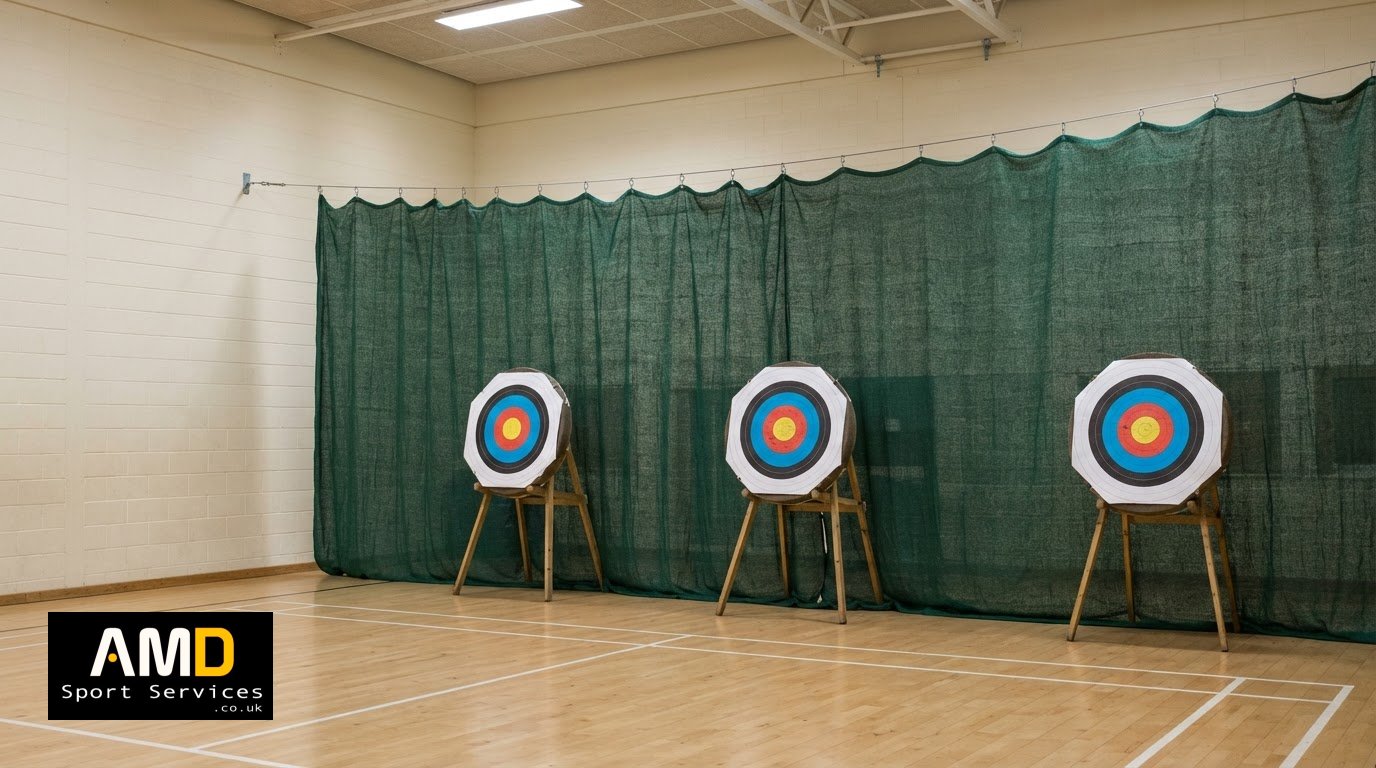
A sports equipment safety inspection covers the equipment included in the agreed scope. This can include outdoor fitness stations, sports hall equipment, games posts, trampolines, climbing frames, wall bars and outdoor play equipment. The assessment considers each item’s condition and records relevant findings. Facilities teams can use the report to understand the state of their sports assets and plan suitable follow-up work.
Do outdoor gyms need impact-attenuating surfacing?
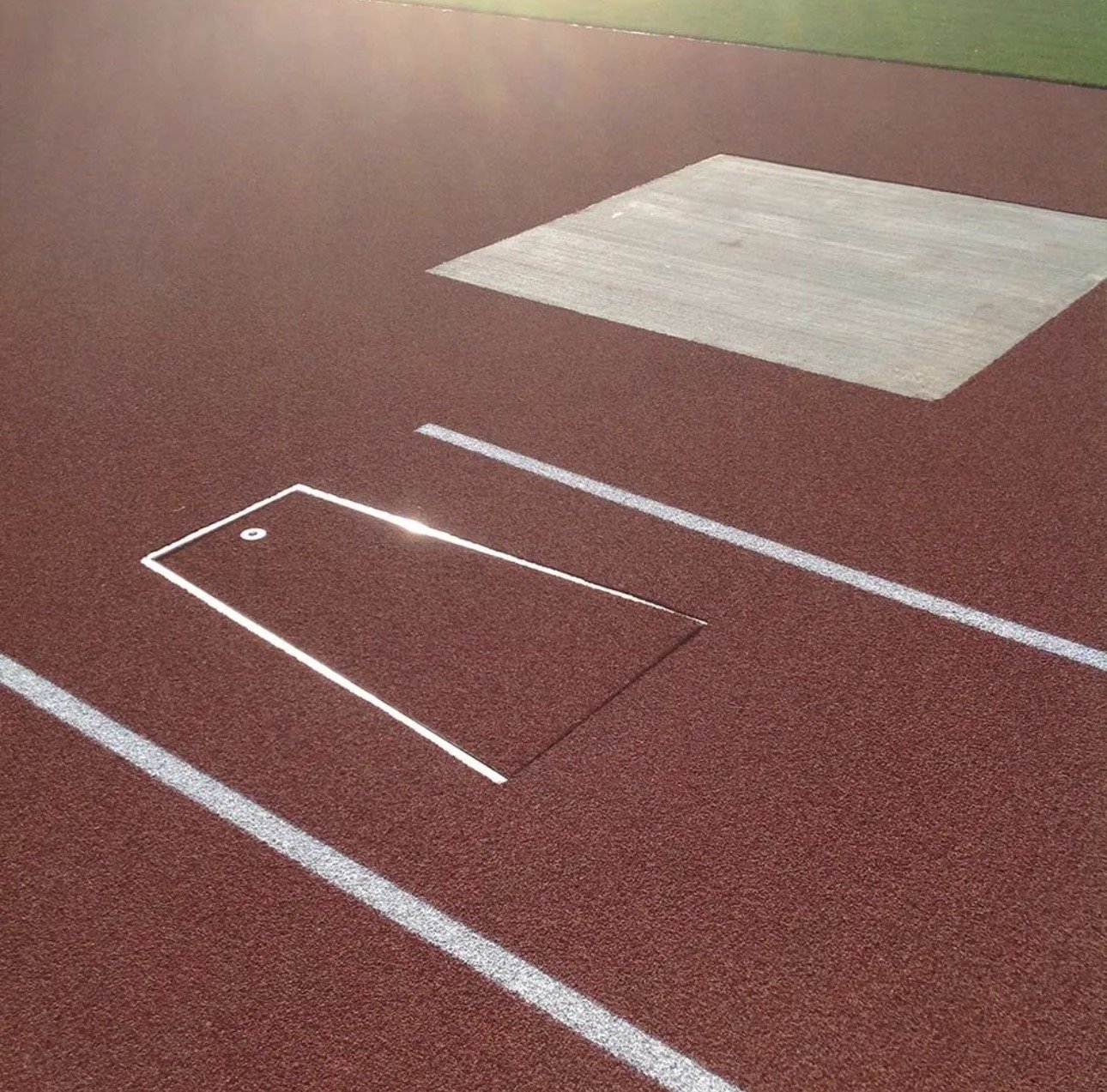
BS EN 16630 specifies an impact-damping ground surface in the movement area of outdoor fitness equipment with a free height greater than 1.0 metre. The appropriate surface depends on the equipment’s free height and fall height. An inspection can include the surfacing around equipment, helping facilities identify whether its condition or arrangement needs further attention.
Do users need instruction signage to use outdoor gym equipment safely?
Instruction signage can help users understand how a particular station is intended to be used, especially in an unsupervised public space. It may explain the movement or exercise associated with the equipment, but signage does not replace a professional inspection or resolve defects. Clear information can help varied users understand the equipment’s purpose.
Do you cover the whole of the UK?
Yes. AMD Sport Services provides sports facility equipment inspections for customers across the UK, including schools, councils, leisure centres and sports clubs. This national coverage is relevant to both single-site facilities and organisations responsible for equipment at multiple locations. Inspection arrangements can be considered in the context of the equipment and sites that need assessment.
Comments