
Commercial Gym Equipment Repair: The Professional Guide to Facility Compliance

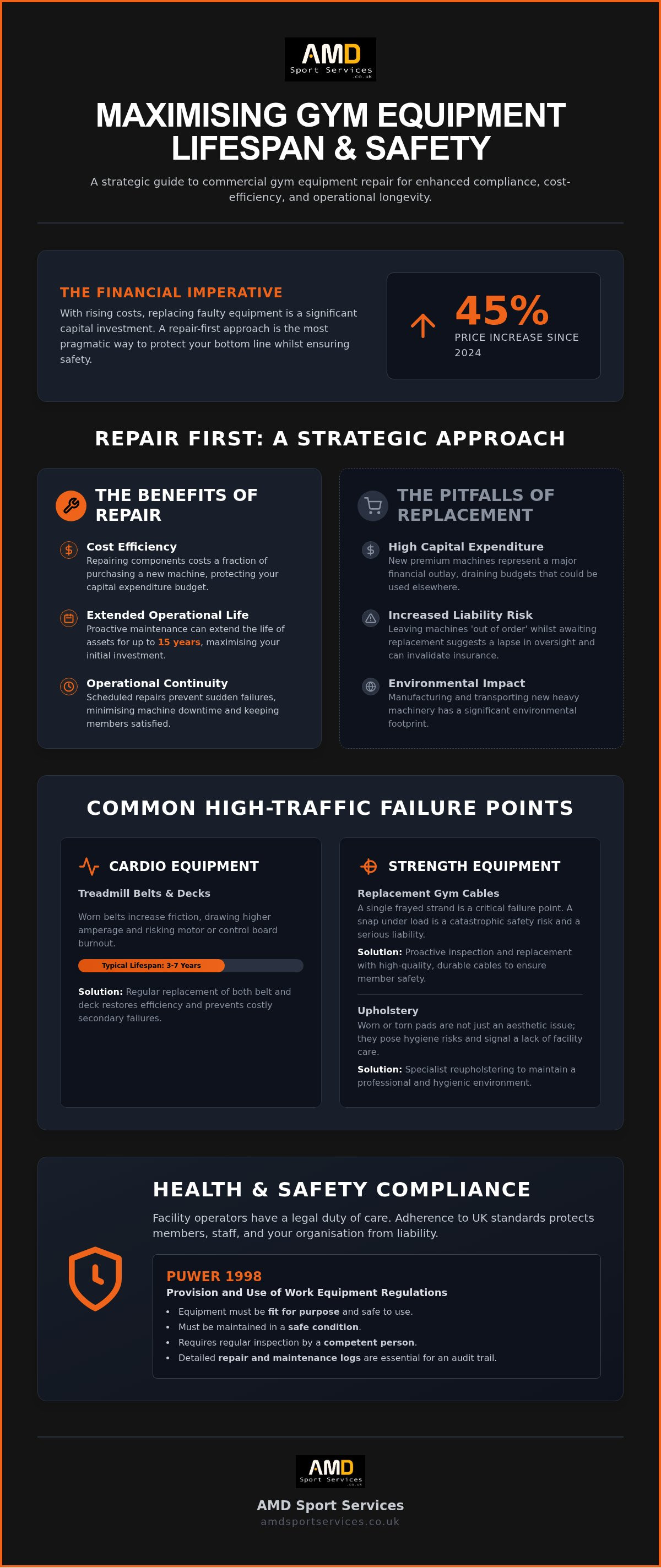
With commercial gym equipment prices rising by as much as 45% since 2024, the decision to replace a malfunctioning machine is no longer a simple budget line item. It's a significant capital investment that most facility managers would prefer to defer. You likely understand the frustration of seeing your most popular machines sit idle whilst members complain and your liability risks increase. Relying on professional commercial gym equipment repair is often the most pragmatic way to manage a safe, compliant fitness space whilst protecting your bottom line.
This guide explains how structured maintenance protocols protect your members, satisfy UK compliance standards, and extend the operational life of your assets. We'll examine the technical requirements for mechanical safety, the importance of specialist upholstery and cable replacement, and how to align your facility with the latest safety regulations. By shifting from a culture of replacement to one of precision maintenance, you can minimise downtime and ensure your strength and cardio equipment remains a reliable asset for years to come.
Table of Contents
The Role of Commercial Gym Equipment Repair in Facility Management
Commercial gym equipment repair isn't just about fixing a broken belt; it's a core component of institutional risk management. For schools, leisure centres, and local authorities, the stakes are significantly higher than in a residential setting. Home users might tolerate a squeaky treadmill, but in a high-traffic environment, that noise often signals a mechanical failure that could lead to injury. Professional repair services bridge the gap between simple cleaning and technical engineering. Whilst janitorial staff can wipe down surfaces, they aren't trained to identify structural fatigue in a hammer cage or micro-fractures in a cable. Fixing a cable matters. It's the difference between a functional facility and a liability.
The Legal Duty of Care for Gym Operators
Every facility operator has a statutory obligation to ensure that all exercise equipment is fit for purpose. This duty of care is particularly stringent for public sector entities. Under the Provision and Use of Work Equipment Regulations (PUWER) 1998, equipment must be safe for use, maintained in a safe condition, and inspected by competent persons. Keeping a detailed repair log is essential. These records provide a transparent audit trail that protects your organisation during health and safety inspections or in the event of a public liability claim. A machine that stays "out of order" for weeks doesn't just frustrate members. It suggests a lapse in facility oversight that can invalidate insurance coverage if an accident occurs.
Repair vs. Replacement: Protecting the Facility Budget
Managing a facility budget requires a clear understanding of the "Total Cost of Ownership". With the cost of premium machines rising significantly, replacing an entire strength circuit because of worn upholstery or frayed cables is financially inefficient. Specialist indoor inspection and maintenance can often double the lifespan of cardio and strength assets. It's a pragmatic approach to asset management.
Consider the following advantages of a repair-focused strategy:
Cost Efficiency: Replacing treadmill decks and belts is a fraction of the cost of purchasing a new unit.
Sustainability: Repairing equipment reduces the environmental impact of manufacturing and transporting new heavy machinery.
Operational Continuity: Scheduled repairs prevent the sudden, total failure of popular machines, keeping student engagement and member retention high.
By investing in professional commercial gym equipment repair, you're choosing a sustainable path that prioritises safety without draining your capital expenditure budget. It ensures your facility remains compliant whilst extending the life of your most expensive assets.
Common Repairs for Commercial Fitness Equipment
High-traffic fitness environments place immense stress on mechanical components, leading to predictable failure points that require expert intervention. Identifying these issues early is the primary goal of commercial gym equipment repair. A professional diagnostic process involves more than just a visual check; it requires a technical assessment of structural integrity and mechanical wear. For older machines where parts are no longer in production, bespoke repair solutions are often necessary to keep the asset operational and safe. Using high-quality, durable replacement components ensures that the repair lasts, preventing the "revolving door" of recurring faults that plagues many leisure centres and schools.
Cardio Machine Maintenance: Belts and Decks
Treadmills are often the hardest-working assets in any facility. Under heavy commercial use, treadmill belts typically last between 3 and 7 years before the friction-reducing underside wears away. Once this coating is gone, the motor draws higher amperage to overcome the resistance, which eventually burns out the control board. Flipping or replacing the treadmill deck alongside the belt is a standard procedure that restores the machine's efficiency. Similarly, servicing cross-trainers and exercise bikes involves checking drive belts and alternator brushes to eliminate noise and ensure smooth, consistent resistance for the user.
Strength Equipment: Cables and Upholstery
In resistance training, the cable is a critical safety component. We focus on the integrity of replacement gym cables, as a single frayed strand can lead to a catastrophic snap under heavy load. This isn't just a maintenance issue; it's a serious safety risk that can lead to significant liability. Beyond the mechanics, fitness equipment upholstery repair is a necessity for hygiene. Cracked or torn vinyl becomes a breeding ground for bacteria and is impossible to sanitise effectively. We provide bespoke upholstery services, allowing facilities to select durable, medical-grade vinyl in custom colours that align with their institutional branding.
Specialist Sports Apparatus Servicing
Institutional facilities often manage complex systems that go beyond standard gym kit. Our expertise includes gymnastics trampoline repairs, bed replacements, and spring tensioning to maintain safety and performance. We also handle the inspection of structural systems, including:
Roof-mounted basketball goals and motorisation units.
Indoor sport netting and hall division curtains.
Safety surfacing and court marking integrity.
Ensuring these systems are functional is a core part of our service and maintenance protocols, providing a one-stop solution for facility compliance and peace of mind.
Maintenance vs. Repair: A Strategic Approach
Most facility operators view commercial gym equipment repair as a reactive necessity. This "break-fix" mentality often leads to machine failures during peak hours, resulting in member complaints and operational friction. A strategic approach shifts the focus toward Planned Preventative Maintenance (PPM). By identifying mechanical wear before it causes a total breakdown, you reduce the frequency of expensive emergency call-outs and keep your facility running at full capacity. It's about moving from a culture of crisis management to one of technical foresight.
The Benefits of Planned Preventative Maintenance (PPM)
PPM involves a structured calendar of inspections tailored to your facility's specific usage levels. A school gym with high student turnover requires a different inspection frequency than a small corporate wellness centre. Regular service and maintenance visits allow technicians to lubricate moving parts, tighten loose fixings, and calibrate electronics. This proactive care offers several tangible advantages:
Early Detection: Spotting a frayed cable or a thinning treadmill belt before it snaps prevents injury and more extensive mechanical damage.
Warranty Protection: Many manufacturers require documented professional servicing to keep warranties valid for newer machines.
Budget Predictability: Small, scheduled maintenance costs are easier to manage than sudden, large-scale capital outlays for machine replacements.
This disciplined strategy ensures that your cardio and strength assets reach their maximum potential lifespan. It's a pragmatic way to protect your initial investment whilst maintaining high safety standards.
Ad-Hoc Repairs: Responding to Unexpected Failures
Even the most robust PPM schedule can't prevent every mechanical failure. When a machine does fail, ad-hoc repairs require a disciplined response. Triage is essential. A broken weight stack pin or a snapped cable is a high-priority issue that renders the equipment dangerous or unusable. Whilst "out of order" signs are a necessary temporary precaution, they aren't a solution. Leaving a machine idle for weeks signals a lack of investment in the facility and can lead to member churn. Rapid response times and a reliable supply of spare parts are critical to minimising these disruptions.
Your on-site staff are the first line of defence in this process. Daily visual checks and a simple, formalised fault-reporting system allow your team to catch minor issues, such as a squeaking pulley or a loose bolt, before they escalate. Training staff to recognise these early warning signs is a low-cost, high-impact way to improve the overall reliability of your equipment. When these reports are paired with a professional commercial gym equipment repair partner, the result is a safer, more efficient facility that meets all institutional requirements.
Health and Safety Compliance for Gym Equipment
Compliance in a commercial fitness environment is governed by a strict set of UK regulations designed to protect both the user and the operator. The primary legislation is the Provision and Use of Work Equipment Regulations (PUWER) 1998. This law requires that any equipment provided for use is suitable for its intended purpose, maintained in a safe condition, and inspected by a competent person. For schools and council-run leisure centres, these standards are non-negotiable. Failing to provide evidence of regular commercial gym equipment repair and maintenance can lead to significant legal consequences and the immediate suspension of facility insurance. Practitioners must stay ahead of changing standards, such as the upcoming GB 47368-2026 national safety standards, which will introduce even stricter mechanical and electrical requirements by October 2027.
Professional Safety Inspections and Audits
A professional sports equipment safety inspection involves a methodical assessment of every asset within the facility. This goes beyond checking if a treadmill turns on. It includes examining wall-mounted pulley systems for structural fatigue and inspecting ceiling-hung apparatus for secure fixings. Annual inspections are particularly critical for gymnastics and athletics equipment, where the mechanical loads are intense and failure can be catastrophic. We look for micro-fractures in metalwork, fraying in secondary safety wires, and degradation in impact-attenuating surfaces. This technical rigor ensures that your facility doesn't just look safe but is structurally sound under the pressure of daily use.
Compliance in Multi-Use Sports Halls
In multi-use environments, gym equipment safety is inextricably linked to broader sports hall netting systems and structural fixtures. A basketball goal that's difficult to operate manually isn't just an inconvenience; it's a health and safety risk for staff. Motorising roof-mounted goals is often a pragmatic compliance step that eliminates the risks associated with manual handling and working at height. Similarly, partition netting must be inspected for secure tracking and flame-retardant integrity to meet current fire safety and operational standards. A holistic approach to commercial gym equipment repair ensures that every mechanical system in the hall, from the weight stack to the division curtain, operates within safe parameters.
Maintaining a robust safety audit trail is the final step in the compliance process. Every repair, from a simple upholstery patch to a full motor replacement, must be documented with the date, the nature of the work, and the name of the competent person who performed it. This documentation serves as your primary defence during an HSE audit. If you need to bring your facility up to current standards, you can arrange a professional compliance inspection to identify and rectify any hidden mechanical risks.
Professional Gym Equipment Servicing with AMD Sport Services
AMD Sport Services operates as a dedicated partner for UK educational and leisure facilities, bringing over 20 years of industry experience to every project. We adopt the role of the "Seasoned Practitioner," prioritising technical proficiency and accountability over polished sales pitches. Our approach is grounded in the belief that high-quality maintenance is a matter of institutional safety rather than mere mechanical fixing. We understand the specific pressures faced by facility managers in schools and councils, where budgets are tight and compliance is mandatory. By focusing on the durability of every repair, we help you achieve long-term reliability for your cardio and strength assets.
Bespoke Solutions for Unique Facility Challenges
Every facility has its own set of mechanical challenges, often involving older equipment that standard service providers struggle to maintain. We specialise in bespoke craftsmanship, such as manufacturing replacement gym cables and providing medical-grade fitness equipment upholstery tailored to your specific branding. Our expertise isn't limited to the gym floor. We provide a comprehensive range of services that includes everything from treadmill deck replacement to external sport equipment installation, such as throwing cages and long jump runways. This breadth of capability allows us to act as a single point of contact for all your sports and fitness maintenance needs.
Our work in UK schools has frequently involved transforming equipment safety by addressing neglected mechanical issues. We don't just identify problems; we provide the physical labour and technical skill required to rectify them. Whether it's motorising a roof-mounted basketball goal or refurbishing a gymnastics trampoline, our focus remains on adhering to official standards and extending the lifespan of your equipment. This pragmatic "repair-first" strategy has saved numerous facilities from the high costs of premature asset replacement.
Get Started with a Comprehensive Safety Inspection
Achieving full facility compliance begins with a methodical assessment of your current inventory. You can book a national safety audit with the AMD team to establish a clear baseline for your equipment's condition. Our inspections are thorough and transparent, covering everything from the structural integrity of wall-mounted systems to the electrical safety of your cardio machines. We provide detailed maintenance and repair reports that categorise findings by urgency, allowing you to manage your maintenance budget with precision.
When you partner with us for commercial gym equipment repair, you receive a service built on technical honesty and direct communication. We provide clear, bespoke repair quotes that outline the necessary steps to return your equipment to a safe, operational state. To discuss your facility's specific requirements or to organise an initial inspection, contact the AMD Sport Services team directly. We are ready to help you minimise equipment downtime and ensure your facility meets the highest standards of safety and performance.
Securing the Long-Term Performance of Your Fitness Assets
Effective facility management requires a shift from reactive fixes to a culture of technical foresight. By prioritising planned maintenance and adhering to PUWER 1998 standards, you protect your members whilst significantly reducing the total cost of ownership for your equipment. A safe gym is a reliable gym, and maintaining that standard is a continuous process of inspection and precise mechanical care.
With over 20 years of technical expertise, AMD Sport Services provides the national coverage and specialist skills needed to keep your facility compliant. Whether you require bespoke upholstery, replacement cables, or a comprehensive safety audit, our seasoned practitioners are ready to support your facility's unique needs. Professional commercial gym equipment repair ensures that your cardio and strength machines remain safe, functional, and durable for years to come.
Don't let equipment downtime compromise your facility's reputation or safety standards. Enquire about our professional gym equipment repair and inspection services to secure your assets today. We look forward to helping you build a safer, more efficient fitness environment.
Frequently Asked Questions
How often should commercial gym equipment be professionally serviced?
Professional servicing should typically occur at least twice a year in high-traffic environments to ensure mechanical safety. Institutional facilities, such as schools and council leisure centres, often require a formal annual inspection to remain compliant with their insurance and safety audits. Regular maintenance intervals depend on your specific equipment usage levels, but a bi-annual schedule helps identify wear in cables and belts before they lead to a total machine failure.
Is it cheaper to repair or replace commercial treadmills?
Repairing a commercial treadmill is almost always the more cost-effective choice for facility managers. With the price of premium cardio machines increasing by up to 45% since 2024, extending the life of your current assets is a pragmatic financial strategy. Replacing treadmill belts and decks costs a fraction of a new unit. Professional commercial gym equipment repair can help a well-maintained machine last between 7 and 15 years.
What are the UK safety regulations for gym equipment in schools?
Safety in school gyms is primarily governed by the Provision and Use of Work Equipment Regulations (PUWER) 1998. These regulations mandate that all equipment is suitable for use, maintained in a safe condition, and inspected by a competent person. Schools must keep a documented audit trail of all repairs and inspections. This record serves as evidence of compliance during health and safety audits and protects the school from public liability claims.
Can you repair upholstery on all brands of fitness equipment?
Yes, we provide bespoke upholstery services for all major brands of resistance and strength equipment. Our technicians use medical-grade, fire-retardant vinyl that is designed to withstand the rigours of a commercial environment. Beyond aesthetics, repairing torn upholstery is essential for hygiene, as cracked surfaces trap bacteria and are difficult to sanitise. We can also provide custom colours to match your facility's specific branding and colour scheme.
How long does a typical gym equipment repair take to complete?
Most standard commercial gym equipment repair tasks, such as replacing frayed cables or fitting new treadmill belts, are completed within a few hours. We prioritise minimising downtime for your most popular machines to keep your members satisfied. More complex mechanical overhauls or bespoke structural repairs may take longer depending on the availability of specialised parts, but we always provide a clear timeline following our initial technical assessment and diagnostic check.
Do I need a safety certificate for my gymnasium equipment?
Whilst there is no single "safety certificate" document, you are legally required to provide evidence of regular professional inspections. Following a safety audit, you will receive a detailed report that documents the condition of each asset and any repairs performed. This report acts as your proof of compliance for local authorities, insurers, and health and safety inspectors, demonstrating that you have met your statutory duty of care.
What is included in a sports equipment safety inspection?
A comprehensive inspection involves a methodical assessment of structural integrity, mechanical function, and electrical safety. Our technicians examine everything from weight stack pins and pulley alignment to the tension of gymnastics trampoline beds and the security of wall-mounted fixtures. We also check for signs of fatigue in secondary safety wires and ensure that all moving parts are correctly lubricated. The final report categorises findings by urgency to help you manage repairs.
Can you provide replacement cables for older resistance machines?
Yes, we specialise in manufacturing bespoke replacement gym cables that fit any machine, including discontinued or older models. Many facilities have high-quality strength assets that are no longer supported by the original manufacturer. Our ability to create custom cables on-site or in our workshop allows you to maintain these machines safely without the need for an expensive full-suite replacement. This bespoke approach is a core part of our commitment to durable craftsmanship.


Comments