
Commercial Gym Equipment Upholstery: A Guide to Maintenance and Safety

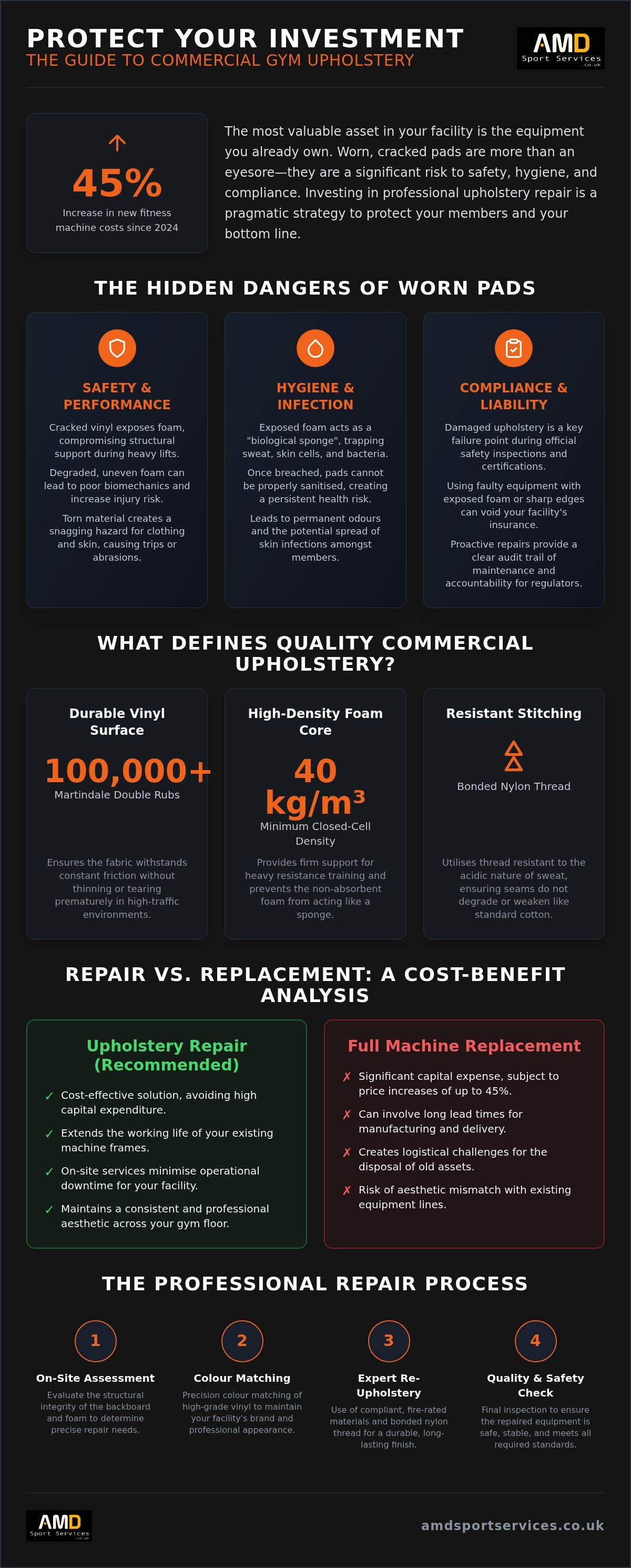
With the cost of new fitness machines rising by up to 45% since 2024, the most valuable asset in your facility isn't your next purchase; it's the equipment you already own. You likely understand that worn, cracked pads are more than just an eyesore for your members. They're a breeding ground for bacteria and a major risk during safety inspections. Investing in high-quality commercial gym equipment upholstery is a pragmatic way to protect your investment whilst maintaining a professional, hygienic environment.
We agree that keeping a facility running smoothly requires durable equipment that can withstand heavy daily use. This guide explains how professional upholstery repairs ensure your facility remains compliant with safety standards, improves hygiene, and extends the working life of your machines. We'll examine the technical requirements for high-density foam, the necessity of fire-rated materials, and how on-site services minimise downtime to keep your members satisfied and your floor fully operational.
Table of Contents
The Role of Commercial Gym Equipment Upholstery in Facility Safety
Maintaining commercial gym equipment upholstery is often mistakenly viewed as a purely aesthetic task. In reality, the condition of your pads and benches is a critical safety indicator during leisure centre inspections. When vinyl surfaces crack or tear, they cease to be a protective barrier and instead become a liability. These breaches in the material expose the internal foam, which lacks the structural integrity to support users safely during high-impact or heavy-weight exercises. For any facility manager, identifying these faults early is a pragmatic step in preventing equipment failure and ensuring user safety.
The physical risks extend beyond simple wear. When managing a wide variety of exercise equipment, facility managers must recognise that the upholstery is a structural component of the machine's interface with the user. If a weight bench pad is compressed or uneven due to foam degradation, it can force a user's body into compromised biomechanical positions. This lack of stable support increases the risk of joint strain or acute injury. Furthermore, torn vinyl presents a snagging hazard for clothing and skin, which can lead to trips or abrasions in a fast-paced gym environment.
Beyond physical safety, the psychological impact on members shouldn't be ignored. A sports centre with visible equipment damage suggests a lack of oversight. Members associate the cleanliness and condition of the upholstery with the overall standard of the facility. If the pads are cracked and unsightly, it often leads to a decline in member retention as users move toward centres that prioritise a well-maintained, professional environment.
Hygiene Standards and Infection Control
Exposed foam acts as a biological sponge. In high-traffic commercial gyms, perspiration and skin cells penetrate deep into the open-cell structure of damaged pads. Once sweat reaches the internal foam, it's impossible to remove through standard surface cleaning. This creates a permanent reservoir for bacteria and fungi, leading to persistent odours and potential skin infections amongst your members. Professional repairs utilise antimicrobial, non-porous vinyl that allows for effective sanitisation. If the upholstery is breached, the equipment cannot be truly sanitised, making immediate repair the only viable solution for infection control.
Compliance with UK Safety Regulations
For schools, councils, and private leisure providers, equipment compliance is a legal necessity. Upholstery condition is a standard check-point in annual safety certifications. Using damaged apparatus with exposed foam or sharp plywood edges can void your insurance and increase liability risks in the event of an accident. It's much more efficient to address these issues through a structured service plan. This proactive approach is most effective when you integrate pad repairs into your regular indoor inspection and maintenance schedule. By documenting these repairs, you create a clear audit trail of safety and accountability that satisfies both inspectors and stakeholders.
Materials and Standards: What Defines Quality Commercial Upholstery?
The technical specification of the materials used in your facility determines the longevity of your equipment. Whilst two pads may look identical on the surface, the difference between domestic-grade vinyl and professional commercial gym equipment upholstery is significant. High-traffic environments require materials with a high Martindale abrasion rating. For a leisure centre or school gym, we recommend a minimum of 100,000 double rubs. This ensures the fabric can withstand the constant friction of users moving against the surface without thinning or tearing prematurely.
Foam density is another critical factor that separates professional repairs from temporary fixes. We utilise high-density, closed-cell foam with a minimum density of 40 kg/m³. This specific grade provides the necessary support for users performing heavy resistance training, preventing the uncomfortable sensation of "bottoming out" against the plywood base. Because the foam is closed-cell, it does not act as a sponge for perspiration, which protects the internal structure of the pad from rot. To ensure these materials perform over time, professional stitching with bonded nylon thread is essential. This thread is resistant to the acidic nature of sweat and won't degrade like standard cotton alternatives. If you are looking to protect your investment, integrating these high-standard repairs into your professional maintenance services is a sensible long-term strategy.
Fire Retardancy and BS 5852 Compliance
Safety in public buildings is governed by strict fire regulations. In the UK, upholstery used in leisure centres and schools must comply with BS 5852, often referred to as the "Crib 5" standard. This test ensures the material is flame retardant and won't contribute to the spread of fire in an indoor sports hall. When sourcing a contractor, always verify that their materials meet these specific British Standards. Whilst global Fitness Product Regulations often focus on mechanical safety, fire compliance is a non-negotiable requirement for UK facility managers and local authorities.
Marine-Grade Vinyl and Antimicrobial Coatings
Moisture resistance is the primary defence against upholstery failure. We often select marine-grade vinyl for gym environments because it's designed to handle constant exposure to moisture without cracking. These materials are treated with antimicrobial coatings that actively inhibit the growth of mould, mildew, and bacteria. This isn't just about hygiene; it's about structural preservation. By preventing fungal growth within the vinyl's backing, the material remains supple and resistant to the brittleness that leads to surface cracking. You can choose from a wide range of textures and colours to match your brand whilst maintaining these high performance standards.
Repair vs Replacement: A Cost-Benefit Analysis for Facilities
Facility managers often struggle to justify high capital expenditure for new machines when only the contact surfaces are failing. It's a common issue in high-traffic leisure centres where the steel frames of resistance machines remain perfectly functional, but the pads have degraded. Choosing to invest in professional commercial gym equipment upholstery is a pragmatic decision that prioritises budget efficiency without compromising on user experience. Replacing a single commercial-grade resistance machine can cost thousands of pounds; however, refurbishing the existing pads allows you to restore the equipment to a "like-new" condition for a fraction of that cost.
The environmental impact of refurbishment is also an increasingly important factor for local authorities and schools. By opting for reupholstery, you significantly reduce the amount of waste sent to landfill. Refurbishing existing frames keeps high-grade steel and plastic components in service for longer, supporting your facility's sustainability targets. In cases where the original pad is beyond a simple recovery, we can provide bespoke pad manufacture. This involves creating a completely new component that matches the original manufacturer's specifications, ensuring the machine remains fully operational and safe for use.
Identifying Structural Damage
Determining whether a pad requires a simple vinyl recovery or a full replacement depends on the state of the internal components. You should check for "soft spots" where the foam has lost its rebound capacity. If a user's weight causes the pad to bottom out against the plywood base, it no longer provides the necessary stability for safe training. We also assess the wooden backing for signs of rot or fastener failure. If the T-nuts that secure the pad to the frame are pulling through the plywood, the entire unit becomes a mechanical risk that requires immediate professional attention.
Lifecycle Planning for Gym Equipment
Pragmatic facility management involves viewing upholstery as a recurring maintenance requirement rather than an unexpected repair. By integrating these checks into your regular service and maintenance programme, you can identify minor tears before they lead to foam contamination. This proactive approach extends the lifespan of your fitness assets and ensures you aren't forced into emergency replacements during peak periods. Regular inspections allow you to schedule repairs during off-peak hours, ensuring minimal disruption for your members whilst maintaining full compliance with safety standards.
The Professional Upholstery Repair Process Explained
Restoring commercial gym equipment upholstery requires a methodical sequence to ensure the finished product meets official safety standards and stands up to heavy use. We follow a technical workflow that prioritises durability and precision. This process begins with a comprehensive on-site assessment. We don't just look for surface tears; we physically inspect every pad, bench, and support for structural weaknesses in the backing and foam. This initial audit allows us to categorise which components require a simple recovery and which need a full internal restoration.
Once the assessment is complete, we move to the selection of compliant materials. We match the colour and texture to your existing equipment whilst ensuring the new vinyl meets the mandatory fire retardancy and antimicrobial standards. The physical repair starts with precision stripping. We remove the old, contaminated covers and assess the foam underneath. If the foam has compressed, we perform restoration work to return the pad to its original profile. Finally, we tailor and fit the new commercial-grade cover. This involves precision cutting and heavy-duty stitching to ensure the fabric remains taut and doesn't shift or bunch during exercise. If your facility needs this level of technical attention, you can book a professional equipment inspection to identify which pads require immediate action.
On-site vs Off-site Repair Solutions
Efficiency is vital for busy leisure centres. Most of our repairs are completed using mobile workshops, which provides the advantage of minimal facility disruption. We come to your site, perform the work, and return the equipment to service immediately. This eliminates the logistical burden and cost of shipping heavy pads. For larger facilities, we can organise repairs during off-peak hours or overnight to maintain member access. Whilst mail-in services are available for small batches of pads, on-site service is the most pragmatic choice for maintaining a full equipment floor.
Bespoke Manufacturing for Discontinued Machines
Institutional clients often manage older machines where the original manufacturer no longer provides spare parts. In these cases, we use bespoke manufacturing techniques to solve the problem. We create custom templates based on the machine's frame, allowing us to build new pads from scratch. We can customise the pad thickness and shape to suit specific user needs whilst ensuring the new components align with the original manufacturers specifications. This specialist approach allows you to keep high-quality, older machines in safe operation rather than being forced into an expensive replacement.
AMD Sport Services: Expert Fitness Equipment Maintenance
AMD Sport Services operates with the grounded professionalism of a seasoned industry expert. With over 20 years of experience, we've developed a pragmatic approach to facility safety that prioritises the longevity of your equipment over unnecessary replacements. We understand that institutional clients, such as schools and local councils, require a dependable partner who values technical honesty and clear communication. Our specialist commercial gym equipment upholstery services are designed to meet these high standards, ensuring that your fitness assets remain durable, compliant, and safe for public use.
Managing a sports facility involves balancing member satisfaction with strict safety regulations. We simplify this process by acting as a single, versatile contractor for all your maintenance needs. By combining upholstery repairs with mechanical tasks like installing replacement gym cables or servicing treadmills, we reduce your facility's downtime. This coordinated effort ensures that every component of your machines, from the weight-bearing cables to the contact pads, is inspected by the same expert team. It's an efficient way to maintain a comprehensive picture of your equipment's health whilst ensuring a consistent standard of workmanship across your entire facility.
Comprehensive Safety Audits for Schools and Centres
Our safety audits are more than a simple visual check. We integrate upholstery assessments into our wider inspection protocols, adhering to UKA and professional standards. Each visit results in detailed reporting that provides a clear audit trail for your compliance records. This documentation is essential for demonstrating accountability to local authorities and insurers. You can view our track record of facility restoration by exploring our latest projects, which showcase our ability to solve complex maintenance challenges for clients across the UK.
National Reach with a Personal Touch
We provide national UK coverage with the attention to detail typically found in a local specialist. This reach allows us to support large-scale maintenance contracts whilst maintaining a personal commitment to the quality of every bespoke repair. Our expertise isn't limited to the gym floor; we offer facility-wide care that includes sports hall netting systems and goal post inspections. If your centre requires a bespoke maintenance quotation that covers all aspects of sports equipment safety, our team is ready to provide a direct, no-nonsense assessment of your needs.
Prioritising Longevity and Compliance in Your Facility
Professional commercial gym equipment upholstery is a structural necessity that directly impacts your facility's safety and reputation. Prioritising fire-rated vinyl and high-density foam protects your members from hidden bacteria and physical injury. Refurbishing existing equipment is a pragmatic, sustainable choice that saves your budget whilst maintaining a professional environment. It's a sensible way to extend the life of your fitness assets without the high capital expenditure of buying new machines.
AMD Sport Services brings over 20 years of specialist expertise to every project, offering national UK coverage for efficient on-site repairs. We provide the comprehensive safety compliance reporting you need to satisfy inspectors and stakeholders alike. Don't wait for minor wear to become a major liability or a hygiene risk. Request a professional gym upholstery and safety inspection from AMD Sport Services to keep your equipment in peak condition. We look forward to helping you maintain a safe, efficient, and welcoming training space for your members.
Frequently Asked Questions
How long does commercial gym upholstery typically last?
Commercial gym equipment upholstery typically lasts between two and five years depending on the facility's traffic and maintenance protocols. In high-use leisure centres, pads on machines like leg extensions or chest presses may require attention sooner due to constant friction. Regular cleaning with non-abrasive, pH-neutral solutions helps preserve the vinyl's suppleness and prevents premature cracking.
Is it possible to match the colour of my existing gym equipment pads?
Yes, it's entirely possible to match the colour and texture of your existing equipment pads to maintain brand consistency. We carry a wide range of commercial-grade vinyls that align with major equipment manufacturers' original specifications. This bespoke approach ensures that repaired pads don't look out of place amongst the rest of your equipment floor.
What is the most durable material for high-use gym benches?
Marine-grade vinyl with an antimicrobial coating is considered the most durable material for high-use gym benches. This material is designed to resist moisture penetration and prevent the growth of mould and bacteria. For commercial environments, we recommend a fabric with a Martindale abrasion rating of at least 100,000 double rubs to ensure long-term resistance to surface wear.
Can gym upholstery repairs be carried out on-site to avoid downtime?
Yes, professional upholstery repairs are frequently carried out on-site using mobile workshops to minimise facility downtime. This pragmatic approach allows equipment to be returned to service almost immediately after the work is completed. For larger facilities, we can organise these repairs during off-peak hours to ensure your members have uninterrupted access to the equipment floor.
How do I know if the foam inside my gym pad needs replacing?
You'll know the internal foam needs replacing if you notice "soft spots" or if the pad fails to rebound after use. If a user can feel the plywood backing whilst exercising, the foam has lost its structural integrity and no longer provides safe support. Replacing the foam during the reupholstery process is essential for maintaining user stability and comfort.
Are there specific fire safety standards for gym upholstery in the UK?
In the UK, all upholstery used in commercial fitness environments must comply with BS 5852 fire safety standards, often known as "Crib 5". This regulation ensures the materials are flame retardant and suitable for use in public buildings like schools and leisure centres. We always verify that our commercial gym equipment upholstery materials meet these mandatory safety credentials.
Can you repair upholstery on older or discontinued fitness machines?
Yes, we specialise in repairing upholstery for older or discontinued fitness machines by using bespoke manufacturing techniques. If original manufacturer parts are no longer available, we create custom templates from the machine's frame to build new, compliant pads. This allows facilities to keep high-quality older machines in safe operation rather than facing expensive replacements.
What is the cost difference between repairing a pad and buying a new one?
Repairing a pad is significantly more cost-effective than buying a new machine, often costing only a fraction of the price of a total replacement. Whilst the cost of new commercial resistance machines has risen by up to 45% since 2024, refurbishment allows you to restore your existing assets to a "like-new" condition. This approach prioritises budget efficiency whilst ensuring full safety compliance.


Comments