
Expert Basketball Goal Repair: Restoring Safety and Play

A loose rim or damaged net may look like a straightforward fault, but cracks, corrosion or movement in the supporting structure can point to a wider problem. Before arranging basketball goal repair, the key question is whether the issue is limited to a repairable component or affects the stability and operation of the complete goal.
The answer depends on the goal’s condition, including its backboard, rim, fixings, support and any adjustment mechanism. A condition-led assessment helps facility managers understand the fault, decide what work is appropriate and plan around any disruption to sports sessions.
This article covers common faults and warning signs, what a specialist assessment considers, and how to weigh repair against replacement. It also explains what happens during repair and the checks to consider before returning a goal to use.
Table of Contents
Basketball goal repair: recognise faults before they affect facility use
How a professional basketball goal inspection identifies the repair needed
Basketball goal repair or replacement: how to weigh the options
What happens during basketball goal repair and return-to-use checks?
Arrange specialist basketball goal repair with AMD Sport Services
Basketball goal repair: recognise faults before they affect facility use
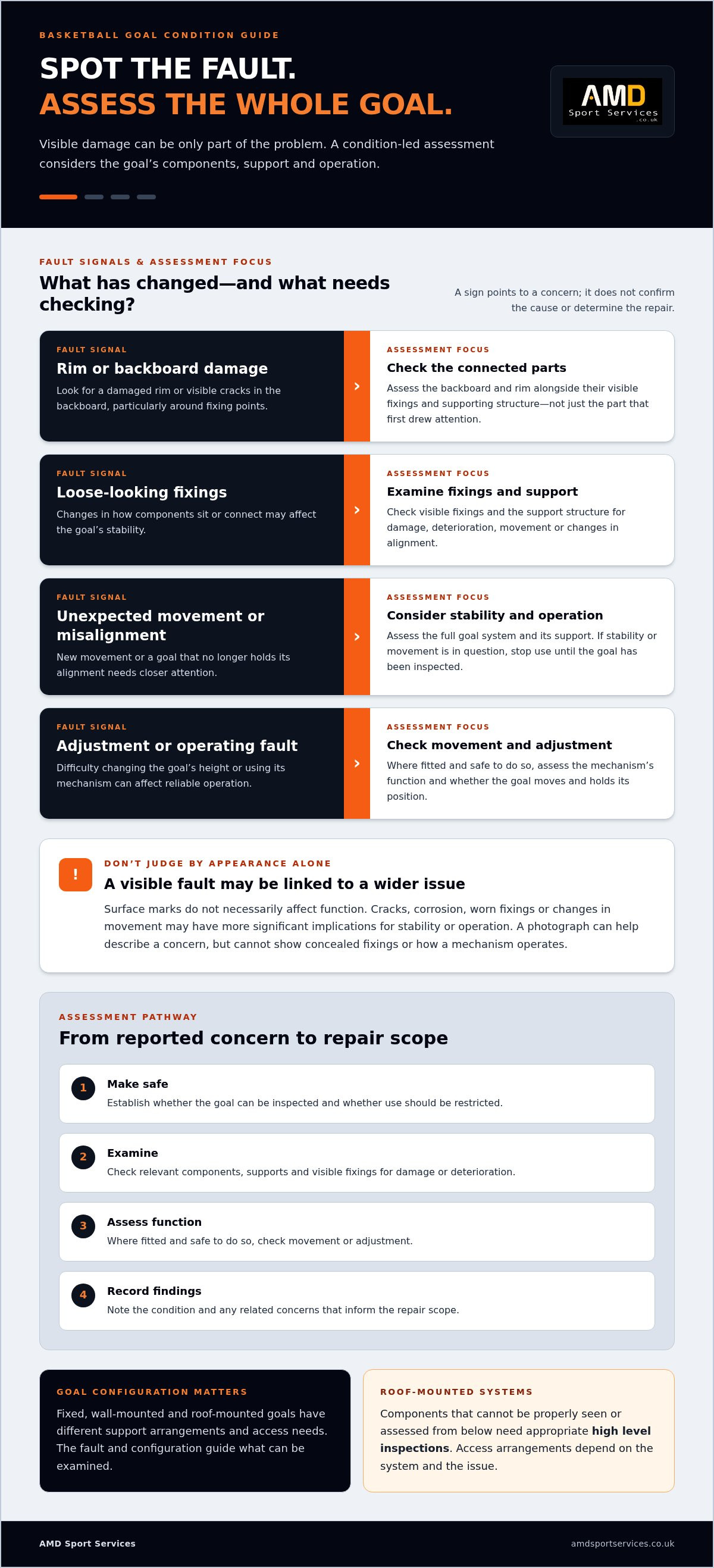
A faulty basketball goal can disrupt scheduled activity and affect safe use of the playing area. A worn net may be a limited issue, but unexpected movement, a change in alignment or unreliable operation needs closer attention. Staff don’t need to diagnose the cause. Note what has changed, stop use if stability or movement is in question, and arrange an assessment.
Goals differ in their mounting and operating systems. A fixed goal, wall-mounted system and roof-mounted goal have different support arrangements and access needs. A fault in an operating mechanism calls for a different assessment from damage to a rim or backboard. Consider the full system: the backboard, rim and net are connected parts of basketball equipment, while the support and any adjustment mechanism affect how the goal functions.
Which basketball goal faults need prompt attention?
Look for changes rather than trying to identify the cause. A damaged rim, cracked backboard, loose-looking fixing or unusual movement can each indicate that the goal needs professional assessment. If the goal no longer holds its alignment or seems less stable, stop using it until it has been inspected. A goal that moves unexpectedly during operation should also be taken out of use.
Rim or backboard damage: Look for a damaged rim or visible cracks in the backboard, particularly around fixing points.
Worn or loose fixings: Changes in how components sit or connect may affect the goal’s stability.
Unexpected movement: New movement or a change in alignment warrants prompt attention.
Adjustment or operating faults: If fitted, difficulty changing the goal’s height or using its mechanism can affect reliable operation.
These signs don’t confirm the cause or determine the right repair. They help staff identify when use should pause while the goal is assessed.
Why the visible fault may not be the whole problem
A damaged component may be connected to a wider support or operating issue. For example, a rim that appears out of position needs to be considered alongside its attachment and supporting structure, not just the rim itself. A fault in a height-adjustment mechanism may also affect how the goal moves and holds its position. The mounting type and access requirements influence what can be examined.
Surface marks don’t necessarily affect function. Cracks, corrosion, worn fixings or changes in movement may have more significant implications for stability or operation, so don’t dismiss them as cosmetic. A photograph can help staff describe what they have noticed, but it can’t show the condition of concealed fixings or how a mechanism operates. An assessment provides a better basis for deciding whether basketball goal repair is suitable and what work is needed.
How a professional basketball goal inspection identifies the repair needed
A professional inspection helps turn a reported concern into a repair scope based on the goal’s condition. The assessor considers whether the goal can be examined safely, checks relevant components and, where appropriate, assesses its functions. This helps distinguish the part showing the fault from any related issue elsewhere in the system.
A professional inspection assesses the complete goal and its components to identify faults and inform appropriate next steps. Checks are guided by the goal’s configuration, the reported problem and the access needed. A fixed goal, wall-mounted system and roof-mounted goal won’t necessarily be examined in the same way.
What is examined during a basketball goal assessment?
The assessment considers the backboard and rim, visible fixings, support structure and any height-adjustment components. The assessor looks for damage, deterioration, movement and changes in alignment, then checks relevant functions where it’s appropriate and safe to do so. This wider view helps establish whether the reported fault is isolated or whether related parts also need attention.
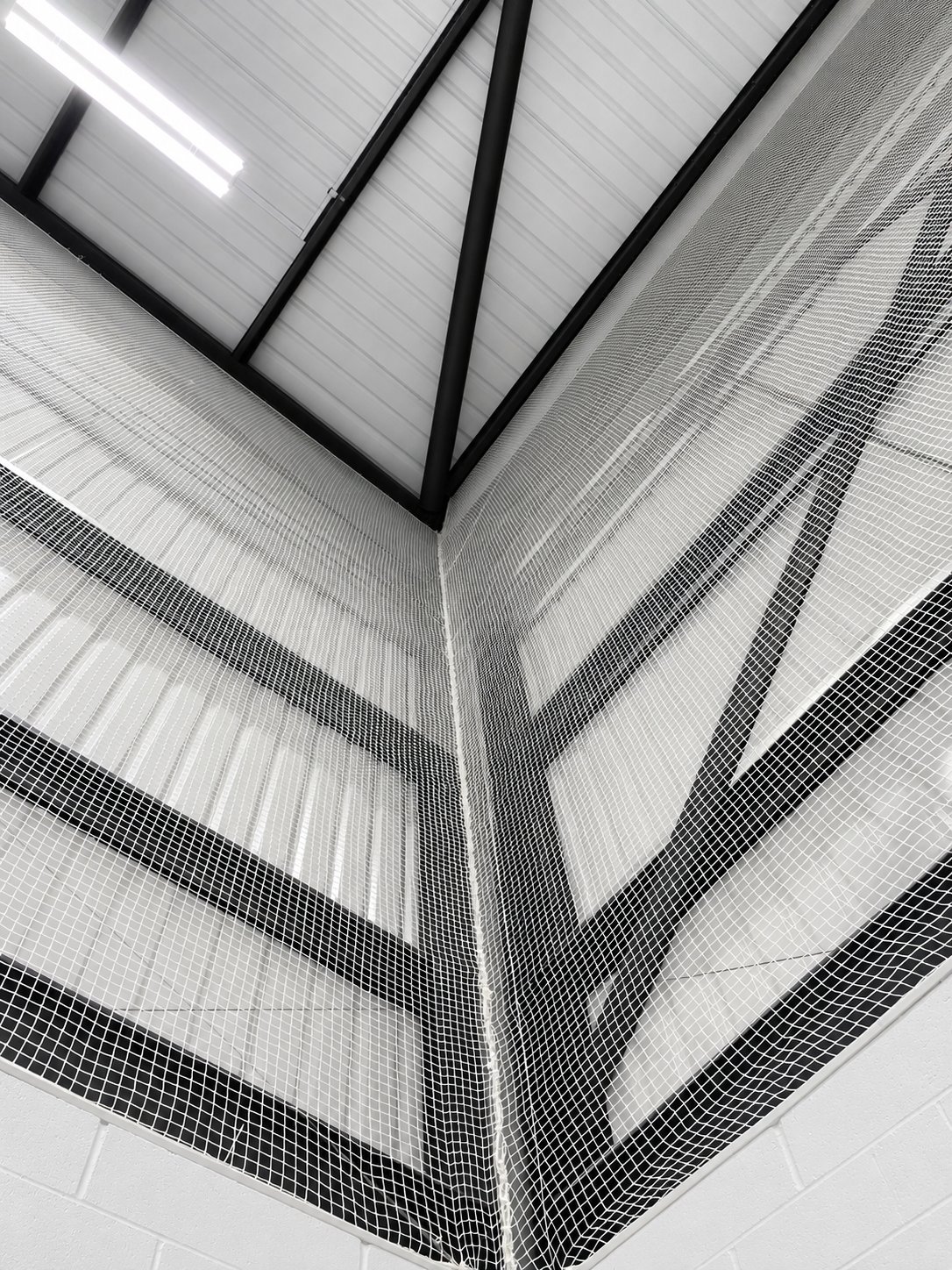
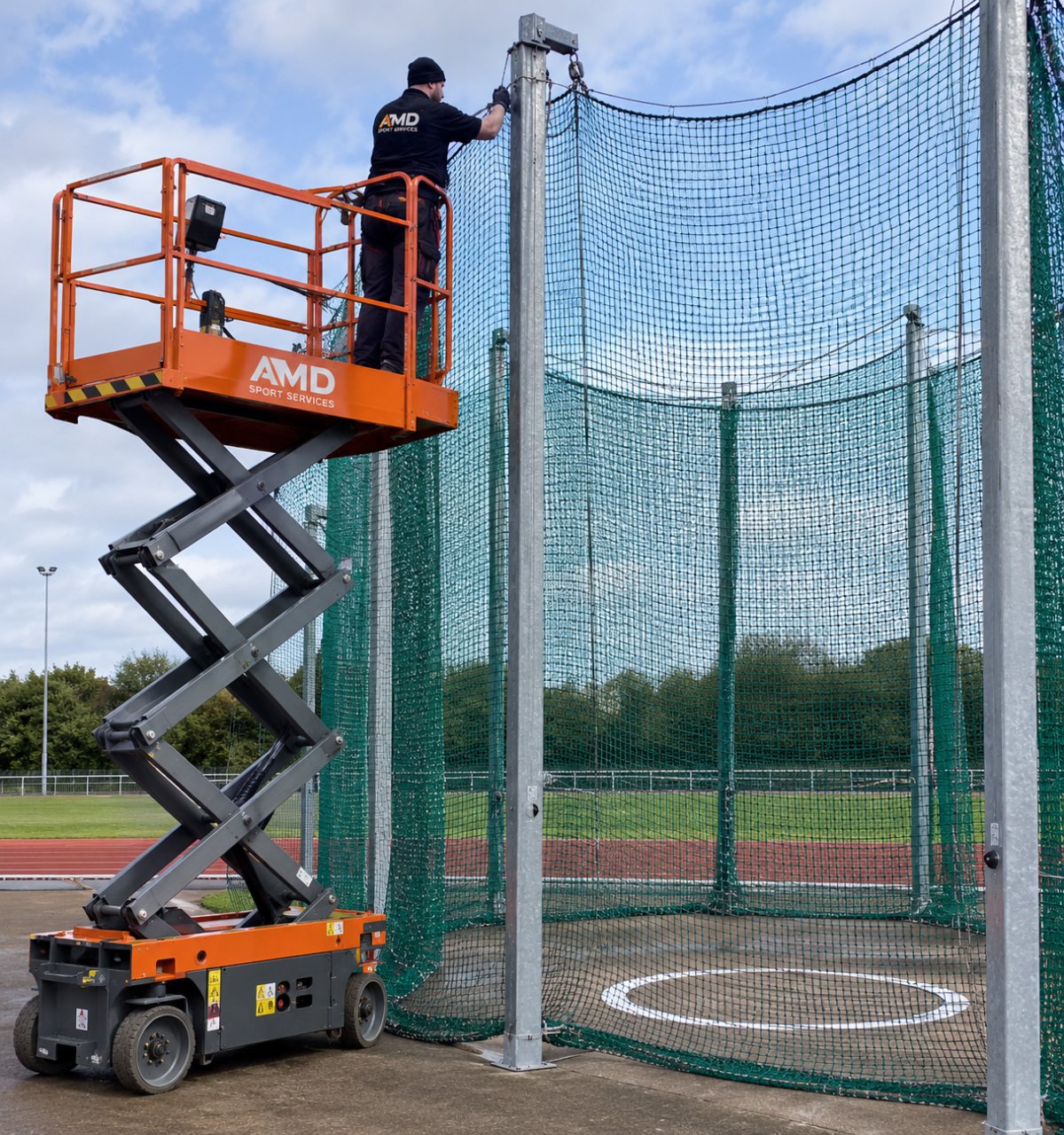
Roof-mounted goals need particular consideration of access. A routine observation from floor level may reveal an obvious change, but it isn’t a substitute for high level inspections of components that can’t be properly seen or assessed from below. The access arrangements and checks depend on the system and the issue being investigated.
How inspection findings shape the repair scope
Useful findings identify the affected component, describe its condition and note connected concerns. For example, a fault in an adjustment component should be considered alongside how the goal moves and holds its position. This prevents a decision being based only on the part that first drew attention.
The repair sequence also depends on access and configuration. A roof-mounted system may need different access planning from a fixed goal, while the extent and location of damage influence which components require attention. The inspection findings help shape work around the equipment’s actual condition instead of assuming a repair method in advance.
Make safe: Establish whether the goal can be inspected and whether use should be restricted.
Examine: Check relevant components, supports and visible fixings for damage or deterioration.
Assess function: Where fitted and safe to do so, check movement or adjustment.
Record: Note the findings and any issues that inform the repair scope.
This process gives facility managers a clearer basis for choosing the next step. AMD Sport Services provides specialist sports equipment inspections and repairs. Its sports equipment maintenance and repair supports a condition-led approach to basketball goal repair.
Basketball goal repair or replacement: how to weigh the options
Choosing between repair and replacement isn’t simply a matter of counting damaged parts. Consider the goal’s overall condition, how the affected components work together and whether the equipment operates reliably. A defined fault may have a practical repair scope, while damage affecting the support or stability may call for a wider review.
Repair suitability depends on the assessed condition, goal configuration and extent of the fault. These factors help facility managers weigh the options without relying on one visible defect or a rule that applies to every system.
When a component repair may be appropriate
A damaged rim, backboard component or height-adjustment mechanism may be suitable for repair if the assessment identifies a clear scope of work. The surrounding structure, fixings and connections still need consideration. Replacing one component won’t resolve a related fault elsewhere in the system, and improving the appearance doesn’t establish that the goal is safe or reliable to use. Basketball goal repair should follow an assessment, with the goal’s condition reviewed after the work.
When wider work or replacement may need consideration
Extensive damage, compromised stability or recurring faults can indicate that a local repair isn’t enough. These findings don’t automatically mean the goal must be replaced, but they do call for a broader review of its condition and function. There’s no single threshold for every fixed, wall-mounted or roof-mounted system. The next step depends on the inspection findings, configuration and extent of damage.
If the assessment points towards a new system, consider the goal’s mounting and the facility’s requirements as part of the decision. AMD Sport Services also carries out basketball goal installation, supporting facilities moving from repair assessment to replacement planning where needed.
What happens during basketball goal repair and return-to-use checks?
Basketball goal repair involves more than working on the part where a fault was first noticed. The process includes assessment, access planning, the repair and a final review of the goal’s condition and relevant functions. Keep affected equipment out of use until it has been assessed and the completed work reviewed.
The mounting arrangement influences how work is planned. Fixed, wall-mounted and roof-mounted systems differ in their components, position and access needs. For more on how installation configuration relates to indoor access, see AMD Sport Services’ information on indoor basketball goal installation.
Planning access around the sports hall
The goal’s location and mounting arrangement inform the access plan. Facility staff can help by identifying the affected goal and describing the fault and any change in operation. Roof-mounted systems may need high level inspections to examine relevant parts directly. Plan access and coordination around the hall to suit the equipment and work, rather than assuming every repair follows the same sequence.
Once the assessment and access needs are understood, the repair can be planned around the goal’s configuration. The affected area and connected components guide the work, which should suit the actual system rather than follow a generic procedure.
Repair completion and functional review
After repair, review the repaired area and related components. Where relevant and appropriate, check the goal’s movement or adjustment functions as well. This helps establish whether the work has addressed the identified fault and whether any further concern remains. Return the goal to use only after the review supports that decision.
For schools, leisure centres and other facilities, the goal may form part of a wider programme of indoor equipment upkeep. AMD Sport Services’ indoor inspection and maintenance information relates to managing equipment beyond a single repair.
A clear handover helps facility staff understand what was addressed and the outcome of the condition review. If a fault has affected a goal at your facility, arrange specialist basketball goal repair with AMD Sport Services.
Arrange specialist basketball goal repair with AMD Sport Services
For schools, councils, leisure centres and sports clubs, a basketball goal is part of a shared facility that needs to remain safe and usable. A fault can disrupt planned activity and affect access to basketball provision. AMD Sport Services provides basketball goal repair and sports equipment safety inspections for facilities across the UK, with an assessment-led approach that considers the goal as a complete system.
The process starts with the reported fault, followed by an assessment, agreement on suitable work and a review of the goal’s condition afterwards. The symptom helps direct the assessment, but it doesn’t determine the repair scope by itself. A rim problem, for example, needs to be considered alongside its connections and supporting structure. The goal’s configuration, access requirements and inspection findings all inform the work.
Support for schools, councils, leisure centres and clubs
Shared sports equipment may be used by different groups throughout a busy programme. Specialist support helps facilities respond methodically, understand which work is appropriate and review equipment before it returns to use. Where wider system planning is relevant, AMD Sport Services also provides basketball goal installation, supporting facilities considering the arrangement of their provision.
If stability, movement or operation is in question, keep the affected goal out of use. Clear observations help describe the issue. Useful details include:
the type of goal, such as fixed, wall-mounted or roof-mounted;
the component or area where the fault is visible;
any change in alignment, movement or adjustment;
whether the issue has appeared before or is affecting normal operation.
These details help explain the concern, but don’t replace an inspection. The appropriate scope depends on the goal and the findings on site. Some faults may have a defined repair scope; broader damage or related concerns may require a wider review before agreeing the next step.
Taking the next step towards a repair
When contacting AMD Sport Services, describe the goal type and the fault, including any change in movement or operation. The goal can then be assessed, suitable work agreed in light of its condition and configuration, and its condition reviewed after repair. This gives facility managers a clear basis for decisions about the equipment and its return to use.
For specialist support with a basketball goal fault, arrange a basketball goal repair with AMD Sport Services.
Keep your facility’s basketball provision moving forward
A fault is also an opportunity to improve how equipment concerns are tracked. Keep a brief record of what staff observed, which goal was affected and what the assessment concluded. This can help facility teams identify recurring concerns and consider them alongside wider equipment planning, without treating every fault as a reason for replacement.
For schools, councils, leisure centres and clubs, considered basketball goal repair can support safe, dependable access to play. The right next step depends on the goal’s condition and a repair scope that reflects its configuration, not an assumption based on one visible issue.
AMD Sport Services supports facilities with specialist sports equipment repair and inspection. Share the type of goal and the fault observed to start a practical conversation about the next step.
Request specialist goal repair support and take the next step towards reliable basketball provision.
Frequently Asked Questions
Can a basketball goal be repaired instead of replaced?
Yes. A basketball goal may be repairable if an assessment finds a defined fault and the rest of the system is suitable for the proposed work. A problem limited to one component may have a different scope from damage affecting the goal’s support or movement. The decision should reflect the equipment’s condition and configuration. AMD Sport Services provides basketball goal repair and can assess the goal to inform the next step.
Is it safe to use a basketball goal with a cracked backboard?
Don’t use a goal with a cracked backboard until it has been assessed. The crack’s position and extent, along with the condition of the backboard’s connections and supporting system, can affect the decision. A crack near a fixing point deserves particular attention, but its appearance alone can’t establish whether the goal is safe. Keep the equipment out of use and arrange a professional inspection before considering its return to play.
What basketball goal faults can be repaired?
Possible repair enquiries include a damaged rim, backboard component, worn fixing or fault in a height-adjustment mechanism. The net or visible finish may also need attention, but correcting surface appearance doesn’t establish that the whole goal functions properly. Repair suitability depends on the fault and related components. An assessment can identify whether the issue has a workable scope or whether wider damage needs consideration.
How is a roof-mounted basketball goal inspected?
A roof-mounted goal is assessed with its mounting arrangement, operating mechanism and access needs in mind. An observation from the floor can flag a change, but it can’t provide a close assessment of every elevated component. High level inspections may be needed to examine relevant parts directly. The inspection also considers how the goal operates where testing is appropriate. Checks depend on the system and the concern being assessed.
Can a basketball goal height adjustment mechanism be repaired?
Yes. A height-adjustment mechanism can be assessed for repair if it isn’t moving or holding position as expected. The fault may relate to the mechanism or connected components, so the goal’s configuration and condition matter. Avoid forcing a stiff or unreliable mechanism. Doing so won’t establish the cause and could affect its condition further. A specialist assessment can determine whether repair is appropriate and what work is needed.
How often should basketball goals be inspected?
There isn’t one inspection interval that suits every goal without considering its use, condition and manufacturer’s guidance. Facilities can set an inspection approach around those factors and arrange an assessment when staff notice damage, unusual movement or changes in operation. Sports equipment safety inspections can help review equipment condition. Keep a record of concerns and previous findings to support maintenance planning.
Can indoor basketball goals be repaired while a sports hall is in use?
Whether repair work can take place while other activity continues depends on the goal’s location, access requirements and the work involved. If the equipment or work area could present a risk, keep it and the surrounding area clear until the repair and condition review are complete. Facility staff can coordinate access and hall use with the repair plan, but the work requirements should determine whether other activities can safely continue.
Comments