
High Level Basketball Goal Servicing: Safety & Maintenance

A basketball goal can look ready for play while wear or looseness in its overhead mechanism and fixings remains out of sight. High level basketball goal inspections assess the complete system, not just visible damage. They help schools, councils and leisure centres understand the equipment’s condition and identify concerns before they disrupt safe use or hall bookings.
What will be checked, what can an inspection resolve, and when should a goal be taken out of use? A specialist assessment can identify concerns and recommend repair work where needed. An inspection is not a substitute for carrying out those repairs. Knowing the difference helps you plan the right next step.
This article explains what an inspection covers, which warning signs warrant professional attention and how planned maintenance can support safer, more reliable sports halls. It also sets out practical ways to arrange access and act on assessment findings without losing sight of the condition of your overhead equipment.
Table of Contents
When does a high-level basketball goal need a professional inspection?
For a facility manager, a goal needs to be dependable and safe to use whenever the sports hall is open. High-level basketball goal inspections assess elevated goal equipment, including its operation and visible condition. They can identify concerns that may not be apparent during a routine check from the floor.
A goal may still appear usable even when a change in movement or visible damage warrants attention. The system includes more than the backboard and ring, and the type of goal affects what needs to be assessed. The Basketball Equipment Regulations section provides context on basketball equipment, but an assessment of an installed goal needs to consider the equipment in the hall.
What signs can indicate a high-level goal needs attention?
Changes during operation can be useful early warning signs. Note unusual noise, resistance, jerky or inconsistent movement, or a goal that behaves differently from usual. Look for visible damage, deterioration or components that appear loose. These signs do not confirm a particular fault, but they are good reasons to arrange a professional assessment rather than assume the system is sound.
If a visible fault creates an immediate concern, prevent use of the goal until it has been assessed. Staff should record what they observed and when, without trying to reach or adjust elevated components themselves.
Why are routine inspections relevant in a busy sports hall?
Gradual changes can be difficult to spot during routine hall setup, particularly when staff are focused on sessions and access. A planned maintenance approach creates a clearer record of reported concerns, assessments and follow-up work. This makes it easier to track changes and plan maintenance before an issue interrupts use.
A goal’s visible condition does not always reveal the condition of the full system. Routine inspections give a more considered view of installed equipment than appearance alone.
There is no single inspection interval that suits every goal and facility. Follow the equipment instructions and use a maintenance plan suited to the system, its condition and how the hall is used. If a concern arises between planned assessments, arrange professional attention rather than waiting for the next scheduled visit. AMD Sport Services provides indoor inspection and maintenance for sports facilities, including assessment of basketball goals.
What does a high-level basketball goal inspection assess?
The scope of high level basketball goal inspections depends on the system installed, its condition and the access available in the sports hall. A ceiling-mounted goal that folds away has different components from a fixed or wall-mounted system. The assessment should reflect the equipment in place, rather than rely on a generic checklist.
The review considers the goal assembly as a whole: the backboard, rim and surrounding components, together with the supporting structure and visible connections. Where fitted, moving parts such as winches and wire ropes are also considered. The aim is to understand the condition of the installed system and identify matters that need attention, not to assume every goal uses the same mechanism.
How are the structure and moving parts considered?
The supporting structure and fixings are assessed for visible condition and signs of movement. Applicable moving parts are considered in relation to how the system is designed to operate. The equipment design and relevant manufacturer guidance inform the inspection approach, so the assessment focuses on components that are actually present.
Standards and guidance can differ by equipment type and jurisdiction. For wider context on the role of standards in athletic equipment, see NOCSAE’s work on athletic equipment standards. This US organisation’s material should not be treated as a substitute for guidance relevant to a UK facility or its installed goal.
What can inspection findings tell a facility manager?
Useful findings distinguish what was observed from what action may be appropriate. A facility manager should be able to identify:
Observed condition: which components were assessed and their visible condition.
Immediate concerns: issues that may need prompt attention or affect the decision to use the goal.
Recommended follow-up: maintenance or repair work to consider, with priorities made clear.
An inspection report records what was assessed, what was found and what follow-up is recommended. It helps staff organise maintenance and keep a record of decisions, but it cannot guarantee how equipment will perform in future. Findings provide a practical basis for prioritising work, not a promise that no later issue will arise.
For a practical approach to sports equipment inspections and maintenance, see AMD Sport Services’ maintenance support.
How does a high-level goal inspection differ from installation or repair?
These terms describe different stages of looking after basketball equipment. High level basketball goal inspections assess an existing system. Installation is the fitting of equipment, while repair responds to a specific fault or damage. Keeping the distinction clear helps facility managers identify the right next step.
When is an inspection different from basketball goal repair?
An inspection takes a broader view of condition. It considers the installed goal and its relevant components, even if no specific fault has been reported. Repair focuses on a particular defect or damage and the work needed to address it. An assessment may identify components that need attention, but identifying a repair need and carrying out remedial work are separate steps. An inspection does not automatically mean repairs have been completed.
If a specific fault or damage is the main concern, explore basketball goal repair and maintenance.
How does an inspection relate to goal fitting and installation?
Installation is about fitting equipment; an inspection is about assessing an existing system after it is in place. If you are planning a new goal, the fitting requirements differ from an assessment of equipment already in use. This section focuses on the ongoing condition of installed goals, rather than installation methods.
AMD Sport Services provides professional basketball goal installation services. Separately, ASTM International publishes a standard addressing residential basketball systems. Its scope differs from the assessment of a sports-hall goal, so it should not be treated as facility-specific inspection guidance. See ASTM’s information on basketball system safety.
How can a facility plan an inspection with minimal disruption?
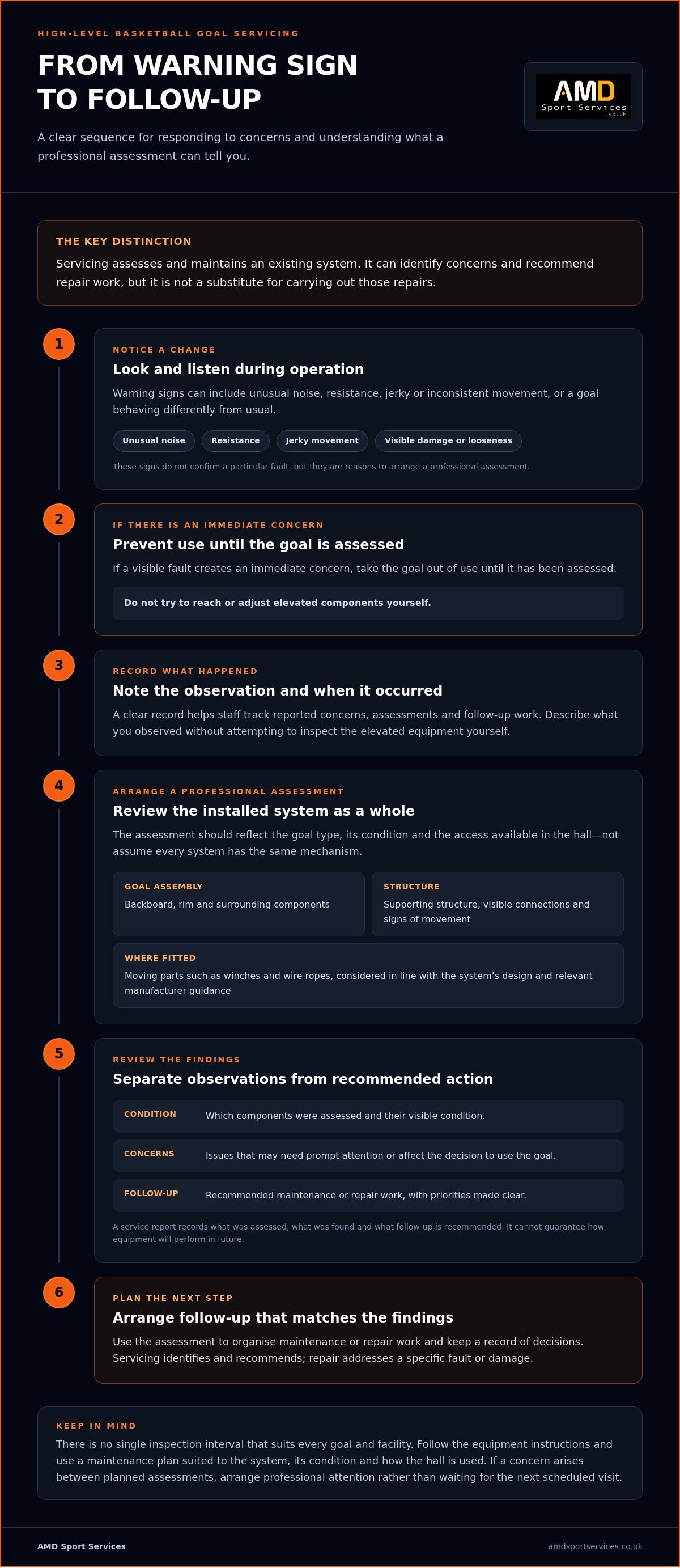
Plan high level basketball goal inspections around hall use by gathering clear information and coordinating access. Involve the staff who manage the hall and oversee equipment use. A straightforward sequence helps everyone prepare and makes findings easier to act on.
Record concerns. Note which goal is involved, where it is in the hall and any reported changes in operation. Include when the change was noticed, if known.
Arrange access. Coordinate a suitable time with the people responsible for hall access and equipment use. Share relevant access arrangements in advance.
Assess the equipment. A specialist reviews the installed goal in light of its system and the available access.
Review the findings. Consider the observed condition, any immediate concerns and recommended follow-up.
Plan next steps. Decide how to prioritise and record any maintenance or remedial work.
What should facilities organise before an inspection visit?
Gather the goal’s location, a short description of reported operating changes and any available equipment or previous maintenance records. This context can help relate current observations to earlier work. Confirm hall access with the relevant staff and coordinate timing around sports use, so the people managing the space know when the assessment is taking place.
What happens after an assessment identifies a concern?
Use the findings to distinguish observations from recommended action. A concern may call for prioritised follow-up or remedial work, depending on what the assessment identifies. Leave elevated mechanisms and structural components to specialist attention rather than attempting adjustments in-house. Record recommendations and completed work together to build a useful maintenance history.
Consistent records help staff track reported changes, assessment findings and work carried out over time. They also give new or returning facility staff a clearer picture of the goal’s maintenance history. For related guidance on indoor facility checks, see the indoor inspection and maintenance service.
For ongoing support with sports equipment inspections and maintenance, explore sports equipment maintenance support.
To plan an inspection for installed basketball goals, view AMD Sport Services’ maintenance support.
How AMD Sport Services supports high-level basketball goal inspections
High-level basketball goals are part of a facility’s working sports equipment, so inspections need to reflect how the hall is used. AMD Sport Services provides sports equipment inspections, maintenance and repairs, including support for basketball goals and roof-mounted systems. Schools, councils, leisure centres and sports clubs can arrange an assessment focused on their installed equipment and facility requirements.
The process starts with the goal system and reported concerns. The assessment findings then help identify appropriate maintenance or repair. Keeping observations distinct from remedial work helps facility managers understand what was found and decide on the next step. Access arrangements and equipment use also matter when planning work in a busy hall.
What can facilities expect from a specialist inspection approach?
A useful inspection approach connects technical observations with how the equipment operates in the facility. Information about the goal, its location, changes noticed during operation and access arrangements provides context for the assessment. Findings can then describe the observed condition and set out recommended next steps in practical terms.
An assessment cannot guarantee future performance, and it may identify work that needs to be planned separately. Clear communication helps the facility distinguish between the condition recorded and any recommended maintenance or repair. This makes it easier to consider priorities alongside hall bookings and equipment use.
How can a facility arrange the next step?
When discussing inspection requirements, describe the goal system and the concern that has prompted attention. Include its location in the hall, any change in operation or visible issue, and relevant access arrangements. If available, previous maintenance information can add useful context. These details help focus the assessment on the installed equipment and the facility’s practical needs.
AMD Sport Services provides basketball goal inspection, maintenance and repair. The assessment establishes what has been observed and whether follow-up work is recommended. Any repair can then be considered as a distinct next step, giving facility staff a clear basis for organising maintenance and coordinating hall access.
For an inspection of an installed basketball goal, discuss your facility’s requirements with AMD Sport Services.
Keep overhead goals ready for planned maintenance
A dependable basketball goal needs more than a quick look at visible parts. High level basketball goal inspections assess the installed system in context, taking account of its condition, operation and access arrangements. Unusual movement, damage or other changes can be reasons to arrange professional attention, even if the goal still appears usable.
Keep the distinctions clear: inspections review existing equipment, installation fits a new system, and repair addresses an identified fault or damage. A clear record of observations and recommended follow-up helps facility teams prioritise work and plan around hall use. It also gives staff useful context for future maintenance.
AMD Sport Services provides sports equipment safety inspections and maintenance for basketball goals, alongside basketball goal repairs and roof-mounted goal motorising. If your facility has a concern or needs an assessment, share details of the goal system and how it is used. Discuss high-level basketball goal inspections with AMD Sport Services to plan the next step for your sports hall equipment.
Frequently Asked Questions
What do high-level basketball goal inspections include?
High level basketball goal inspections involve assessing an existing overhead goal system. The review can consider the goal assembly, supporting structure, visible connections and relevant moving components, such as winches or wire ropes where fitted. The scope depends on the installed system, its condition and access arrangements. Findings should describe what was observed and identify any recommended maintenance or repair as a separate next step.
How often should a high-level basketball goal be inspected?
There is no fixed interval that suits every basketball goal. Follow the equipment instructions and organise a maintenance plan suited to the system, its condition and how often the sports hall is used. Keep a record of inspections, reported concerns and completed work so changes can be tracked. If a fault or change in operation appears between planned visits, arrange an assessment rather than waiting for the next scheduled inspection.
Can a basketball goal remain in use if it makes unusual noises?
Unusual noise is a reason to arrange a professional assessment, but noise alone does not identify the cause or establish whether the goal is safe to use. Note when the sound occurs and whether operation has also changed. If there is an apparent fault that creates an immediate concern, prevent use until the equipment has been assessed. Do not attempt to reach or adjust elevated mechanisms yourself.
What parts of an overhead basketball goal should be checked?
An assessment considers the installed system as a whole, not just the visible backboard and rim. Relevant areas include the goal assembly, supporting structure, visible connections and any fitted moving components, such as winches or wire ropes. The exact scope depends on the design, condition and access arrangements. Equipment instructions also inform the approach because overhead goal systems can differ.
Do basketball goal inspections include repairs?
Inspection and repair are related but distinct. An inspection assesses the condition of an existing goal and may identify a defect, damage or component that needs attention. Repair is the remedial work that responds to that finding. AMD Sport Services provides basketball goal repair as well as inspection and maintenance, so assessment findings can clarify what follow-up work may be appropriate.
Can inspections be arranged around sports hall use?
Yes. Facilities can coordinate with staff responsible for hall access and equipment use to plan a suitable time. Access needs depend on the goal system and the facility, so share relevant arrangements when organising the visit. Recording concerns and gathering available equipment or maintenance information beforehand provides useful context and helps staff prepare for the assessment.
Who provides high-level basketball goal inspections in the UK?
AMD Sport Services provides sports equipment safety inspections, maintenance and repairs across the UK, including support for basketball goals and roof-mounted goal motorising. The company works with schools, councils, leisure centres and sports clubs. Facilities can describe the installed goal system, its location and any concerns, such as unusual movement or visible damage, to arrange appropriate inspection or maintenance support.
Comments