
Maintaining Polyurethane Tracks: A UK Facility Guide

A high-performance polyurethane track is a precision-engineered safety system, not just a durable surface for athletes. You likely recognise that maintaining a facility to UK Athletics (UKA) standards is a demanding task, especially when the British climate encourages moss and algae growth that turns a fast lane into a dangerous slip hazard. It's often difficult to balance the daily operational needs of a school or leisure centre with the technical requirements of the TrackMark scheme, particularly when visible wear begins to create potential trip hazards for users.
We understand that facility managers need clear, actionable advice rather than marketing jargon. This guide provides a pragmatic roadmap to help you manage your facility's lifecycle effectively. You'll discover the technical specifications of PU surfaces, how to implement a rigorous maintenance schedule, and exactly when to call in a specialist contractor for refurbishment. We'll examine the strategies needed to navigate safety compliance and protect your investment, ensuring your track remains safe and functional for its full 25-year potential.
Table of Contents
Understanding Polyurethane Track Composition and Benefits
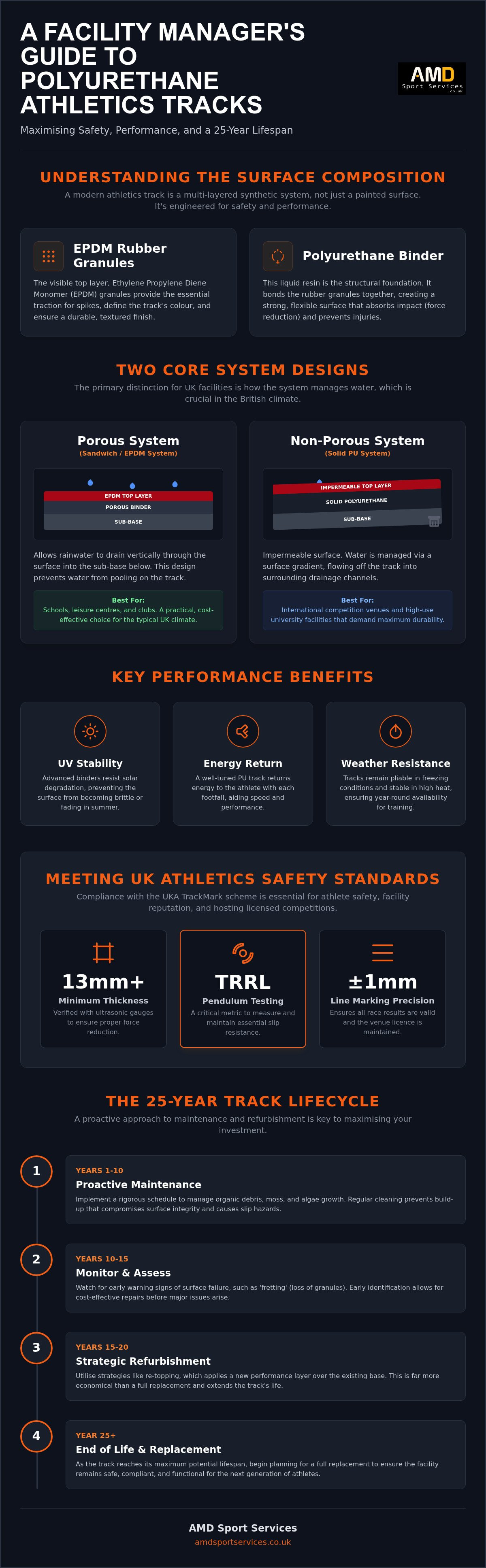
A polyurethane track isn't just a layer of paint; it's a multi-layered synthetic system designed for elite performance and safety. These surfaces consist of high-grade rubber granules bonded together with a liquid polyurethane resin. This combination creates what is commonly known as an all-weather running track, a standard that has replaced older, less reliable materials across the UK. For facility managers, understanding these technical differences is the first step in creating a long-term service and maintenance plan.
Most UK facilities choose between porous and non-porous systems. Porous tracks, often called sandwich or EPDM systems, allow rainwater to drain through the surface into the sub-base. It's a practical, cost-effective choice for the British climate. Non-porous or "solid PU" tracks are impermeable. Water must be managed via a surface gradient into drainage channels. Whilst solid systems are more expensive, they offer the highest levels of durability and are the preferred choice for international competition venues and high-use university hubs.
The Science of Synthetic Surfacing
EPDM (Ethylene Propylene Diene Monomer) granules are the visible component of the track. They provide the necessary traction for spikes and define the facility's colour. The polyurethane binder acts as the structural foundation, ensuring the granules remain locked in place even under heavy use. Force reduction refers to the surface's ability to absorb the impact of an athlete's foot strike, significantly lowering the risk of joint and ligament injuries. Without this specific chemical balance, the surface would either be too hard, causing shin splints, or too soft, which drains an athlete's speed.
Why Polyurethane Outperforms Traditional Surfaces
Modern PU systems are a significant leap forward from legacy cinder or asphalt tracks. Cinder requires constant levelling and becomes unusable when waterlogged, whilst asphalt lacks the necessary "give" for safe sprinting. PU is the industry standard for high-use school facilities because it withstands the constant friction of hundreds of students daily without significant surface loss. In professional settings, the material's consistency is what allows for World Athletics certification.
UV Stability: Advanced PU binders resist solar degradation, preventing the surface from becoming brittle or fading during the summer months.
Energy Return: Unlike softer surfaces that "eat" energy, a well-tuned polyurethane track returns energy to the athlete, aiding speed and peak performance.
Weather Resistance: These tracks remain pliable in freezing temperatures and stable in high heat, ensuring year-round availability for training.
Choosing polyurethane ensures that a facility provides a consistent, predictable environment. Whether it is a local school's 100-metre straight or a full-size stadium, the material's ability to maintain its physical properties under stress makes it the most reliable investment for long-term athletics provision.
Performance Standards and Safety Compliance in the UK
Compliance isn't just a matter of administrative box-ticking; it's the foundation of athlete safety and facility longevity. In the UK, the TrackMark scheme, launched by UK Athletics in 2018, serves as the primary quality assurance framework. If a polyurethane track fails to meet these specific units of accreditation, it cannot host licensed competitions. This failure directly impacts a facility's ability to attract clubs, secure funding, and maintain its reputation as a high-performance venue.
Adhering to UKA and World Athletics Specifications
Competition-grade tracks must adhere to strict physical dimensions. Most systems require a minimum thickness of 13mm, though this can vary slightly depending on the specific product and intended use level. Specialist contractors use ultrasonic depth gauges to verify this thickness without damaging the surface. Line markings are equally technical. They must be applied with millimetre precision to ensure race results are valid. Any deviation from the official geometry can lead to a venue losing its competition licence, making professional sports equipment safety inspections a vital part of your annual operations.
Slip resistance is another critical safety metric. We measure this using the TRRL Pendulum Test. This test evaluates the surface's grip in both wet and dry conditions. For athletics, a Pendulum Test Value (PTV) of 55 or higher in the wet is generally required. If the surface becomes worn or contaminated with algae, this value drops, creating a significant slip hazard for runners using spikes.
Impact Absorption and Athlete Welfare
A primary function of a high-quality surface is force reduction. Over time, polyurethane binders can harden due to UV oxidation and environmental exposure. When a track loses its elasticity, it no longer absorbs the energy of an athlete's foot strike. Instead, that force is returned directly into the runner's joints and bones. This hardening is a leading cause of stress fractures and chronic shin splints. For schools and local authorities, maintaining proper impact absorption is a fundamental duty of care requirement.
Legal and insurance implications are significant. Insurance providers often mandate that facilities follow SAPCA Codes of Practice and UKA standards. If an injury occurs on a surface that hasn't been inspected or maintained, the facility manager may be held liable. Keeping a detailed log of inspections and repairs demonstrates a proactive approach to risk management. It ensures that the facility remains a safe environment for everyone from primary school children to elite competitive athletes.
Essential Maintenance Strategies for Long-Term Durability
A polyurethane track represents a significant capital investment for any UK facility. Its lifespan is directly linked to the rigour of its upkeep. Maintenance isn't just about appearances; it's about structural preservation. Without a disciplined approach, the surface will degrade prematurely, leading to costly repairs that could have been avoided. We recommend a tiered schedule that addresses daily, weekly, and seasonal requirements to keep the facility in peak condition.
Routine Cleaning and Debris Management
Daily inspections are essential for identifying wind-blown litter, glass, or stones that can be ground into the surface by athletes' spikes. Weekly, the track should be cleared of all organic matter using a soft-bristled brush or a specialist vacuum unit. You must avoid using stiff wire brushes or metal scrapers, as these can tear the EPDM granules from the binder. If you use mechanical sweepers, ensure they are fitted with high-flotation tyres to prevent point-loading damage to the synthetic layers.
Allowing organic debris like leaves and grass clippings to rot on the surface is a common mistake. As this matter decomposes, it releases humic acids that chemically attack the polyurethane binder. This process leads to "fretting," where the surface granules begin to loosen and migrate. Regular removal of this debris is the simplest way to prevent the binder from becoming brittle and failing.
Addressing Moss, Algae, and Drainage Issues
The damp British climate frequently leads to the development of a "biofilm" of moss and algae amongst the surface granules. This growth doesn't just look unsightly; it creates a dangerous slip hazard and traps moisture against the binder. You should apply a water-based, non-acidic moss killer at least twice a year. Always ensure the chemical is approved for use on synthetic surfaces to avoid discolouration or chemical softening of the polyurethane track.
Effective drainage is the foundation of surface longevity. Standing water is the enemy of a PU system, as it can lead to delamination between the synthetic layers and the sub-base. Facility managers should regularly inspect drainage channels and silt traps for blockages. If you notice water "ponding" after rain, it's often a sign that the pores of a sandwich system are blocked or the gradient of a solid system is compromised.
Whilst deep cleaning is sometimes necessary, be wary of high-pressure washing. Many general contractors use industrial pressure settings that are far too aggressive. Excessive pressure can force water under the edges of the track or blast away the essential textured finish. A professional service and maintenance programme uses regulated pressure and specialist detergents to clean without compromising the surface's integrity.
Refurbishment, Resurfacing, and Repair Decision Frameworks
Deciding when to intervene on a polyurethane track requires a technical understanding of surface degradation. It isn't always necessary to opt for a full replacement when signs of wear appear. A staged assessment helps identify if a localised repair, a full re-top, or a complete reconstruction is the most appropriate route for your budget and facility needs. Ignoring early warning signs often leads to base failure, which significantly increases the final invoice for any remedial work.
Identifying Structural Wear and Surface Delamination
Delamination is the physical separation of the synthetic layers from each other or the underlying base. It often starts at the edges or around drainage channels where water ingress is highest. You'll notice this as bubbling or areas where the surface feels "hollow" underfoot. These pockets trap moisture, which then expands and contracts during the UK's freeze-thaw cycles, rapidly worsening the damage.
Cracks are more than aesthetic issues. They act as conduits for water to reach the sub-base, leading to frost heave or structural softening that can't be fixed with a simple surface patch. To perform a simple visual "wear test," compare the surface texture and granule density of the high-use inside lanes with the relatively untouched outer lanes to identify significant thinning or "balding."
The Retexturing and Re-topping Process
If the structural base remains stable and level, re-topping is a highly effective refurbishment strategy. This process involves thoroughly cleaning the existing surface, applying a fresh polyurethane binder, and broadcasting a new layer of EPDM granules. It effectively resets the wear clock of the polyurethane track without the need for heavy excavation.
This method is significantly more cost-effective than a full reconstruction and reduces the environmental impact by reusing the existing rubber base. Once the new wear layer is cured, renewing court markings is essential to ensure the facility meets official competition geometry and safety standards. A professional assessment framework includes:
Fretting Analysis: Checking for loose granules that indicate binder failure.
Base Stability Check: Identifying soft spots or depressions that suggest sub-base issues.
Depth Verification: Ensuring the remaining surface meets the 13mm UKA minimum requirement.
Slip Resistance Testing: Confirming the surface still provides adequate traction for spiked footwear.
If your facility is showing signs of significant wear or granule loss, contact us to arrange a professional long jump runway refurbishment or a comprehensive track condition survey.
Professional Installation and Specialist Support for UK Facilities
Maintaining a polyurethane track to the necessary UKA standards requires more than just reactive repairs; it demands a partnership with a specialist who understands the technical interplay between surfacing and equipment. Choosing a contractor with a proven UK track record is vital for navigating the TrackMark accreditation process. At AMD Sport Services, we bring over 20 years of experience to every project, providing national coverage for schools, councils, and private leisure providers who value technical proficiency over hollow marketing claims.
Bespoke Solutions for Schools and Leisure Centres
Educational facilities face unique pressures that standard commercial sites don't. High-use environments mean surfaces wear faster, yet maintenance must be organised around strict term-time schedules to avoid disrupting physical education and athletics clubs. We specialise in coordinating these works during summer holidays or half-terms, ensuring the facility is ready for the start of the new season. Integrating a long jump runway refurbishment into your wider track maintenance plan is a logical, cost-effective way to ensure the entire site remains compliant without multiple mobilisation fees.
Integrating Tracks with Field Event Infrastructure
Athletics tracks don't exist in isolation. They must be seamlessly integrated with field event infrastructure to provide a safe, consistent environment for all disciplines. This includes the technical installation or repair of a pole vault trough, which must be flush with the surrounding surface to prevent trip hazards. Consistent surfacing across the track and field event runways is essential for athlete confidence and performance.
Transition zones are the areas where the synthetic surface meets grass in-fields or sand pits. These are high-risk spots for debris contamination. We ensure these areas are designed and maintained to prevent sand from long jump pits from migrating onto the polyurethane track, where it acts as an abrasive that accelerates binder wear. Managing these transitions correctly preserves the structural integrity of the entire facility.
Trust is built through accountability and technical honesty. Regular safety inspections are the only way to catch minor defects before they become major liabilities. We provide detailed reports that help facility managers plan their budgets for the next five to ten years, moving away from emergency repairs toward a sustainable lifecycle management strategy. This seasoned approach ensures your facility remains a safe, high-performance asset for the community.
Securing the Future of Your Athletics Facility
Managing a polyurethane track is a long-term commitment to athlete safety and financial accountability. We have explored how routine debris removal and technical inspections prevent minor surface fretting from escalating into total structural failure. Adhering to UK Athletics standards isn't just about maintaining competition licences; it's about fulfilling your duty of care to every student and club member who steps onto the lane. A proactive approach to re-topping and drainage management can save significant sums in reconstruction costs whilst ensuring year-round availability for your community.
With over 20 years of specialist experience, AMD Sport Services provides national UK coverage to help you navigate these technical requirements with confidence. Our team understands the nuances of UKA compliance and the physical demands of high-use school and leisure environments. Please contact AMD Sport Services for a professional track safety inspection to assess your facility's current condition and plan for its future. Taking these pragmatic steps today protects your investment and provides a high-performance environment where athletes can truly excel.
Frequently Asked Questions
How long does a polyurethane track typically last before needing resurfacing?
A well-maintained polyurethane track wear layer typically lasts between 10 and 15 years before it requires a professional re-top. The underlying base layers can remain viable for 20 to 25 years if the facility follows a rigorous maintenance schedule. Factors such as usage levels, local tree cover, and the quality of the initial installation will influence this timeline. Regular inspections help identify when the binder is becoming brittle, allowing for timely intervention.
What is the difference between a porous and a non-porous polyurethane track?
Porous systems allow rainwater to drain directly through the synthetic layers into a stone sub-base. Non-porous or "solid PU" tracks are impermeable; water stays on the surface and must be directed into drainage channels via a precise gradient. Solid systems are more durable and suited for elite competition, whilst porous tracks offer a cost-effective solution for facilities with standard drainage requirements and lower budgets.
Can a polyurethane track be repaired if only one lane is damaged?
Localised repairs are entirely possible if damage is restricted to a single lane or specific area. We can cut out the affected section and install a bespoke patch to restore the surface's safety and performance. Whilst the structural integrity is fully restored, please be aware that the new material may have a slight colour variance compared to the existing track due to natural UV fading of the older granules over time.
Is it possible to change the colour of a polyurethane track during refurbishment?
You can change the colour of your facility during the re-topping or resurfacing process. Since re-topping involves applying a fresh layer of polyurethane binder and broadcasting new EPDM granules, you aren't restricted to the original palette. Many UK schools choose to move from traditional red to blue or green to match institutional branding, provided the new granules meet World Athletics performance specifications for traction and UV stability.
How often should a professional safety inspection be carried out on a school track?
Professional safety inspections should be conducted at least once every twelve months to ensure continued compliance with UK Athletics (UKA) standards. Annual checks allow facility managers to identify early signs of fretting, drainage blockages, or hardening before they become significant liabilities. For high-use school environments, these inspections are a fundamental part of managing your duty of care and ensuring the surface remains safe for students and local clubs.
Can we use a pressure washer to clean our polyurethane athletics surface?
Regulated pressure washing is an effective cleaning method, but you must avoid using high-pressure industrial settings. Excessive force can blast the EPDM granules out of the binder or cause delamination at the edges. It's safer to use specialist cleaning equipment designed for synthetic tracks. These units use a combination of low-pressure water and rotating brushes to remove deep-seated silt and algae without compromising the structural bond of the surface.
What happens if we ignore moss and algae growth on the track?
Ignoring organic growth leads to a significant increase in slip accidents and accelerates the physical breakdown of the polyurethane track. Moss and algae trap moisture against the binder, whilst their roots can physically lift the granules. The decomposition of this matter releases humic acids that chemically soften the polyurethane. If left untreated, what started as a minor cleaning issue will quickly evolve into a requirement for a full surface replacement.
Are polyurethane tracks suitable for all-weather use in the UK climate?
These surfaces are specifically engineered as "all-weather" systems, making them ideal for the unpredictable UK climate. A high-quality polyurethane track remains pliable in freezing temperatures and stable during summer heatwaves, unlike traditional asphalt which can become brittle or soft. The textured finish ensures that athletes maintain traction even in wet conditions, provided the surface is kept free from silt and algae contamination that could compromise its essential slip resistance.


Comments