
Professional Gym Upholstery Repair and Maintenance Guide

Damaged gym upholstery is more than a cosmetic flaw; it's a liability that compromises user safety and breaches UK health and safety standards. You likely recognise the frustration of seeing a well-used weight bench develop tears or witnessing a member's hesitation when faced with exposed, absorbent foam. These worn surfaces don't just look unprofessional; they create genuine hygiene risks and can lead to equipment failing mandatory safety inspections. It's a persistent challenge for facility managers who must balance equipment uptime with strict operational requirements.
Discover how professional gym upholstery repairs provide a durable, cost-effective alternative to replacing entire machines whilst ensuring your facility remains fully compliant with current design and manufacturing standards, such as ASTM F2276-23. We'll examine the technical process of refurbishing pads to withstand high-traffic use and explain how a proactive maintenance programme extends the longevity of your equipment. From the initial assessment of structural integrity to the final installation of bespoke, high-grade vinyl, this guide outlines the practical steps required to maintain a safe and professional fitness environment.
Table of Contents
The Role of Professional Gym Upholstery in Facility Safety
Professional gym upholstery serves a far more critical function than simple aesthetic appeal. In a commercial fitness environment, the upholstered pad acts as the primary protective barrier between the user and the rigid steel frame of exercise equipment. When this barrier fails, the equipment's structural safety is compromised. We often see facilities where minor vinyl tears are dismissed as cosmetic issues, yet these openings allow sweat, oils, and cleaning chemicals to penetrate the internal foam core. This process, known as ingress, causes the foam to lose its density and structural integrity over time, eventually leading to a complete failure of the support system.
Maintaining high-quality gym upholstery is a fundamental requirement for passing sports equipment safety inspections UK. Inspectors look for more than just mechanical stability; they assess the condition of every touchpoint. Cracked or thinning vinyl poses a direct risk of skin abrasions or "pinching" injuries where the user’s skin becomes caught in the split seams. By investing in professional reupholstery, facility managers ensure that their equipment remains compliant with safety regulations whilst preventing the build-up of bacteria within the porous foam layers.
Hygiene and Infection Control in Fitness Environments
The internal foam of a gym pad is naturally porous. Once the protective vinyl layer is breached, even the most rigorous surface cleaning routine becomes ineffective. Bacteria and moisture become trapped within the core, creating a breeding ground for pathogens that cannot be reached by standard sanitisers. This is a primary concern for leisure centres and schools where equipment is used by hundreds of different individuals daily. Neglecting a small tear today often leads to the total degradation of the foam, necessitating a much more expensive full replacement of the pad rather than a simple vinyl recovery. Consistent maintenance ensures the equipment remains sanitary and safe for public use.
User Safety and Ergonomic Support
Support profiles are designed by manufacturers to guide the body through a specific range of motion. When gym upholstery becomes compressed or the foam "bottoms out" against the backing board, the user no longer receives the necessary ergonomic support. This lack of stability can lead to poor exercise form and increased joint strain. Our repair process focuses on restoring these original equipment manufacturer (OEM) profiles. We ensure that every repaired pad provides the firm, consistent resistance required to maintain correct posture during heavy lifts. This technical approach protects the user from injury and ensures the machine performs exactly as the manufacturer intended.
Identifying Wear: When to Repair vs. Replace Equipment Pads
Identifying the specific point where gym upholstery transitions from "worn" to "unsafe" is a key responsibility for any facility manager. Visual indicators usually manifest first. You might notice thinning vinyl that appears shiny or translucent, or colour fading caused by aggressive cleaning agents. Hairline cracks are particularly deceptive; whilst they seem minor, they act as conduits for moisture. If you detect persistent odours or staining that doesn't resolve after a deep clean, the contamination has likely reached the internal core, necessitating immediate intervention to maintain hygiene standards.
The "tape test" is a common but unacceptable practice in commercial settings. Applying adhesive tape over a tear might hide the problem, but it doesn't restore the safety barrier. Tape is porous, traps bacteria against the foam, and inevitably peels, leaving a sticky residue that can cause skin irritation. Adopting such temporary measures often results in equipment failing formal audits. Proper maintenance is a cornerstone of broader health initiatives, such as those outlined in Federal Employee Health and Wellness Programs, which emphasise that equipment must be kept in a condition that supports, rather than hinders, user safety.
Assessing Foam Degradation
High-traffic gym upholstery relies on high-density reconstituted foam to absorb impact and provide consistent resistance. If you feel "soft spots" or find that a pad "bottoms out" against the backing board under load, the foam cells have ruptured. Progressive foam collapse describes the gradual loss of cellular structure within the padding that eventually prevents the material from returning to its original shape. In these instances, the foam must be entirely replaced rather than just recovered to restore the equipment's original ergonomic profile.
Backing Board and Hardware Integrity
A pad is only as secure as its foundation. During a reupholstery service, we often find splintered plywood or rusted T-nuts that were hidden beneath the vinyl. These components must be sound to ensure the pad remains fixed during use. If mounting points are loose or the wood is soft, it's a sign that the environment's humidity or sweat ingress has caused structural rot. Identifying these issues early is vital, especially when determining if the wider frame requires sport equipment repairs to remain operational.
If you are unsure about the current condition of your padding, a professional equipment assessment can help categorise which items require immediate attention and which can be scheduled for future maintenance.
Technical Standards for Commercial Gym Upholstery Materials
Selecting the correct material for gym upholstery is a technical decision based on safety and durability rather than aesthetics alone. In a commercial environment, the fabric must withstand constant abrasion, chemical exposure from cleaning, and high levels of moisture. Standard domestic vinyl lacks the reinforced backing and chemical resistance required to survive these conditions. We prioritise materials that meet specific British Standards to ensure that every repair is legally compliant and fit for purpose.
Fire safety is the most critical technical requirement for any equipment situated in public buildings. In the UK, materials must meet the Crib 5 (BS 5852) standard. This test ensures that the upholstery is resistant to ignition from sources like matches or smouldering cigarettes. Using non-compliant materials in a school or local authority leisure centre isn't just a safety risk; it's a breach of fire safety regulations that can invalidate insurance policies. Always demand material specifications that clearly state this rating before approving any refurbishment work.
Abrasion resistance is another essential benchmark, measured using the Martindale rub test. For a commercial fitness environment, we specify fabrics that exceed 50,000 cycles. This level of durability ensures the material can handle the repetitive friction of users moving against the pads without thinning or cracking prematurely. Modern technical fabrics also include antimicrobial and antifungal treatments. These are integrated into the vinyl during manufacturing to inhibit the growth of bacteria and mould. This feature is essential in high-sweat environments, as it helps maintain the internal hygiene of the pad even under heavy use.
Selecting the Right Vinyl Grade
The distinction between domestic and heavy-duty commercial vinyl lies in the weave of the backing material. Commercial grades use a reinforced polyester or cotton mix that prevents the vinyl from stretching or tearing at the staple points. UV resistance is another vital factor for equipment used in outdoor sports areas or facilities with large glass frontages. Whilst "breathable" fabrics are popular in domestic furniture, they are unsuitable for gym upholstery because they allow sweat to pass directly into the foam core, leading to the rapid degradation of the internal structure.
Adhering to UK Fire Safety Regulations
Councils and educational institutions require documented proof of compliance for all upholstered items. When we carry out repairs, we provide material certifications that verify the Crib 5 rating. It is a common mistake to assume that all "commercial" vinyl is fire-rated; however, many imported fabrics do not meet the stringent UK requirements. Using uncertified materials creates a significant liability. We recommend maintaining a file of all material safety data sheets (MSDS) as part of your facility's health and safety documentation to ensure you can verify compliance during official audits.
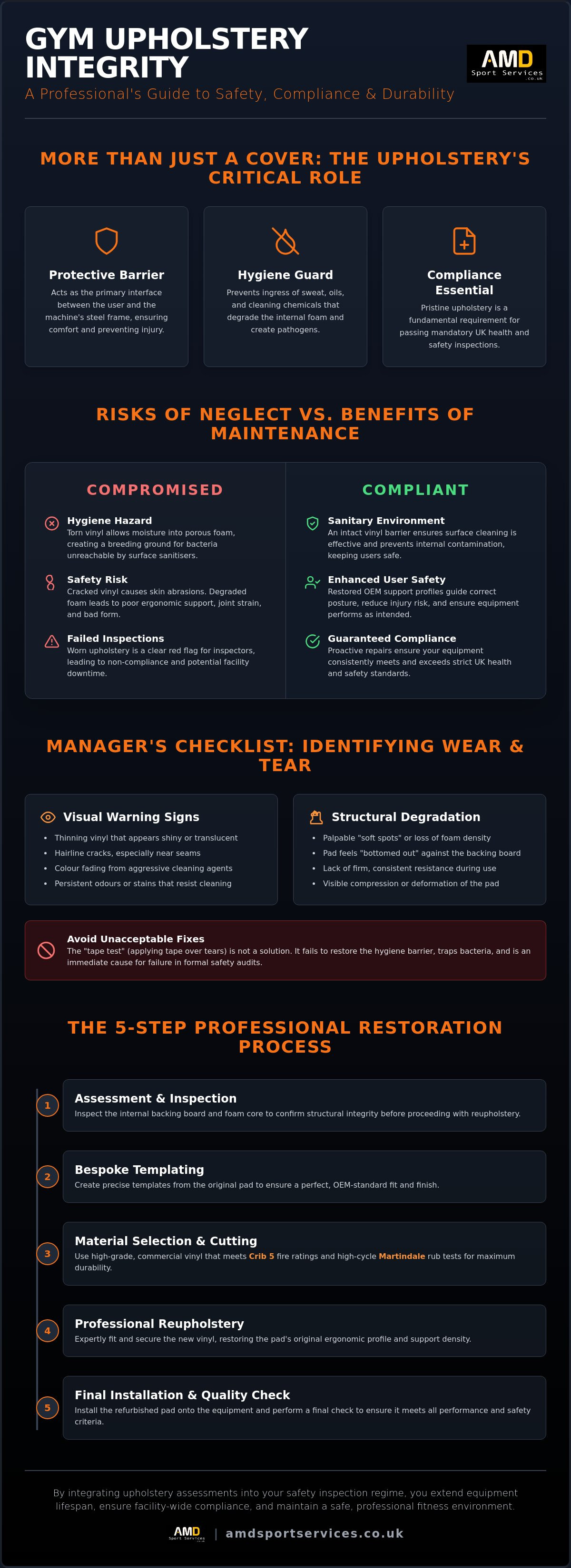
The Upholstery Process: Restoring Compliance and Durability
Professional gym upholstery restoration is a methodical sequence of technical tasks designed to return a component to its original safety specification. We begin by stripping the existing material to expose the underlying foam and backing board. This step is vital; it allows us to inspect the core for hidden structural damage or contamination that isn't visible from the surface. If the foam core is compromised, we replace it with high-density materials that match the manufacturer's original profile. Once the foundation is verified as sound, we create a bespoke template. This ensures the new vinyl fits the specific dimensions of the pad perfectly, avoiding the loose material that leads to premature wear.
The assembly phase relies on high-specification components. We use heavy-duty bonded nylon thread for all stitching, as standard threads quickly fail under the tension of commercial use. Reinforcing the seams prevents the splitting often seen in lower-quality repairs. During the final fitting, we tension the material precisely over the foam. Proper tensioning is essential to prevent sagging, which can create trip hazards or allow the vinyl to bunch and crack. This disciplined approach ensures the finished pad is as durable as a factory-new component.
Bespoke Craftsmanship vs. Generic Covers
Generic "slip-on" covers are an inadequate solution for commercial facilities. They rarely provide a secure fit, often sliding during exercise and compromising user stability. Precise corner folding is a hallmark of professional work; it ensures there are no sharp protrusions or loose flaps that could snag clothing or skin. By choosing custom-tailored solutions, you ensure your installations maintain the high performance standards expected in professional fitness environments.
Minimising Facility Downtime
We understand that equipment downtime directly impacts member satisfaction. To mitigate this, we organise refurbishment works during off-peak hours or scheduled school holidays. For larger leisure centres, a rolling maintenance programme is the most efficient strategy. This involves repairing a small number of pads at a time, ensuring the majority of the gym remains operational. Once our team has completed the fitting, the equipment is ready for immediate use, fully compliant with safety standards.
If your facility requires a structured approach to equipment refurbishment, you can book a technical assessment to identify which units require priority attention.
Integrating Upholstery into Your Annual Safety Inspection Regime
A robust maintenance strategy treats the condition of contact surfaces with the same level of priority as mechanical fastenings and cable integrity. During a comprehensive sports equipment safety check, the state of the gym upholstery serves as a primary indicator of the facility's overall safety standards. We often find that whilst the moving parts of a machine are well-greased, the pads have been allowed to degrade to a point where they no longer provide adequate protection. Integrating these components into your formal inspection regime ensures that no single point of failure is overlooked.
Effective asset management begins with a detailed register of all upholstered equipment. This document should track the age of each pad, the date of its last recovery, and any identified thinning or foam softening. Our role as seasoned practitioners is to identify the subtle failures that often precede a major incident, such as the gradual loosening of T-nuts or the microscopic cracking of vinyl seams. By maintaining documented records of these checks, you create a transparent audit trail that is essential for satisfying insurance requirements and local authority safety standards.
Compliance Audits for Schools and Councils
For educational institutions and council-run leisure centres, the outcome of a sports safety compliance audit often hinges on the condition of the equipment. Proactive maintenance of your gym upholstery acts as a powerful risk management strategy, demonstrating a commitment to user welfare that goes beyond reactive repairs. This care is naturally linked to broader indoor inspection and maintenance protocols. When an inspector sees that padding is intact, clean, and firm, it builds confidence in the management of the entire facility.
Planning for Long-Term Equipment Health
Budgeting for upholstery cycles alongside mechanical servicing is the most cost-effective way to manage a large facility. Rather than waiting for a pad to fail and potentially injuring a user, we recommend a rolling replacement programme. A unified approach to equipment services reduces overall facility costs by identifying issues before they necessitate full equipment replacement. This preventative mindset is equally important for specialised apparatus; ensuring the longevity of basketball goals and gymnastics equipment often depends on the integrity of their protective padding. Regular professional assessments allow you to plan your expenditure whilst maintaining a safe, professional environment for every member.
Maintaining Professional Standards Through Expert Care
Maintaining high standards in a leisure centre or school requires more than just mechanical servicing. The condition of your gym upholstery is a critical factor in facility safety, hygiene compliance, and user comfort. By identifying wear early and adhering to technical standards like Crib 5 fire ratings, you protect both your members and your institution's reputation. A proactive maintenance regime ensures that equipment remains operational and compliant whilst avoiding the high costs of total machine replacement.
AMD Sport Services brings over 20 years of industry experience to every project. As specialist contractors for schools, councils, and leisure centres, we provide comprehensive safety inspections and repairs nationwide. Our technical team ensures that every refurbished pad meets strict commercial durability requirements. We take pride in delivering pragmatic solutions that solve structural challenges and restore equipment to its original specification.
Request a professional gym upholstery assessment from AMD Sport Services to ensure your facility remains safe and fully compliant. Taking these practical steps today will extend the lifespan of your assets and provide a superior, professional experience for every user.
Frequently Asked Questions
Is gym upholstery repair a legal requirement for UK schools?
Yes, maintaining equipment in a safe condition is a requirement under the Provision and Use of Work Equipment Regulations (PUWER). Damaged upholstery is more than a cosmetic issue; it represents a failure to provide a safe and hygienic environment for students. Schools must ensure that all surfaces are free from tears and structural defects to pass mandatory health and safety audits and protect users from injury.
How long should commercial gym upholstery last before needing replacement?
High-quality commercial vinyl typically lasts between three and five years in high-traffic facilities. This lifespan depends heavily on the frequency of use and the type of cleaning agents applied to the surface. Using the correct grade of material and following a consistent maintenance schedule can extend this period. We recommend replacing pads as soon as the vinyl begins to thin or show signs of hairline cracking.
Can you match the original colour of my gym equipment pads?
Yes, we provide a wide range of commercial-grade vinyls designed to match or closely complement the original manufacturer colours. We understand that maintaining a consistent brand identity is important for leisure centres and schools alike. Our team can provide swatches to ensure the new material aligns with your existing equipment whilst meeting the necessary technical specifications for durability and fire safety.
What is the difference between domestic vinyl and commercial gym upholstery?
Commercial gym upholstery is specifically engineered with reinforced polyester backing and high abrasion resistance, often exceeding 50,000 Martindale rub cycles. Domestic vinyl lacks these reinforcements and will quickly stretch, crack, or tear under the friction of regular exercise. Commercial materials also feature chemical-resistant coatings that prevent the vinyl from becoming brittle when treated with the industrial sanitisers required in public fitness environments.
Do I need to send my equipment away for upholstery repairs?
No, you generally only need to remove the individual pads rather than the entire machine. This approach significantly reduces facility downtime and transport costs. We can arrange for the collection and return of the upholstered components, allowing your staff to keep the main frames in place. Once the refurbished pads are returned, they can be quickly bolted back onto the equipment for immediate use.
How does damaged upholstery affect my insurance coverage?
Neglecting damaged equipment can lead to insurers rejecting liability claims in the event of an accident. Insurance policies typically require that all sports and fitness apparatus be kept in a "good state of repair" according to professional standards. If an injury is linked to a split seam or collapsed foam that was previously identified but not repaired, your facility may be held fully liable for the resulting costs.
What fire safety standards must gym pads meet in the UK?
All gym upholstery situated in public buildings, including schools and council centres, must meet the Crib 5 (BS 5852) fire safety standard. This regulation ensures the material is resistant to ignition from common sources, providing vital protection in the event of a fire. Using non-compliant materials is a breach of safety protocols and can lead to the immediate failure of a fire safety inspection.
Can you repair the foam inside the pad or just the vinyl cover?
We provide full foam restoration services alongside vinyl recovery. If the internal core has "bottomed out" or lost its shape, we replace it with high-density reconstituted foam to restore the original ergonomic support. Simply recovering a damaged foam core is a temporary fix that fails to address user safety. Replacing the foam ensures the pad provides the necessary resistance and comfort required for heavy commercial use.


Comments