
Tartan Track Rejuvenation Services and Surface Lifespan

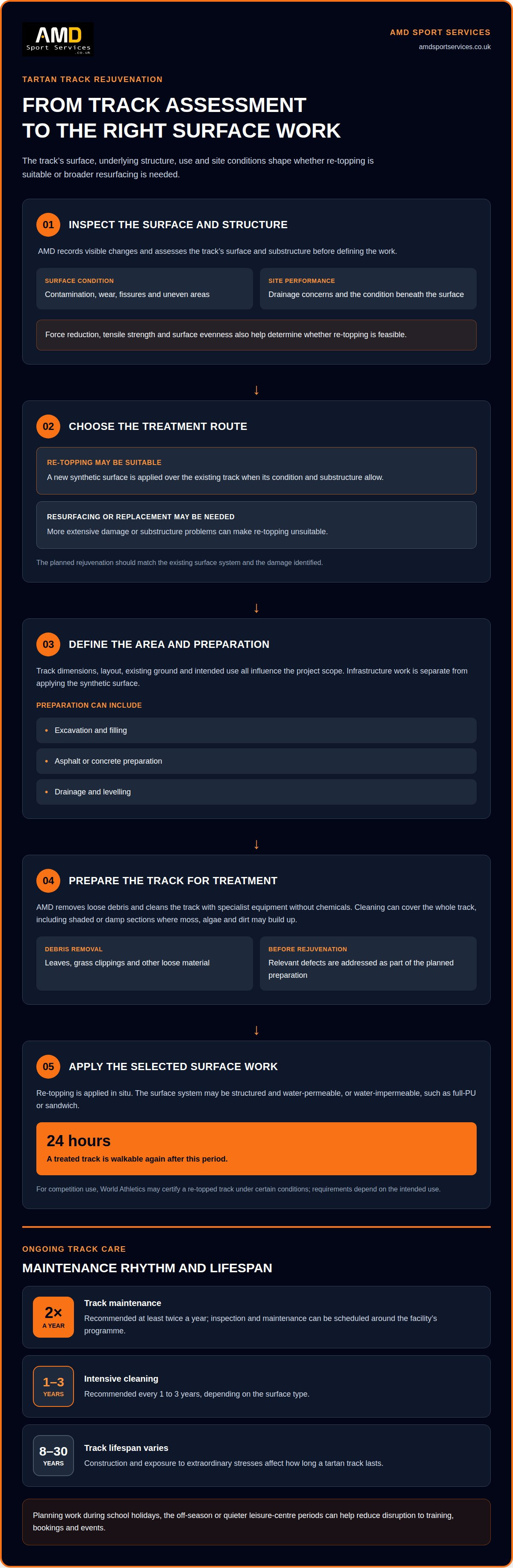
Tartan track rejuvenation services can help facilities address a worn surface and assess whether broader refurbishment is needed. The decision depends not simply on the track’s age, but on its condition, construction and role at the site, particularly when it serves school athletics, community sessions or scheduled competitions.
For facilities managers, the challenge is balancing the track’s condition and use against the disruption involved in the work. A school may need to plan around term dates, while a leisure centre must account for regular bookings. Defining the scope early makes planning and scheduling more practical.
This article explains how contamination and surface damage affect a track, what maintenance and inspection involve, and how the area and existing infrastructure shape the work. It also explains how AMD Sport Services can assess a tartan track and help determine a suitable next step.
Risks from dirt, moss, algae and slippery surfaces
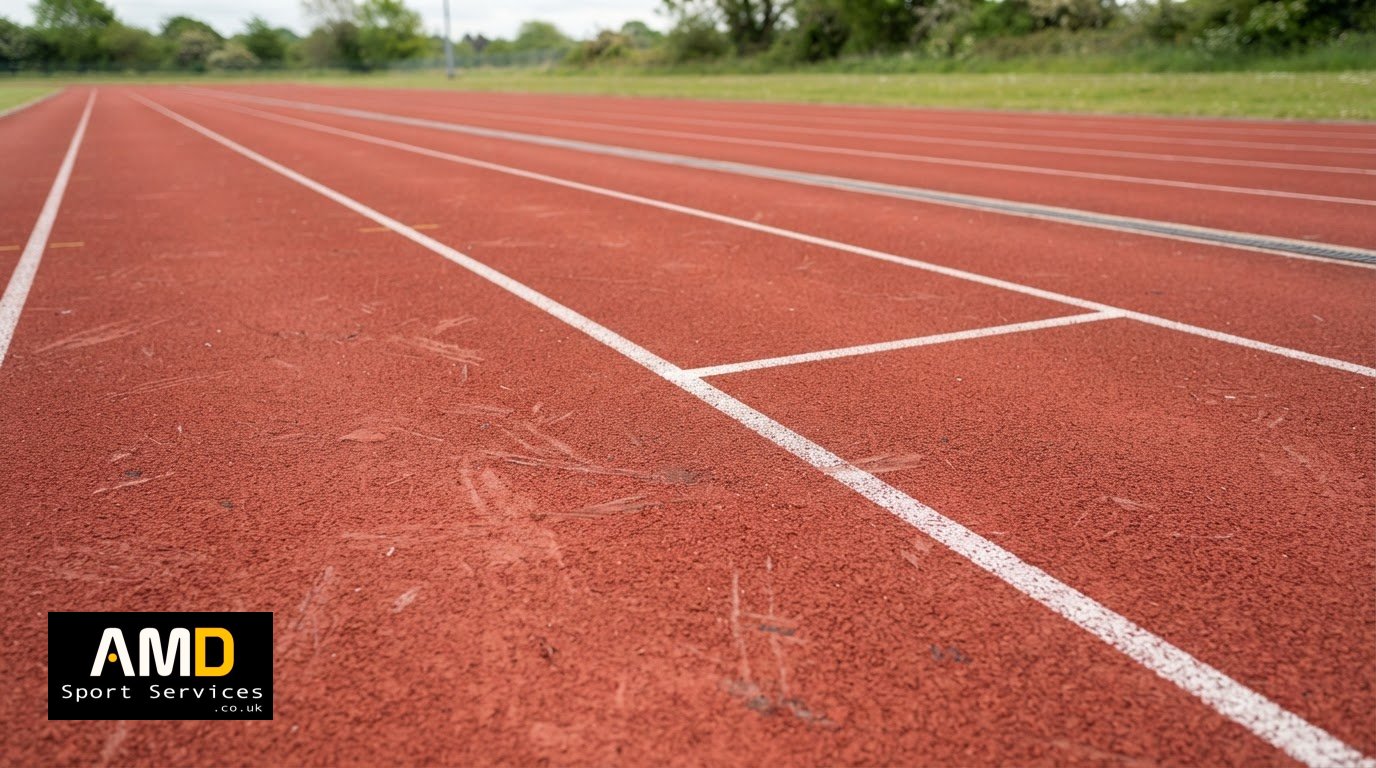
Dirt, moss, algae and cracks can affect grip, drainage and the consistency of a synthetic track. Whether it needs local repairs, rejuvenation or replacement depends on the surface condition and underlying structure.
Dirt, moss and algae removal
Leaves, soil and grass clippings can collect on running lanes, while moss and algae may develop in damp or shaded areas. These deposits can make the surface slippery and conceal early wear. Cleaning methods matter: mechanical sweepers should have soft bristles, as hard metallic bristles can damage the surfacing. Regular upkeep limits contamination and helps keep defects visible.
Fissure and surfacing repairs
Small fissures can widen as water enters and the surface is used repeatedly. Prompt repairs can limit further damage and help preserve an even running surface. Larger damaged areas may need more than a local patch. The extent of damage, surrounding material and condition beneath the surface all influence the repair approach.
A track assessment helps distinguish rejuvenation from full resurfacing. Force reduction, tensile strength, surface evenness and substructure condition help determine whether re-topping is feasible. Re-topping applies a new synthetic surface over the existing track, preserving it where suitable. Resurfacing or replacement may be needed if damage or substructure problems make re-topping unsuitable.
Surface systems include structured, water-permeable surfaces and water-impermeable full-PU or sandwich surfaces. Material quality, including EPDM and SBR granules and the polyurethane binder ratio, affects durability; application thickness and system type also matter. Tartan tracks can last 8 to 30 years, depending on construction and exposure to extraordinary stresses. A rejuvenation project should match the existing system and the damage identified.
Re-topping is applied in situ, and a treated track is walkable again after 24 hours. For competition use, World Athletics may certify a re-topped track under certain conditions; requirements depend on the intended use. UK contractors should have relevant synthetic-track experience and assess the surface and substructure. No particular accreditation should be assumed to establish suitability on its own.
Facilities teams considering track work alongside other site needs can find the wider sports-facility context on the sports services page.
Tartan track maintenance and inspections
Regular maintenance helps keep a track in good condition and allows developing problems to be identified. AMD Sport Services can schedule inspections and maintenance around school terms, leisure-centre programmes and competition calendars.
AMD carries out professional track inspections to record visible changes such as contamination, surface wear, uneven areas and drainage concerns. This gives facilities teams a clearer picture of the track’s condition and helps identify issues that may need further assessment.
Maintenance frequency depends on use and surroundings. Track maintenance is recommended at least twice a year, while intensive cleaning is recommended every 1 to 3 years, depending on the surface type. AMD can remove leaves, grass clippings and other debris, which may collect more quickly on a tree-lined track than in an open athletics area.
Our cleaning service can involve removing loose debris with a leaf blower and using specialist equipment without chemicals. Moss, algae and dirt can build up in shaded or damp sections, so AMD can clean the whole track, not just the main straight.
Before rejuvenation work, AMD assesses the track’s surface and structure and prepares it for the planned treatment. Cleaning and addressing relevant defects help create a suitable surface for the work.
Scheduling maintenance in the off-season can reduce disruption to training and events. AMD can plan work during school holidays or quieter periods in a leisure centre’s programme.
Track performance depends on both the surface and how it is used. A heavily used bend, for instance, may show wear sooner than a less trafficked area. Planned inspections can track such changes over time. Track maintenance and servicing can be scheduled as part of a wider approach to sports facility upkeep.
Area size and infrastructure costs
A project-specific price depends on the area being treated and the work required beneath the surface. An eight-lane athletics track covers a different area from a school’s short running track or a long jump runway. Larger areas generally need more surfacing materials and application work, while the layout also affects quantities. AMD assesses the site to establish the area and work involved.
Existing infrastructure can significantly change the project scope. A sound asphalt base is a different starting point from ground that needs levelling or drainage work. Depending on site condition, infrastructure costs can include excavation, filling, asphalt or concrete preparation, drainage and levelling. These are separate from applying the synthetic surface.
For example, rejuvenating the whole surface requires different work from treating worn bends or a damaged section. AMD assesses the existing ground to identify preparation needs and considers the intended use when defining the work. A school track and a facility designed for regular athletics may have different project requirements.
AMD’s assessment defines the surface work and any infrastructure preparation required, including excavation, filling, base preparation, drainage and levelling. This gives schools, leisure centres and local authorities a clear understanding of the work involved and how site conditions affect the project.
Even tracks with similar dimensions can require different scopes because of drainage, ground levels or the condition of existing asphalt. A site with sound infrastructure may need less preparation than one requiring excavation or new drainage.
For a project-specific assessment of track dimensions and infrastructure, arrange a discussion about your site.
AMD Sport Services: Tartan track
AMD Sport Services provides tartan track installation and refurbishment for schools, leisure centres, councils and sports clubs across the UK. Facilities planning to renew an athletics surface can discuss the available options with the team. Each site has its own operational priorities, so the project should reflect how the track supports its users and programme.
A school may need to coordinate track work with term dates and planned athletics activities. A leisure centre or sports club may need to account for regular bookings. Sharing these constraints and the track’s intended use helps shape a project around the facility, rather than treating the surface as an isolated asset.
AMD’s athletics work includes tartan track installation and refurbishment. Facilities can discuss renewal options without assuming every track needs the same treatment. The appropriate scope depends on the site and proposed work, with surface renewal and broader refurbishment treated as distinct decisions.
For organisations responsible for several sports facilities, clear communication also matters. Schools, councils and facilities managers need to understand how a track project fits their wider responsibilities. A focused discussion keeps attention on the athletics surface, its planned use and the work under consideration, without bringing unrelated equipment or services into the conversation.
AMD Sport Services works with sports facilities across the UK. When discussing tartan track work, facilities managers can explain the project’s purpose, operating schedule and known site considerations. This gives the team a practical starting point and helps define the conversation. Speak directly with the engineers about the track and your facility’s requirements, so the scope reflects the project rather than a standard package.
If your organisation is considering tartan track work, contact AMD Sport Services to discuss the project and its requirements.
Plan the next step for your track
Choosing tartan track rejuvenation services is a facilities decision as well as a surfacing one. The work needs to suit the track’s role in your wider sports programme, from school athletics sessions to community use. Discussing the site and its priorities helps establish a practical way forward.
AMD Sport Services also provides sports equipment safety inspections, basketball goal installation and safety surfacing. These services can support facilities planning improvements in more than one area, with each project scoped to its own requirements.
If the track is showing wear or needs planned attention, discuss its condition and intended use with AMD Sport Services. This helps clarify the appropriate scope before you decide on the work.
Contact AMD Sport Services to discuss your tartan track and take the next step towards a considered plan for your facility.
Frequently Asked Questions
How Long Does a Modern, Seamless Tartan Surface Last?
There is no single service life for every seamless tartan surface. Construction makes a substantial difference: spray-coated surfacing and full-PU or sandwich systems have different expected lifespans. Condition and use also matter. AMD Sport Services can assess whether a track’s performance still suits the activities taking place there and discuss any work that may be needed.
What maintenance can AMD provide?
AMD Sport Services can provide maintenance for running tracks, including cleaning and a visual review of the surface. The visit can identify and record visible defects, such as wear on a bend or an issue near a drainage point. This gives facilities managers a clear picture of the track’s condition and any follow-up work that may be required.
What is included in the Tartan Running Track Maintenance service?
A maintenance visit can include a visual review of the running surface, cleaning and a record of visible defects. The assessment can note where concerns occur, such as a worn bend or an issue near a drainage point. This information helps facilities managers understand the track’s condition and the work that may be needed.
What does tartan track rejuvenation involve?
Rejuvenation renews an existing synthetic surface rather than automatically rebuilding the entire athletics facility. The work can be specified to identify the surface system, application thickness and materials, including the quality of EPDM and SBR granules where relevant. These details clarify what is being applied and how the work relates to the track’s existing construction.
What is the typical lifespan of a rejuvenated tartan track?
The renewed surface’s lifespan depends on its system, material quality, use and ongoing care. Rejuvenation does not give every track an identical service life. A full-PU or sandwich surface differs from a spray coating, so the system matters. The condition of the underlying base may also affect later work.
What risks or limitations should facilities consider when rejuvenating a tartan track?
Rejuvenation may be unsuitable if problems with the existing base or substructure cannot be addressed by a new surface. The scope of work may also need to include infrastructure preparation alongside surface work. AMD Sport Services can assess the existing track and explain whether rejuvenation is suitable for its condition.
Comments