
Bespoke Games Posts: Durable Custom Solutions for UK Schools

Could posts that look right on a specification sheet still fail to suit your school’s courts? Choosing bespoke games posts means matching the sports and post arrangement to the facility, then checking that the equipment works with existing sockets and site conditions. A standard option may not cover every practical requirement. Uncertainty about fit, stability and shared use can make the decision harder. Treat posts, sockets and the playing area as one connected specification, rather than choosing equipment in isolation.
It’s reasonable to want a durable, safe solution without committing to equipment that doesn’t suit the site. This guide explains how to prepare a clear equipment brief, what to check about sports, sockets, surfaces, layout and installation, and how to compare a tailored specification with a standard product. You’ll also learn how to move from initial site requirements to a practical installation plan. AMD Sport Services installs sports equipment across the UK, including tennis, volleyball, basketball, netball, and netball posts, helping facilities turn their requirements into a workable project scope.
Table of Contents
What bespoke games posts solve for a sports facility
Bespoke games posts are posts specified or arranged to suit a facility’s sports and practical requirements. The aim is to establish what the site needs before selecting equipment and planning installation. A standard arrangement may not fit every court or playing area, so begin with the confirmed requirements rather than assumptions about the product.
Schools, clubs and leisure centres may need to accommodate different sports, user groups or spaces. For example, a school may need to plan for tennis and netball across its available courts. Existing sockets, the number and position of playing areas, and the way the facility operates can all affect the brief. Check these details rather than assuming that post dimensions, fittings or compatibility will suit the site.
Let the sports and people using the facility guide the post specification. The right arrangement is the one that meets the site’s confirmed requirements.
Which facilities may need a tailored post solution?
A considered post solution can help a school, sports club or leisure centre turn its activities into a clear equipment brief. Start by listing:
The sports the posts must serve, such as tennis or netball.
The user groups who will use each space.
The courts or other playing areas involved.
What does “bespoke” mean in a post installation brief?
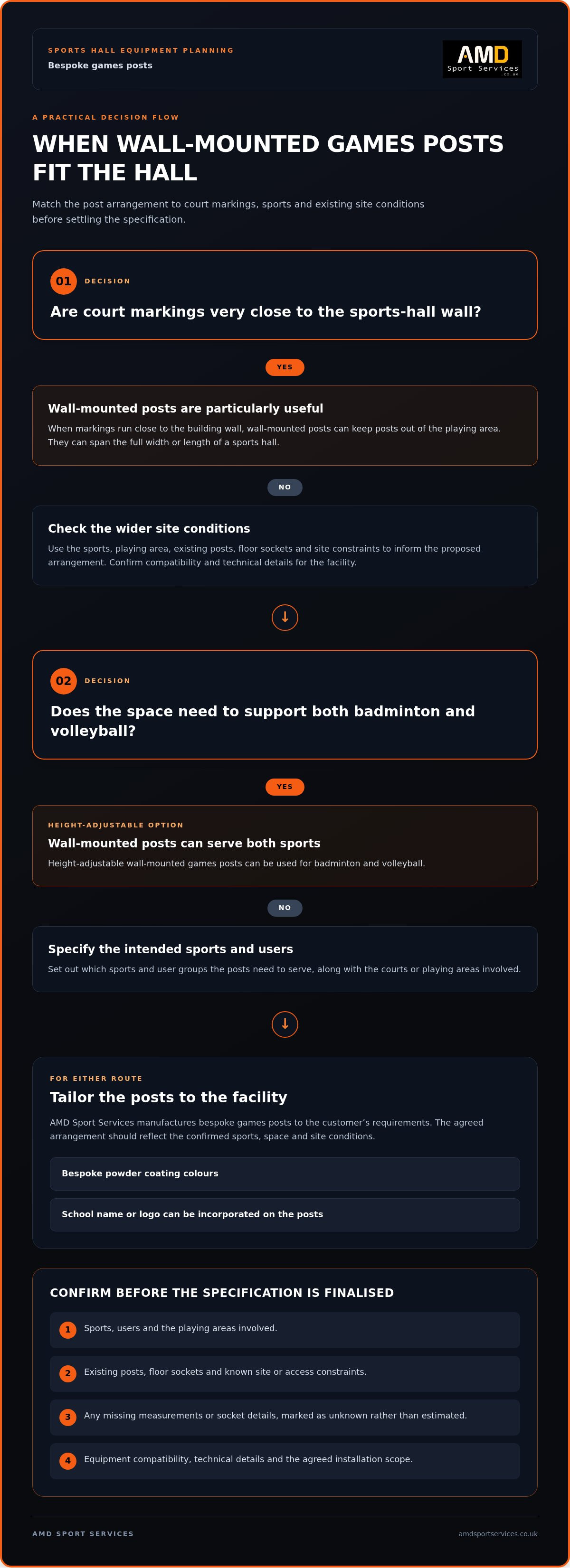
In this context, “bespoke” means posts manufactured to the customer’s requirements and a project plan tailored to the facility’s confirmed use and site conditions. Custom manufacturing capabilities allow the posts to be made to suit the sports hall rather than forcing the hall to suit a standard product. Equipment selection and installation planning are still separate decisions: first establish what the site needs, then confirm which equipment and work are within the contractor’s scope.
One example is a height-adjustable, wall-mounted games post for multi-sport use, including badminton and volleyball. Wall-mounted posts can span the full width or length of a sports hall. They are also practical where court markings run close to the perimeter walls, because the posts do not need to stand within the playing area.
Before agreeing the scope, record the sports, playing areas and user requirements, along with existing sockets or equipment that may affect the work. Ask the installation contractor to confirm what can be provided and installed for those conditions. AMD Sport Services installs all forms of sport equipment posts across the UK. The specific arrangement and installation scope should be established for each project.
Customisation options include bespoke powder coating colours, and school names or logos can be added to the posts. Confirm the available colours, logo placement and finish with the contractor as part of the scope.
How to specify bespoke games posts around sports and facility use
A clear brief turns a general need into a practical installation scope. Work through the decisions in order: identify the sports and users, record site details, check existing equipment and sockets, agree what the project includes, then confirm the installation plan with the contractor. This keeps the discussion focused on the facility instead of assumptions about a particular post arrangement.
Begin the equipment brief with intended use and site conditions. These details help show what needs checking before posts are selected or installation is agreed.
Start with the sports and users the posts must serve
List each sport the facility needs to support, how often it’s played and who will use the space. Tennis, netball and volleyball may all be part of a facility’s requirements, but don’t assume one post arrangement will suit every sport. Prioritise the activities and user groups that matter most, then note any secondary uses the project should accommodate.
Be specific about which courts or spaces are involved and whether the same area needs to serve different activities. This gives the installation contractor a clearer basis for discussing the proposed arrangement and any limitations that need to be resolved.
Check the site, sockets and existing equipment
Record what’s already in place and any conditions that could affect the work. Include the playing area, existing posts, floor sockets and known access or site constraints. If dimensions or socket details are missing, mark them as unknown instead of estimating.
Existing sockets don’t automatically confirm compatibility. Ask the installation contractor to check whether they suit the proposed equipment and intended use. Post dimensions, socket specifications and other technical details need site-specific confirmation. If records are incomplete, arrange for those points to be assessed before the scope is finalised.
Use your notes to move from requirements to an agreed plan:
Prioritise the sports and user groups.
Document the spaces, existing posts and socket locations.
Flag unknown measurements, access issues and other site constraints.
Agree what equipment and installation work are included.
Confirm technical details and installation arrangements with the contractor.
This process helps prevent product selection from getting ahead of the site checks. AMD Sport Services carries out tennis, volleyball, netball, basketball and badminton post installation across the UK. Facilities can review its sports equipment installation information when considering how their brief may progress to an installation project.
Compare post options by compatibility, use and installation needs
Compare each option against the facility brief, not an assumed advantage in lifespan or performance. A bespoke games posts project still needs careful checks: the word “bespoke” doesn’t confirm that a post will fit an existing socket or suit the site. Suitable installation options depend on the sport and the requirements confirmed for that facility.
Use the table to organise questions for an installer. It’s a comparison framework, not a product specification. Any unknown technical details need to be confirmed before you choose.
When might existing floor sockets affect the choice?
Socket position, condition and compatibility can affect which post options are practical. Record what’s known, including locations and any existing equipment that uses them, but don’t rely on appearance or old records to establish a technical match. Ask the installer to confirm suitability for the proposed posts. If measurements or socket details are missing, flag them for site assessment rather than guessing.
How should facilities compare single-sport and multi-sport needs?
Start with how the space is actually used. A single-sport area may have different requirements from one that changes between activities, but extra flexibility isn’t automatically the better choice. Consider how often changeovers happen and whether posts are intended to stay in place or be removed between sessions. Record storage and day-to-day operating needs, then ask the installer how they affect the arrangement and installation scope.
Prepare the site and plan a games post installation
Good preparation helps turn a request for bespoke games posts into an agreed installation scope. Gather the information you have, mark technical details that still need checking, and discuss those gaps with the contractor before confirming the work. This gives both sides a clearer understanding of the facility’s needs and what the project will cover.
What information should you gather before requesting a proposal?
Give the contractor a practical picture of the facility and how it operates. Include:
The sports and playing areas the posts must serve.
Existing posts and other equipment that may affect the installation.
Known floor socket locations, condition and any available technical records.
Access arrangements, site constraints and operating needs that could affect the work.
Relevant site plans or photographs, if available and appropriate to share.
Don’t fill gaps with estimates. Mark unknown measurements or socket information clearly, so the contractor can confirm whether further site assessment is needed. Check site-specific technical requirements before agreeing the work.
What should the installation scope clarify?
After reviewing the site information, confirm precisely what is included. The scope should identify the equipment and installation tasks, how existing posts and sockets will be assessed, and how relevant site constraints will be handled. If a detail remains unconfirmed, record it as an item to resolve rather than treating it as agreed.
A short handover checklist can keep responsibilities clear:
Scope: Which equipment and installation tasks are included?
Access: What arrangements must the facility make before work begins?
Responsibilities: Who will confirm site information and coordinate access?
Completion checks: What will be reviewed with the contractor when the agreed work is finished?
This checklist doesn’t replace the contractor’s technical checks. It gives the facility a clear record of what has been discussed, what needs confirmation and how completion will be reviewed. AMD Sport Services carries out external sports equipment installation, including tennis and netball post installation. Discuss your sports equipment installation requirements with the team as you develop the project scope.
Plan your bespoke games posts project with an experienced installer
A well-prepared enquiry gives the installer a clearer starting point and helps identify what needs confirming before a project is agreed. Bring together the sports and users the posts must serve, site conditions, information about existing sockets and the work you expect the installation to cover. If something is unknown, say so. A clear list of open questions is more useful than an unverified assumption.
What to include in an enquiry about games posts
Describe the facility and intended use, then outline what’s already in place. For example, say whether the project concerns a school, club or leisure facility, which sports are involved and which playing areas need posts. Include details of existing equipment and sockets, along with known access or operating constraints.
Your enquiry can cover:
The sports, user groups and spaces the arrangement needs to serve.
Existing posts and socket locations, with any available records.
Known site constraints and access considerations.
Technical details that are missing or still need checking.
Site plans or photographs may help explain the layout, where they’re available and appropriate to share. The installer can then advise what further information or site-specific checks are needed. This gives both sides a practical basis for agreeing the project scope.
How AMD can support the next step
AMD Sport Services provides sports equipment installation and maintenance across the UK. Its post installation services include tennis and netball. The equipment arrangement, socket compatibility and installation requirements still need to be checked against the facility and project brief, rather than assumed from the word “bespoke”.
For an overview of the relevant work, see AMD’s Internal and external sports equipment installation services. Facilities planning for volleyball can also consult the related Professional Volleyball Post Installation Services article for sport-specific guidance.
Before contacting an installer, bring together what you know and flag what remains uncertain. This makes it easier to discuss the sports, site requirements and installation scope without implying specifications that haven’t been checked. To discuss your facility requirements with AMD, contact the sports equipment installation team.
Turn your facility requirements into a clear installation plan
Choosing bespoke games posts starts with the facility brief, not a product assumption. Identify the sports and users to support, record site conditions and existing sockets, then confirm compatibility and installation scope with a contractor. These checks help you compare options against actual requirements and flag unanswered technical questions before agreeing the work.
AMD Sport Services supports sports facilities across the United Kingdom with specialist sports equipment installation and maintenance, including tennis and netball post installation. Equipment and site details still need to be confirmed for each project, so share what you know and note what needs checking.
Ready to discuss the next step? Discuss your sports equipment installation requirements with AMD. A clear brief is a practical starting point for moving your project forward.
Frequently Asked Questions
What are bespoke games posts?
Bespoke games posts are posts manufactured to match a facility’s sports and practical requirements. A school might need to plan for tennis or netball and consider its playing spaces and existing sockets. Confirm the available equipment, technical details and installation scope with a contractor before deciding whether an option suits your site.
Can existing floor sockets be used with new games posts?
Possibly, but compatibility needs to be confirmed for the proposed posts and the actual site. Socket condition and position can affect the choice, and appearance alone doesn’t establish a technical match. Record socket locations and any available information, such as existing equipment or site records, then ask the installation contractor to check suitability. If measurements or specifications are missing, flag them for confirmation rather than assuming the sockets will fit.
How do I choose games posts for a school or sports club?
Start by listing the sports, user groups and playing areas the posts must serve. Note how the facility will be used, whether activities share a space, and whether posts are expected to stay in place or be removed between sessions. Then record existing equipment, socket details and site constraints. Compare options against this brief, and ask an installer to confirm the relevant product and installation details before agreeing the scope.
What information should I provide before requesting games post installation?
Describe the facility, sports and intended use, then identify the playing areas involved. Include details of existing posts, socket locations and known site or access constraints. Share available technical records, plans or photographs if appropriate. Make clear what you don’t know, including missing dimensions or uncertain socket information. This helps the contractor identify what needs checking and discuss an installation scope based on confirmed site requirements rather than estimates.
Can one games post arrangement support more than one sport?
Yes. Our height adjustable games posts can be used for volleyball and badminton.
Do games posts need professional installation?
Yes. All of our equipment will require professional installation by ourselves.
Does AMD Sport Services install tennis and netball posts?
Yes. AMD Sport Services provides tennis post installation and netball post installation for facilities across the United Kingdom. The specific equipment arrangement, socket compatibility and site requirements should be confirmed for each project. To help discuss your needs, outline the sports and users involved, describe the playing area and existing equipment, and note any details that remain uncertain. AMD can then consider the installation requirements with you.
Comments