
Bonded Rubber Mulch Installation UK: A Practical Buying Guide

For bonded rubber mulch installation UK projects, appearance is only one part of the decision. Intended use, existing ground conditions and preparation all affect whether the surface is a practical fit. Start by defining what the area needs to support, then assess the site and the work required.
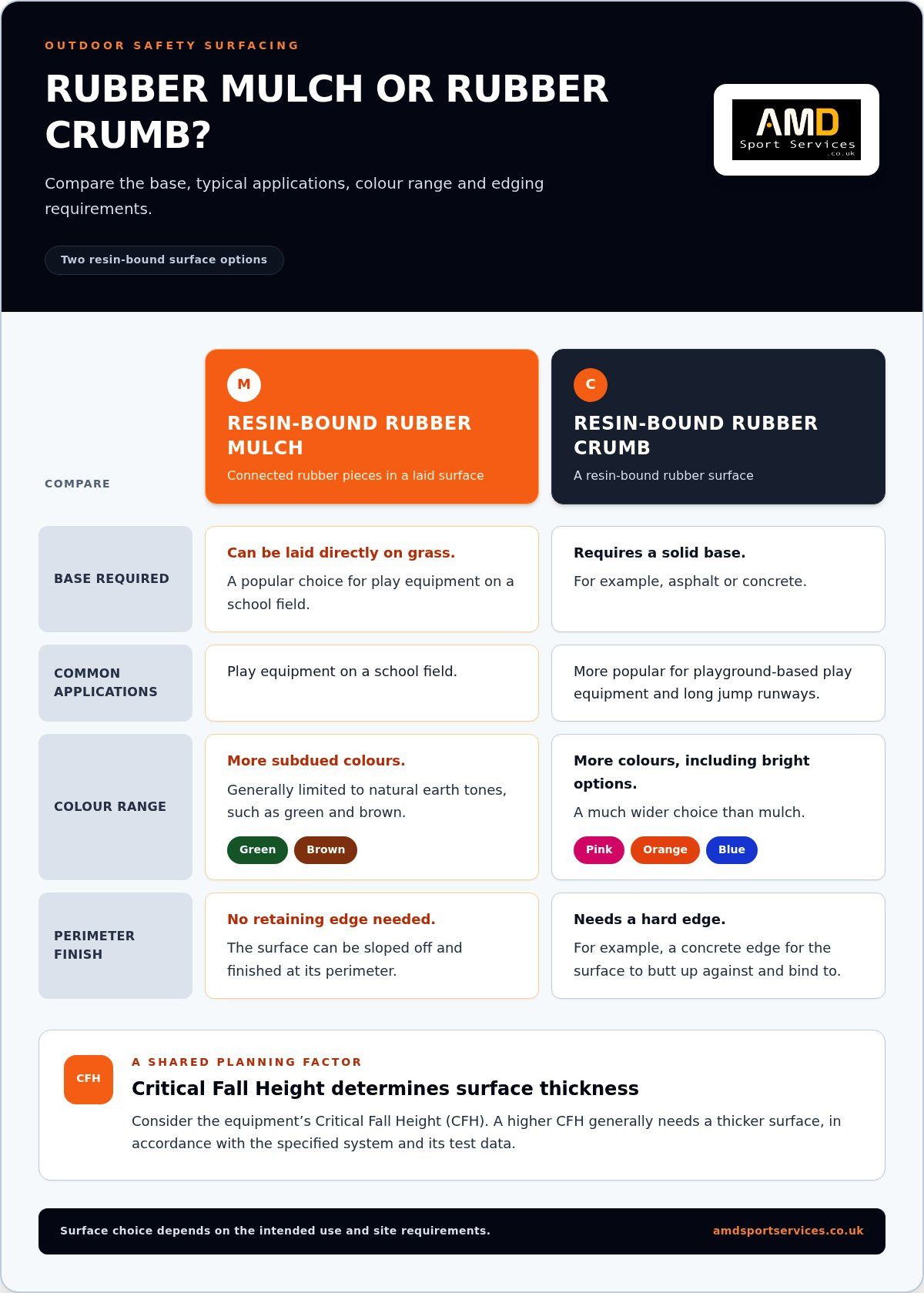
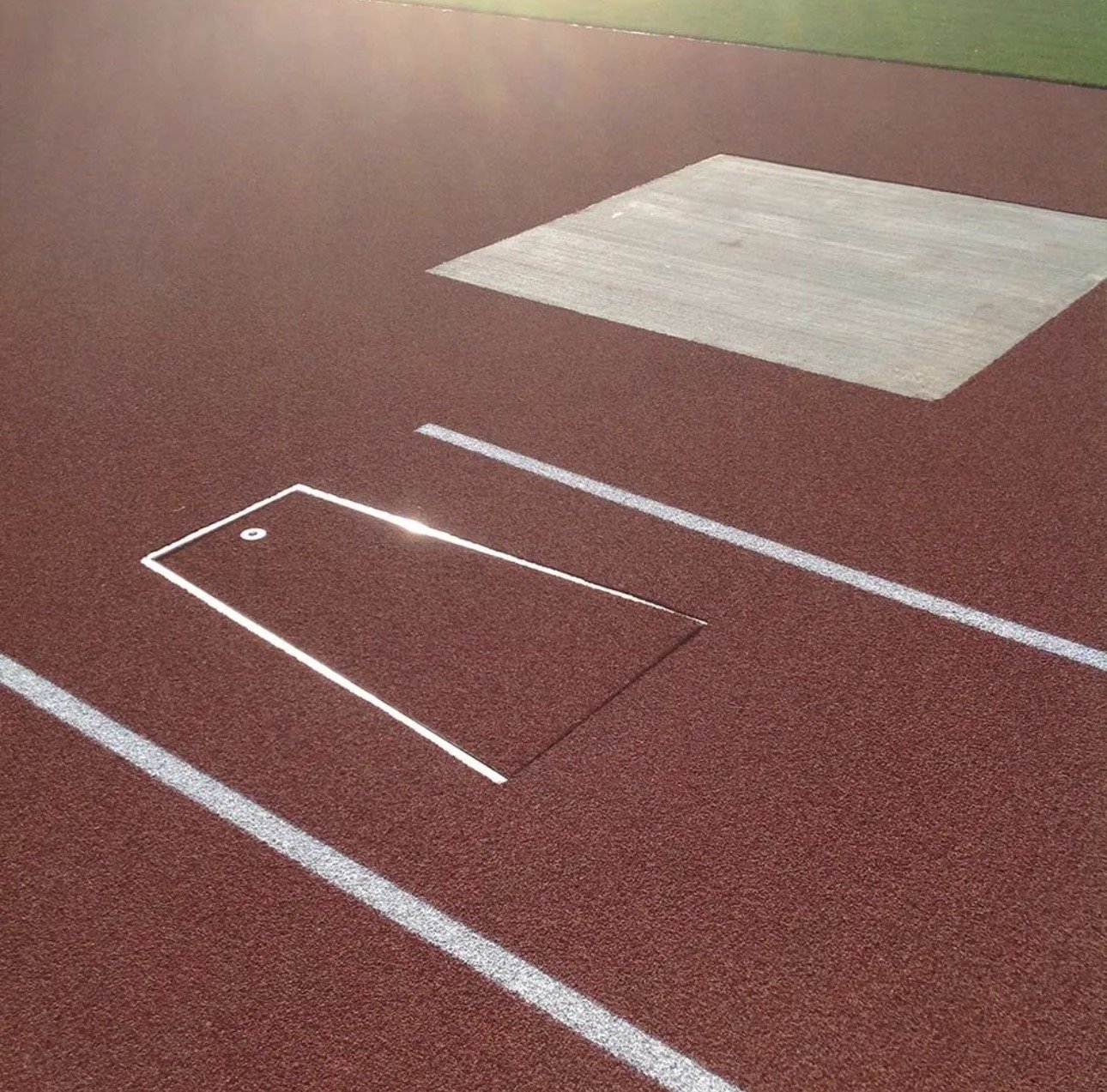
Colour, finish and intended use all matter when comparing surfacing options. Resin-bound rubber mulch can be installed directly on to grass, making it a popular choice for play equipment on a school field, for example. By contrast, resin-bound rubber crumb requires a solid base, such as asphalt or concrete, and is more commonly used for playground-based play equipment and long jump runways.
There are also clear colour differences. Rubber mulch is generally available in a limited range of subdued, natural earth tones, such as green and brown. Rubber crumb is available in a much wider variety of bright colours, including pink, orange and blue. This guide explains where each option may suit, what to check before installation and how AMD Sport Services can plan and carry out the surfacing work.
Use the steps below to assess suitability, understand the installation stages and compare proposals. When planning a play or activity area, consider the equipment’s Critical Fall Height (CFH). CFH is the maximum height from which a user could fall from the equipment, and it helps determine the required thickness of the safety surface: equipment with a higher CFH generally needs a thicker surface in accordance with the specified system and its test data.
Edging requirements also differ. Rubber mulch does not require retaining edges and can be sloped off at its perimeter. Resin-bound rubber crumb, however, requires a hard perimeter edge, such as concrete, for the surface to butt up against. These points are particularly relevant to schools, community organisations and other site managers planning an outdoor play or activity area.
What is bonded rubber mulch, and where can installation make sense?
Bonded rubber mulch is made by joining rubber pieces with a binder to create a laid surface, rather than spreading loose pieces across an area. Products can differ in their materials and specification. The key distinction is that the rubber is held together instead of remaining loose.
For a school, community organisation or other facility, start with the area’s intended use. Identify the activities it needs to support, the size and shape of the space, and the condition of the existing ground. Colour and finish can help you choose a design, but they do not establish whether a product or specification suits the site. AMD Sport Services installs safety surfacing, including rubber mulch, with the work planned around the project requirements.
How bonded rubber mulch differs from loose mulch
Loose mulch consists of separate, unbound pieces. Bonded mulch combines rubber pieces with a binder to create a connected surface. This describes how the material is held together, not a guarantee of a particular level of safety, drainage or durability.
Products can also vary in rubber type, binder, colour and intended application. The name alone does not tell you every characteristic, so review the product specification for the proposed project. The rubber mulch overview provides general background on the material, but the choice for a particular site should be based on its requirements and the product details.
What kinds of facilities may consider bonded rubber mulch?
Facilities planning outdoor play or activity areas may consider bonded rubber mulch as one surfacing option. Examples include school play spaces, community facilities and defined areas around outdoor equipment. It may also be considered for routes or activity zones, but the intended use should lead the decision, not a preference for a bark-like finish alone.
For a school play area, list the activities and equipment the surface needs to accommodate, then map where each will sit. A community facility planning an outdoor route will need to consider how that route connects with paths and other parts of the site. These uses have different requirements, so assess the actual layout and project specification rather than assuming one product suits both.
Intended use: Identify who will use the area and which activities it must accommodate.
Site conditions: Record the existing surface, boundaries, access, changes in level and any areas where water collects.
Project specification: Set out the required finish and performance criteria for the intended application.
AMD Sport Services plans surfacing as part of a site project, linking the requirements to the installation work. If an outdoor scheme also includes equipment work, the external sport equipment installation service can be part of the wider project. Start by recording what the area needs to do and how the existing site could affect the installation.
Is bonded rubber mulch right for your UK site?
To compare surfacing options, first look at the full area, not just its open centre. Paths, equipment, boundaries and changes in level can affect the layout and how surfaces meet. A site plan or measured sketch is useful: mark the proposed area, fixed features and edges, and note where the surface will meet paths or other materials.
Which site conditions affect the choice?
Check the levels and condition of the proposed area, how it meets surrounding surfaces and whether its boundaries are clear. Note slopes, thresholds, fixed equipment and places where water tends to collect. These observations help identify what the installation plan needs to address, but they do not determine a universal preparation method. The work depends on the existing site and proposed specification.
For example, an area that meets a path needs an edge detail that accounts for that transition. A play zone surrounded by a boundary has different edges to consider. Record each transition, along with access restrictions and drainage features that need to remain usable. These details give the installation team practical information for planning the work.
How does bonded mulch compare with other surfacing?
Bonded mulch, loose mulch and wet-pour surfacing differ in how their material is presented and how they look in a space. The table compares these design considerations, not the performance of any particular product.
For playground projects, RoSPA Play Safety guidance on surfacing offers background on different surfacing options. Use it alongside the project design and documentation. General guidance cannot establish the specification for a particular site.
AMD Sport Services can account for site constraints when planning surfacing and installation work. Compare options against the documented requirements for the area, including the material, layout and installation scope.
What happens during bonded rubber mulch installation?
Bonded rubber mulch installation involves more than laying material over an existing surface. The site, intended use and agreed specification shape the preparation and installation plan. There is no single timescale for every project: access, site conditions and the work involved all affect how the installation is organised.
The main stages are site assessment, planning, preparation, installation, finishing and review. Agreeing the area and specification before work starts helps keep each stage focused on the project requirements.
Site assessment and preparation
Before installation, establish the size and shape of the area, the condition of the existing surface, changes in level, boundaries and access for people and materials. Mark the proposed surface on a plan and identify fixed equipment, paths and other features that could affect the work area or its edges.
Preparation is specific to the site and proposed specification. Do not assume that the same base or drainage detail applies to every location. Recording visible defects, uneven sections and areas where water collects gives the installation plan useful information. Keeping the work area accessible and clearly defined also helps the team coordinate the installation with nearby facilities and site use.
Laying the surface and completing the work
Once preparation is complete, the specified surfacing is installed across the agreed area and finished to suit the layout. The method and details depend on the product specification, so confirm the material and any relevant application requirements for the project. Edges and transitions should be included in the agreed work, rather than left as an unspecified finishing detail.
Assess the site: Review the intended area, existing surface, boundaries, access and practical constraints.
Agree the project requirements: Define the area to be surfaced and the specification that will guide the work.
Prepare the work area: Carry out the preparation required for the specific site and installation plan.
Install and finish: Lay the specified surface and complete the agreed area, including its edges and transitions.
Review the completed work: Check the finished area against the project scope and agree handover arrangements.
Plan assessment, preparation, installation, finishing and review as one sequence, with each stage tied to the site conditions and agreed specification.
For playground projects, standards and equipment requirements are part of the wider planning picture. The British Standards for playground surfacing (BS EN 1176 and BS EN 1177) provide a reference point for understanding standards relevant to play equipment and surfacing. Set out the requirements that apply to the planned area in the project specification. A general description of the installation does not establish compliance or a particular impact performance.
AMD Sport Services carries out surfacing installation as a planned site project. Agreeing the area, preparation scope and finish gives the team a clear basis for completing the work and reviewing it at handover.
How should you compare bonded rubber mulch installation proposals?
Compare proposals by checking how clearly each one defines the work, identifies the surface and distinguishes confirmed details from assumptions. Broad descriptions such as “complete installation” can conceal differences in scope. Look for an itemised description so you can see what is included and where proposals differ.
Which project details should a clear proposal set out?
Check that each proposal identifies the material, the area to be surfaced and the work included. Look specifically for preparation, installation, edges and finishing. Any exclusions or assumptions should also be clear. This lets you compare the same work rather than relying on similar-sounding descriptions.
AMD Sport Services defines surfacing work around the agreed project scope. When reviewing bonded rubber mulch installation proposals, note differences in the material description, preparation and finishing, and identify anything that needs clarification before you decide. Do not assume a task is included just because a proposal uses a broad or familiar term.
Material description: Check that the proposed surfacing is identified clearly.
Included work: Note which installation tasks are explicitly covered.
Exclusions: Identify work or items that the proposal leaves outside its scope.
Assumptions: Separate stated project details from conditions the proposal takes for granted.
Supporting documents: Match technical or safety claims to relevant project documentation.
How can you assess whether the proposed surface fits?
Use the facility’s agreed requirements as your checklist, then see whether each proposal addresses them. If a proposal makes a technical or safety claim, look for documentation that relates to the specified product and its intended application. Keep supporting evidence separate from assumptions so you can understand the basis of each claim.
Words such as “premium”, “best” or “long-lasting” are difficult to compare without supporting detail. Focus instead on the product identified, the work included and the evidence provided for any claims. This keeps your decision grounded in the project scope rather than promotional language.
AMD Sport Services installs safety surfacing, including rubber mulch, and can discuss the work involved in your project. Discuss your surfacing installation requirements.
Bonded rubber mulch installation with AMD Sport Services
A project-led approach to surfacing work
AMD Sport Services supplies rubber mulch and installs safety surfacing for schools, councils and other facilities. The work is planned around the agreed project, taking account of the site and installation scope rather than treating the surfacing as a product-only purchase.
If a project also involves changes to outdoor sports equipment, AMD’s external sports equipment installation work can be planned alongside the surfacing. This gives facility decision-makers a way to discuss related installation requirements while keeping each part of the work clearly defined.
Taking the next step with a UK-wide installer
Start by outlining the proposed area, its intended use and any site features that could affect the work. AMD Sport Services can plan and carry out the bonded rubber mulch installation around those project requirements, rather than applying a fixed specification to every location.
For facilities teams, a defined area and clear scope make it easier to plan the installation and coordinate it with wider site needs. To discuss your project with AMD Sport Services, discuss a bonded rubber mulch installation.
Move your surfacing project forward
A well-planned outdoor surface starts with a clear decision about what the space needs to support. Turn that purpose into a defined project by recording the area, intended use and relevant site conditions. This gives your organisation a practical basis for planning the work and coordinating it with the facility’s wider needs.
Schools, councils and other facility teams planning bonded rubber mulch installation UK projects can progress by setting out the proposed area and its intended use. AMD Sport Services can plan and carry out the installation to suit the project, with the site and agreed scope considered together.
To discuss your project, contact AMD Sport Services about bonded rubber mulch installation.
Frequently Asked Questions
What is bonded rubber mulch?
Bonded rubber mulch is rubber mulch joined with a binder to create a connected surface rather than a spread of separate pieces. Products can differ, so the name alone does not confirm their materials or technical performance. Review the product specification alongside how and where the surface will be used. This helps distinguish a visual description from details relevant to the project.
Is bonded rubber mulch suitable for every playground?
No. Suitability depends on the playground’s activities, equipment, site conditions and project specification. A space with different types of play equipment may have different requirements across its layout, so consider the relevant areas rather than treating the whole playground as one uniform zone. Assess the selected surfacing against the requirements for its intended use. A bark-like appearance by itself is not evidence of suitability.
How is bonded rubber mulch installed?
Installation generally involves assessing the work area, preparing it to suit the agreed specification, laying and finishing the surface, then reviewing the completed work. The exact method depends on the product and site, so the project scope should set out the relevant materials, application and access arrangements. At a school, include access around nearby activities in the site plan so the work can be coordinated with facility operations.
Can bonded rubber mulch be installed over an existing surface?
It may be possible in some circumstances, but do not assume every existing surface is suitable. The base condition and type, its levels and the proposed system all affect the preparation plan. A sound, even area presents a different starting point from one with damaged or uneven sections. A site assessment helps establish what work is needed before installation.
How much does bonded rubber mulch installation cost in the UK?
There is no single price for every bonded rubber mulch installation. The total depends on the area, preparation required, site access and project specification. A smaller area that needs significant preparation may involve different work from a larger, straightforward site. For a meaningful comparison, make sure proposals describe the same area and included work, then compare the project-specific prices.
How long does bonded rubber mulch installation take?
There is no single timescale for every installation. The work period depends on the size and condition of the area, preparation requirements, access and the chosen product’s installation instructions. Any setting or curing period required by the product can also affect when the space is ready for use. Have the expected work sequence and reopening arrangements set out for the project rather than relying on a general estimate.
Does bonded rubber mulch need regular maintenance?
Maintenance requirements depend on the installed product and how the site is used. As a practical starting point, include the surfaced area in routine visual checks and record visible changes or damage for assessment. Follow the maintenance guidance for the specific system rather than applying advice intended for loose mulch or another surface. Clear records help staff track observations and arrange any necessary follow-up.
Comments