
Discus throwing cage maintenance: nets, stability and storage

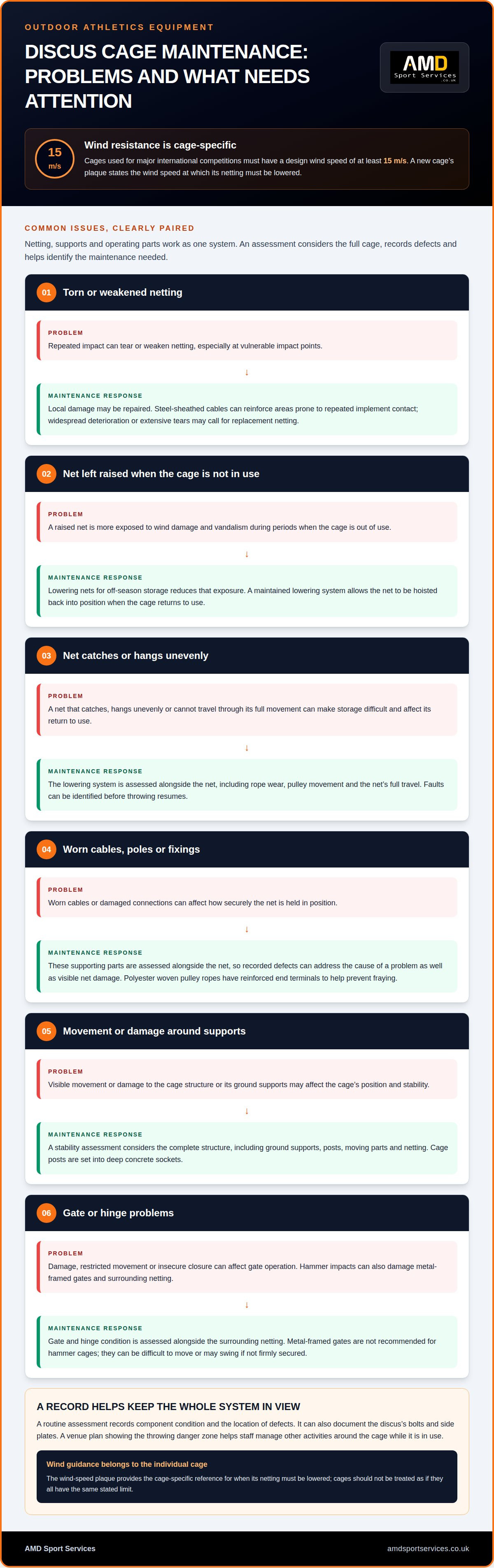
A throwing cage can look secure and still be vulnerable to wind or damaged netting. For cages used in major international competitions, the design wind speed must be rated to at least 15 m/s; the netting’s lowering point depends on the wind speed stated for that cage. Good discus throwing cage maintenance also means dealing with wear before it compromises the cage’s use.
Netting can tear or weaken under repeated impact, while moving parts and fixings wear with regular use. Leaving nets raised when a cage is out of use can expose them to wind damage and vandalism. These are practical concerns for schools, athletics clubs and facilities teams maintaining outdoor equipment throughout the year.
This article explains how cage stability and wind resistance are assessed, when damaged netting may need repair or replacement, and how nets can be lowered and hoisted for off-season storage. It also covers the signs that a cage needs attention, so you can understand the work involved and keep the facility in serviceable condition.
Cage stability and wind resistance
A professional stability assessment considers the cage as a complete structure, including ground supports, posts, moving parts and netting. The findings help facilities teams determine whether the cage is suitable for continued use or needs repair.
Routine Inspection Checklist
A routine inspection checklist records a structured assessment of the cage and associated throwing equipment. It documents component condition, identifies defects and sets out what needs attention. This gives schools and athletics facilities a consistent record, rather than relying on informal observations from different staff members.
For a discus, the assessment can also document the condition of its bolts and side plates. Recording findings against the relevant equipment helps facilities teams track recurring faults and maintenance over time.
Failure Signs and Safety Risks
Failure signs are defects or changes in condition that may affect the cage’s stability or function. These can include movement in the structure, damaged supports or faults in the parts that control the net. An inspection records the nature and location of each issue so its significance can be assessed in context.
A cage used for throwing sessions also needs a clearly defined danger zone. A venue plan showing the area helps staff manage other activities around the cage while it is in use.
Wind Resistance and Stability
Wind resistance describes the wind conditions a cage is designed to withstand. Cages used for major international competitions must have a design wind speed of at least 15 m/s. New cages must display a plaque stating the wind speed at which their netting must be lowered.
The plaque gives facilities teams a cage-specific reference for managing the net’s position in high winds. A stability assessment considers this information alongside the condition of the structure and its operating components.
Ground Supports and Moving Parts
Ground supports transfer the cage’s stability to its foundations. Cage posts are set into deep concrete sockets, and an assessment considers whether visible movement or damage could affect the structure’s position.
Moving parts are assessed as part of the same system. A mechanism fault can affect net positioning, so inspection findings should distinguish operational issues from damage to the supporting structure. This gives facilities teams a clearer basis for planning maintenance.
Hammer and discus cage net repairs and replacement
Net repairs address local damage, while replacement renews netting that is too worn or extensively torn to repair. Regular discus throwing cage maintenance helps identify deterioration before it affects the enclosure’s use.
Net Repairs and Replacement
A repair addresses a damaged area; replacement provides new netting when deterioration is more widespread. Work begins by assessing the tear, the surrounding material and vulnerable impact points. The appropriate repair or replacement depends on the net’s condition and how the cage is used.
Cables, Poles and Fixings
Cables, poles and fixings support the net and hold it in position. Their condition is assessed alongside the net, since worn cables or damaged connections can affect how securely it is held. Recording defects in these components helps repair work address the cause, not just the visible tear.
Polyester woven pulley ropes have reinforced end terminals to help prevent fraying. Rope wear, attachment condition and movement through the pulley system all inform the maintenance assessment.
Cleaning, Corrosion and Weather Protection
Cleaning and corrosion treatment address dirt build-up and deterioration on exposed metal surfaces. Suitable work depends on the component’s material and condition, and should not obscure damage that needs repair.
Weather protection includes lowering nets for off-season storage, reducing their exposure to wind damage and vandalism. For related sports equipment servicing, the cage’s netting and operating components can be considered together.
Gate and Hinge Maintenance
Gate and hinge maintenance addresses damage, restricted movement and insecure closure. These parts are assessed alongside the surrounding netting, particularly if repeated impact has affected the gate’s operation.
These gates can also be difficult to move or may swing if not firmly secured, if the hinges have dropped or bent, so their condition and operation matter to the cage’s continued use.
Lowering and hoisting nets for off-season storage
Off-season net storage means lowering a cage net when the facility is not using it for throwing. A maintained lowering system allows the net to be hoisted back into position when the cage returns to use. Lowering nets for storage helps reduce exposure to wind damage and vandalism.
For facilities teams, the lowering system’s condition matters as much as the net’s position. An assessment considers whether the net travels through its full movement, catches or hangs unevenly, and whether ropes and pulleys show wear. These faults can make routine storage difficult and leave the net exposed when the cage is not in use.
Storm arrangements are specific to each cage. The wind-speed plaque states when its netting must be lowered, giving staff a reference for managing equipment in adverse weather. An assessment can consider the lowering system’s condition alongside the cage’s stated limit, without treating every cage as identical.
At the end of a season, maintenance can include lowering the net and assessing damage or operating faults. The work can be scheduled around a school holiday closure or an athletics club’s break in training. This ties maintenance to the venue’s actual use rather than a fixed calendar date.
Before the cage is used again, the netting system can be assessed as it returns to its operating position. A net that catches or cannot be raised evenly may need attention before throwing resumes. This gives facilities managers a clear handover from storage to use and makes faults visible for planned repair.
What should be included in a routine discus cage inspection checklist?
A routine discus cage inspection checklist records the condition of the netting, supports, fixings and discus. It helps facilities teams identify specific defects and document what needs attention before the cage is used.
Net position and anchoring are key checks. The net should hang at least 0.60 m clear of support posts. At ground level, it should preferably have a minimum of 30 cm of adequately anchored netting. It should never be tied to the cage superstructure.
Record any net tears, worn areas or damage around its attachments.
Check that cables, ropes, pulleys and moving connections are in serviceable condition.
Note visible movement or damage at posts and their ground-level supports.
Include gate movement and whether gates can be secured properly.
Record the wind-speed threshold shown on the cage plaque for lowering its net.
The checklist also covers the discus itself. Bolts should be checked periodically, for example monthly, to ensure they remain secure. Cracked side plates should be replaced. Recording these details helps distinguish a loose fixing from a damaged component that needs repair.
A useful record identifies the cage, describes the fault and notes whether it affects the net, support or discus. For example, “net tear beside the lower attachment” is more useful than “net damaged”. This makes follow-up clearer when several cages are used at one school or athletics facility.
Sports equipment safety inspections can assess the cage and its associated equipment as part of a planned maintenance programme. A documented inspection helps facilities staff track reported defects and the work completed. For support with a sports equipment inspection, arrange an inspection of the equipment and its condition.
Include reminders about safety procedures before, during and after competition, along with the venue’s danger-zone plan.
AMD Sport Services
AMD Sport Services carries out sports equipment safety inspections to help schools, clubs and facilities teams assess throwing cages. The inspections provide a clear view of equipment condition, including netting, supports and moving parts that may need attention.
If a cage has torn netting, faults in its lowering system or visible damage, an inspection can establish the equipment’s condition and the work required. This gives facilities teams practical information for planning maintenance and keeping records across their sports equipment.
Contact AMD Sport Services to discuss an inspection of your throwing cage.
Keep cage maintenance part of your facility plan
Discus throwing cage maintenance is easier to manage when it has a clear place in your site’s wider sports equipment plan. For schools, athletics clubs and leisure facilities, that means assigning responsibility for the cage, recording inspection findings and following repair work through. A consistent process gives staff a useful record when responsibilities or site use change.
AMD Sport Services supports facilities teams with sports equipment safety inspections and throwing cage repairs. An inspection establishes the equipment’s condition, while repairs address faults affecting the net or cage. This is a practical next step when damage has been identified or the equipment needs professional assessment.
For help with your facility’s sports equipment, contact AMD Sport Services to discuss the work. A clear plan helps your team make informed decisions and keep the cage ready for its next use.
Frequently Asked Questions
How often should a discus cage be inspected and serviced?
Sports equipment should receive a thorough visual inspection at least every 12 months, and some heavily used sites arrange inspections biannually. The inspection record can help a school or club plan servicing around its athletics programme. Additional attention may be needed after damage, severe weather or a change in how frequently the cage is used.
How do you repair or replace damaged discus cage netting safely?
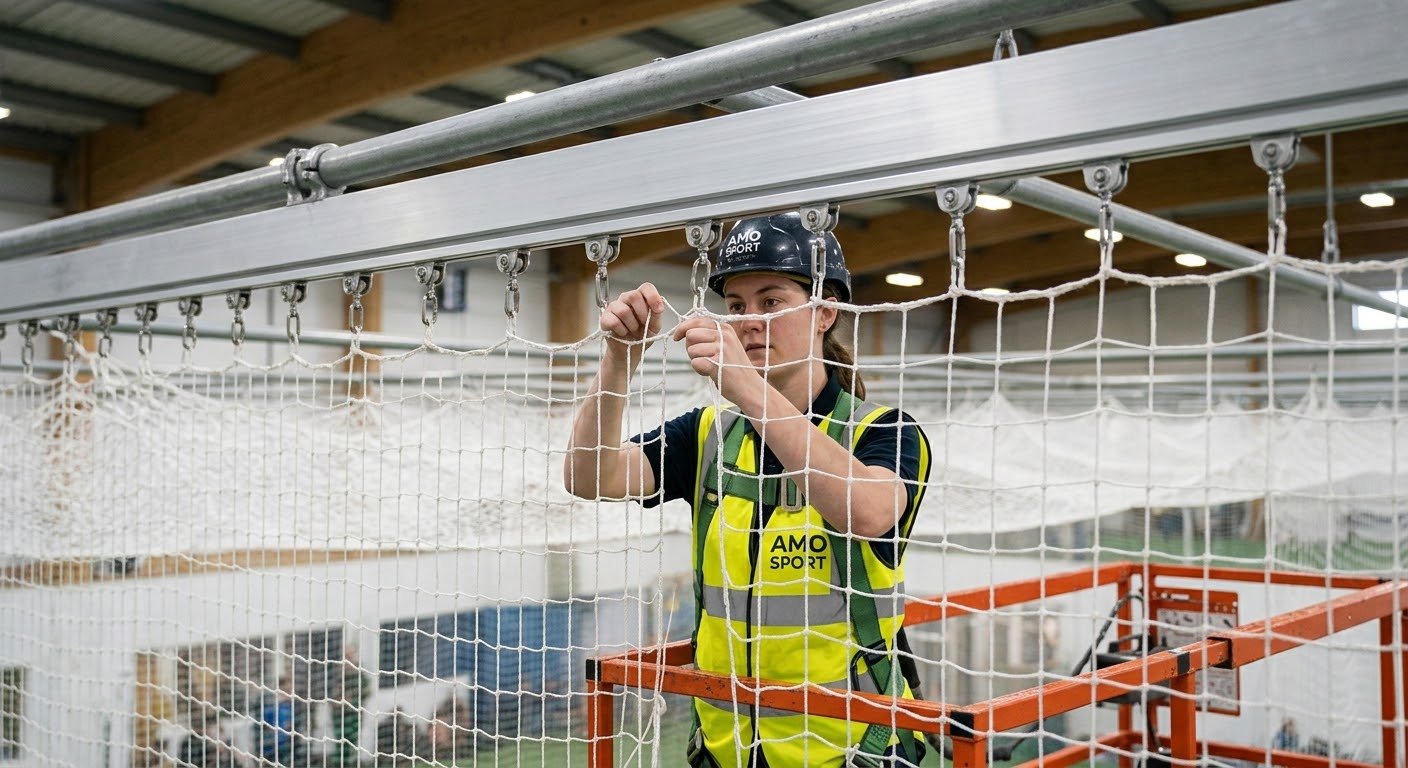
A specialist assesses the damaged area and surrounding netting, then determines whether repair or replacement is appropriate. The assessment should consider how the net is supported and whether cables or attachments are also affected. AMD Sport Services carries out throwing cage repairs from a 4 x 4 cherry picker, operated by IPAF certified engineers. Addressing netting faults as part of the work to help facilities teams plan a suitable return to use.
How much does discus cage netting repair or replacement cost in the UK?
The work required depends on the extent and position of the damage, the netting needed, access to the cage and whether repair or replacement is appropriate. A small localised tear may involve different work from widespread wear or damage to supporting components. AMD Sport Services provides a free, no-obligation quotation for the requested work, based on the cage’s condition after an inspection has taken place.
Comments