
Gymnastics Facility Safety Inspection: The Essential UK Compliance Guide

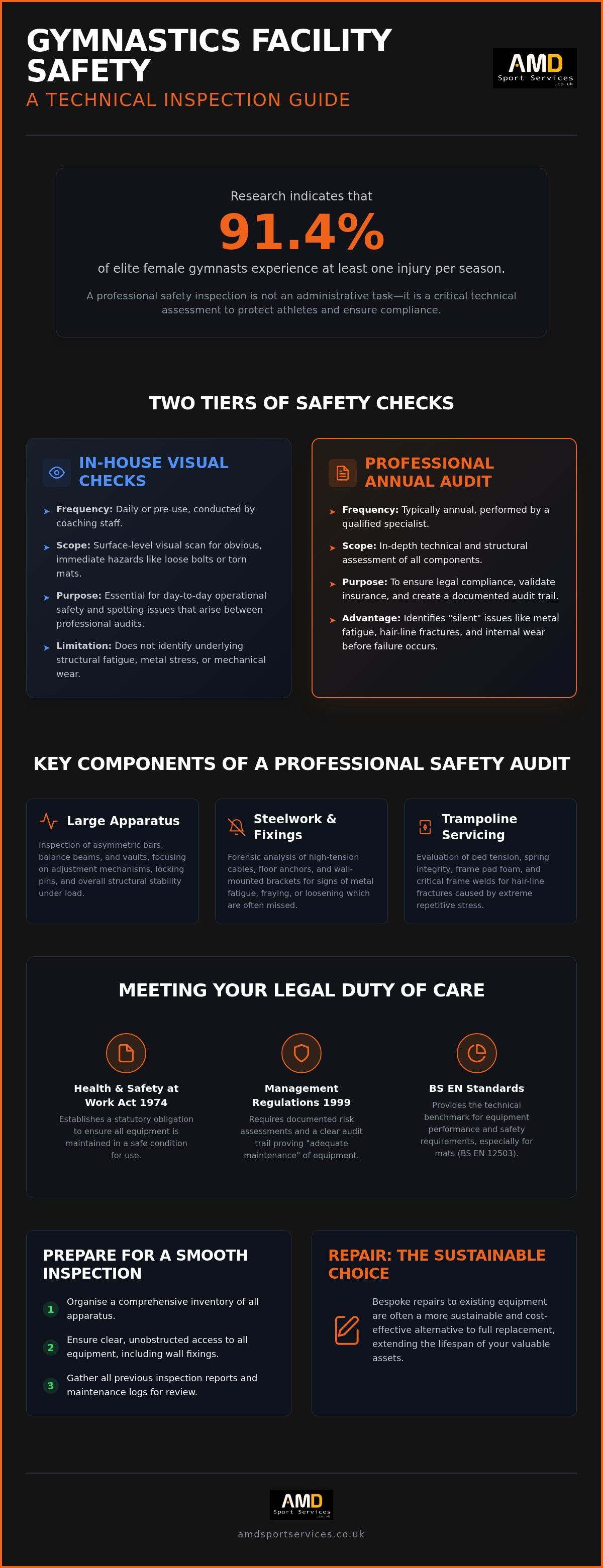
Research indicates that 91.4% of elite female gymnasts experience at least one injury per season, a statistic that highlights the high-stakes nature of the sport. In such a demanding environment, a professional gymnastics facility safety inspection is far more than a simple administrative requirement. It is a critical technical assessment designed to protect both the athletes and the long-term viability of your organisation.
We know that managing a facility often involves navigating a confusing overlap between British Gymnastics guidelines and BS EN standards. The fear of liability following an accident is a heavy burden, especially when specialist contractors for complex repairs are difficult to source. This expert guide simplifies the process by detailing how to meet British safety standards through methodical inspections and proactive equipment maintenance. You'll learn how to extend the lifespan of your apparatus and maintain a clear, documented audit trail for insurance purposes. We will cover everything from trampoline servicing to the technical steps required for a robust safety audit.
Table of Contents
Why Gymnastics Facility Safety Inspections are Critical for Compliance
A professional gymnastics facility safety inspection is a technical audit of structural integrity. It's an assessment that goes far beyond a simple visual walkthrough. Whilst daily checks are necessary for spotting immediate hazards, a professional inspection evaluates the mechanical stability of high-tension cables, floor anchors, and the internal framework of heavy apparatus. This gymnastics safety overview highlights how physical demands on equipment have increased as the sport evolves. Consequently, the standards required to maintain these facilities have become more stringent to handle higher impact forces.
British Gymnastics provides clear policy guidance, but technical compliance is often measured against BS EN 12503 standards. These regulations dictate the performance and safety requirements for mats and equipment used in training and competition. Regular inspections help mitigate insurance risks by identifying fatigue in metal components or fraying in tensioning systems before they result in catastrophic failure. It's about moving from a reactive "fix it when it breaks" mindset to a proactive maintenance cycle that ensures equipment remains fit for purpose.
The Legal Framework for UK Sports Facilities
Under the Health and Safety at Work Act 1974, facility managers have a statutory obligation to ensure that all equipment is safe for use. The Management of Health and Safety at Work Regulations 1999 further requires documented risk assessments and proof of "adequate maintenance". In a legal context, "adequate" is rarely satisfied by verbal assurances or undocumented in-house checks. You need a clear audit trail of professional inspections to demonstrate that you've met your obligations. Non-compliance can lead to significant liability in the event of an accident, potential prosecution, or the invalidation of your insurance cover.
Duty of Care and Participant Safety
Your duty of care extends to every participant who enters the hall. A professional gymnastics facility safety inspection acts as a preventative measure to stop equipment-related injuries before they occur. This proactive approach builds essential trust with parents, schools, and local authorities who rely on your facility's reputation. There's also a direct link between equipment condition and athlete performance; gymnasts can only train effectively when they have total confidence in the stability of the bars, beams, and trampolines they use. By maintaining high standards, you create an environment where athletes can focus on their skills without the distraction of equipment instability.
Key Components of a Professional Gymnastics Safety Audit
A professional gymnastics facility safety inspection is a forensic analysis of your equipment's mechanical health. It goes beyond the surface to examine the structural integrity of every fixing and the stability of moving parts. This technical depth is required to comply with UK workplace safety regulations, which demand that equipment is maintained in an efficient state and in good repair. By identifying subtle wear before it leads to failure, you protect your athletes and ensure the longevity of high-value assets.
Inspecting Large Apparatus and Steelwork
Large apparatus such as asymmetric bars and balance beams require a meticulous review of their adjustment mechanisms and locking pins. We look for metal fatigue in floor cables and tensioning systems, as even minor fraying can lead to sudden failure under load. Floor sockets are another critical area; they must be securely anchored and perfectly flush with the floor surface to eliminate trip hazards for gymnasts moving at speed. If you have concerns about the stability of your older equipment, our indoor inspection and maintenance team can provide a detailed condition report. We focus on identifying the "silent" issues, such as loose wall-mounted brackets or degraded floor anchors, that standard visual checks frequently miss.
Specialist Gymnastics Trampoline Servicing
Trampolines are complex machines that undergo extreme repetitive stress. A professional audit evaluates the bed tension and spring integrity to ensure performance is consistent and safe. We also inspect the frame pads and safety enclosures for signs of degradation in the impact-absorbing foam. The critical failure points of a commercial trampoline frame usually manifest as hair-line fractures at the weld joints or excessive ovalisation of the spring attachment holes. Identifying these issues early prevents the need for total frame replacement and ensures the equipment remains safe for high-intensity use.
Every finding must be recorded in a comprehensive facility safety log. A documented record of your gymnastics facility safety inspection is essential for insurance purposes and helps you track the lifecycle of your apparatus. This audit trail proves you are managing risks responsibly and taking the necessary steps to protect your participants. It provides the clear evidence required by local authorities and educational boards that your facility is operating at the highest possible safety standard.
In-House Visual Checks vs. Professional Annual Inspections
Daily visual checks are your first line of defence, but they don't replace the technical depth of a professional gymnastics facility safety inspection. Whilst your coaching staff are experts in athlete form and training protocols, they aren't mechanical engineers. A professional audit looks beneath the surface to evaluate the structural health of your apparatus, identifying issues that aren't visible to the untrained eye. Relying solely on in-house checks leaves your facility vulnerable to "hidden" failures, such as internal metal fatigue or degraded floor anchors that appear secure from above.
The Limitations of Daily Staff Checks
Staff checks are effective for spotting immediate hazards like surface tears in mats, loose padding, or spilled liquids. However, coaches see the same equipment every day, and this familiarity often leads to "safety blindness." They may stop noticing the gradual loosening of a wall bracket or the slow fraying of a high-tension cable because the change happens so incrementally. According to the British Gymnastics safety guidelines, clubs must maintain a culture of safety reporting, but these internal reports should focus on operational hazards rather than mechanical integrity. Staff are there to supervise participants, not to perform structural stress tests on heavy steelwork.
The Professional Advantage: Expertise and Equipment
An independent, third-party assessment provides the "Seasoned Practitioner" perspective required for true liability protection. We use specialist tools to measure cable tension and structural alignment, ensuring that every piece of equipment meets the exact specifications for safe use. This technical precision is something a visual walkthrough simply cannot replicate. When we conduct a gymnastics facility safety inspection, we provide a formal certificate of inspection. This document is a critical asset for local authority compliance and insurance audits, proving that your equipment has been verified by a qualified expert.
Professional inspections also identify bespoke structural issues that generic checklists miss. We look for specific wear patterns in floor sockets and the internal mechanisms of vaulting tables that standard maintenance routines often overlook. By catching these problems early, you avoid the high costs of emergency repairs and the operational downtime caused by equipment failure. It's a pragmatic approach that prioritises athlete safety whilst protecting your facility's long-term budget and reputation.
Preparing Your Facility for a Successful Safety Inspection
To get the most value from your gymnastics facility safety inspection, preparation must start well before the technician arrives. A disorganised hall leads to overlooked items and incomplete reports, which ultimately compromises your audit trail. By taking a few practical steps, you ensure that every piece of apparatus is thoroughly assessed and that the final report provides a true reflection of your facility's safety status. Having your documentation and equipment ready also reduces the time required on-site, allowing for a more efficient and focused technical review.
Start by gathering all previous maintenance records and manufacturer manuals. These documents provide a baseline for the inspector, allowing them to track the wear patterns of specific components over time. If a piece of equipment has undergone a bespoke repair or modification in the past, having the technical details available helps the inspector evaluate its current structural integrity against the original specifications.
Creating a Comprehensive Equipment Inventory
An accurate inventory is the foundation of any professional audit. Categorise your items by age, frequency of use, and the date of their last service. Pay particular attention to bespoke or modified equipment; these items often have unique structural challenges that require extra scrutiny. This list should be directly linked to your indoor inspection and maintenance workflow, ensuring that no portable mat or wall-mounted bar is missed during the site visit. A clear inventory also helps in identifying the exact location of floor sockets and hidden anchors that might otherwise be covered by mats.
Operational Logistics for Inspection Day
Scheduling is a critical factor for a successful gymnastics facility safety inspection. Arrange the visit during off-peak hours when the hall is clear of participants and coaching staff. This allows the inspector full access to the floor space and storage areas without causing operational disruption. Communicate with your site team to ensure that all storage cupboards are unlocked and that high-level fixings are not obstructed by temporary staging or other sports equipment.
Ensure that all wall-mounted apparatus is accessible and that any stored items are brought out for review. Inspectors will need to check high-level fixings and structural anchors, so keep access routes to these areas clear. Finally, allocate time at the end of the day for a post-inspection debrief. This is your opportunity to receive a summary of findings and discuss any immediate repairs required. If you're ready to secure your facility's compliance, you can book your annual safety inspection with our specialist team to ensure your equipment remains in peak condition.
From Inspection to Repair: Restoring Safety and Performance
Once a gymnastics facility safety inspection identifies a fault, the transition to repair must be immediate and methodical. A technical report serves as the blueprint for restoring apparatus to a safe, operational state. We prioritise repairs that meet or exceed original equipment manufacturer (OEM) standards, ensuring that the structural integrity of the equipment is never compromised by substandard components. It's about moving from a list of liabilities to a documented record of resolution and safety.
Choosing bespoke repairs over total equipment replacement is often the most sustainable and cost-effective path for institutional budgets. Many high-value items, such as asymmetric bar frames or balance beam bases, are engineered to last decades; it's usually the moving parts, cables, or tensioning systems that fail first. By refurbishing these specific elements, you extend the life of your assets whilst maintaining full compliance with British safety standards. This pragmatic approach avoids the high capital expenditure of new purchases whilst ensuring equipment remains in peak condition.
Specialist Gymnastics Trampoline Repairs
Trampolines require high-precision maintenance to maintain safe bounce dynamics and structural stability. We focus on replacing worn beds and fatigued springs before they snap or lose their elasticity, which can lead to uneven landings. Our team also refurbishes frames and safety padding to ensure impact protection remains effective for all participants. For a deeper look at specific component replacement and technical workflows, see our guide to gymnastics trampoline service and maintenance.
Bespoke Solutions for Unique Facility Challenges
Older leisure centres and school halls often present unique structural challenges that standard, off-the-shelf equipment cannot address. We specialise in repairing wall-mounted systems and roof-mounted basketball goals where standard parts may no longer be available. This "Seasoned Practitioner" approach allows us to engineer solutions for aging infrastructure, ensuring that even veteran facilities remain safe for modern gymnastics. Our service and maintenance team handles everything from floor socket renewals to the mechanical repair of heavy apparatus.
Maintaining a long-term relationship with a specialist maintenance contractor ensures that your repair history is documented and your equipment's lifecycle is managed professionally. This partnership moves beyond a one-off gymnastics facility safety inspection, creating a continuous cycle of care that protects your athletes and your investment. It provides the clear, documented audit trail required for insurance purposes and gives facility managers total peace of mind regarding their compliance obligations.
Securing Your Facility's Future Through Specialist Maintenance
Maintaining a safe training environment requires a shift from reactive repairs to a proactive technical strategy. A professional gymnastics facility safety inspection provides the technical depth needed to identify metal fatigue and structural instability before they lead to equipment failure. By prioritising these annual audits, you ensure your equipment meets British safety standards whilst building a robust, documented audit trail for insurance purposes. Daily visual checks are a necessary starting point, but true compliance relies on expert mechanical assessment and bespoke repair solutions that extend the useful life of your apparatus.
At AMD Sport Services, we provide a UK-wide national service with specialist expertise in gymnastics trampoline repairs and comprehensive safety audits. Our no-nonsense approach focuses on delivering clear, actionable results that protect your participants and your facility's reputation. Book your professional gymnastics facility safety inspection with AMD Sport Services today to secure your compliance. We look forward to helping you create a safer, more dependable environment for your gymnasts to excel.
Frequently Asked Questions
How often should a gymnastics facility undergo a professional safety inspection?
A gymnastics facility safety inspection should be carried out at least once every 12 months. This frequency is recommended to comply with the Health and Safety at Work Act 1974, which requires all physical education equipment to be maintained in a safe condition. Facilities with exceptionally high usage rates may benefit from more frequent technical reviews to monitor the accelerated wear of cables, floor anchors, and trampoline springs.
What specific British standards apply to gymnastics equipment in UK schools?
The primary standards are the BS EN 12503 series, which covers the safety and performance requirements for mats used in schools and clubs. Other specific standards apply to apparatus like asymmetric bars and balance beams. Following these ensures that your landing areas provide the necessary impact attenuation to protect participants. We verify that all your equipment meets these current technical specifications during our comprehensive on-site audits.
Can our own staff perform the annual safety audit if they are experienced?
Whilst staff should perform daily pre-use visual checks, they shouldn't conduct the formal annual safety audit. An annual inspection requires a competent person with specialist technical knowledge of mechanical fatigue and structural fixings. Professional inspectors use specialist tools to measure tension and alignment that staff simply don't have. Relying on non-expert assessments can lead to safety blindness and may invalidate your insurance if a mechanical failure occurs.
What happens if a piece of equipment fails its safety inspection?
If an item fails, it must be decommissioned and clearly marked as out of use immediately to prevent accidents. The inspector will provide a detailed report outlining the specific structural or mechanical faults found. You'll then need to arrange for a professional repair to restore the item to OEM standards. We specialise in bespoke repairs for gymnastics equipment, allowing you to refurbish apparatus rather than paying for a total replacement.
Do we need to inspect portable mats and landing blocks as well as fixed apparatus?
Yes, portable mats, landing blocks, and crash mats are critical components of your facility's safety system. These items are subject to internal foam degradation and seam failure that isn't always obvious from a distance. Every piece of equipment that athletes land on or interact with must be included in your gymnastics facility safety inspection to ensure it still provides adequate impact protection and meets BS EN requirements.
How long does a typical gymnastics facility safety inspection take to complete?
Most inspections for a standard sports hall or gymnastics centre take between two and four hours to complete. The exact duration depends on the volume of equipment and the complexity of your wall-mounted or roof-mounted systems. We recommend scheduling the audit during off-peak hours when the hall is empty. This allows our technicians full access to all areas, ensuring the process is as efficient and thorough as possible.
Will a safety inspection certificate help reduce our insurance premiums?
Documented safety certificates are often a mandatory requirement for maintaining valid public liability insurance. Whilst a certificate doesn't always guarantee a direct discount, it provides the clear audit trail needed to prove you've met your legal duty of care. In the event of a claim, having professional evidence of regular maintenance and equipment repairs is essential for defending your position and demonstrating that you aren't negligent.
What is the difference between a general sports hall inspection and a gymnastics-specific one?
A gymnastics-specific inspection focuses on the high-tension fixings and mechanical adjustment systems unique to gymnastics apparatus. General sports hall inspections often overlook the subtle stress fractures in bar steelwork or the specific bed tension requirements of trampolines. Because gymnastics involves much higher impact forces and complex mechanical movements, the audit must be conducted by specialists who understand the unique structural demands placed on this specialist equipment.


Comments