
Long Jump Runway Maintenance: UK Facilities Guide 2026

Could a layer of microscopic algae or a slightly loose take-off board be the single point of failure for your athletics facility? For many school and club managers, long jump runway maintenance often falls to the bottom of the priority list until a slippery surface leads to a preventable injury or a failed safety audit. It is a common frustration; you want to provide a high-quality environment for athletes, yet you are constantly battling moss growth, contaminated sand that hinders drainage, and boards that have begun to rot or shift underfoot. Ensuring your facility meets UKA standards for 2026 requires a technical, structured approach rather than occasional reactive repairs.
We understand that managing a sports facility involves balancing tight budgets with strict safety obligations. This guide provides the pragmatic clarity you need to maintain your runways effectively, helping you avoid the necessity of a full, costly refurbishment. We will examine the specific requirements for polymeric and needlepunch surfaces, the importance of using UKA-approved silica sand for pit hygiene, and how to identify structural issues before they compromise athlete safety. By following these professional standards, you can ensure your facility remains a dependable, compliant asset for every jumper who uses it.
Table of Contents
The Importance of Professional Long Jump Runway Maintenance
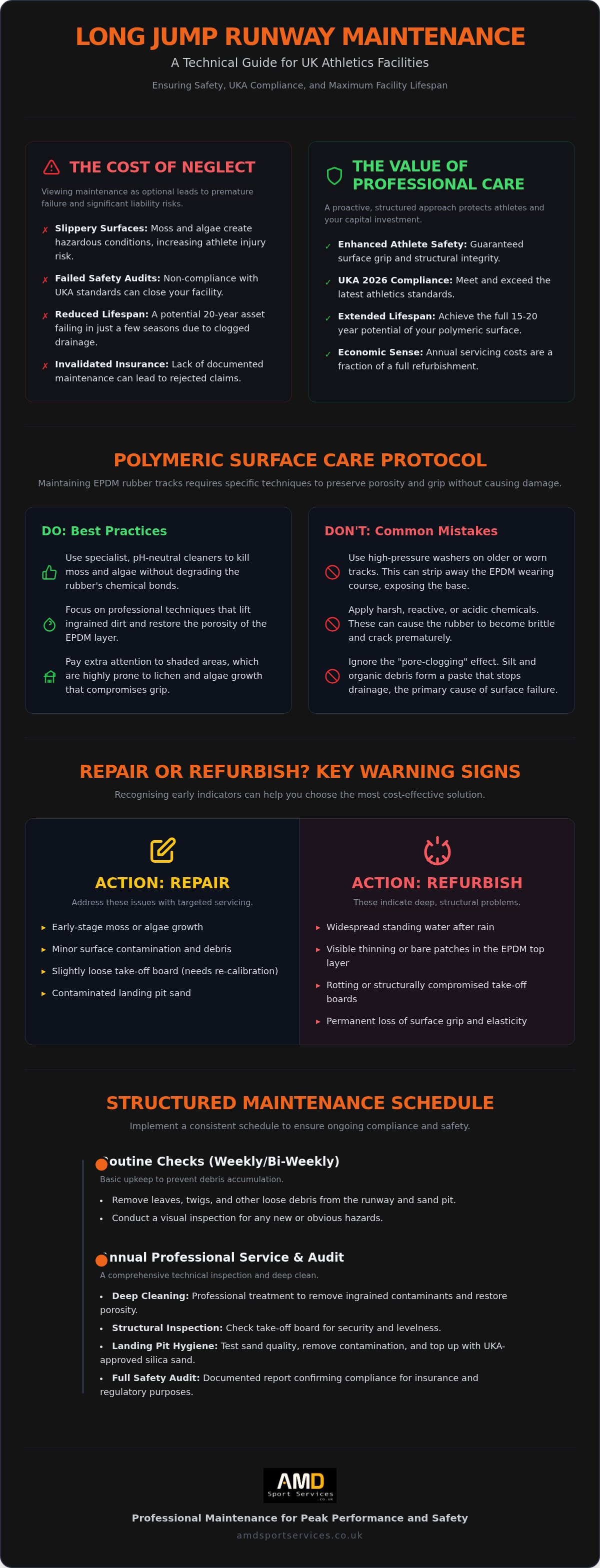
Professional long jump runway maintenance is a technical discipline that combines deep surface cleaning, landing pit hygiene, and rigorous structural inspections. It's a mistake to view these tasks as optional or purely aesthetic. In reality, the condition of the run-up directly impacts athlete performance and safety. A proactive care regime is the primary factor in determining whether a polymeric surface reaches its 15 to 20 year life expectancy or fails prematurely. We've seen many facilities where basic neglect has turned a high-performance track into a liability within just a few seasons.
You might hear claims that modern synthetic surfaces are maintenance-free. From a professional standpoint, this is a dangerous myth. UK health and safety regulations, alongside facility insurance requirements, dictate that equipment must be fit for purpose. Neglected runways quickly accumulate moss, algae, and silt. These contaminants don't just look untidy; they create a physical barrier that prevents water from draining, leading to standing pools and a loss of traction. For schools and local authorities, the liability risks of equipment failing a safety inspection are substantial.
Safety Standards and UKA Compliance
UK Athletics (UKA) maintains strict standards for the long jump. These regulations specify requirements for surface evenness and grip to ensure fair competition and athlete protection. Our role as seasoned practitioners is to identify where a facility falls short of these benchmarks. Annual safety inspections are vital. They help identify loose take-off boards or thinning EPDM layers that could cause a trip. Without documented evidence of regular maintenance, many insurance providers will question the validity of a claim if an injury occurs on-site.
Economic Benefits of Regular Servicing
The cost of annual servicing is negligible when compared to the price of a premature long jump runway refurbishment. Consistent long jump runway maintenance focuses on preserving the porosity of the track. When dirt and organic debris clog the surface, water cannot pass through to the drainage system. This trapped moisture is the enemy of any athletics track; it weakens the bond between the rubber crumb and the base layer. By investing in professional cleaning and minor repairs, you protect your initial capital investment and extend the usable life of the facility by years.
Surface-Specific Cleaning and Debris Management
Effective long jump runway maintenance requires a deep understanding of the specific material underfoot. Most UK facilities utilise either polymeric rubber crumb or needlepunch synthetic carpet. Each demands a distinct approach to debris management. The World Athletics Facilities Manual provides the technical specifications for these surfaces, but keeping them in peak condition is a matter of consistent, tailored care.
The biggest threat to any porous track is the "pore-clogging" effect. When leaves, silt, and organic matter settle on the runway, they gradually break down into a fine paste. This sludge fills the voids between the rubber granules or carpet fibres, preventing water from draining away. In the damp UK climate, this leads to rapid moss and algae growth. It's a common sight on neglected tracks. Once it takes hold, it turns a safe runway into a dangerous, slippery hazard.
When cleaning, avoid the temptation to use high-pressure washers on older tracks. A jet that's too powerful can easily strip away the EPDM wearing course, leaving the base layer exposed and vulnerable. Similarly, any chemical treatments used to kill moss must be pH-neutral. Harsh, reactive cleaners can degrade the rubber's chemical bonds, leading to premature brittleness and cracking. If you're unsure about your surface condition, our team can provide a detailed assessment through our service and maintenance programmes.
Maintaining Polymeric Rubber Surfaces
Polymeric tracks consist of EPDM rubber granules bound by a polyurethane binder. We focus on techniques that lift ingrained dirt without compromising this bond. Shaded areas are particularly prone to lichen and algae. These must be treated early to maintain the surface friction required for high-speed run-ups. If the grip is lost, athlete performance suffers. The risk of a slip at the take-off point increases significantly when the surface texture is compromised.
Needlepunch Carpet Care and Grooming
Needlepunch runways rely on a sand infill to support the synthetic fibres. Regular brushing is necessary to keep this sand level and prevent the carpet from flattening underfoot. We look for "seam stress" where the carpet sections meet. If edges start to lift, they must be secured immediately to prevent trip hazards. For deep-seated silt removal, vacuuming is far more effective than sweeping, as it extracts the fine particles that a brush simply moves deeper into the pile.
Landing Pit Hygiene and Take-off Board Calibration
The transition from the high-speed run-up to the landing pit is the most high-impact phase for any athlete. If the landing area is neglected, the risk of severe lower-limb injuries increases. Professional long jump runway maintenance must encompass the entire jump sequence, from the final stride on the runway to the moment of impact in the sand. A well-maintained pit doesn't just provide a mark for the officials; it acts as a critical safety buffer that absorbs the energy of a jump.
Standard "play sand" is entirely unsuitable for these facilities. It clumps when damp and lacks the specific grain shape required for athletics. We utilise sub-angular silica sand because it resists compaction and allows water to permeate through to the drainage layer effectively. Adhering to the SAPCA Code of Practice ensures that your sand provides the necessary impact attenuation to protect jumpers while maintaining long-term porosity.
Managing UKA Approved Silica Sand
Maintaining the correct sand depth is a technical requirement, not a recommendation. For a competition-standard pit measuring 9m by 3m, you need a depth of at least 500mm, which equates to approximately 20 tonnes of specialist sand. Regular turning and raking are essential parts of Maintaining Long Jump Sand Pits for Safety. This prevents the sand from becoming a solid, compacted block that could cause injury. Our practitioners follow a strict protocol for inspecting the pit for biological contaminants, glass, or other foreign objects that often migrate into the sand during the off-season. We also monitor sand migration onto the track, as loose grains can act like ball bearings, causing athletes to slip on the polymeric surface.
Take-off Board Inspection and Replacement
The take-off board is the most critical mechanical component of the facility. It must be perfectly stable and flush-mounted with the runway surface. We frequently find timber boards that have started to rot from the underside or synthetic alternatives that have cracked due to UV exposure. A board that sits even slightly higher than the track creates a dangerous "stumble" point for an athlete at full sprint. During our inspections, we test the housing for any movement. If the board shifts even slightly under load, it's a sign that the structural integrity is compromised. When the housing or the board itself can no longer be safely calibrated, we recommend a professional long jump take off board replacement to restore the facility to UKA standards.
Identifying Wear: When to Refurbish vs Repair
Determining the health of your athletics track requires more than a passing glance. As part of a robust long jump runway maintenance regime, you must look for specific indicators of structural decay. One reliable method we use is the "Screwdriver Test". By gently pressing a flat-head screwdriver into the surface, you can assess the base layer's integrity. If the tool sinks easily or the surface feels "mushy", the binder has likely degraded. Conversely, if the surface has become excessively hard, it has lost its shock-absorbency, increasing the risk of stress injuries for athletes.
Visual cues often signal deeper functional failures. Thinning EPDM rubber, exposed base layers, and "bald" patches are clear signs that the wearing course has reached the end of its effective life. Puddling or standing water is a more serious indicator. It suggests a total drainage collapse, often caused by the pore-clogging organic matter discussed in previous sections. Once the sub-base remains saturated, the structural stability of the entire runway is at risk, as moisture weakens the adhesive bonds from the bottom up.
Minor Repairs and Patching
Localized damage doesn't always necessitate a total overhaul. Vandalism, such as equipment gouges or cigarette burns, can often be addressed through professional patching. If the overall structure is sound but the grip has diminished, "re-topping" the polymeric surface can restore the necessary friction. We also prioritise fixing loose perimeter edgings. These often shift over time due to ground movement, creating trip hazards that can lead to significant liability issues for schools and clubs if left unaddressed.
Full Refurbishment Indicators
There comes a point where the cost of ongoing patching exceeds the long-term value of a complete overhaul. If more than 25% of the runway shows signs of thinning or delamination, a full refurbishment is usually the most pragmatic choice. This is also an ideal time to consider upgrading from older needlepunch carpets to high-performance polymeric rubber to meet modern competition standards. Consulting specialist long jump runway installers for a structural assessment will provide a clear roadmap for your facility's future. We can determine if the existing sub-base is suitable for a simple resurface or if a deeper intervention is required.
If you've noticed standing water or thinning rubber on your track, book a specialist safety inspection today to ensure your facility remains compliant and safe for use.
Professional Maintenance Schedules and Safety Audits
Establishing a methodical rhythm of care is the only way to ensure long jump runway maintenance remains effective over the facility's lifespan. While on-site staff can manage daily tasks, a tiered schedule prevents minor issues from escalating into structural failures. Weekly tasks should focus on surface clearing and basic sand raking. Monthly, your team should inspect the sand depth at the impact zone and check the take-off board for any lateral movement. However, these internal checks don't replace the need for an independent professional safety audit, which provides the technical documentation required for local authority compliance and insurance validity.
When we conduct a sports equipment safety inspection, we follow a rigorous, process-oriented workflow. We start with a visual assessment of the polymeric or needlepunch surface, looking for the thinning or puddled areas identified in previous sections. We then move to physical stress testing of the take-off board housing and the perimeter edgings. This "action-result" approach ensures that every component is measured against UKA standards. The finished result is a comprehensive condition report that serves as a vital audit trail for your facility’s health and safety records.
The Annual Professional Service
The annual service is a deep-level intervention that goes beyond simple sweeping. We use specialist machinery to perform a pressure-regulated deep clean, which is essential for restoring surface porosity. This process extracts the fine silt and organic paste that clogs the drainage voids. Simultaneously, we perform a "deep turn" of the landing pit. This involves mechanically loosening the sand to its full 500mm depth to remove compaction. We then top up the pit with fresh, sub-angular silica sand to ensure you meet the exact depth requirements for competition and training safety.
Bespoke Maintenance Programmes
A "one size fits all" approach rarely works because every facility faces unique environmental challenges. A school runway used daily for PE lessons requires a different frequency of care than a professional club track used for evening training. We tailor our programmes to address site-specific factors such as heavy leaf fall from overhanging trees or poor natural drainage in the surrounding soil. By establishing a long-term partnership, we help you stay ahead of the wear-and-tear cycle. This proactive stance ensures that your facility remains a safe, high-performance asset rather than a mounting repair bill.
Securing the Future of Your Athletics Facility
Maintaining a high-performance long jump facility requires more than just occasional raking. It demands a technical commitment to surface porosity, sand hygiene, and structural calibration. By implementing the structured approach detailed in this guide, you ensure that your runways remain safe, compliant, and durable against the UK’s challenging climate. Proactive long jump runway maintenance is the most effective way to protect your capital investment and avoid the liability risks associated with neglected equipment.
At AMD Sport Services, we bring over 20 years of experience to every site visit. We provide a national service for schools, local authorities, and leisure centres, specialising in both polymeric and needlepunch systems. Our team ensures your landing pits meet UKA-compliant sand specifications and that every take-off board is perfectly calibrated for athlete safety. Don't wait for a failed safety audit to address hidden wear or drainage issues. Request a Professional Long Jump Safety Inspection from AMD Sport Services today to keep your athletes jumping safely throughout 2026 and beyond.
Frequently Asked Questions
How often should a long jump runway be cleaned?
Facility staff should clear surface debris like leaves and twigs weekly to prevent organic matter from breaking down and clogging drainage pores. Professional long jump runway maintenance involves a deeper intervention, typically recommended at least once a year. This annual service uses specialist machinery to extract ingrained silt and restore surface friction. Facilities situated near heavy foliage or in high-pollution areas may require more frequent professional cleaning to prevent moss and algae growth.
What is the best sand for a long jump pit in the UK?
The industry standard for UK facilities is washed, sub-angular silica sand. This specific grain shape is critical because it resists heavy compaction and allows for efficient water drainage through the pit. Unlike domestic play sand, which clumps and becomes hard when wet, silica sand maintains its soft landing properties. Using UKA-approved sand ensures the facility meets official competition standards and provides the necessary impact attenuation for athlete safety.
Can we use a domestic pressure washer on a polymeric runway?
We strongly advise against using domestic pressure washers on polymeric rubber surfaces. High-pressure jets can easily strip away the EPDM granules or weaken the polyurethane binder, especially on older tracks. This damage often leads to bald patches and exposed base layers. Professional long jump runway maintenance utilizes specialised equipment that regulates pressure and water flow to lift ingrained dirt without compromising the structural integrity of the wearing course.
How long does a long jump runway surface typically last?
A well-maintained polymeric runway typically has a lifespan of 15 to 20 years. This longevity depends heavily on consistent maintenance and the management of surface porosity to prevent water damage. Needlepunch carpet systems generally have a shorter lifespan, often requiring replacement or refurbishment after 10 to 12 years of heavy use. Neglecting basic cleaning tasks can reduce these lifespans by half as organic contaminants accelerate the degradation of synthetic materials.
What are the signs that my take-off board needs replacing?
You should replace a take-off board if it shows signs of timber rot, deep cracking, or structural instability. During your monthly checks, test if the board sits exactly flush with the runway surface. If it has warped or sunk, it creates a trip hazard. Any lateral movement within the housing under the weight of an athlete is a critical failure. In these cases, calibration is no longer sufficient and a full replacement is necessary.
Is a sand pit cover necessary for maintenance?
While not strictly mandatory by regulation, a heavy-duty sand pit cover is essential for effective facility care. Covers prevent wind-blown debris, litter, and biological contaminants like animal waste from entering the silica sand. This keeps the sand cleaner for longer and reduces the frequency of deep turns required to remove foreign objects. A cover also helps to maintain correct moisture levels, preventing the sand from becoming overly saturated during heavy rainfall.
What happens during a professional sports equipment safety inspection?
During a professional inspection, a seasoned practitioner conducts a comprehensive audit of the entire facility. This includes testing the surface grip, checking for drainage issues like puddling, and measuring sand depths against UKA requirements. We also perform structural stress tests on take-off boards and pit edgings. The result is a detailed condition report and a documented audit trail that demonstrates your commitment to health and safety regulations and facility compliance.
Does my long jump runway need to be UKA compliant?
UKA compliance is necessary if your facility hosts official competitions or school athletics events. Even for recreational use, adhering to UK Athletics standards is a best practice for risk management. Compliance ensures that dimensions, surface friction, and sand depths meet recognised safety benchmarks. Maintaining these standards often forms a core requirement of your facility insurance, protecting the institution from liability claims in the event of an avoidable athlete injury.


Comments