
Professional Basketball Goal Installation in the UK: The Complete Facility Manager’s Guide

A professional basketball hoop is not just a piece of sports equipment; it's a significant structural installation that carries substantial weight and dynamic force. If you're managing a school or a leisure centre, you probably find the technical requirements for basketball goal installation UK confusing, especially when dealing with the structural limitations of older sports hall walls. It's a common frustration to feel caught between equipment suppliers who sell the gear and installers who might not understand the specific architectural constraints of your building.
We agree that your primary goal is to provide a safe, high-quality environment for players while maintaining a flexible space for other activities. This guide simplifies the path to achieving a compliant, durable setup that lasts for decades. We'll cover everything from choosing between roof-mounted and folding systems to the vital role of long-term maintenance and safety inspections. By the end of this article, you'll have a clear, step-by-step plan to ensure your facility meets national standards without compromising on structural integrity or ease of use.
Table of Contents
Professional Basketball Goal Installation in the UK: An Overview
Professional basketball goal installation UK is a task of structural engineering rather than simple kit assembly. For facility managers in schools and leisure centres, the priority is often a balance between court availability and long-term safety. A specialist installer understands that these goals are high-impact points of contact. They aren't just pieces of furniture; they're mechanical systems that must remain stable under significant dynamic loads. Whether you're managing an indoor sports hall or an outdoor MUGA, the installation must be precise to ensure the longevity of the equipment and the safety of the users.
Choosing a specialist over a general contractor is about accountability. General builders may not be familiar with the specific stresses that a matchplay backboard endures during a game. Without this niche expertise, you risk installing equipment that vibrates excessively or, in worst-case scenarios, suffers structural failure. Professional installers ensure the setup works within the wider context of the hall, allowing the space to remain versatile for other sports like badminton or netball without the basketball goals becoming an obstruction.
The Difference Between Residential and Institutional Installation
Institutional systems must withstand hundreds of hours of high-impact use every year. Unlike residential driveway hoops designed for light use, professional systems must adhere to strict basketball equipment specifications regarding rim tension and backboard rigidity. In a school environment, durability is a safety requirement. If a unit isn't rated for matchplay, the risk of structural failure during a dunk or a collision increases significantly. We focus on heavy-duty, fixed, or folding systems that can handle these forces without vibrating or loosening over time.
The Importance of Specialist Site Surveys
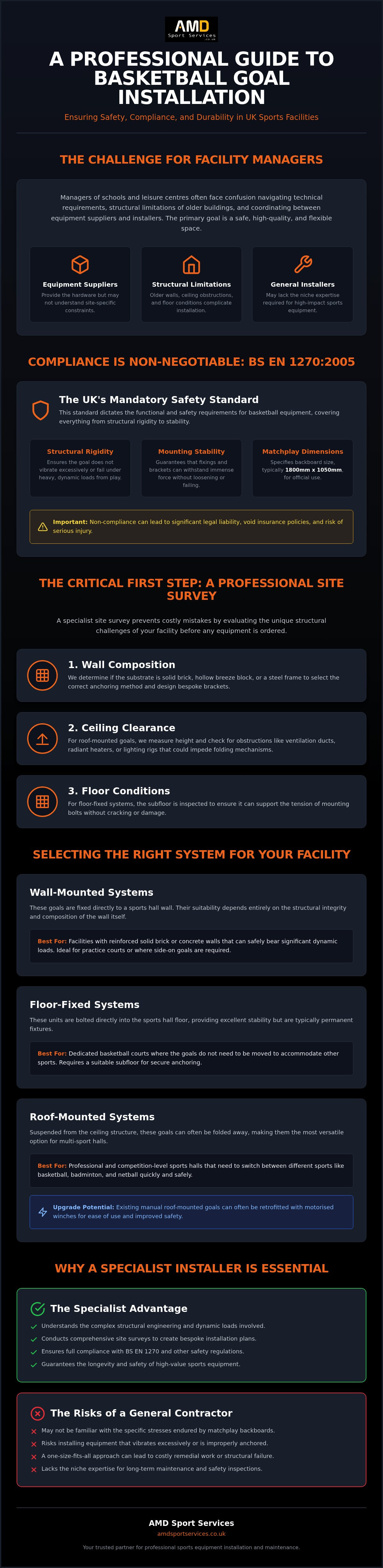
Every UK sports hall presents unique challenges. A one-size-fits-all approach to basketball goal installation UK often leads to costly remedial work. A seasoned practitioner starts with a comprehensive site survey to evaluate the structural integrity of the building. This technical assessment prevents the common mistake of ordering equipment that cannot be safely mounted to the existing structure. During a survey, we evaluate several critical factors:
Wall Composition: We determine if the substrate is solid brick, hollow breeze block, or a reinforced steel frame to select the correct anchoring method and bespoke brackets.
Ceiling Clearance: For roof-mounted goals, we measure the height and check for obstructions like ventilation ducts, radiant heaters, or lighting rigs that could impede the folding mechanism.
Floor Conditions: For floor-fixed systems, the subfloor must be inspected to ensure it can support the weight and the tension of the mounting bolts without cracking.
This methodical approach ensures that the chosen system is fit for purpose and compliant with all relevant safety standards from the moment it's commissioned.
Compliance and Safety Standards: BS EN 1270 Explained
BS EN 1270:2005 is the mandatory benchmark for any professional basketball goal installation UK. This standard, published in March 2006, dictates the functional and safety requirements for eight distinct types of equipment. It covers everything from structural rigidity to the stability of the mounting system. When a player dunks or hangs on a rim, the force exerted is immense. Without adherence to these BS EN 1270 safety standards, backboards can shatter or mounting brackets can fail. Ensuring compliance isn't just about equipment quality; it's about the precision of the fixings used to secure that equipment to your facility's structure.
Sport England provides additional guidance on court layouts to ensure facilities remain fit for purpose. For matchplay, backboards must typically measure 1800mm by 1050mm. Failing to meet these specifications can lead to more than just a poor playing experience. Schools and leisure centres face significant legal liability if an injury occurs on non-compliant equipment. Under the Provision and Use of Work Equipment Regulations (PUWER), facility managers must ensure all sports gear is safe, correctly installed, and regularly maintained. Non-compliance can invalidate insurance policies and lead to costly litigation if a structural failure occurs.
Understanding Safety Classifications
Basketball goals are categorised from Class A to Class E based on their intended use and structural strength. Class A units are the most robust. They are designed for high-level competition and are capable of withstanding the highest dynamic forces. Practice units might fall into lower classifications, but they still require strict stability tests to prevent tipping or collapse. Safety padding is another non-negotiable requirement. Any backboard used for matchplay must have high-impact padding on the lower edge and corners to protect players during close-range play. Choosing the wrong class for your facility's level of use is a common mistake that leads to premature equipment failure.
The Role of Regular Safety Inspections
A successful basketball goal installation UK is only the first step in a long-term safety strategy. Over time, vibration and repeated use can lead to stress fractures in steelwork or loose fixings in wall mounts. Annual audits are essential to identify these issues before they become hazards. We often see frayed nets or damaged rim springs that compromise the "breakaway" function of a matchplay hoop. Integrating your installation with a comprehensive plan for indoor inspection and maintenance ensures your facility remains compliant year after year. If you aren't sure whether your current setup meets these benchmarks, you can request a technical safety audit to verify your equipment's status.
Selecting the Right System: Wall-Mounted, Floor-Fixed, or Roof-Mounted?
Choosing the correct hardware for basketball goal installation UK depends entirely on your building's structural capacity and how the hall is utilised. We treat every project as a bespoke engineering challenge. While a wall-mounted system might suit a dedicated sports centre, a primary school hall with multiple uses often requires a more flexible approach to keep the floor clear for other activities. Every mounting type places different stresses on the building fabric, so the decision must be based on a technical assessment of the site.
Wall-Mounted Systems: Fixed vs Side-Folding
Wall-mounted goals are a cost-effective, space-saving choice for many UK facilities. A fixed system is the most rigid option, ideal for courts where basketball is the primary focus. However, if your hall hosts indoor cricket or trampolining, a side-folding mechanism is often necessary to prevent the backboard from becoming an obstruction. These units swing flat against the wall when not in use, protecting the equipment from damage during other sports.
The structural substrate of the wall is the most critical factor here. We assess whether the wall is solid brick, reinforced concrete, or hollow breeze block. Each requires a different anchoring method to handle the leverage exerted during play. If the wall cannot support the weight, we may need to install floor-to-wall bracing to distribute the load safely and ensure compliance with the BS EN 1270:2005 safety standard. Getting this wrong can lead to serious wall damage or equipment failure.
Roof-Mounted and Overhead Solutions
For modern multi-sport environments, roof-mounted goals are the preferred solution. These systems fold up into the ceiling void, completely clearing the floor area for sports like netball or five-a-side football. This setup is technically complex and requires precise engineering to suspend the goals from the building's steel frame. It's vital to ensure that the basketball goal installation UK process includes a check of the roof's load-bearing capacity and potential obstructions like lighting rigs.
You have two main options for deployment: manual or electric winching. Manual systems are reliable but time-consuming for staff to operate. Motorised systems allow for rapid deployment at the touch of a button. These motorised installations are increasingly popular in large leisure centres where quick transitions between sports are essential for maintaining a busy schedule.
Floor-Fixed and Portable Systems
When walls are too weak or the ceiling is too high for overhead mounting, floor-fixed systems provide a stable alternative. These are bolted directly into the subfloor using heavy-duty anchors. Portable systems are also an option, particularly for high-level competition or facilities that cannot support permanent fixings. Unlike residential units, professional portable goals are extremely heavy and require significant storage space. They must be moved by trained staff to avoid damaging the sports floor and require regular maintenance of their hydraulic folding mechanisms to stay safe and functional.
The Professional Installation Process: What to Expect
A professional basketball goal installation UK follows a methodical sequence designed to ensure structural integrity and user safety. It's a complex logistical operation that begins long before the first bolt is tightened. Because these systems involve heavy steelwork and high-tension components, the process must be handled by a specialised team capable of managing both the mechanical assembly and the structural requirements of the building.
Structural assessment and bespoke design: Following the initial survey, we design mounting brackets tailored to your specific wall or roof structure. This ensures the load is distributed safely across the building's frame.
Safe delivery and secure storage: High-value components, such as tempered glass backboards and motorised winches, are delivered and stored securely to prevent damage before they're lifted into position.
High-level access work: Our teams utilise specialised platforms, such as scissor lifts or mobile towers, to work safely at height. We manage all necessary risk assessments for using this machinery in your facility.
Precision levelling and tensioning: The backboard and rim are aligned using precision levels to ensure the playing surface is perfectly plumb. We also set the tension on breakaway rims to meet matchplay standards.
Safety testing and certification: Once the physical work is complete, we conduct rigorous load testing. You receive a certificate of compliance that confirms the setup meets current safety regulations.
Minimising Disruption to Facility Schedules
We understand that closing a sports hall for several days isn't always feasible. To mitigate this, we often organise installation programmes during school holidays or out-of-hours periods. Our project management focuses on efficiency; we aim to move from the initial delivery to final certification with minimal impact on your daily operations. Strict health and safety protocols are maintained throughout, ensuring that the work area is cordoned off and that no risk is posed to the public or facility staff whilst the installation is in progress.
Technical Calibration of Matchplay Equipment
Precision is the hallmark of a seasoned practitioner. During the final stages of the basketball goal installation UK, we focus on the fine details that define a professional court. The rim must be positioned exactly 3.05 metres from the finished floor level; even a slight deviation can affect the validity of matchplay. We also calibrate the breakaway rims, ensuring they trigger at the correct force to protect both the player and the backboard. Finally, we verify that the backboard face is perfectly level, preventing "dead spots" or irregular bounces that can occur with poorly aligned equipment.
If you're planning an upgrade or a new build, our team can guide you through every technical stage. You can view our recent installation projects to see the standards we maintain for facilities across the country.
Long-Term Maintenance and Motorised Upgrades
The completion of a basketball goal installation UK is the beginning of a long-term safety commitment. High-use facilities, particularly schools and public leisure centres, subject their equipment to constant mechanical stress. Transitioning from the initial setup to a structured service and maintenance plan is essential to prevent minor wear from becoming a major structural hazard. Regular servicing ensures that the precision levelling and tensioning achieved during installation remain intact over years of competitive play.
Outdoor goals require specific attention due to the British climate. Exposure to rain and fluctuating temperatures can lead to corrosion on steelwork and the degradation of nylon nets. We recommend annual inspections for MUGAs and outdoor courts to check for rust on ground-fixed posts and to verify that safety surfacing remains flush with the equipment base. For indoor systems, the focus shifts to the mechanical components that facilitate movement and storage.
Motorising Your Basketball Goals
Many older UK sports halls still rely on manual winching systems to deploy roof-mounted goals. These systems are often cumbersome and present a manual handling risk to staff. Upgrading to electric motors is one of the most effective ways to modernise a facility. We specialise in motorising existing manual goals, replacing hand-cranked winches with high-torque electric motors that operate at the touch of a button.
These upgrades provide several pragmatic benefits. Key-switch or remote control operation prevents unauthorised use and ensures that the goals are always deployed to the exact calibrated height. Modern motors can also be integrated into centralised sports hall control systems; this allows facility managers to transition the hall from a basketball court to a badminton layout in minutes without physical strain or safety risks associated with manual winding.
Professional Repair and Refurbishment
Not every ageing system requires a full replacement. If the primary structural mounting is sound, we can often refurbish the unit to modern safety standards. This process typically involves replacing damaged backboards, installing new breakaway rims, and re-tensioning the steel cables on folding units. We also inspect the pulley systems on overhead goals, as worn bearings can lead to jerky movement or mechanical failure.
The decision to repair versus replace depends on the integrity of the main frame. If we identify stress fractures in the primary steelwork or significant wall substrate damage, a full basketball goal installation UK upgrade is usually the safer, more cost-effective long-term choice. Our goal is always to provide a grounded assessment that prioritises the safety of the players whilst respecting the facility's budget constraints.
Securing Your Facility's Sporting Future
Managing a sports facility involves balancing high performance with rigorous safety standards. A successful basketball goal installation UK relies on choosing the right system for your building's unique structure and ensuring full compliance with BS EN 1270. Whether you're opting for space-saving roof-mounted goals or upgrading existing manual systems with electric motors, the focus must always remain on technical precision and structural durability.
AMD Sport Services brings over 20 years of industry experience to every project. As a member of the Association of Play Industries (API), we provide the seasoned expertise required for complex high-level maintenance and bespoke structural mounting. Our DBS checked installation teams understand the specific challenges of working in educational and public-sector environments, ensuring that every piece of equipment is safe for immediate use.
We're ready to help you create a safe, versatile, and professional sports hall that serves your community for decades. To discuss your specific requirements or to arrange a technical site survey, Contact AMD Sport Services for a Professional Basketball Goal Installation Quote. We look forward to partnering with you to elevate your facility's standards.
Frequently Asked Questions
Do basketball goals in schools need an annual safety inspection?
Yes, basketball goals in educational settings require an annual safety inspection to comply with the Provision and Use of Work Equipment Regulations (PUWER). These audits identify structural fatigue, loose fixings, or mechanical wear that could compromise user safety. Regular inspections are a critical part of a long-term maintenance strategy. We provide comprehensive safety reports that help facility managers maintain a safe environment and ensure their insurance policies remain valid through documented compliance.
Can I install a matchplay basketball goal on a breeze block wall?
Installation on a breeze block wall is possible, but it requires a specific structural assessment first. Standard hollow blocks may not support the dynamic loads of matchplay without bespoke internal bracing or floor-to-wall mounting systems. We evaluate the substrate density and select appropriate chemical anchors or spreader plates to distribute the weight safely. This ensures the basketball goal installation UK meets BS EN 1270 standards without causing structural damage to the building fabric.
What is the standard height for a professional basketball rim in the UK?
The standard height for a professional basketball rim is exactly 3.05 metres (10 feet) from the finished floor level to the top of the ring. This measurement is consistent across all matchplay levels in the UK. During the installation process, we use precision levelling tools to calibrate this height. Even a small deviation can affect the validity of a game, so ensuring the backboard and rim are perfectly plumb and level is essential for competitive play.
How long does it typically take to install a pair of wall-mounted goals?
A standard installation for a pair of wall-mounted goals typically takes between one and two days to complete. This timeline includes the initial setting out, drilling into the substrate, and the final technical calibration of the backboards and rims. Complex projects involving side-folding mechanisms or structural reinforcement may take longer. We often schedule this work during school holidays or out-of-hours periods to minimise disruption to your facility's regular sports and activity programmes.
Is it possible to motorise my existing roof-mounted basketball hoops?
Yes, we specialise in motorising existing manual roof-mounted systems by replacing hand-cranked winches with high-torque electric motors. This upgrade significantly improves staff safety by removing the need for manual winding at height. Motorised systems can be operated via a secure key-switch or remote control, providing rapid deployment and consistent height settings. It's an efficient way to modernise an older sports hall and integrate equipment into a centralised facility management control system.
What is the difference between a fixed rim and a breakaway rim?
A fixed rim is rigid and bolted directly to the backboard, making it suitable for practice but potentially hazardous during high-impact play. A breakaway rim features a calibrated spring mechanism that allows the hoop to flex downwards when a specific force is applied. This protects the player's hands and prevents the backboard from shattering. Professional basketball goal installation UK projects for matchplay facilities always prioritise breakaway rims to meet modern safety and performance requirements.
Are outdoor basketball goals different from indoor ones?
Outdoor basketball goals are specifically engineered to withstand the British climate. They utilise galvanised steelwork to prevent corrosion and heavy-duty, weather-resistant backboards made from materials like steel mesh or specialised composites. Unlike indoor units, outdoor systems often feature ground-fixed posts set in concrete foundations to provide stability against wind loads. We also ensure that any outdoor installation includes appropriate safety surfacing to protect players from falls on hard MUGA or playground surfaces.
Do I need a structural engineer for roof-mounted goal installation?
A structural assessment is mandatory for all roof-mounted systems to ensure the building's steel frame can support the overhead load. Whilst we conduct a technical site survey as part of our process, some local authorities or new-build projects may require a formal report from a qualified structural engineer. We work alongside facility managers to verify that the mounting points are safe and that the installation doesn't interfere with other overhead services like lighting or ventilation.


Comments