
Professional Long Jump Pit Installation: A Complete Guide

A long jump pit is a precision-engineered safety system, not just a hole filled with sand. Getting a professional long jump pit installation right requires technical accuracy over simple aesthetics. You likely understand the frustration of a waterlogged facility or the confusion surrounding specific UKA sand requirements. It is a common concern that a sub-standard installation will lead to poor drainage, making the area unusable after a heavy British downpour. Choosing the wrong materials or a contractor without specialised athletics experience can result in a landing area that fails to meet safety standards or requires constant maintenance.
This guide will help you master the technical requirements and installation phases of a professional-grade facility. By following these industry-standard workflows, you can secure a safe, compliant landing area that lasts for decades whilst enhancing your reputation. We will walk through the essential stages of construction, from excavation and geotextile membrane placement to the final selection of washed white silica sand. You will gain a clear understanding of the dimensions and drainage solutions necessary to ensure your investment remains a high-performing asset for your school or sports club.
Table of Contents
UKA Standards and Technical Specifications for Landing Pits
Compliance with UK Athletics (UKA) standards is the foundation of any professional long jump pit installation. These regulations ensure that every leap is measured accurately and that the facility is legally fit for competitive use. Without UKA certification, a track cannot host sanctioned regional or national meets; results achieved there won't be recognised in official rankings. For schools and leisure centres, meeting these benchmarks demonstrates a commitment to athlete progression and safety. A Long jump overview reveals that the sport relies on precise measurements, and a non-compliant pit can render a school or club's results void.
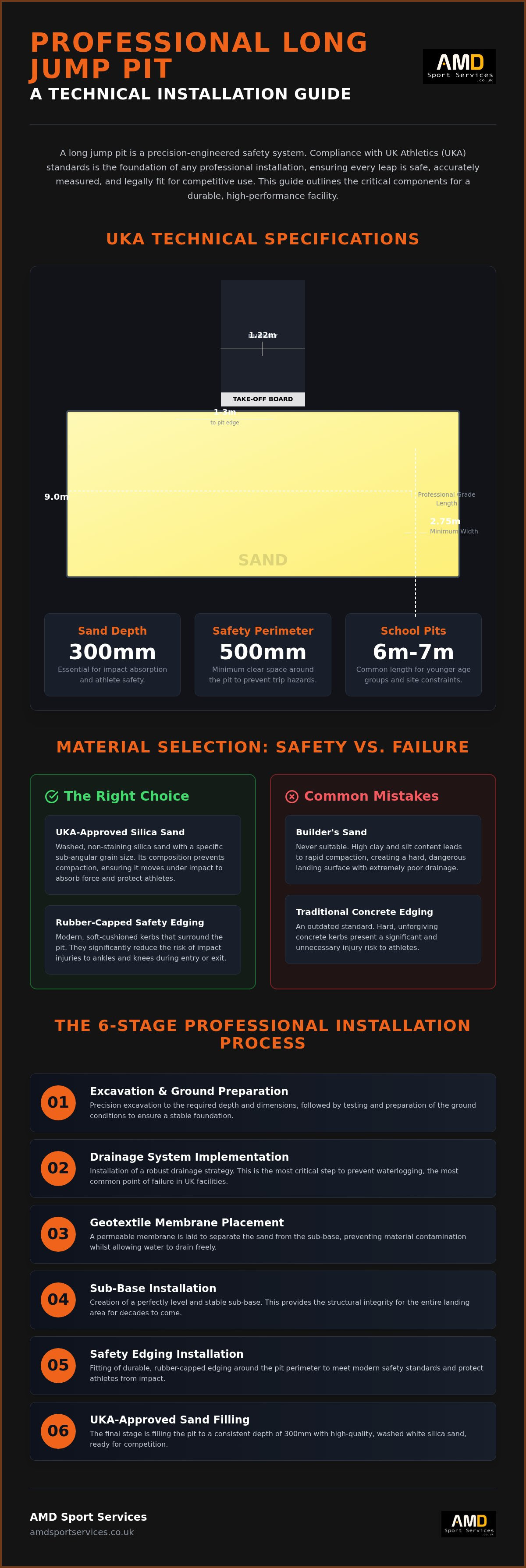
Beyond competitive validity, these standards dictate the physical footprint of the project. A standard professional-grade landing pit typically measures 9.0 metres in length and between 2.75 and 3.0 metres in width. Whilst primary schools may occasionally opt for shorter 6.0 or 7.0-metre pits to fit specific site constraints, any facility aiming for senior athletics use must adhere to the larger dimensions to accommodate the distances achieved by elite jumpers.
Official Pit Dimensions and Depth Requirements
Precision in excavation is critical for a compliant result. The industry benchmark for sand depth is 300mm, providing a sufficient buffer to prevent athletes from hitting the sub-base. Standard requirements include:
Professional Grade: 9.0m x 2.75m minimum.
School Level: 6.0m to 7.0m length is common for younger age groups.
Runway Width: Usually 1.22m to match standard track lanes.
When planning a multi-use runway that includes triple jump, the pit placement must account for various take-off board positions. This often requires extending the landing area or carefully calculating the distance from the furthest board to ensure every athlete lands safely within the sand, regardless of their starting point.
Safety Zones and Perimeter Clearances
Safety extends beyond the sand itself. A professional long jump pit installation must include an overshoot area and clear perimeter margins. This prevents injuries if a jumper loses balance or overshoots the landing. Current regulations often require soft-cushioned edging or rubber-capped concrete surrounds. These specialised kerbs protect the athlete's ankles and knees during entry and exit from the pit. Maintaining a minimum clear space of at least 500mm around the pit's perimeter is a standard practice to keep the area free from trip hazards or hard obstructions.
The placement of the take-off board is another technical hurdle. For long jump, the board is usually set 1 to 3 metres from the edge of the pit. If the installation isn't planned with these ratios in mind, you risk creating a facility where younger athletes can't reach the sand or elite jumpers run out of landing space.
Selecting High-Performance Materials: Sand, Edging, and Surfacing
Material selection is often where budget-driven compromises lead to long-term facility failure. A professional long jump pit installation relies on technical components that resist compaction and maintain athlete safety over years of heavy use. Whilst traditional concrete edging was the historical standard, modern facilities favour materials that reduce the risk of impact injuries. Choosing the right combination of sand, kerbing, and covers ensures the pit remains a functional asset rather than a maintenance burden.
The Importance of UKA-Approved Silica Sand
The sand is the most critical safety component in the entire landing area. It isn't just a filler; it is a precision-engineered shock absorber. We use washed, non-staining silica sand because it lacks the clay or silt particles found in cheaper alternatives. According to the SAPCA Code of Practice, the specific grain size and sub-angular shape are vital to prevent the pit from hardening into a solid mass. This "flow" during impact ensures the sand moves under the athlete's weight rather than resisting it. Builders sand is never suitable for an athletics pit because its high clay content leads to rapid compaction and poor drainage, creating a dangerous landing surface.
Safety Edging and Transition Strips
Edge selection impacts both safety and longevity. Concrete kerbs are durable but unforgiving during a misplaced landing. In school environments, we recommend rubber-topped safety kerbs. These provide a cushioned perimeter that significantly lowers the risk of ankle or knee injuries if a jumper clips the edge. Achieving a flush transition between the long jump runway and the pit is equally important. Any lip or gap can become a trip hazard or allow water to seep into the sub-base, potentially destabilising the entire structure. If you aren't sure which edging suits your usage levels, our team can provide a specialist safety inspection to assess your current setup.
The surfacing surrounding the pit also plays a role in maintenance. Porous polymeric rubber or needlepunch surfacing helps manage water runoff and keeps the area tidy by allowing sand to be easily swept back into the pit. To protect your investment, bespoke pit covers are essential. These prevent contamination from wind-blown debris and animal fouling, which can quickly degrade the sand quality and create hygiene issues. Heavy-duty, breathable mesh covers are the preferred choice as they allow moisture to evaporate whilst keeping the pit clean and ready for use.
The Step-by-Step Long Jump Pit Installation Process
A professional long jump pit installation is a methodical construction project that demands technical precision from the first shovel. The process begins with a thorough site assessment to determine ground conditions and drainage requirements. This initial stage ensures the sub-base can support the weight of the sand and the impact of athletes without shifting over time. Skipping this assessment often leads to uneven settling, which ruins the facility’s competitive validity within just a few seasons.
Ground Preparation and Excavation
Initial excavation requires the removal of turf and subsoil to a specific depth, typically between 450mm and 500mm. This depth allows sufficient room for the drainage stone and the mandatory 300mm sand layer. Managing soil disposal is a logistical step that must be planned to keep the site clear and safe. We focus heavily on creating a stable perimeter during this phase. If the surrounding ground isn't properly retained, the pit can "migrate" or the edges can sag. Achieving a perfectly flat landing area is essential; even a slight slope can cause water to pool and lead to inaccurate distance measurements during competitions.
Structural Assembly and Membrane Fitting
Once the excavation is complete, we install the structural frame and safety kerbing. One of the most critical elements is the integration between the runway and the pit edge. The transition must be seamless to prevent trip hazards. We secure the take-off board system directly into a concrete foundation within the runway structure. This prevents the board from moving or becoming loose after thousands of jumps. Installing a heavy-duty geotextile membrane is a non-negotiable step in any long jump pit installation. This layer serves two vital purposes: it prevents weed growth from below and stops the expensive silica sand from leaching into the drainage stone.
The layering follows a strict, logical sequence to ensure longevity:
Drainage Base: 150mm to 200mm of clean, angular stone to facilitate rapid water runoff.
Geotextile Layer: A permeable membrane wrapped up the internal sides of the pit to keep the sand pure.
Sand Fill: A final 300mm fill of UKA-approved silica sand, levelled to the exact height of the safety kerbs.
This methodical approach ensures the facility is ready for immediate use. If you are planning a new build or need to refurbish an existing landing area, following these steps ensures a professional finish that meets all regulatory standards. We take pride in solving the unique structural challenges that standard landscaping cannot address, positioning the facility as a high-performing asset for decades.
Essential Drainage Solutions and Pit Refurbishment
Drainage is the most frequent point of failure for UK athletics pits. Given the high levels of annual rainfall and the prevalence of heavy clay soil in many regions, a standard soakaway is rarely sufficient. When water cannot escape the sub-base, it creates a "swimming pool effect" where the sand remains permanently saturated. This doesn't just make the facility unpleasant to use; it actively degrades the structural integrity of the long jump pit installation. Over time, standing water can cause the sub-base stone to shift and the geotextile membrane to fail, leading to sand loss and a dangerously uneven landing surface.
Integrating the pit’s drainage with the wider facility's water management system is a technical necessity. We often install dedicated land drains and a clean, angular stone sub-base to facilitate rapid water dispersal. This ensures that even after a heavy downpour, the pit remains dry and functional. Efficient drainage is the primary safeguard against sand saturation, which can lead to a dangerously firm landing surface and increased risk of joint injuries.
Designing for the British Climate
In areas with poor natural percolation, such as those with heavy clay, we implement bespoke drainage solutions that move water away from the pit area entirely. This involves connecting the internal land drains to the main site drainage or a dedicated outfall. By using a multi-layered approach with varying stone sizes, we create a system that acts as a reservoir during peak rainfall, allowing water to drain away at a controlled rate without flooding the surface. This pragmatic approach to long jump pit installation prevents the sand from becoming waterlogged and abrasive, preserving the quality of the silica grains.
Refurbishment: Breathing New Life into Old Pits
Even a well-built pit will eventually require professional attention. Signs that your facility needs refurbishment include persistent weed growth, a hardened sand surface that won't loosen, or visible damage to the safety kerbs. Contamination from organic matter and animal fouling is a hygiene risk that deep-cleaning alone cannot always resolve. In these cases, a full sand renewal is necessary.
Our refurbishment process involves more than just swapping the sand. We assess the condition of the sub-base membrane and replace worn take-off boards to ensure the facility meets modern UKA standards. If your facility is showing signs of wear, our team provides comprehensive long jump runway refurbishment and pit maintenance to restore safety and compliance. Upgrading old safety kerbs to rubber-capped solutions is also a common step in bringing a legacy pit up to current safety specifications, ensuring it remains a durable asset for the next generation of athletes.
Bespoke Long Jump Solutions from AMD Sport Services
Choosing a single contractor for both the runway and the pit infrastructure ensures technical consistency across the entire project. At AMD Sport Services, we provide a comprehensive service that manages every phase of a long jump pit installation. From the initial safety inspection of an existing site to the final precision levelling of the sand, we prioritise technical honesty over sales flair. Our team organises national projects for schools, local councils, and athletic clubs, ensuring that every facility meets the stringent requirements of UK Athletics (UKA) and World Athletics standards.
Working with a specialised contractor reduces the risk of miscommunication between different trades. We handle the excavation, drainage, and safety surfacing ourselves, which guarantees that the transition between the runway and the landing area is flush and compliant. This integrated approach results in a durable facility that withstands the demands of both recreational use and competitive track meets. Our national coverage ensures that professional athletics infrastructure is accessible to institutions across the United Kingdom.
Expertise in Athletics Infrastructure
With over 20 years of industry experience, our hands-on approach allows us to solve complex site-specific challenges that standard landscaping firms often overlook. Whether it is managing difficult soil percolation or installing multi-use runways for triple jump, we adhere to the highest regulatory standards. You can view our previous work and successful project deliveries by visiting AMD Sport Services Installations. Every project we undertake is a commitment to craftsmanship and safety, providing a professional finish that enhances your facility's reputation.
Long-Term Maintenance and Support
Our relationship with our clients doesn't end when the sand is levelled. A professional long jump pit installation requires ongoing care to remain safe and compliant for decades. Our seasoned practitioners offer a logical progression of support services designed to extend the life of your facility. These include:
Annual sports equipment safety inspections to identify wear before it becomes a hazard.
Bespoke repair services for tartan tracks, polymeric surfacing, and safety kerbing.
Sand deep-cleaning and replenishment programmes to maintain hygiene and impact absorption.
Court marking renewal and equipment refurbishment to keep your facility in peak condition.
A well-maintained pit is a safe pit. By scheduling regular professional assessments, you can avoid the high costs of total reconstruction and ensure your athletes have the best possible landing surface. If you are ready to discuss your project requirements, contact our expert team for a bespoke installation quote today.
Securing Your Athletics Infrastructure for the Future
Achieving a high-standard facility requires more than just filling a trench with sand. It is a matter of precision engineering, from the UKA-compliant dimensions to the multi-layered drainage systems designed to withstand the British weather. You now understand how specific silica sand grades and rubber-capped safety kerbs protect athletes whilst reducing your long-term maintenance burdens. A successful long jump pit installation is a strategic investment that demands technical honesty and a no-nonsense approach to construction.
With over 20 years of industry experience, AMD Sport Services provides the UKA-compliant technical expertise needed for both new builds and complex refurbishments. We offer full national maintenance and installation coverage, ensuring schools and clubs across the country have access to durable, professional-grade infrastructure. Our team is ready to help you navigate the specific technical requirements and deliver a compliant landing area that stands the test of time. Enquire about our professional long jump installation services today to secure a safe and reliable facility for your athletes.
Frequently Asked Questions
What is the standard size for a long jump pit in the UK?
Standard professional pits in the United Kingdom are typically 9.0 metres long and between 2.75 and 3.0 metres wide. For primary schools, these dimensions are often reduced to 6.0 or 7.0 metres to suit younger age groups and limited space. A minimum sand depth of 300mm is the industry standard to ensure athlete safety. Adhering to these UKA specifications ensures your facility is fit for competitive use and official results.
Does a long jump pit require a specific type of sand?
Yes, using washed silica sand is essential for any professional long jump pit installation. This specific sand is non-staining and features sub-angular grains that prevent the landing area from compacting into a hard surface. Standard builders sand contains clay and silt which leads to poor drainage and a dangerous landing. High-quality silica sand maintains its "flow" under impact, providing the necessary shock absorption for jumpers of all ability levels.
How often should the sand in a long jump pit be replaced?
Sand replacement is typically required every five to ten years, though this timeframe depends heavily on maintenance and usage levels. If the sand becomes contaminated with soil, organic debris, or animal fouling, it may need replacing sooner to maintain hygiene and safety. Regular deep cleaning and raking can extend the lifespan of the silica sand. However, once the grains become too fine or compacted, a full sand renewal is necessary.
Can an existing long jump pit be refurbished rather than replaced?
Most existing pits can be refurbished if the underlying structural integrity remains sound. This process often involves removing contaminated sand, replacing the geotextile membrane, and installing new safety kerbing or take-off boards. Refurbishment is a pragmatic way to bring a legacy facility up to modern UKA safety standards without the cost of a full new long jump pit installation. It effectively restores the landing area's performance and competitive validity.
What drainage systems are best for outdoor athletics pits?
The most effective drainage solution involves a clean stone sub-base integrated with land drains. This system allows water to permeate through the sand and geotextile layer before being directed away from the pit. In clay-heavy areas, connecting these internal drains to the wider facility's water management system is vital. Proper drainage prevents the sand from becoming waterlogged, which is the primary cause of surface hardening and structural failure in British athletics facilities.
How do you prevent weeds from growing in a long jump pit?
A heavy-duty geotextile membrane is the most effective way to prevent weed growth from the subsoil. This permeable layer allows water to pass through whilst acting as a physical barrier against roots. Additionally, keeping the pit covered when not in use prevents wind-blown seeds from germinating in the sand. Regular maintenance, such as raking and the removal of organic matter, ensures that the sand remains an inhospitable environment for weeds.
Is a cover necessary for a long jump landing area?
A cover is highly recommended for any outdoor landing area to ensure longevity and hygiene. Bespoke mesh covers protect the sand from animal fouling, litter, and organic debris like leaves, which can lead to drainage blockages. Breathable materials are preferred as they allow moisture to evaporate, preventing the sand from becoming sour or mouldy. Using a secure cover significantly reduces the frequency of deep cleaning and helps maintain UKA compliance.
How much does a professional long jump pit installation cost?
The cost of a professional installation depends on several site-specific factors, such as excavation requirements, ground conditions, and the chosen edging materials. A single-lane facility will require a different budget than a multi-lane competitive setup with complex drainage. Other variables include the proximity to access points for machinery and the volume of soil disposal. We recommend a professional site assessment to provide an accurate, bespoke quote tailored to your facility's specific needs.


Comments