
Professional Sports Dividing Net Installation: The Complete UK Facility Guide

What if the biggest obstacle to your facility's profitability isn't your schedule, but the physical layout of the hall itself? Many leisure centre managers find that huge, open-plan spaces often lead to wasted capacity and noise interference when different groups try to train side-by-side. It's a common frustration to see half a hall sitting empty because a single activity prevents another from starting safely. Professional sports dividing net installation changes this dynamic by turning a single cavernous room into a versatile, high-functioning environment.
We understand that safety is your primary concern, especially when dealing with heavy-duty trackways and ceiling-mounted equipment. You need to know that your installation won't just look right, but will also meet strict UK institutional standards for fire retardancy and structural integrity. This guide explains how expert sports dividing net installation maximises your floor space and ensures full safety compliance. We will walk you through the technical requirements, from BS 5867-2:2008 fire standards to the engineering behind durable trackway systems, helping you build a safer and more efficient facility.
Table of Contents
The Role of Sports Dividing Net Installation in Modern Facilities
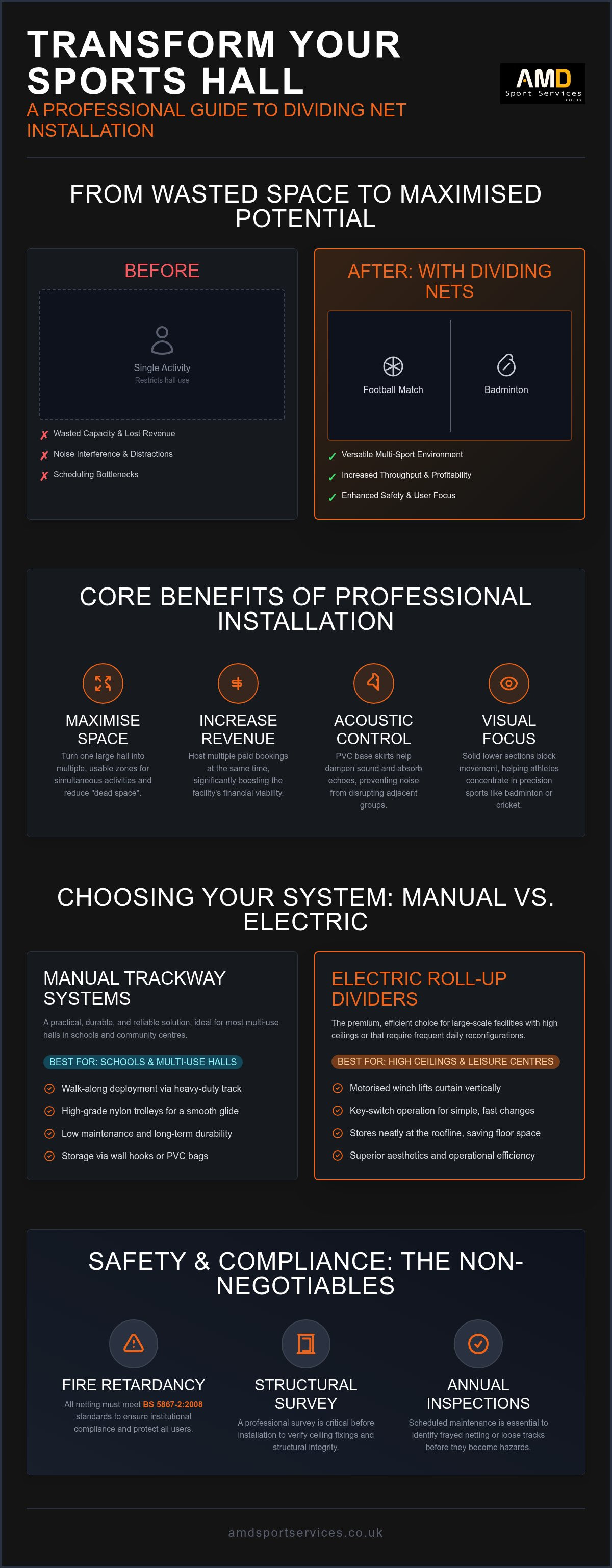
A sports hall division system is more than just a simple barrier; it's a high-performance piece of sports equipment designed to partition large halls into manageable, safe zones. A standard setup involves heavy-duty aluminium trackways, nylon trolleys, and fire-retardant mesh. Professional sports dividing net installation ensures these components are anchored securely to the building's primary structure, allowing staff to reconfigure the space in minutes. Without this flexibility, a four-court hall often remains restricted to a single activity, leading to significant revenue loss and scheduling bottlenecks.
By splitting a hall into two or three distinct areas, leisure centres can host a five-a-side football match alongside a gymnastics class without safety risks. This capability is vital for meeting the high demand for evening club bookings whilst maintaining a clear floor for school use during the day. It's about turning a static room into a dynamic asset that adapts to the community's needs.
Maximising Space in Schools and Leisure Centres
Schools and leisure centres rarely have the luxury of surplus floor area. Professional sports dividing net installation allows for the creation of bespoke zones that follow the specific court markings of the hall. This reduces "dead space" that often occurs in corners or between mismatched activities. Whether the hall is a standard rectangular shape or has unique structural pillars, a bespoke trackway layout ensures every square metre is usable. This increased throughput directly supports the long-term financial viability of the facility by allowing multiple groups to pay for the space simultaneously.
Acoustic and Visual Benefits for Athletes
Beyond physical separation, netting plays a critical role in controlling the environment. Modern systems use a combination of open mesh for airflow and solid PVC base skirts to dampen sound. This design provides several tangible benefits:
Acoustic Control: The fabric helps absorb echoes, preventing noise from a boisterous basketball session from disrupting a nearby yoga class.
Visual Focus: Solid lower sections block the movement of players in adjacent zones. This is essential for concentration in precision sports like badminton or cricket.
Professional Atmosphere: High-quality netting creates a dedicated training environment. This encourages repeat bookings from local clubs who require a focused space for competitive play.
To maintain these benefits, the system must remain in peak condition. Regular indoor inspection and maintenance is necessary to ensure the trackway continues to glide smoothly and the netting remains free of tears that could compromise safety or visual privacy.
Comparing Manual Trackway and Electric Roll-Up Systems
Selecting the right hardware is a pivotal stage in any sports dividing net installation. Facility managers generally choose between manual walk-along trackways or motorised vertical-lift systems. Manual setups offer a pragmatic, low-maintenance solution for schools, whilst electric roll-up curtains provide a premium, efficient alternative for large-scale leisure centres. Regardless of the choice, all installations must align with the Safety of Sports Grounds Act 1975 to ensure the hall remains a safe environment for all users, staff, and spectators alike.
Manual Trackway Systems: Practical and Reliable
Manual systems are the most common choice for multi-use halls due to their long-term durability. The netting hangs from a heavy-duty aluminium trackway, which we mount to the existing structural steelwork of the building. Staff deploy these nets by walking them across the floor, so the quality of the internal trolleys is paramount. We use high-grade nylon trolleys to ensure a smooth glide and prevent the snagging often found in older, poorly maintained systems. For storage, you can choose between wall-mounted hooks or PVC bag-up systems that keep the netting protected and neatly tucked away when the full hall is required.
Electric Roll-Up Dividers: The Premium Solution
For facilities with very high ceilings or those that require multiple daily reconfigurations, electric dividers are the superior option. These systems use motorised winches to lift the curtain vertically, storing it neatly at the roofline. This removes the need for floor-level storage bags and reduces the manual labour required from site teams. Modern electric systems include essential safety features such as fail-safe gravity brakes and secure key-switch controls. These ensure the curtain cannot be operated by unauthorised persons, making them a staple in high-traffic public leisure centres where speed and safety are the top priorities.
Choosing between full mesh or a PVC-mesh hybrid depends on your hall's specific activities. Hybrids are popular because the solid PVC base provides a visual block and prevents balls from passing through, whilst the upper mesh allows for natural light and ventilation to circulate. Manual systems typically have a longer mechanical lifespan with basic care, whereas electric motors require specialist technical checks to maintain their warranty. If you are currently evaluating your facility's needs, you can explore our indoor inspection and maintenance services to understand the long-term upkeep and performance of each system type.
The Professional Installation Process: From Survey to Handover
Professional sports dividing net installation is a precise engineering task that goes far beyond simply hanging a mesh curtain. It requires a methodical approach to ensure the system operates smoothly for years whilst maintaining the highest levels of safety for facility users. Every project follows a logical sequence from the initial site survey through to the final safety certification. This process ensures that the finished result is both durable and compliant with institutional standards.
Step 1: Structural Assessment and Bespoke Design
A structural survey is the non-negotiable foundation of any installation. We must identify the load-bearing points within the ceiling or roof structure to ensure the primary steelwork can support the weight and tension of the trackway. During this phase, we design the net drop with precision. This includes calculating the necessary floor clearance, typically around 25mm to 50mm, to prevent the fabric from dragging and wearing prematurely. We also help you select the correct mesh size amongst various sport-specific options, such as 50mm mesh for football or smaller apertures for cricket and tennis.
Step 2: Physical Fitting and Component Assembly
The physical fitting phase involves complex logistics, particularly regarding working at height. We utilise mobile elevating work platforms (MEWPs) or scaffold towers to access the roof structure, always organising the site to ensure minimal disruption to your daily schedule. A critical part of this step is ensuring the aluminium trackway is perfectly level. Even a slight incline can cause the net to drift or make it difficult for staff to operate. Once the track is secured, we assemble the trolleys and lead-edge poles, distributing the weight of the netting evenly to prevent stress on any single fixing point.
Step 3: Testing and Safety Certification
Before we hand over the system, we perform rigorous testing of the pull-across or motorised mechanism. This ensures there are no snags in the track and that the safety brakes on electric systems are fully functional. We provide the facility manager with a comprehensive safety certificate and an O&M manual, which details the required maintenance intervals. You can view examples of our previous bespoke installations to see how these systems integrate into different hall types. The handover process serves as the final safety gateway to confirm the system is fit for purpose and staff are competent in its operation.
Prioritising Safety Standards and Long-Term Maintenance
The longevity of a sports dividing net installation depends on the quality of the initial fit and the consistency of the subsequent care. Because these systems are suspended above participants, the duty of care for facility managers is significant. Annual safety inspections aren't just a recommendation; they're an essential part of meeting British Standards, such as BS EN 12185, for indoor sports apparatus. Over time, even the most robust trackways and mesh can suffer from the rigours of daily use in a busy leisure centre or school hall. Ignoring minor wear can lead to system failure, which poses a direct risk to users and staff.
Identifying Potential Hazards in Aging Systems
Mechanical components like winches and trolley wheels are subject to constant friction. If a trolley wheel seizes, it puts undue strain on the trackway fixings. This can lead to structural failure if left unaddressed. For motorised curtains, a failed winch or a malfunctioning gravity brake is a serious hazard. These parts require regular lubrication and alignment to function correctly. Netting also degrades over time. High-impact use from footballs or cricket balls causes micro-tears that compromise the net's integrity. UV light from hall windows can also make synthetic fibres brittle over several years. You can refer to our guide on indoor inspection and maintenance for a detailed breakdown of what to look for during your monthly visual checks.
Professional Repair and Refurbishment
Deciding when to repair versus when to replace a sports hall partition is a matter of technical assessment. In many cases, individual sections of netting can be re-threaded or replaced without removing the entire system. This is a cost-effective way to extend the lifespan of your equipment. However, bent tracks or loose structural fixings always require immediate specialist intervention. General building contractors often lack the specific height-access equipment and technical knowledge of load-bearing mesh to perform these tasks safely. They don't have the specialist tools required for high-level tensioning. All repairs must be documented clearly in your facility's safety audit trail. This provides proof of compliance and ensures your insurance remains valid. If your system is showing signs of wear, you should book a professional safety inspection to ensure your hall remains fully compliant and safe for all participants.
Choosing a Specialist Contractor for Your Sports Hall Project
Selecting a contractor for sports dividing net installation is a decision that impacts the safety and functionality of your hall for decades. Whilst a general builder might be competent with standard masonry or carpentry, they often lack the specific engineering knowledge required for high-level netting systems. Installing heavy-duty trackways to primary roof steelwork requires specialist access equipment and a deep understanding of load-bearing mesh tensioning. A specialist contractor brings the technical proficiency needed to ensure the system doesn't sag, snag, or fail under the pressure of daily institutional use.
There's significant value in working with a provider that manages the entire lifecycle of the equipment. Choosing a single partner for both the initial installation and ongoing service and maintenance creates a clear line of accountability. This ensures that the team who knows the structural fixings of your building is the same team performing the annual safety checks, reducing the risk of oversight during inspections.
Expertise in Institutional Environments
Working within schools and public leisure centres requires more than just technical skill; it demands a commitment to institutional safety protocols. All site teams should hold current DBS checks and be familiar with school-safe working practices. We understand that facility managers must balance essential upgrades with a busy booking diary. This means managing the project timeline with precision, often working during holiday periods or off-peak hours to ensure the hall is ready for the next session. For a more detailed look at the technical specifications required for these environments, you can refer to our Professional Sports Hall Netting Systems pillar.
Bespoke Solutions vs. Generic Kits
Generic, off-the-shelf netting kits rarely provide a perfect fit for UK sports halls, which often feature unique structural challenges like sloping ceilings, ventilation ducting, or wall obstructions. A bespoke solution involves custom-measuring every net drop and track run to ensure total floor-to-ceiling coverage without gaps. At AMD Sport Services, we rely on over 20 years of industry experience to provide technical honesty from the first survey. We don't use polished sales pitches; instead, we focus on delivering high standards of workmanship that solve unique structural challenges. This hands-on approach ensures that your sports dividing net installation is tailored specifically to your facility's dimensions, providing a durable and versatile environment for all users.
Securing the Future of Your Multi-Sport Facility
A successful sports dividing net installation is a strategic investment in your facility's long-term versatility and safety. By prioritising a professional structural survey and choosing a bespoke system, you transform a single hall into a high-capacity environment that meets the diverse needs of your community. It's not just about the hardware; it's about the ongoing commitment to British Standards that ensures your equipment remains fit for purpose year after year. Taking the right steps now prevents future downtime and keeps your hall as a safe, profitable asset.
As a member of the UK sports equipment safety network, we provide the technical expertise needed for complex high-level fittings. Our DBS-checked installation teams handle every stage of the process, whilst providing comprehensive O&M manuals with every project. This gives your site team the clear documentation required for safety audits and daily operations. We focus on durability and technical honesty to ensure your hall functions exactly as intended.
Enquire about our professional sports dividing net installation services today to begin your facility's transformation.
Frequently Asked Questions
How long does a sports dividing net installation usually take?
A standard sports dividing net installation typically takes between one and three days to complete, depending on the complexity of the roof structure and the length of the trackway. Larger multi-court facilities or those requiring motorised roll-up systems may take slightly longer due to the technical assembly of winches and electrical testing. We always aim to schedule these works during holiday periods or off-peak hours to minimise disruption to your facility's booking schedule.
Do I need to strengthen my ceiling before a net installation?
Most modern sports halls feature primary steelwork capable of supporting a trackway without additional strengthening, but a structural survey is a mandatory first step. This assessment identifies the load-bearing points in your ceiling to ensure the fixings are secure and compliant with safety standards. If your building has a non-standard roof or aging timber beams, we may need to design bespoke brackets to distribute the weight safely across multiple structural points.
Can I install a dividing net myself or use a general maintenance team?
You should always use a specialist contractor rather than a general maintenance team for this type of work. High-level installations require specific qualifications for working at height and an understanding of the mechanical tensions involved in trackway systems. Professional installers ensure that the netting is perfectly level and that all fixings meet British Standards. Using non-specialists can void your insurance and lead to structural failures that put facility users at significant risk.
What is the difference between a division net and a hall curtain?
Whilst the terms are often used interchangeably, a division net is typically a full-mesh barrier designed for airflow and visibility, whereas a hall curtain often incorporates a solid PVC base. The PVC section, usually two metres high, provides a visual and acoustic block that prevents distractions between adjacent zones. Nets are often preferred for general ball sports, whilst hybrid curtains are the standard for competitive environments like badminton or cricket where visual focus is paramount.
How often should sports hall netting be inspected for safety?
Professional safety inspections for all indoor sports apparatus, including netting, must be carried out at least once every twelve months. This annual check identifies frayed mesh, bent trackways, or loose ceiling fixings that might not be visible from the ground. In addition to this, site staff should perform monthly visual checks to ensure the trolleys are gliding smoothly and that there are no obvious snags or tears that could compromise the system's integrity.
Are electric dividing nets safer than manual trackway systems?
Both manual and electric systems are safe when installed and maintained correctly, though they offer different operational benefits. Electric roll-up nets remove the manual handling risks associated with pulling heavy curtains across a hall and eliminate floor-level storage bags. However, they require more complex safety features like gravity-fed brakes. Manual trackways are often considered more robust for high-impact school environments because they have fewer electrical components that could fail over decades of heavy use.
Can existing dividing nets be motorised at a later date?
Motorising an existing manual walk-draw trackway is rarely possible because the structural requirements for a vertical-lift system are entirely different. A motorised "roll-up" divider requires a specific barrel and winch assembly that the existing manual track cannot support. If you're looking to upgrade from manual to electric, it usually involves a complete sports dividing net installation where the old track is replaced with a motorised unit designed for vertical operation.
What is the standard mesh size for multi-sport hall division?
The standard mesh size for a multi-sport hall is typically 50mm, which is suitable for stopping footballs, basketballs, and netballs. However, if your facility hosts specific sports like cricket or tennis, you may require a smaller mesh aperture to prevent balls from passing through or getting stuck. We often recommend a bespoke combination of mesh sizes or a hybrid PVC-mesh curtain to ensure the partition meets the specific requirements of every club using your space.


Comments