
Rubber Mulch vs Crumb: UK Facilities Manager's Guide

Table of Contents
Defining the Materials: What are Rubber Mulch and Rubber Crumb?
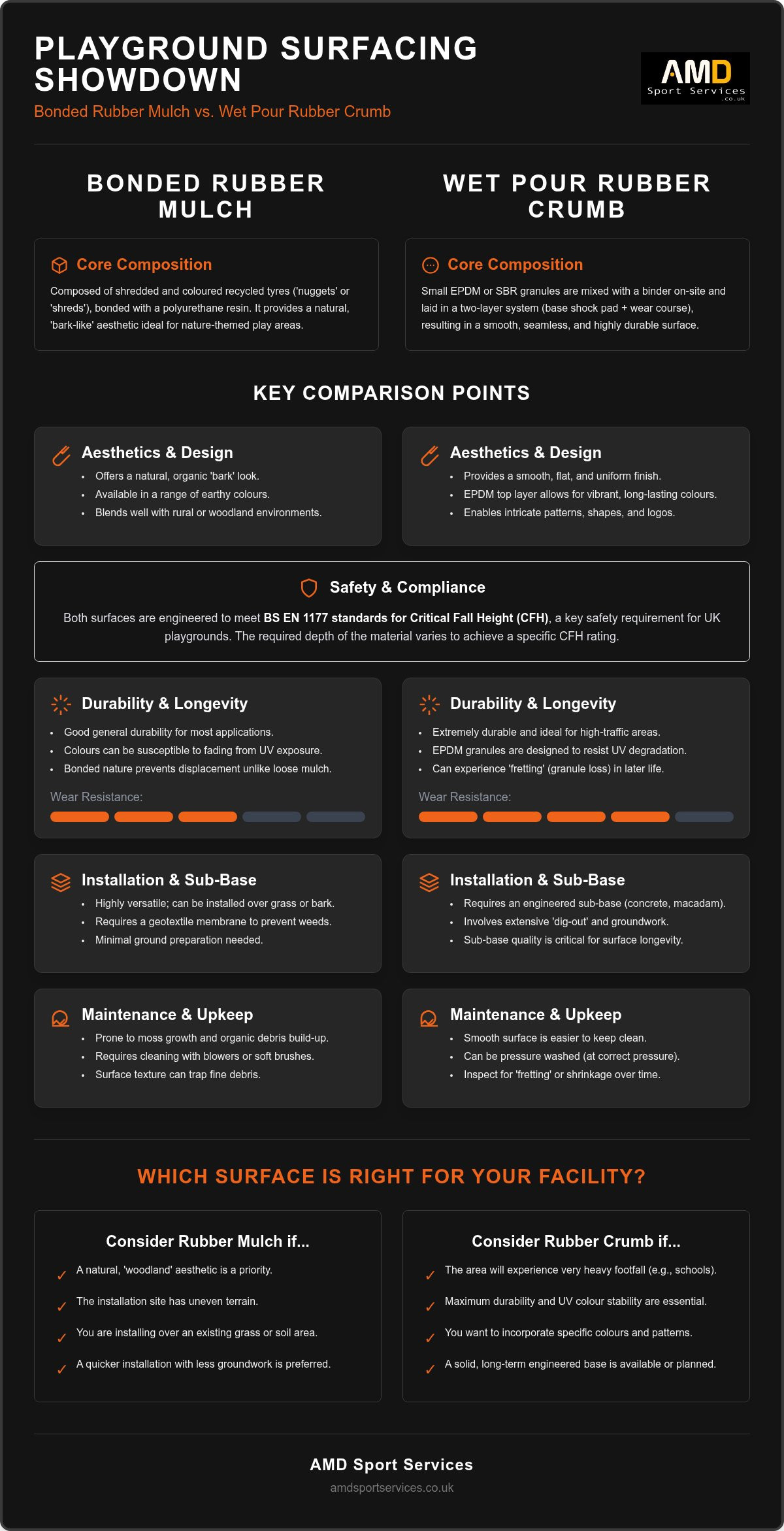
Rubber Mulch: Composed of shredded recycled tyres that are available in various colours, offering a natural look ideal for play areas.
Rubber Crumb (Wet Pour): Features small EPDM or SBR granules mixed with a binder on-site, resulting in a smooth, durable surface.
Both materials are widely used in UK schools and council environments, catering to different aesthetic and functional needs.
The 'bark' aesthetic of rubber mulch appeals particularly to rural or nature-themed play areas.
The Anatomy of Bonded Rubber Mulch
Rubber mulch consists of 'nugget' or 'shred' structures that provide effective cushioning.
The installation process allows for a single-layer application while maintaining porosity, which aids in drainage.
Common misconceptions include the belief that 'loose' mulch offers the same safety benefits as 'bonded' mulch.
Understanding the Wet Pour Rubber Crumb System
The wet pour system employs a two-layer approach: a base shock pad for impact absorption and a wear course for durability.
EPDM granules are preferred due to their vibrant colours and resistance to fading.
The polyurethane binder plays a crucial role in maintaining surface integrity and longevity.
Comparing Performance: Durability, Safety, and Aesthetics
Safety Standards: Both materials meet BS EN 1177 standards for Critical Fall Height (CFH), ensuring compliance for playground safety.
Durability: Each material's performance against heavy footfall and adverse UK weather conditions varies significantly.
Design Flexibility: Rubber mulch offers a more organic look, whereas rubber crumb allows for intricate designs and patterns.
Porosity and Drainage: Rubber crumb surfaces typically handle standing water more effectively than mulch.
Critical Fall Height Compliance
Depth requirements differ for rubber mulch and crumb to achieve the same CFH, which is defined as the maximum height of a fall for which a surface provides an acceptable level of impact attenuation.
It is essential to test your surface post-installation to ensure compliance with safety regulations.
Long-term Wear and UV Stability
Rubber crumb generally provides a smoother, more durable finish, particularly in high-traffic areas.
UV rays can cause colour fading in rubber mulch, while EPDM crumb is designed to resist such degradation.
Identifying 'fretting' or surface breakdown is crucial to maintaining older installations before they pose safety risks.
Installation Requirements and Sub-base Considerations
The sub-base plays a critical role in preventing surface cracking or sinking, which can affect long-term performance.
Rubber mulch can be installed directly over grass or existing bark with minimal preparation, making it a versatile option.
In contrast, rubber crumb requires a solid, engineered base, such as MOT Type 1 or macadam, to ensure durability.
Environmental considerations must be addressed, particularly regarding drainage planning during installation.
Installing Mulch over Natural Ground
Utilising a geotextile membrane is essential to prevent weed growth beneath the mulch.
Rubber mulch is often favoured for 'woodland' play areas due to its ability to accommodate uneven terrain.
Proper site levelling is crucial to avoid 'puddling', which can lead to drainage issues.
The Engineered Sub-base for Wet Pour Crumb
A concrete or tarmac base is essential for the longevity of rubber crumb surfaces.
The 'dig-out' process involves removing existing materials to prepare for the installation of the engineered base.
The quality of the sub-base directly impacts the results of annual safety inspections, which are necessary for compliance.
Maintenance and Safety Inspections: The Seasoned Practitioner's View
Common maintenance issues include moss growth, debris accumulation, and surface shrinkage, all of which can affect playground safety.
Regular inspections, known as the 'AMD Approach', are more cost-effective than emergency repairs and ensure ongoing compliance.
Cleaning protocols differ between mulch and crumb; maintaining slip resistance is crucial for both types.
Addressing 'holes' or worn areas promptly can prevent them from becoming trip hazards.
Routine Cleaning and Upkeep
Using leaf blowers and soft brushes can help prevent organic matter build-up on the surface.
Pressure washing is effective, but specific pressure levels must be adhered to in order to avoid damaging the binder.
Addressing 'fretting'—the loosening of granules—early can prolong the lifespan of the surface.
The Importance of Annual Safety Inspections
Inspectors look for gaps, hardness, and trip hazards in rubber surfacing, which are critical for maintaining safety standards.
Documenting maintenance activities is essential for insurance and compliance purposes.
For further information on maintenance services, see our [service and maintenance](https://www.amdsportservices.co.uk/service-and-maintenance) page.
Making the Choice: Which Surface is Right for Your Facility?
Budget vs Longevity: Assessing the true cost of ownership over ten years can reveal the long-term benefits of each material.
Facility Type: Schools often prefer rubber crumb for its durability, while parks may favour rubber mulch for its aesthetic appeal.
AMD Sport Services: We provide expert installation and inspection services tailored to UK playgrounds.
A final checklist is essential for decision-makers before commissioning a project to ensure all factors are considered.
Decision Matrix for Facility Managers
Opt for rubber mulch if you have a low initial budget, prefer a natural setting, or plan to install over grass sub-bases.
Choose rubber crumb for high traffic areas, complex designs, or when prioritising long-term durability.
Consulting with a specialist can help verify site suitability for either option.
Next Steps for Your Project
Arrange a site survey and safety assessment to determine the best surfacing option for your facility.
Utilising a national contractor with specialist surfacing experience can streamline the installation process.
For expert advice on playground surfacing, [contact AMD Sport Services](https://www.amdsportservices.co.uk/external-sport-equipment-installation).


Comments