
The Ultimate School Playground Inspection Checklist: A UK Safety Guide

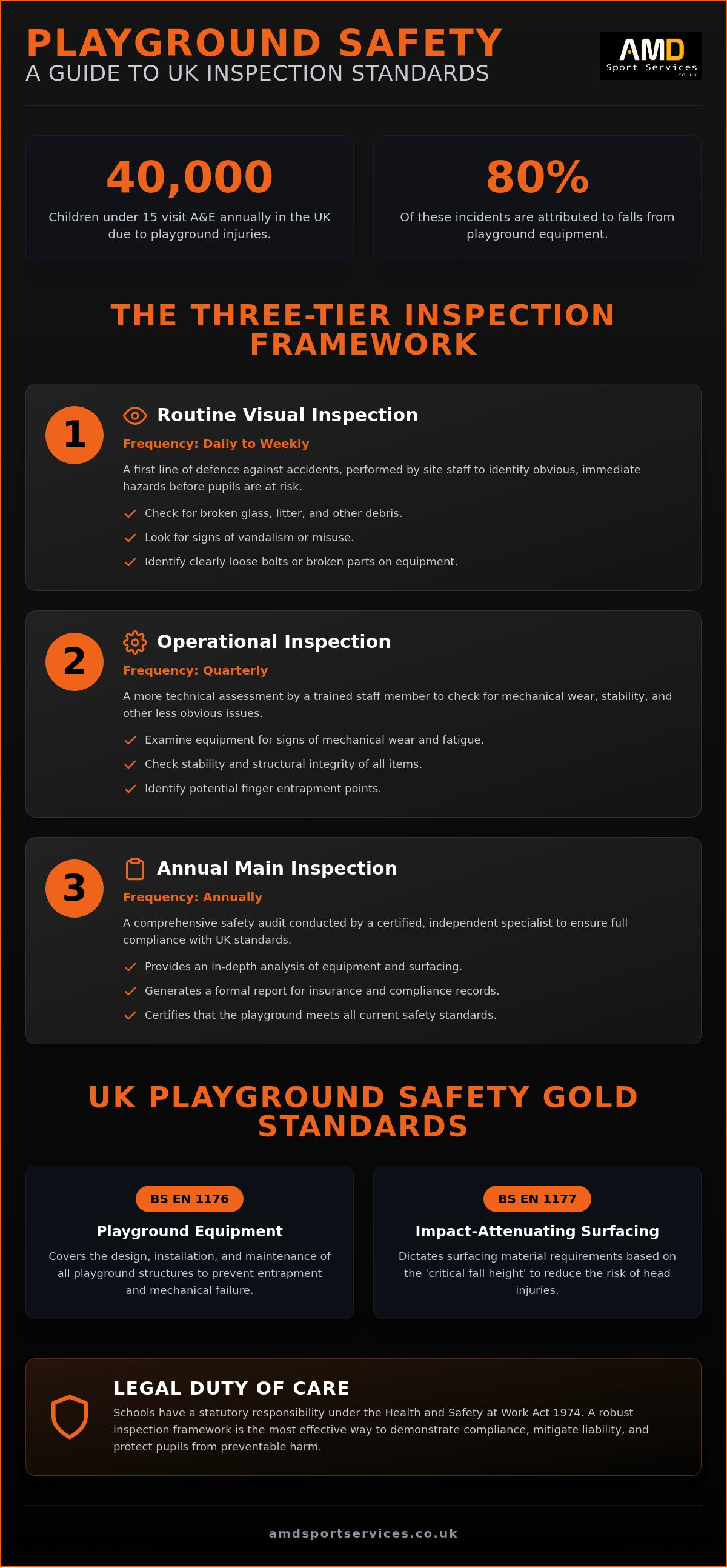
An estimated 40,000 children under the age of 15 visit A&E departments in the UK each year due to playground injuries, with falls accounting for roughly 80% of these incidents. For a school site manager or business leader, these figures represent a significant burden of responsibility and the constant pressure of potential litigation. It's understandable if you find yourself struggling to interpret complex BS EN 1176 safety standards while managing a limited budget for equipment replacement.
This guide provides a comprehensive school playground inspection checklist designed to help you master the essentials of safety compliance and protect your pupils. By following a structured, repeatable framework, you can ensure 100% adherence to UK regulations and significantly extend the lifespan of your playground assets. We'll examine the technical requirements of BS EN 1177:2018 for impact-attenuating surfacing and outline the tiered inspection process, moving from basic daily visual checks to the professional audits required for annual certification. You'll gain the clarity needed to maintain a safe environment while managing your school's physical assets with confidence and technical precision.
Table of Contents
Understanding UK School Playground Safety Standards & Regulations
Schools operate under a strict legal framework that prioritises the physical well-being of every child. The Health and Safety at Work etc. Act 1974 and the Management of Health and Safety at Work Regulations 1999 dictate how educational facilities must manage their grounds. These aren't just optional guidelines; they're statutory requirements that demand active compliance. Schools owe a clear duty of care to pupils, staff, and any visitors on the premises. Failing to maintain a robust school playground inspection checklist can lead to severe financial penalties and legal action following an accident. A comprehensive Playground safety overview shows that most incidents are preventable through consistent adherence to established standards and professional oversight.
The Legal Responsibility of School Governors and Site Managers
Whilst there's no single "Playground Law" in the UK, the courts rely on civil law and the concept of negligence to settle disputes. If an injury occurs because a known fault wasn't repaired, the school is often found liable for the damages. Site managers and governors must ensure that a "Competent Person" oversees the safety programme to mitigate these risks. According to the UK HSE, a competent person is someone who has sufficient training and experience or knowledge and other qualities that allow them to assist you properly. Relying on untrained staff for technical safety audits can leave the institution vulnerable during insurance claims.
BS EN 1176 and 1177: The Gold Standards of Safety
The industry benchmarks for playground safety are defined by two specific British Standards. BS EN 1176 covers the design, installation, and maintenance of playground equipment. It ensures that structures like swings and climbing frames are built to prevent finger entrapment or mechanical failure. BS EN 1177 focuses specifically on impact-attenuating surfacing, such as rubber crumb or mulch. This standard dictates the required thickness of materials based on the "critical fall height" of the equipment above it to reduce the risk of head injuries.
It's vital to distinguish between mandatory requirements and recommended best practices. Whilst the standards themselves are technically voluntary, they're used in court as the evidence-based benchmark for what a "reasonable" operator should do. Maintaining a thorough school playground inspection checklist based on these standards is the most effective way for a school to demonstrate it has met its legal obligations and kept its pupils safe.
The Three-Tier School Playground Inspection Framework
Effective safety management isn't a one-off event. It requires a structured hierarchy that builds a reliable paper trail for insurance and compliance. This tiered approach ensures that every potential hazard is identified and mitigated at the appropriate interval, following RoSPA play safety standards. The frequency of these checks often depends on equipment usage and local environmental factors, such as exposure to coastal salt air or high-traffic urban settings. By establishing a repeatable routine, school leaders can demonstrate a proactive commitment to pupil safety whilst protecting the institution from liability.
Tier 1: Routine Visual Inspections (Daily to Weekly)
These checks are the first line of defence against accidents. Site staff should walk the grounds before the first break time to identify obvious hazards. This includes looking for broken glass, evidence of vandalism, or clearly loose bolts on high-traffic equipment. Using a simple "pass/fail" logging method within your school playground inspection checklist allows for rapid reporting and immediate action. If a swing is broken or a bottle has been smashed on the rubber mulch, it's identified before a child is at risk.
Tier 2: Operational Inspections (Quarterly)
Every three months, a more technical assessment is required to ensure structural integrity. This tier focuses on mechanical wear and stability issues that aren't visible during a quick walk-through. You're looking for subtle problems like "finger entrapment" points that may have developed as equipment settles or wears over time. Moving parts, including swing bearings and slide attachments, need close scrutiny. These checks should be performed by a staff member who has undergone specific playground safety training to ensure they understand mechanical tolerances and wear patterns.
Tier 3: Annual Main Inspections (Specialist Professional)
The final tier is a comprehensive structural analysis and compliance audit against BS EN 1176 and 1177. Because of the technical depth and specialised tools required, an independent, third-party specialist is essential. An external expert like AMD Sport Services provides an unbiased view of the facility's condition. This professional audit completes your annual school playground inspection checklist, providing a report that includes detailed risk ratings and a prioritised list of required repairs. This document serves as your definitive proof of compliance for local authorities and insurers. For schools looking to secure their long-term safety records, engaging a specialist for professional safety audits ensures no technical detail is overlooked.
The Essential School Playground Inspection Checklist
A robust school playground inspection checklist must move beyond basic visual checks to address the technical state of every asset on the site. It's a technical audit. This process requires a holistic view of the play structures, the ground beneath them, and the surrounding environment to identify hidden failure points. Following UK playground risk assessment guidelines ensures that your team is looking for specific mechanical and structural vulnerabilities that could lead to an accident.
Safety Surfacing and Ground Conditions
Impact-attenuating surfacing is your primary defence against fall-related injuries. For rubber crumb and mulch installations, you must inspect for shrinkage at the edges or cracks in high-frequency use zones. These gaps often lead to "hollow" spots where the material has thinned, significantly compromising its safety rating. If your facility uses loose-fill materials like bark or sand, ensure the correct depth is maintained to meet critical fall height requirements. Be vigilant for trip hazards caused by uneven borders or tree root ingress, which can easily go unnoticed during a casual walk-through.
Fixed Play and Sports Equipment
Mechanical failure is often the result of cumulative environmental stress and heavy use. Check steel posts for signs of corrosion and timber frames for rot, particularly at the ground-contact points. Moving parts, such as swing chains, shackles, and bearings, require inspection for excessive wear or a lack of lubrication. Don't overlook sports-specific infrastructure. Ensure that any basketball goal installation is securely fixed and free from structural wobble. Similarly, check the tension and fixings of sports hall netting or outdoor ball-court enclosures to prevent entanglement or unexpected collapse.
Hazard Identification: Entrapment and Protrusions
Entrapment hazards are technical failures that require precise measurement with standardised probes. You must check for head and neck entrapment in any gap between 110mm and 230mm within railings or climbers. Finger entrapment is equally critical; inspect chains and small apertures that could trap a child’s finger during a fall. Finally, run a gloved hand over surfaces to detect sharp edges, exposed bolt threads, or splintering wood. These minor protrusions can cause significant injury if they snag clothing or skin during active play.
The general environment surrounding the equipment is just as vital for overall compliance. Check that fencing is secure and gates are self-closing to prevent children from wandering into dangerous areas or onto roads. Signage must be legible and up to date, providing clear contact details for the site manager in case of an emergency. Look for obstructions within the "fall zones" of equipment, ensuring that items like benches or bins haven't been moved into areas where a child might land after a fall.
Identifying Common Hazards: From Mechanical Wear to Vandalism
The British climate is notoriously harsh on outdoor assets. Constant rain cycles accelerate metal corrosion, whilst the UV exposure we receive is often enough to cause plastic components to become brittle over time. A robust school playground inspection checklist must account for these environmental stressors before they compromise structural integrity. It's not just about the equipment itself; the interaction between weather, usage frequency, and material fatigue dictates the safety of the entire facility.
Environmental and Weather-Related Damage
Water pooling on safety surfacing often leads to the growth of moss or algae, creating a significant slip hazard that is easily overlooked during dry weather. During the winter months, the freeze-thaw cycle can cause concrete foundations to heave or rubber mulch to separate from its sub-base. Timber equipment is also susceptible to the elements. You should inspect timber posts for "shakes" or deep cracks in the wood that may have widened during dry spells. These cracks can weaken the frame or create new entrapment points that weren't present during the initial installation.
Mechanical Failures and Excessive Wear
Fatigue failure is a common issue in high-use areas where components are under constant stress. You should look for "metal-on-metal" wear in swing hangers and roundabout bearings. If you hear a mechanical grind or feel a wobble in a pivot point, the component is likely reaching the end of its safe operational life. Sagging in netting systems is another red flag, as it significantly increases the risk of pupil entanglement or injury. We also frequently identify stability issues with sports posts and basketball goals where the ground fixings have loosened through aggressive play or soil movement.
Vandalism is an unfortunate reality for many school sites. Your team needs to spot intentional damage, such as cuts in the safety surfacing or bolts that have been purposefully loosened or removed. These aren't just aesthetic problems. A small hole in a rubber crumb surface can quickly expand into a major trip hazard that could lead to a fracture. Minor issues escalate into major liabilities with surprising speed. A loose net or a small crack might seem trivial, but they represent a failure in the duty of care if left unaddressed. Catching these faults early is the only way to prevent a manageable repair from turning into a costly litigation case. If you've identified structural concerns during your routine checks, contact AMD Sport Services for a professional equipment repair to restore your facility to BS EN standards immediately.
Managing Repairs and Remedial Action with Specialist Contractors
Finding a fault through your school playground inspection checklist is only the first stage of effective site management. The subsequent phase involves a structured approach to remediation that prioritises pupil safety whilst protecting the school's budget. Every identified issue requires a specific risk rating to determine the urgency of the response. This methodical categorisation ensures that resources are directed where they are needed most, preventing minor wear from developing into a critical failure.
High Risk: Immediate danger to users. The equipment must be decommissioned instantly.
Medium Risk: Significant wear that requires attention within a defined timeframe, usually one to four weeks.
Low Risk: Minor cosmetic issues or early-stage wear that should be monitored or repaired during scheduled maintenance windows.
Prioritising Repairs Based on Risk Assessments
Faults defined as an "Immediate Risk" demand instant action. This usually involves physically securing the area with fencing or removing a specific component, such as a swing seat, to prevent use. Leaving damaged equipment accessible, even with a warning sign, is rarely sufficient to meet your duty of care. If a mechanical failure is identified in a high-use area, the equipment must stay closed until a qualified professional confirms the repair meets safety standards.
Professional inspection reports are invaluable tools for site managers when presenting cases to school governors. These documents provide the technical evidence required to justify the allocation of funds for repairs. By following the prioritised list provided in a professional audit, you can address the most pressing safety concerns first. This approach allows you to manage the school's liability and maintenance budget simultaneously without compromising on safety.
The Value of Specialist Sports Facility Maintenance
Whilst a general builder might be capable of minor timber repairs, they often lack the technical expertise required for external sport equipment installation and specialist surfacing. Athletics infrastructure and mechanical play components require a deep understanding of BS EN tolerances and specific material behaviours. Using a non-specialist can inadvertently void warranties or result in a repair that still fails to meet safety standards. Specialist contractors bring over 20 years of industry experience to ensure that every bolt, bearing, and surfacing patch is fit for purpose.
Maintaining a centralised Maintenance Log is a critical final step in the compliance process. This log should record the date a fault was found, the risk rating assigned, the details of the remedial work, and the contractor used. It creates a comprehensive audit trail that is essential for insurance purposes and demonstrates a proactive approach to safety. For schools seeking to extend the life of their assets and ensure total compliance, contact AMD Sport Services for professional UK-wide playground and sports facility inspections.
Securing the Future of Your School's Play and Sports Facilities
Maintaining a rigorous school playground inspection checklist is more than a regulatory hurdle; it's a fundamental part of responsible site management. By implementing the three-tier framework, you've established a proactive system that identifies mechanical fatigue and surfacing degradation before they lead to accidents. This approach doesn't just fulfil your legal duty of care; it significantly extends the operational life of your expensive outdoor assets.
Consistency is the key to effective safety compliance. Whether you're monitoring basketball goals or inspecting rubber mulch, documenting every check creates a vital audit trail for insurance and local authority reviews. AMD Sport Services provides UK-wide specialist coverage backed by over 20 years of technical expertise. We deliver comprehensive reports that ensure your facility remains 100% compliant with BS EN standards whilst simplifying your maintenance programme.
Take the next step in protecting your pupils and your school's reputation. Book a professional sports equipment and playground safety inspection today to receive a detailed compliance audit. With a clear plan in place, you can focus on providing a high-quality environment where children can play and learn with total confidence.
Frequently Asked Questions
Is a school playground inspection checklist a legal requirement in the UK?
Yes, maintaining a school playground inspection checklist is essential for meeting legal obligations under the Health and Safety at Work etc. Act 1974. Whilst the BS EN 1176 and 1177 standards aren't law themselves, they're the recognised industry benchmarks used by courts to determine if a school has fulfilled its duty of care. Failing to document these checks can lead to significant liability issues during personal injury claims.
How often should a school playground be inspected by a professional?
A school playground must undergo a professional annual main inspection at least once every twelve months. This audit should be conducted by an independent specialist who is suitably qualified, often registered with the RPII. This comprehensive check ensures full compliance with BS EN safety standards and provides a certified report for your insurance records. Regular operational checks should also occur quarterly to bridge the gap between these professional visits.
What is the difference between a routine visual and an operational inspection?
A routine visual inspection is a frequent check, often daily or weekly, designed to identify obvious hazards like broken glass, vandalism, or loose bolts. In contrast, an operational inspection is a more detailed quarterly assessment. It focuses on mechanical wear, structural stability, and hidden failure points such as bearing wear or entrapment risks. Both levels are necessary to maintain a complete safety record for your facility.
Who is qualified to perform a quarterly operational playground inspection?
Quarterly operational inspections should be carried out by a competent person who has received specific playground safety training. This individual must understand the technical requirements of BS EN 1176 and be able to identify mechanical tolerances and wear patterns. Whilst this can be a trained member of the school site team, many institutions prefer to use external specialists to ensure an unbiased and technically accurate assessment of their equipment.
What are the most common hazards found during school playground checks?
Falls are the most frequent cause of injury, but inspections often reveal technical hazards like head, neck, or finger entrapment points. Other common issues found during a school playground inspection checklist include surfacing degradation, such as thinned rubber crumb, and mechanical wear in moving parts like swing hangers. Environmental damage, including timber rot or metal corrosion, is also frequently identified as a primary failure point in older installations.
How long should school playground inspection records be kept?
You should keep playground inspection records for a minimum of 21 years. Because personal injury claims can be brought by a child once they reach the age of 18, schools must retain evidence of their safety regime until the pupil is 21. These records should include daily logs, quarterly reports, and annual certificates, as they provide the definitive defence against historical negligence claims and demonstrate consistent compliance.
Do we need to inspect the safety surfacing as well as the equipment?
Yes, safety surfacing is as critical as the equipment itself and must be inspected according to BS EN 1177:2018. You must check for thinned areas, cracks, or loss of impact-absorbing properties, especially in high-traffic zones like the base of slides. Surfacing accounts for the majority of fall-protection capability, so ensuring it meets the required critical fall height for your specific equipment is a mandatory part of any safety audit.
What should I do if a piece of equipment fails its safety inspection?
If a piece of equipment fails, you must take it out of use immediately. This usually involves physically securing the area or removing specific parts to prevent pupil access. You should then risk-rate the fault and contact a specialist contractor for repairs. Don't return the equipment to service until a competent person confirms that the remedial work meets the required BS EN safety standards and the asset is safe for use.


Comments